

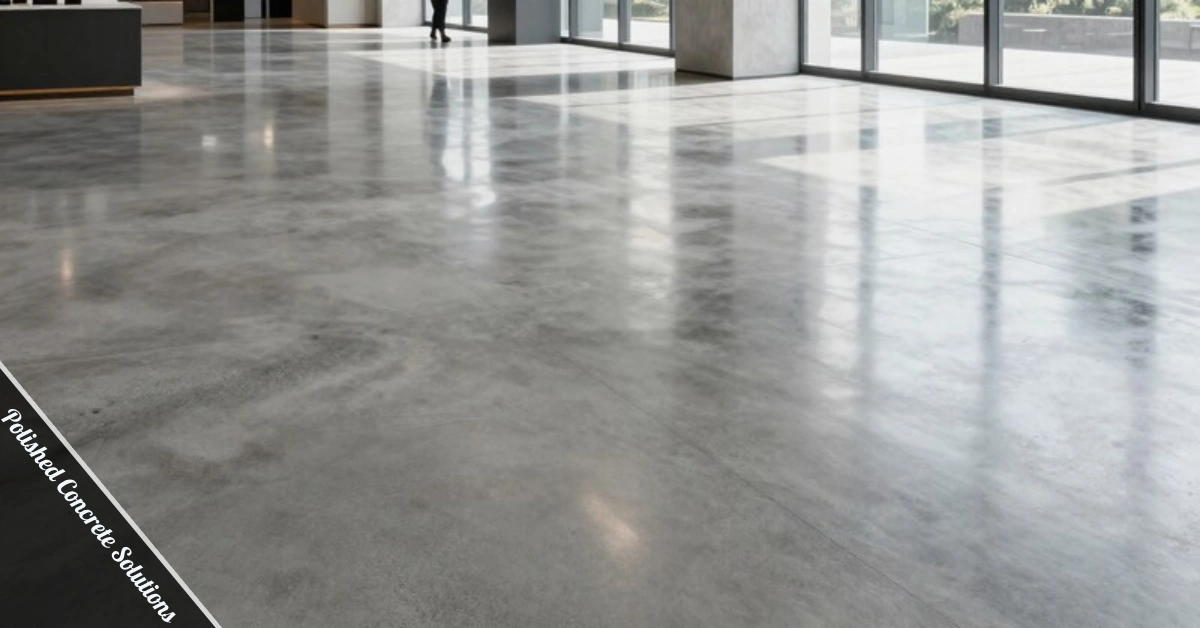
Polished concrete solutions transform ordinary slabs into durable, low-maintenance floors through multi-step grinding and densifying. Costs range from $3-$12 per square foot for commercial projects and $6-$15 for residential applications. This eco-friendly flooring option lasts 20+ years, requires minimal upkeep, and can reduce lighting costs by up to 30% through enhanced light reflectivity.
Picture walking into a modern retail store and seeing your reflection in the floor. That gleaming surface isn’t marble or granite—it’s polished concrete. Once relegated to warehouses and industrial spaces, polished concrete has become a sought-after flooring choice for homeowners and businesses across the country.
What makes this transformation possible? Can you really turn a dull concrete slab into something beautiful and functional? The answer lies in understanding polished concrete solutions and how they work.
What Makes Polished Concrete Different from Regular Concrete
Standard concrete slabs serve their purpose but lack visual appeal. They’re porous, dusty, and prone to staining. Polished concrete takes that same slab and transforms it through mechanical grinding with progressively finer diamond tools.
The process starts with coarse grinding to remove surface imperfections, followed by application of chemical densifiers that harden the concrete at a molecular level. Then comes the polishing phase using increasingly fine diamond pads—from 400 grit up to 3000 grit for mirror-like finishes.
Think of it like sanding wood. You start rough and work your way to smooth. The difference? You’re working with concrete instead of timber, and the result lasts decades longer.
How Much Does Polished Concrete Cost in 2026
Pricing varies based on several factors: project size, existing slab condition, desired finish level, and geographic location.
Commercial projects typically cost $3-$12 per square foot, with most falling in the $5-$8 range. Residential installations run higher at $6-$12 per square foot due to smaller project sizes and tighter working conditions.
Here’s what drives these numbers:
Surface Preparation Requirements: Damaged concrete with cracks, deep pits, or old coatings requires extensive prep work. Basic preparation adds $2 per square foot, while extensive repairs can increase costs by $2-$4 per square foot.
Finish Level Selection: A matte finish using 50-100 grit diamonds costs less than a high-gloss finish requiring 800-3000 grit polishing. Each additional polishing step adds labor time and material costs.
Project Size Impact: Larger spaces bring economies of scale. A 5,000-square-foot warehouse floor will have a lower per-square-foot cost than a 500-square-foot residential kitchen.
Geographic Location: Labor rates and material costs vary by region. Projects in major metropolitan areas typically cost more than those in smaller markets.
For a typical 2,000-square-foot commercial space, expect to invest $10,000-$16,000 for a quality polished concrete installation. A 1,000-square-foot residential project might range from $6,000-$12,000.
Three Main Types of Polished Concrete Finishes
Choosing the right finish depends on your space’s function and desired aesthetic.
Cream Polish (Minimal Exposure) This finish keeps the top layer of concrete intact, revealing subtle natural variations. Perfect for spaces where you want a smooth, uniform appearance without exposing aggregate. Retail stores and office lobbies often select this option.
Salt and Pepper (Light Aggregate Exposure) Grinding reveals fine sand particles just below the surface, creating a lightly textured look with small speckles. This method cuts the slab to a depth of 1/16 inch to expose small aggregates. Restaurants, shopping malls, and modern homes frequently choose this style.
Full Aggregate Exposure (Heavy Cut) This process requires cuts up to 1/4 inch deep, exposing larger stones and creating a terrazzo-like appearance. Industrial spaces and architectural showrooms often feature this dramatic finish.
Step-by-Step Polished Concrete Installation Process
Understanding the installation process helps you know what to expect and why it takes time.
Initial Assessment and Preparation: Contractors evaluate your slab’s condition, checking for cracks, moisture issues, and structural integrity. They remove existing coatings and clean the surface thoroughly.
Coarse Grinding Phase: Using 16-20 grit diamond tools, contractors grind away surface contaminants, old adhesives, and minor imperfections. This stage levels the floor and exposes fresh concrete.
Crack and Joint Repair: Technicians fill cracks and joints with specialized grouts matched to your concrete color. Proper repair prevents future damage and creates a uniform appearance.
Densifier Application: Chemical densifiers penetrate the concrete, reacting with calcium hydroxide to create a harder, more durable surface. These water-based products contain no volatile organic compounds and produce no fumes or off-gassing.
Fine Grinding and Honing: Contractors progress through finer grits (30, 50, 100, 150) to smooth out scratches and prepare the surface for polishing. Each pass creates a progressively smoother finish.
Polishing to Desired Sheen: Final polishing uses 400, 800, 1500, or 3000 grit diamonds, depending on your chosen gloss level. Higher grits create more reflective surfaces.
Optional Sealer Application: Some projects benefit from a final sealer that adds stain resistance and enhances color depth, though properly densified concrete often doesn’t require additional protection.
The entire process typically takes 3-5 days for residential projects and 1-2 weeks for large commercial installations, depending on size and complexity.
Environmental Benefits That Matter
Polished concrete solutions align with green building practices in meaningful ways.
Material Reuse Reduces Waste Polished concrete makes use of existing slabs, eliminating the need for additional flooring materials like vinyl, carpet, or tile. This approach keeps materials out of landfills and reduces manufacturing demand.
Zero VOC Emissions. Unlike some sealers, adhesives, or synthetic flooring materials, polished concrete typically involves minimal or zero volatile organic compounds. Better air quality benefits building occupants and meets strict indoor environmental standards.
Light Reflectivity Cuts Energy Use. The reflective properties of polished concrete help brighten spaces by bouncing light off the surface and distributing it throughout the room. This natural light amplification can reduce artificial lighting needs by up to 30% in some spaces.
Thermal Mass Regulates Temperature.e Concrete absorbs, stores, and slowly releases heat, helping regulate indoor temperatures and reducing reliance on HVAC systems. This property particularly benefits buildings in climates with significant temperature swings.
LEED Certification Contributions Polished concrete supports multiple LEED categories including Materials and Resources, Energy and Atmosphere, and Indoor Environmental Quality. Many LEED-certified projects incorporate polished concrete to earn points toward certification.
Longevity Minimizes Replacement Polished concrete floors last 20 years or more when properly maintained. This extended lifespan means fewer resources consumed over the building’s lifetime compared to flooring options requiring replacement every 5-10 years.
Maintenance Requirements and Long-Term Costs
One of polished concrete’s biggest advantages is simple upkeep.
Daily maintenance involves dust mopping or sweeping to remove dirt and debris. Weekly cleaning requires only water or a pH-neutral cleaner—no harsh chemicals needed.
Annual maintenance for a 2,000-square-foot commercial space costs approximately $500-$1,000, compared to $2,000-$4,000 for vinyl composition tile or carpet.
Every 2-3 years, apply a penetrating sealer to maintain stain resistance and enhance durability. This simple treatment takes a few hours and costs a fraction of refinishing other flooring types.
Avoid acidic cleaners that can etch the surface. Skip wax-based products—they’ll dull your finish rather than enhance it. These floors don’t need coating or refinishing to maintain their appearance.
The math works in your favor. Lower maintenance costs, reduced replacement frequency, and decreased cleaning time add up to significant savings over 10-20 years.
Common Applications for Polished Concrete Solutions
This versatile flooring works in diverse settings.
Retail and Commercial Spaces Shopping centers, boutiques, and showrooms benefit from polished concrete’s durability and modern aesthetic. The reflective surface showcases merchandise while standing up to heavy foot traffic.
Industrial and Warehouse Facilities Manufacturing plants and distribution centers need floors that handle forklifts, pallet jacks, and constant activity. Polished concrete delivers strength without requiring frequent repairs or downtime.
Residential Interiors Homeowners embrace polished concrete for kitchens, living areas, and basements. The sleek appearance complements contemporary design while providing easy-to-clean surfaces.
Educational Institutions Schools and universities choose polished concrete for hallways, cafeterias, and common areas. The flooring withstands student traffic while minimizing maintenance demands.
Healthcare Facilities Hospitals and medical offices require hygienic, easy-to-clean surfaces. Polished concrete’s non-porous nature prevents bacteria growth and simplifies sanitation.
Restaurants and Hospitality Dining establishments appreciate polished concrete’s resistance to spills and stains. The variety of colors and finishes allows customization to match any brand aesthetic.
Design Customization Options
Polished concrete offers more creative flexibility than many realize.
Color Enhancement Through Dyes and Stains Water-based dyes penetrate the concrete, creating rich, translucent colors that won’t fade or peel. Options range from subtle earth tones to vibrant blues, greens, and reds. Acid stains create variegated, natural-looking patterns with earthy hues.
Decorative Saw Cuts and Scoring Contractors can create geometric patterns, borders, or custom designs by cutting lines into the concrete before polishing. These cuts become permanent design elements that add visual interest.
Aggregate Exposure Levels control how much stone shows through your finish. Light exposure reveals fine particles for a salt-and-pepper look. Deep grinding exposes larger aggregate for a dramatic visual impact.
Gloss Level Selection Choose from matte (minimal shine), satin (soft luster), semi-gloss (noticeable reflection), or high-gloss (mirror-like finish). Each level serves different aesthetic and functional purposes.
Joint Filling Options Decorative joint fillers in contrasting colors can turn necessary expansion joints into design features rather than interruptions in your floor.
Performance Characteristics You Should Know
Understanding how polished concrete performs helps set realistic expectations.
Slip Resistance Properties Even when wet, polished concrete provides great slip resistance as water’s interaction with the porous surface can give shoes extra traction. Different finish levels offer varying slip resistance, with lower-gloss finishes providing more traction.
Impact and Abrasion Resistance Chemical densifiers make polished concrete significantly harder than untreated slabs. The surface resists scratches, scuffs, and wear from equipment or foot traffic.
Stain Resistance Capabilities Densified polished concrete resists most stains when spills are cleaned promptly. Oil, grease, and acidic substances can still cause discoloration if left on the surface for extended periods.
Temperature Compatibility Polished concrete works well with radiant floor heating systems. The thermal conductivity allows efficient heat transfer throughout the space.
Crack Development All concrete floors will eventually crack as part of the initial curing process and over time. Saw-cut control joints manage where cracks occur, and proper repair techniques minimize visual impact.
Comparing Polished Concrete to Other Flooring Options
How does polished concrete stack up against alternatives?
Polished Concrete vs. Tile Tile offers design variety but requires grout maintenance and periodic resealing. Polished concrete is more expensive per square foot than tile initially, but offers better long-term value due to longevity. Polished concrete eliminates grout lines where dirt accumulates.
Polished Concrete vs. Hardwood Polished concrete has material costs significantly lower than high-quality hardwood floors. Wood scratches, dents, and requires refinishing every few years. Concrete handles moisture better and doesn’t support mold growth.
Polished Concrete vs. Epoxy Coatings Epoxy creates a smooth, colorful surface but can chip, peel, or yellow over time. Polished concrete becomes part of the slab itself—there’s no coating to fail or require reapplication.
Polished Concrete vs. Vinyl or Laminate. These options cost less initially but need replacement every 7-15 years. They can’t match polished concrete’s durability or environmental profile. Vinyl and laminate also release VOCs and create disposal problems.
Selecting the Right Contractor
Your project’s success depends heavily on contractor expertise.
Look for companies with specific polished concrete experience, not just general concrete work. Ask about their equipment—professional operations use ride-on grinders for large projects and edge grinders for detailed work.
Request references from similar projects. A contractor who excels at warehouse floors might lack experience with residential applications requiring careful color matching and detailed finishing.
Verify they understand moisture testing and mitigation. Excessive moisture can cause densifiers to fail and create long-term problems.
Ask about their diamond tooling progression. Reputable contractors follow systematic grinding sequences and don’t skip steps to save time.
Get detailed written proposals specifying finish levels, surface preparation methods, and expected timeline. Vague estimates often lead to disputes and additional costs.
Check for proper licensing, insurance, and training certifications from industry organizations like the Concrete Polishing Association of America.
Potential Challenges and Limitations
Polished concrete isn’t perfect for every situation.
Existing Slab Quality Matters Severely damaged concrete with extensive cracking, spalling, or contamination may require complete replacement or a cementitious overlay before polishing. This adds high cost.
Color Consistency Challenges: Concrete slabs poured at different times or with varying mix designs can show color variations after polishing. While some find this natural variation appealing, others prefera uniform appearance.
Cold Surface Temperature Concrete feels cold underfoot, particularly in winter climates. Radiant heating or area rugs can address this, but it’s a consideration for residential applications.
Sound Transmission Hard surfaces reflect sound rather than absorbing it. Spaces with polished concrete may require acoustic treatments on walls or ceilings to control noise levels.
Limited Repair Options: Damage to polished concrete requires repolishing the affected area. Patching rarely matches the surrounding finish perfectly, though skilled contractors can minimize visual differences.
Making Your Investment Decision
Polished concrete solutions make sense when you value durability, low maintenance, and environmental responsibility.
The upfront cost exceeds vinyl, laminate, and basic carpet, but total ownership costs over 20 years typically favor polished concrete. Factor in replacement costs for shorter-lived flooring options.
Commercial applications with heavy traffic see the fastest return on investment. Reduced maintenance labor and extended floor life create tangible savings.
Residential projects benefit from increased home value and reduced ongoing costs. The modern aesthetic appeals to buyers seeking contemporary, low-maintenance homes.
Consider your timeline. If you need flooring immediately and can’t wait for a multi-day installation process, polished concrete might not work. But if you’re planning renovations or new construction with flexible scheduling, the installation timeline becomes manageable.
Evaluate your existing slab condition. New construction or good-condition existing slabs are ideal candidates. Heavily damaged slabs require more investment to achieve quality results.
Final Thoughts
Polished concrete solutions transform ordinary slabs into high-performance floors that last decades with minimal maintenance. The process requires expertise, proper equipment, and realistic expectations about costs and timelines.
For commercial facilities prioritizing durability and low operating costs, polished concrete delivers measurable value. Retail spaces gain modern aesthetics that showcase products. Industrial facilities get tough surfaces that withstand demanding use.
Residential applications work best when homeowners embrace the material’s natural characteristics rather than trying to make concrete look like something else. The unique appearance, easy maintenance, and environmental benefits appeal to design-conscious buyers.
Success requires partnering with experienced contractors who understand proper surface preparation, densifier application, and polishing techniques. Cutting corners to save money typically results in subpar finishes that don’t deliver promised benefits.
The flooring market offers countless options, but few match polished concrete’s combination of strength, sustainability, and style. When properly installed and maintained, these floors prove that sometimes the best solution sits right beneath your feet.
FAQs
Can polished concrete be installed in residential kitchens and bathrooms?
Yes, polished concrete works well in both spaces. The non-porous surface resists water and stains when properly sealed. Ensure adequate slip resistance in bathrooms by selecting appropriate finish levels. Some homeowners add area rugs near sinks for comfort and extra protection.
How long does the polishing process take for a typical home?
A 1,000-square-foot residential project typically requires 3-5 days from start to finish. This includes surface preparation, grinding, densifying, and final polishing. Larger homes or projects requiring extensive repairs take longer. Contractors can often work in phases to minimize disruption.
Will polished concrete work with my existing radiant floor heating?
Polished concrete pairs excellently with radiant heating systems. The thermal conductivity of concrete distributes heat evenly throughout the space. Inform your contractor about the heating system before grinding to avoid damaging embedded pipes or wires.
What happens if my polished concrete gets damaged or stained?
Most stains can be removed with appropriate cleaners. For permanent damage, contractors can repolish affected areas to restore the finish. While matching existing surfaces perfectly can be challenging, skilled technicians can blend repairs to minimize visual differences.
Does polished concrete need to be resealed regularly like other concrete surfaces?
Properly densified, polished concrete requires minimal resealing. Apply a penetrating sealer every 2-3 years to maintain optimal stain resistance. This differs from coated surfaces that need frequent waxing or topical sealer replacement. The densifying process creates inherent durability that doesn’t depend on surface coatings.