

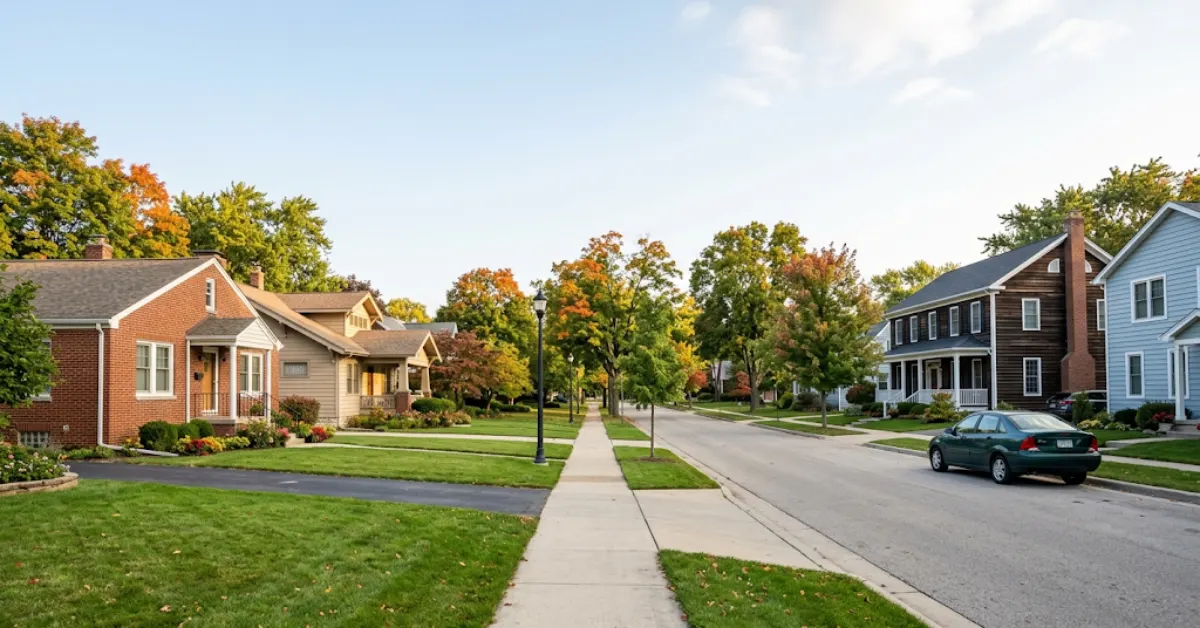
Homer, Illinois is a small village in Champaign County with a low volume of reported crime in recent local data. Most incidents recorded in 2026 are arrests and minor offenses, and no shootings appeared in the latest three-month window.
Public data on a village this size is thin, so use it as one input alongside local police information and your own visits.
Is Homer Illinois Safe for Families Today?
Homer is a village of roughly 1,200 residents in Champaign County, about a short drive from the University of Illinois campus in Urbana. Most people who move there are looking for quiet streets, lower housing costs, and a slower pace than a larger city offers. Safety is usually the first question buyers and renters ask, and the answer depends on what data you read and how you interpret it.
Based on the available records, Homer reports very little serious crime. Small villages often have few incidents in any given month, so one or two reports can shift the percentages a lot. That is why a single statistic rarely tells the full story.
What the Latest Crime Numbers Show
SpotCrime, a crime mapping service that compiles reports from local police agencies and news sources, shows a small number of incidents for Homer in the spring of 2026. The service recorded four incidents in April, two in May, and one in June. Arrests made up most of those records, and one assault was logged. The service also reported zero shootings, arson, robbery, or burglary in the three-month window.
Those counts come from a radius drawn around the village centre, not the official village boundary. The June figure may also be incomplete, since reports often arrive days or weeks after an incident. Read the numbers as a rough picture, not a precise count.
The OpenCrime database tells a different story about timing. Its Homer page contains only one year of data, from 2020, and lists zero violent crimes for that year. Because the data is old, it says little about current conditions, but it does show that the village is very small and that most crime databases have few records for it.
Why Small Village Data Can Mislead
Crime rates per 1,000 residents are unstable in very small places. If a village of 1,200 people records three property crimes in a year, the rate jumps to 2.5 per 1,000 residents, which can look alarming next to a city average. Two incidents in a different year could produce a much lower figure, even though nothing about daily life has changed.
Reporting habits also matter. Some incidents never reach police, and some agencies submit data to the FBI more consistently than others. Jeff Asher, a crime data analyst, has written that Illinois has had long-running problems reporting accurate figures to the FBI. His 2025 analysis argued that state totals can understate certain crimes, which affects how far any single statistic can be trusted.
Name matching is another source of confusion. Searches for “Homer” often return results for Homer Glen, a much larger suburb in Will County, or Homer, New York. Confirm that any figure you cite refers to the Champaign County village before you publish it.
Crime Types You Are Most Likely to Encounter
In a community with low reported crime, the most common concerns tend to be property issues rather than violent crime. Based on the incident mix in recent local data, residents should expect the following:
- Vehicle break-ins and theft from unlocked cars, which are common across rural and small-town areas
- Package theft from porches, especially in neighbourhoods with limited sight lines
- Minor vandalism and occasional disturbances tied to traffic or late-night activity
- Scams, which often target older residents by phone or email
Each category has simple prevention steps. Lock vehicles, keep garage doors closed, and set up delivery notifications so packages do not sit outside. Good lighting near entrances also discourages most opportunistic crime.
Where Homer Stands Within Illinois
Illinois as a whole carries a heavier crime burden than many states, largely because of violent crime in Chicago and a few other large cities. Comparing Homer to Chicago is not useful, because the two places differ in population, density, and reporting systems. A better comparison is with other small villages in central Illinois, where most homes sit on quiet residential blocks.
Asher’s analysis also notes that statewide trends can hide local differences. A county or state that looks worse on paper may have villages where residents face very little serious crime. Homer falls into that second group based on the limited data available.
Checking Sex Offender Registry Information
Families often want to know whether registered sex offenders live nearby. The Illinois State Police maintains a public sex offender registry that you can search by address or city. One aggregator listed two registered offenders living in Homer as of September 2026. Check the official state registry directly before making decisions, since third-party sites update on different schedules.
Use registry information to make informed choices, not to label neighbours. Registration reflects a past conviction and rules that apply to specific offenses, and the registry does not describe every risk a person poses. Pair it with general safety offences such as locking doors and knowing your neighbors.
Practical Steps for Staying Safe in Homer
Start with a visit at different times of day. Walk neighbours’ streets after dark, check how the parking areas near your target home look, and notice whether neighbours keep their properties well maintained. These observations often tell you more than a crime map.
Next, contact the Homer Village Hall or the Champaign County Sheriff’s Office to ask about neighborhood watch programs, recent incident summaries, and any community alerts. Many small agencies respond directly when residents ask.
Finally, look at the property itself. Test locks, check exterior lighting, and confirm that windows and doors latch properly. If you are buying, a home inspector can flag weak points that a thief might target. Strong basic security costs little and protects against most of the risks that small villages face.
For buyers weighing the wider financial picture, our guide on minimize financial risks of property ownership covers how to protect your investment beyond physical security. Many readers also want to understand how a home’s design influences its feel and safety. Our article on 2000s Tuscan house explores layouts and exterior features you may want to review on a tour.
FAQs
Is Homer, Illinois a safe place to raise children?
Available data shows very few serious crimes in recent years, and most reported incidents involve property or arrests rather than violence. Parents should still visit the village, talk with residents, and check current police updates before deciding.
Where can I find the most current crime information for Homer?
Start with the Champaign County Sheriff’s Office and the Illinois State Police. Crime mapping services can help, but they draw on incomplete and sometimes outdated reports.
Does Homer have a high crime rate compared with the rest of Illinois?
No. Small rural and village communities in central Illinois generally report far fewer incidents than large cities, and Homer’s recent records are consistent with that pattern.
Are there registered sex offenders in Homer?
Public registry data shows a small number of registered individuals. Check the Illinois State Police registry directly for an accurate, up-to-date count and addresses.
What should I do if I feel unsafe in a specific area?
Contact local law enforcement for a non-emergency assessment, ask neighbors about their experiences, and consider a different time of day for your visit. If you ever feel in danger, call 911.