

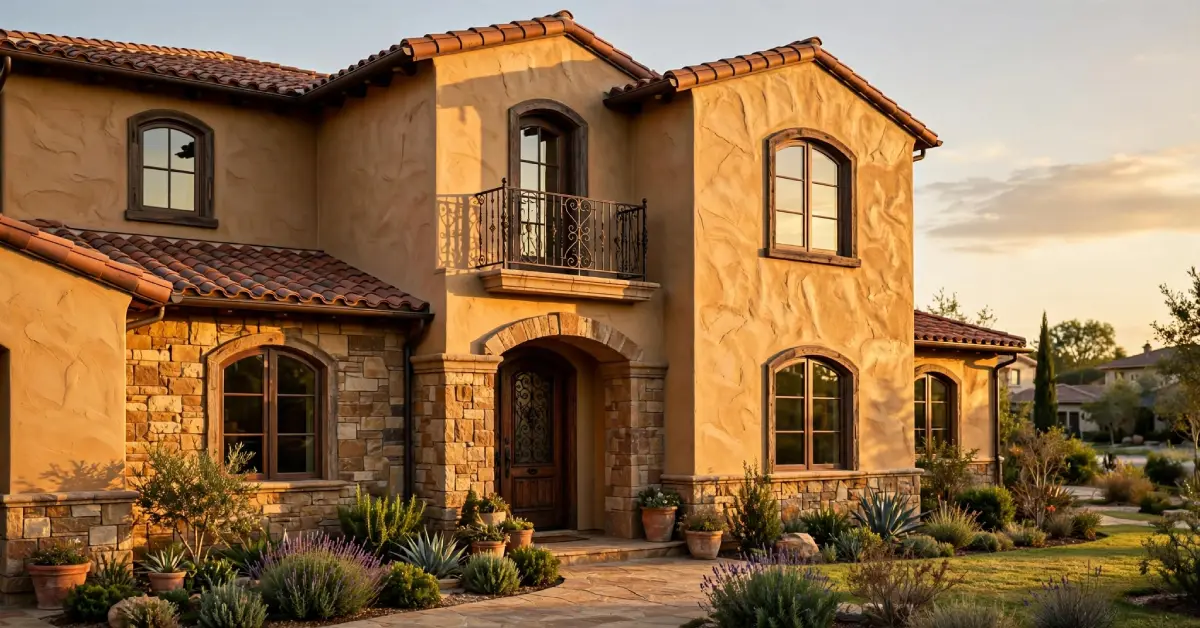
Walk into a house built between 2000 and 2008, and there’s a good chance you’ll recognize the pattern before anyone tells you the decade. Arched doorways. A stone or stucco exterior. Dark wood cabinets with iron pulls. A kitchen island big enough for a small dinner party. That’s the 2000s Tuscan house, and it’s one of the most recognizable residential styles from the era.
The look borrowed heavily from the villas and farmhouses of Tuscany and the broader Mediterranean coast, but it was filtered through American suburban building trends and scaled up for larger, newer neighbourhoods. The result was warm, dramatic, and built for entertaining, with rich colours, textured walls, and a strong sense of old-world craftsmanship.
This guide covers what actually defines the style, how to spot one, what the exterior and interior typically include, and how the classic 2000s Tuscan kitchen came together. It also covers something most articles skip: a practical path for bringing a Tuscan house into a more current look without stripping away everything that makes it interesting.
What Is a 2000s Tuscan House?
A 2000s Tuscan house is a home built in that decade using design cues inspired by Tuscan and Mediterranean architecture. It wasn’t an exact copy of Italian farmhouses. It was an American interpretation, shaped by production builders and custom home designers who wanted to sell buyers a sense of luxury and permanence.
The style leaned on a specific set of materials and shapes: warm earthy colours, stucco and stone exteriors, arched openings, dark wood finishes, and wrought iron accents. Interiors often had tall ceilings and large open rooms meant to feel grand rather than cosy.
At its core, the style was about warmth, texture, and the feeling of an old-world villa, even in a house that was brand new.
How the 2000s Tuscan Style Became Popular
A few forces pushed this style into mainstream popularity during the early 2000s.
Buyers wanted something that felt more established and formal than the beige tract housing of the 1990s. Old-world European design, especially Tuscan and Mediterranean influences, offered that sense of history and craftsmanship, even in a new build. Home sizes were also growing, and builders needed a design language that could fill larger square footage without feeling empty. Heavy arches, tall entries, and oversized kitchens did exactly that.
Entertaining played a role too. Open kitchens with large islands and connected living spaces fit how families were using their homes at the time, and Tuscan style gave those spaces a formal, finished look.
How to Recognise a 2000s Tuscan House
If you’re trying to identify one, look for this combination of features:
- Stucco exterior, often in warm tan or gold tones
- Natural stone or stone-look accents near the entry
- Terracotta or clay-style roof tiles
- Arched windows, doorways, or entryways
- Wrought iron railings, light fixtures, or door hardware
- Dark stained wood throughout the interior
- A warm, earthy colour palette
- Travertine or tile flooring, often with visible grout lines
- Decorative wall niches
- A large kitchen and open living area built for gathering
If a home checks most of these boxes, it’s very likely a 2000s Tuscan build.
2000s Tuscan House Exterior Features
The exterior is usually the first giveaway. It was designed to look substantial and old-world from the street.
Stucco and Stone Exterior Walls
Most homes used a stucco finish, often paired with real or manufactured stone accents around the entry, base of the house, or chimney. The stucco itself had a textured, slightly uneven look meant to mimic hand-applied plaster. Exterior colours stayed warm: tan, gold, terracotta, and soft brown were the standard palette.
Terracotta and Clay-Tile Roofs
Roofs typically used terracotta or clay-style tiles in red, orange, or brown tones. Rooflines were often broken up into multiple sections at different pitches, which added to the villa-like, layered look rather than a single simple roofline.
Arched Windows and Large Entry Doors
Arched openings were one of the clearest style markers. Windows, doorways, and sometimes entire porticos used rounded tops instead of standard rectangles. Entry doors were heavy, often with dark wood or wrought iron detailing, and window frames leaned dark to match.
Columns, Pillars, and Wrought-Iron Details
Entry columns, porch pillars, and iron railings on balconies or stairs were common. Ironwork also showed up in light fixtures, gates, and decorative window grilles, reinforcing the handcrafted, European feel builders were going for.
Courtyards, Patios, and Outdoor Living
Many 2000s Tuscan homes included a covered patio, a courtyard-style entry, or a dedicated outdoor dining area. Fountains and stone seating walls were common upgrades, especially in warmer climates where outdoor living space carried real value.
Tuscan Landscaping and Exterior Lighting
Landscaping tended to use warm-toned plants, stone pathways, and terracotta planters rather than lush green lawns. Exterior lighting was usually warm and low, meant to highlight architectural details like arches and stonework after dark.
2000s Tuscan House Interior Features
Inside, the goal was the same as outside: warmth, texture, and a sense of weight and permanence.
Warm Earthy Colour Palette
Interior walls typically used beige, cream, warm white, terracotta, rust, olive green, or golden brown. These colours worked together to create a cohesive, layered look across rooms rather than sharp contrast between them.
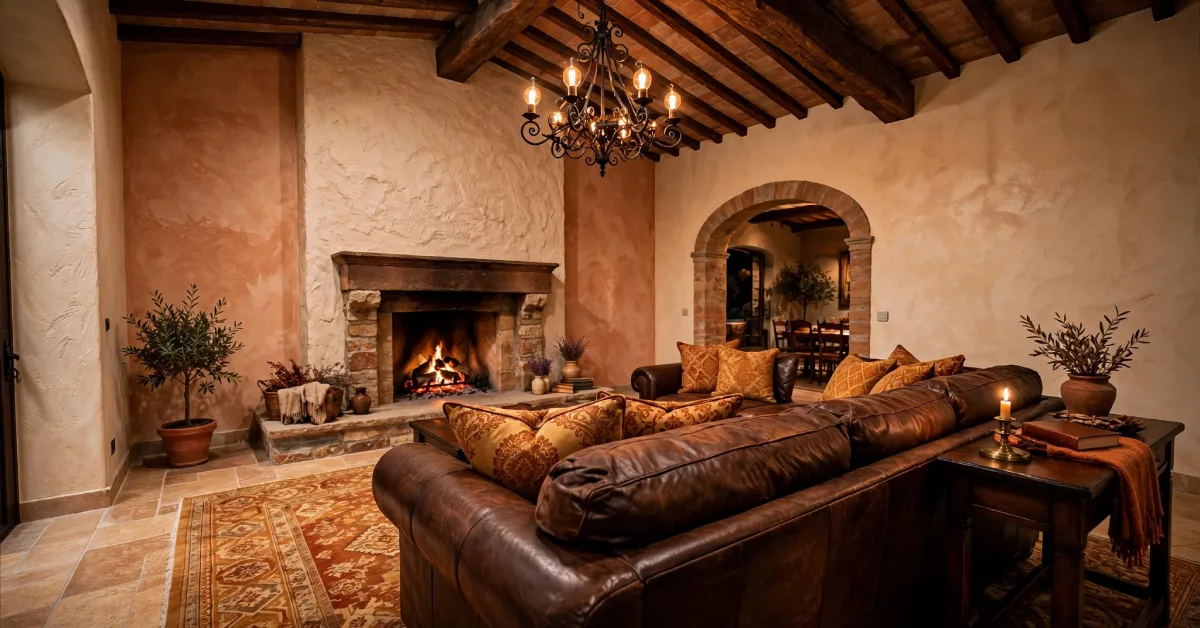
Textured Walls and Faux-Plaster Finishes
Many homes used textured or faux-plaster wall finishes to mimic aged Italian stucco. These finishes added visual depth but also made walls harder to update later, since a smooth, modern look usually requires skim-coating or refinishing.
Travertine, Tile, and Natural Stone Flooring
Flooring commonly used travertine, terracotta tile, or other natural stone, often with wide grout lines that added to the rustic look. Some homes mixed in marble in bathrooms or formal areas for extra polish.
Dark Wood and Rustic Furniture
Furniture and cabinetry leaned dark and substantial. Dark-stained wood, leather upholstery, and rustic finishes were standard, with an emphasis on large, statement pieces rather than lighter, more minimal furniture.
Arches, Beams, Corbels, and Built-In Niches
Interior arches often carried through from doorways into hallways and room transitions. Exposed wood ceiling beams, decorative corbels, and built-in wall niches for art or decor added architectural interest without relying on paint or wallpaper.
Wrought-Iron Lighting and Decorative Details
Chandeliers, sconces, and stair railings frequently used wrought iron to match the exterior detailing. Hardware throughout the home, from cabinet pulls to light switch covers, tended toward heavier, more ornate designs.
The 2000s Tuscan Kitchen
The kitchen is where the style shows up most strongly, and it’s usually the room homeowners care most about updating.
Dark Wood Tuscan Kitchen Cabinets
Cabinets were almost always dark-stained wood, often with raised panel doors, decorative moulding, and ornate hardware. Some kitchens layered in glazing or distressing to add an aged look.
Granite and Stone Countertops
Granite was the standard countertop material, usually in busy, multi-toned patterns that matched the warm palette. Edges were often thick and heavily detailed rather than simple and clean.
Decorative Tile Backsplashes
Backsplashes leaned into pattern, using decorative tile in earthy tones, sometimes with a mosaic accent strip or a decorative border above the range.
Large Kitchen Islands and Open Layouts
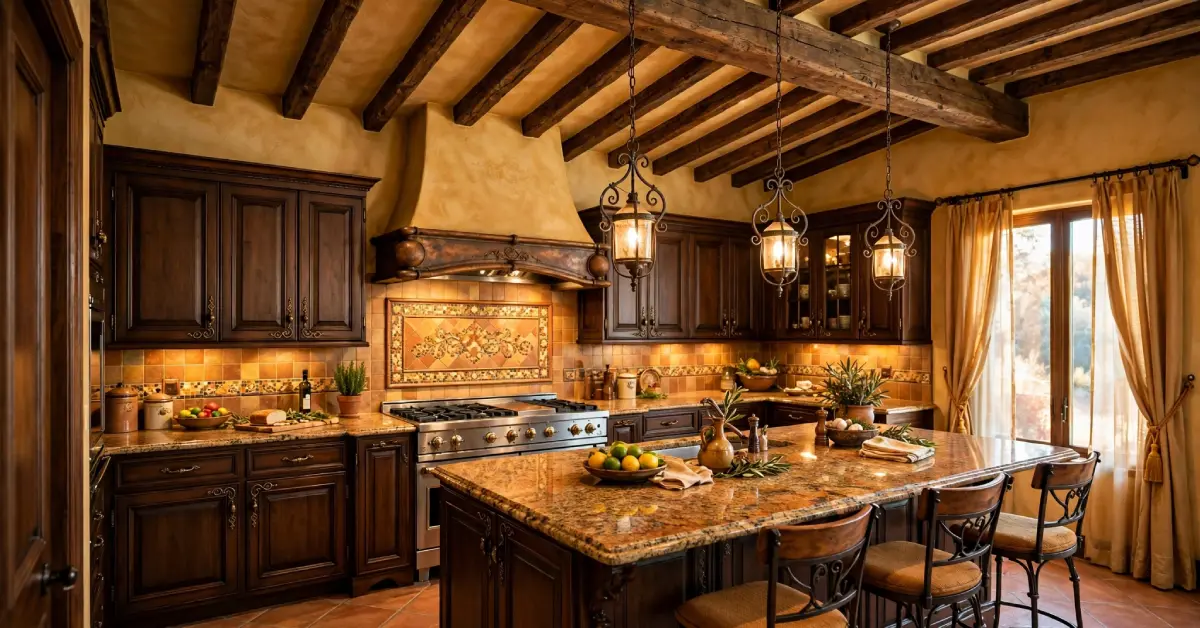
Kitchens were built around entertaining, with large islands, open sightlines to the living area, and enough counter space to host a crowd. This part of the layout tends to hold up well, even when the finishes feel dated.
What Still Works in a 2000s Tuscan Kitchen
Not everything needs to go. Solid wood cabinetry, a well-planned layout, natural stone, and a generous island are all things newer kitchens still aim for. If these elements are in good shape, they’re worth keeping and building around.
What Makes a Tuscan Kitchen Look Dated?
The kitchen usually starts to look dated when there’s too much going on at once: heavy dark finishes everywhere, aggressive distressing, a busy backsplash, excessive ornate hardware, and dim, yellow-toned lighting. It’s rarely one feature causing the problem. It’s the accumulation.
2000s Tuscan House Living Room and Other Spaces
Tuscan Living Room
Living rooms typically centred on a fireplace, with dark wood details, comfortable oversized furniture, warm lighting, and a traditional chandelier or iron light fixture overhead.
Tuscan Dining Room
Dining rooms were formal, built around a large wood table, heavy chairs, and decorative overhead lighting suited to hosting bigger gatherings.
Tuscan Bedroom
Bedrooms carried the same warm colours and textured walls as the rest of the house, paired with wood furniture and layered textiles like heavier drapes and patterned bedding.
Tuscan Bathroom
Bathrooms used stone and tile finishes, warm colour tones, and decorative fixtures that matched the rest of the home’s Tuscan-inspired materials.
Entryway and Foyer
Entryways were often designed to make a first impression, with tall ceilings, arched openings, columns, and a statement light fixture hanging above.
2000s Tuscan House Plans and Layouts
Common Floor Plan Features
Floor plans from this era tended to be spacious, with large gathering areas, a tall entry foyer, a formal dining room, and wide hallways connecting the main living spaces.
Open Kitchen and Living Areas
Kitchens usually opened directly into a family room, reflecting the family-oriented, entertaining-focused design priorities of the time.
Bedrooms and Primary Suites
Primary suites were typically large and separated from secondary bedrooms, giving homeowners more privacy within an otherwise open layout.
Indoor-Outdoor Connections
Covered patios, courtyards, and clear sightlines to the backyard were common, extending the living space outward for entertaining.
How to Modernise an Outdated Tuscan Floor Plan
If the layout itself feels closed off or inefficient, focus on improving circulation first. That might mean opening a wall between the kitchen and a formal space, resizing an oversized island, or converting an underused formal room into something more flexible, like a home office. The goal is to improve function while keeping the architectural features that give the house its character.
Are 2000s Tuscan Houses Still Popular?
Do Tuscan Style Houses Still Exist?
Yes. Plenty of 2000s Tuscan homes are still on the market, particularly in the Southwest, Southeast, and other regions where the style was widely built. Many have already been partially or fully renovated by previous owners.
Is Tuscan Style Coming Back?
A lighter, more restrained version of Tuscan style has been showing up again, especially in Mediterranean and Spanish-influenced new construction. This modern take uses the same bones, arches, natural materials, and warm tones, but pulls back on ornamentation and heavy furniture in favour of a cleaner look.
Classic 2000s Tuscan vs. Modern Tuscan
| Classic 2000s Tuscan | Modern Tuscan |
|---|---|
| Dark colors | Warm neutrals |
| Heavy furniture | Simpler furniture |
| Ornate details | Restrained details |
| Busy finishes | Cleaner finishes |
| Heavy lighting | Layered lighting |
| Themed decor | Natural materials |
How to Modernise a 2000s Tuscan House
This is the part most homeowners actually need. The style itself isn’t the problem. It’s usually the buildup of dark, heavy, and ornate choices layered on top of it. Here’s how to bring it forward without gutting the house.
Keep the Architecture and Simplify the Finishes
Arches, quality stone, tall ceilings, and good wood beams are worth preserving. These are structural and architectural features that would be expensive to recreate. The goal is to reduce visual heaviness around them, not remove them.
Choose a Lighter Warm-Neutral Colour Palette
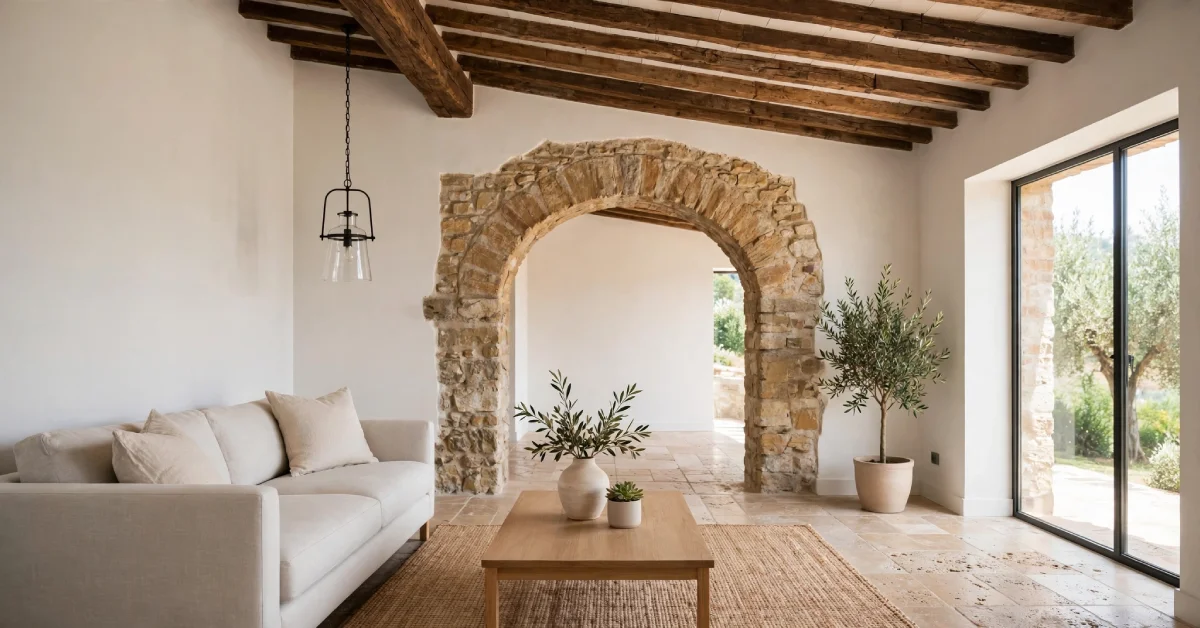
Swap dark, saturated wall colours for warm white, soft cream, or a gentle greige. Keep a few muted earthy accents rather than dropping warmth entirely, since a stark white palette can clash with stone and wood finishes that are staying put.
Update the Kitchen Without Replacing Everything
If the cabinets are solid wood in good condition, consider keeping the boxes and doors while replacing hardware and simplifying the backsplash. New countertops and better lighting can shift the whole feel of the room without a full remodel.
Modernise Lighting and Hardware
Swap heavy, ornate fixtures for simpler ones, and layer in more light sources rather than relying on one dominant fixture. Warmer, brighter bulbs make a bigger difference than most homeowners expect.
Update Dated Flooring
Evaluate existing travertine before ripping it out. Regrouting can clean up a tired-looking floor, and area rugs can soften the look in living spaces. Full replacement should be a last resort, since it’s one of the more expensive updates on this list.
Simplify Heavy Decorative Elements
Reduce ironwork scrollwork, remove Tuscan-themed decor items, and simplify or repurpose built-in niches instead of filling them with heavy accessories. Less decoration lets the architecture speak for itself.
Refresh Window Treatments
Heavy drapes are one of the fastest ways to date a room. Lighter fabrics and cleaner hardware immediately modernise a space without touching walls or flooring.
Modernise the Exterior Without Losing Its Character
A fresh coat of paint in a lighter warm tone, simplified exterior lighting, and updated landscaping can shift curb appeal significantly, while arches and quality stonework stay exactly where they are.
Modern Tuscan Decorating Ideas
For homeowners who want to lean into a refreshed version of the style rather than move away from it entirely, a few ideas work well together.
Use warm neutrals and natural materials as the base of the room. Combine wood, stone, linen, and ceramic textures instead of relying on one dominant material. Curved furniture, like a rounded sofa arm or an arched mirror, echoes the architectural arches without adding bulk. Choose simpler, more modern light fixtures that still carry warm-toned finishes like brass or aged iron. Rugs and textiles can soften hard stone floors without replacing them. Outdoors, a more relaxed patio setup with simple furniture and greenery keeps the Mediterranean feel without the formality of the original design.
What to Keep vs. Replace in a 2000s Tuscan House
Tuscan Features Worth Keeping
- Arches
- Real stone
- Quality wood millwork
- Ceiling beams
- Interesting rooflines
- Natural materials overall
Features That Usually Need Updating
- Dark, saturated paint
- Heavy, ornate lighting
- Excessive faux finishes
- Overly ornate hardware
- Themed decorative items
Features That Can Simply Be Simplified
- Wall niches
- Ironwork
- Decorative trim
- Oversized furniture
- Busy surface patterns
Common Mistakes That Make a Tuscan House Look Dated
A few patterns show up again and again in homes that feel stuck in the 2000s.
Too much brown and dark paint across every surface is the most common one. Layering rustic finishes without a break- dark wood, dark tile, dark cabinets, and dark furniture all in one room- adds up fast. Leaning too heavily on Tuscan-themed decor, like wine-and-grape motifs or heavy tapestries, also tends to date a space quickly. Poor lighting makes every other issue worse, since dim, warm bulbs alone can make a room feel older than it is. On the other end, stripping out every architectural detail to force an ultra-modern look often removes the very features that made the house interesting in the first place.
Buying a 2000s Tuscan House Today
Are 2000s Tuscan Houses Still Available?
Yes, particularly in markets where the style was heavily built during that period. Many are now selling as older resale homes, some updated and some still in original condition.
What to Check Before Buying
Before making an offer, it’s worth checking the condition of the stucco for cracking, the roof and tile for age and wear, any signs of past water intrusion around arches or balconies, the state of the kitchen and bathrooms, the HVAC system’s age, and the condition of the windows.
Renovation Costs to Consider
Kitchen updates, flooring, exterior repairs, roof work, lighting, and any structural or layout changes should all factor into your offer and budget planning.
How to Evaluate Price vs. Renovation Potential
A home with strong architectural bones, good stonework, solid cabinetry, and quality beams tends to be worth a higher price even with dated finishes, since those finishes are far easier and cheaper to update than the structure itself.
Conclusion
A 2000s Tuscan house is built around a clear set of features: stucco and stone exteriors, arched openings, dark wood, wrought iron, and warm, textured interiors designed for entertaining. The style itself isn’t the issue. What tends to date these homes is an overload of dark finishes, heavy ornamentation, and themed decor layered on top of good architecture.
The most effective approach is to keep what’s structurally and architecturally strong, simplify what’s overdone, and refresh what’s genuinely worn out. Arches, natural stone, and solid wood can all work beautifully in a home that feels current, without erasing the character that made the house stand out in the first place.
FAQs
What makes a house Tuscan style?
A combination of stucco or stone exteriors, arched openings, terracotta roofing, wrought iron details, dark wood interiors, and warm earthy colours throughout.
When were Tuscan homes popular?
The style was most common in new construction from the early to mid 2000s, roughly 2000 through 2008.
Are 2000s Tuscan houses outdated?
Some finishes feel dated today, but the architecture itself- arches, stone, and solid materials- still holds up well and can be refreshed rather than replaced.
Is Tuscan style coming back?
A lighter, more restrained version is showing up in current Mediterranean-influenced design, using the same architectural language with less ornamentation.
Do Tuscan style houses still exist?
Yes, they’re widely available on the resale market, especially in regions where the style was popular during the original building boom.
Is a house built in 2000 considered old?
Not structurally. A house from 2000 is generally in the middle of its usable life for most major systems, though finishes from that era often need updating.
How do you modernise a 2000s Tuscan house?
Keep the architecture and quality materials, lighten the colour palette, update lighting and hardware, and simplify decorative details rather than removing everything.
Can you modernise a Tuscan house without painting everything white?
Yes. A warm neutral palette, like soft cream or greige, keeps the house feeling cohesive with existing stone and wood while still looking current.