

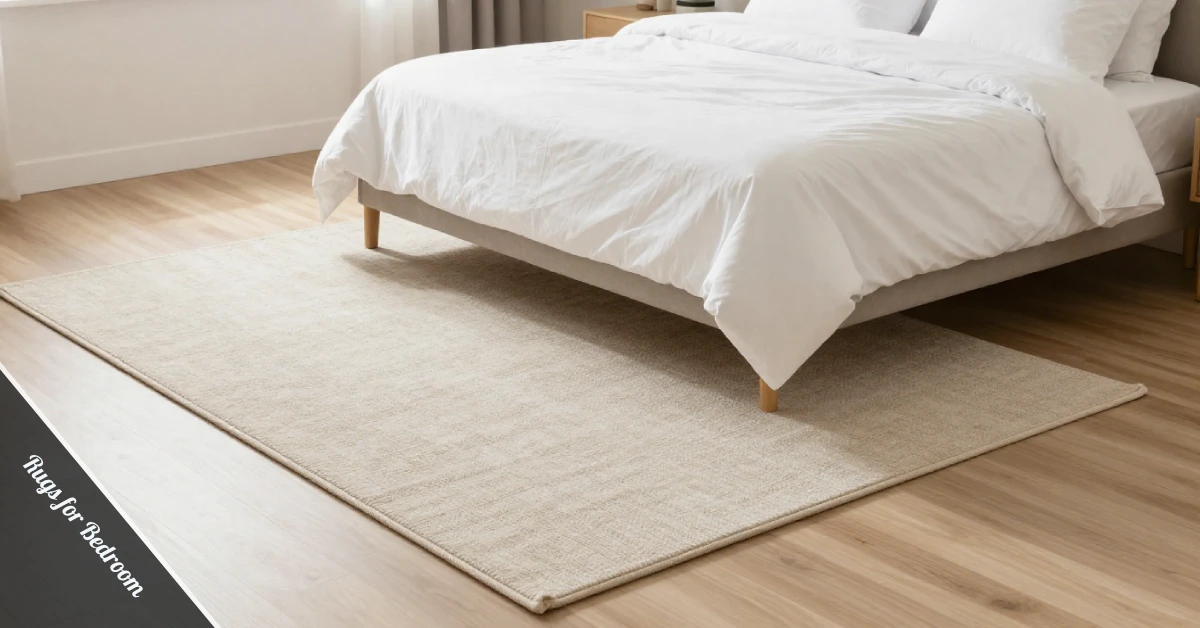
Choosing the right rug for your bedroom comes down to three things: size, material, and placement. Your rug should extend at least 18 to 24 inches beyond the sides and foot of your bed. Wool and high-pile synthetic options work best for comfort underfoot. Match your rug size to your bed size, and position it so you always step onto something soft first thing in the morning.
Why Your Bedroom Needs a Rug
Does your bedroom floor feel cold and bare in the morning? A rug changes that immediately. It adds warmth, absorbs sound, and gives your room a finished look.
Bedrooms are low-traffic spaces, which means your rug will last longer and stay cleaner here than anywhere else in your home. That also means you can go for materials that feel luxurious rather than just durable. A good rug is one of the easiest ways to make a bedroom feel pulled together.
The Right Rugs for Bedroom Sizing
Getting the size wrong is the most common mistake people make. A rug that is too small looks out of place and makes your furniture look disconnected.
Experts recommend that your rug should extend at least 18 to 24 inches past both the foot and each side of the bed. This frames your bed, eliminates tripping hazards, and gives you a soft landing every morning.
Here is a quick guide by bed size:
- Twin bed: A 5×8 rug works well, extending enough around the sides for comfort.
- Full bed: A 6×9 rug is the standard choice, sitting under the lower two-thirds of the bed.
- Queen bed: An 8×10 is the most practical option. It covers the full bed, including a headboard against the wall.
- King bed: Go with a 9×12 or larger. A 5×8 will barely clear the sides of a king bed, so skip it entirely.
If your room is small, you have other options. Two 2×8 runner rugs on each side of the bed are easy to lift and clean, and they still give you soft flooring where you need it most.
Three Placement Options That Actually Work
You do not have to center your rug perfectly under the bed. There are three approaches that each work well, depending on your room size and layout.
The first option is placing all your furniture on the rug. This means the bed, nightstands, and any benches all sit on top of it. If you choose this layout, make sure your nightstand legs are included on the rug to avoid wobbling. You will typically need a 9×12 or 10×14 for this to work well.
The second option starts the rug at the base of your nightstands and extends it toward the foot of the bed. This is a good choice for medium-sized rooms where you want the rug to anchor the bed without covering the entire floor.
The third option works best in smaller rooms or when you are working with a tighter budget. Place the rug at the lower two-thirds of the bed so it sits mostly at the foot. This still provides warmth and softness underfoot while keeping the room feeling open and spacious.
Best Bedroom Rug Materials for Comfort
The bedroom is the one room where comfort should come first. You are barefoot here more than anywhere else, so the material matters.
Wool is the top choice. When cared for properly, a wool rug can last for decades, making it a long-term investment that balances style, comfort, and performance. It is soft, naturally insulating, and holds up well even with regular use. The only downside is the price. Wool rugs cost more upfront, but they do not need replacing every few years.
Viscose is a strong second option for bedrooms, specifically. It has a subtle sheen that dresses up the room, and because bedrooms see less traffic and fewer spills than living areas, viscose holds up better here than it would elsewhere.
Synthetic options like polypropylene and nylon are worth considering if budget is a concern. They resist stains, come in a wide range of styles, and feel comfortable underfoot. They do not match the softness of wool, but they are a practical choice for households with kids or pets.
Cotton rugs are affordable and easy to clean, though they wear out faster. They work well in guest bedrooms or rooms that do not see heavy daily use.
How to Pick the Right Bedroom Rug Style
Color and pattern choices affect how large or small your room feels. A few clear principles help here.
If your bedding has a bold pattern, choose a solid or simple rug. If your bedding is solid, a patterned rug adds visual interest without making the room feel cluttered. For very large rugs, stick to neutral colors to maintain calm and avoid overwhelming the rest of the space.
Interior designers in 2024 noted a clear shift away from gray toward warmer neutrals, with beige and cream dominating. The most requested colors were rust and green. These tones work well in bedrooms because they create warmth without being too stimulating.
In terms of texture, shag rugs are making a strong comeback in 2025. Their high-pile texture is ideal for bedrooms where comfort is a priority. Round rugs are also worth considering for smaller bedrooms or rooms where the bed sits against a wall. They soften sharp lines and add an unexpected design element.
Common Rugs for Bedroom Mistakes to Avoid
A few mistakes come up repeatedly, and they are easy to fix once you know what to look for.
Going too small is the biggest one. A rug that barely peeks out from under the bed looks awkward and does nothing for comfort. When in doubt, size up.
Skipping a rug pad is another common oversight. A pad keeps your rug from slipping, adds cushioning, and protects your floor. It also makes the rug feel thicker and more comfortable underfoot.
Keep at least 10 inches between the rug and your nightstands, and aim for at least 12 inches between the rug and the walls. This preserves proportion and stops the room from feeling closed in.
Finally, ignoring pile height is a mistake if you have heavy bedroom furniture. High-pile rugs can make furniture legs sink and become uneven. If your bed frame and dressers are heavy, a low to medium-pile rug is more practical.
FAQs
What size rug do I need for a queen bed?
An 8×10 is the most common and practical choice. It fits the full bed and allows for 18 to 24 inches of rug on each side. If your room is large, a 9×12 gives you more coverage and a more grounded look.
Should the rug go under the bed or in front of it?
Both options work. Placing it under the bed gives the room a more cohesive, layered look. Placing it at the foot of the bed works well in smaller rooms or when you want to show off more of your flooring.
What is the best rug material for a bedroom?
Wool is the top choice for softness and longevity. High-pile synthetic rugs are a more affordable alternative. Avoid jute in the bedroom since it can feel scratchy and does not hold up well in high-moisture environments.
Do I need a rug pad under a bedroom rug?
Yes. A rug pad prevents slipping, protects your floor, and adds extra cushioning. It also helps the rug lie flat and last longer.
Can I use a small rug in a large bedroom?
You can, but it often looks unbalanced. In a large room, a small rug draws the eye to the floor space around it rather than anchoring the bed. If cost is a concern, two runners on either side of the bed look better than one rug that is too small.