

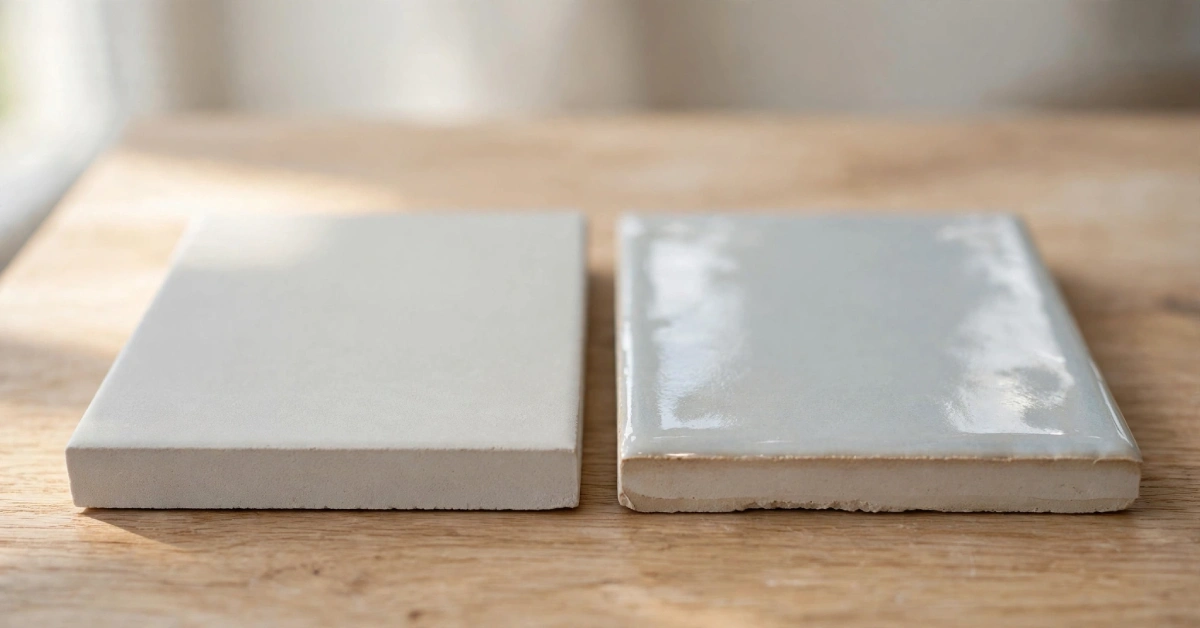
Porcelain tile absorbs 0.5% water or less, while ceramic absorbs more and usually needs a glaze to hold up. That difference decides which tile suits walls, floors, and wet areas. Porcelain handles showers, bathroom floors, and heavy traffic well. Ceramic costs less and performs well on dry walls and light-use rooms.
Walls and floors face very different conditions. A kitchen backsplash deals with cooking splashes and grease, while a bathroom floor handles standing water, foot traffic, and daily cleaning. Choosing one tile for every surface often leads to disappointment. A 2025 survey of 2,000 UK homeowners by flooring retailer Flooring King reported that 60% of respondents had unsuitable flooring for their bathroom. Many people choose tile by appearance and overlook performance.
This guide explains how porcelain and ceramic differ, where each one performs best, and what to check on a product label before you buy. By the end, you will know which tile fits each surface in your home, from shower walls to patios.
What Separates Porcelain From Ceramic Tile
Porcelain is a type of ceramic tile, so both start from clay. The difference comes from how each one is made. Porcelain uses finer, denser clay and fires at higher temperatures. ArchiPro notes that the firing range often reaches 1,200 to 1,300 degrees Celsius, and that heat fuses the material into a dense, hard body with very few open pores.
Ceramic tile uses a coarser clay body and fires at lower temperatures. The result is a more porous tile that usually carries a glaze on its surface to resist stains and water. The glaze protects the top layer, but the body underneath still absorbs more moisture.
Water absorption is the clearest way to tell them apart. Tile Mountain notes that porcelain falls under the BS EN 14411 standard in Group BIa, which means average absorption of 0.5% or less. Many porcelain products test well below that limit. Ceramic absorbs more, and sources do not agree on the exact cutoff, so check the manufacturer’s data sheet rather than relying on the name alone.
The main differences show up in four areas:
- Water absorption: Porcelain stays at or below 0.5%, while ceramic typically absorbs more.
- Density and hardness: Porcelain resists scratches and heavy wear better than most ceramic tile.
- Cost: Ceramic usually costs less per square metre, which keeps budgets manageable.
- Workability: Non-porcelain tile is easier to cut and install, which suits DIY projects around fixtures and corners.
Where Porcelain Tile Performs Best
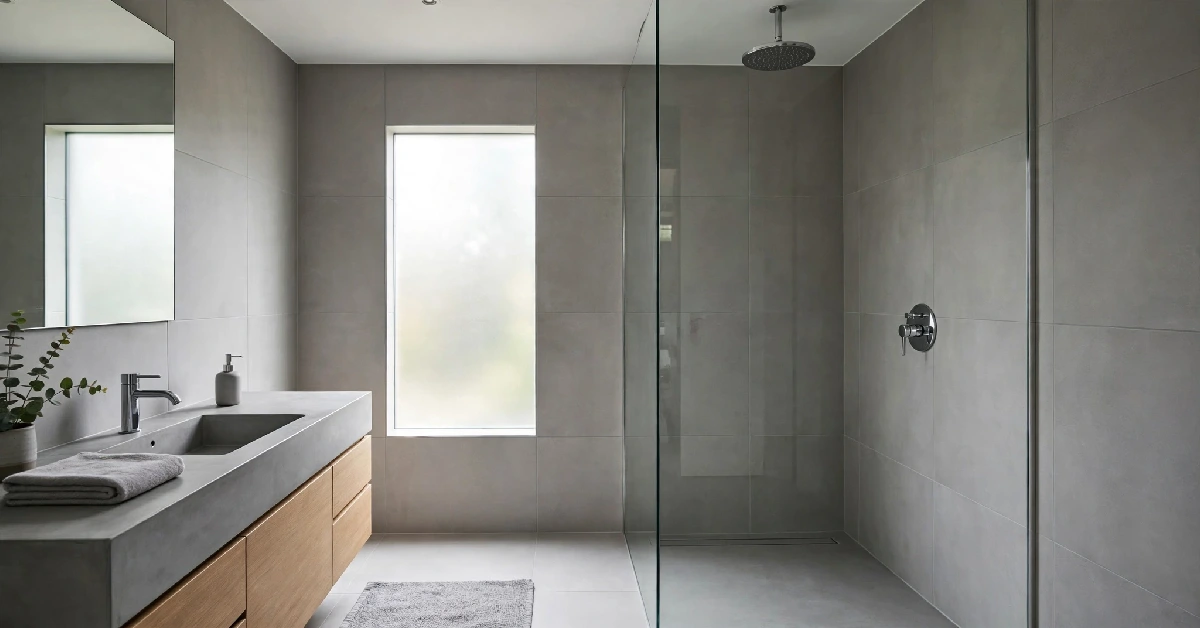
Porcelain suits any area that stays wet or takes heavy use. Shower floors, bathroom walls, and entryways all fit that description. Its low absorption helps it resist stains, mould, and mildew, which build up in damp rooms over time. Tile Bar recommends porcelain for showers and floors for this reason.
Outdoor spaces are another strong match. Porcelain resists freeze and thaw cycles because it takes in very little water. When water soaks into a tile and freezes, it expands and can crack the surface. Low absorption protects patios and exterior walls in cold climates.
Porcelain also works well in large formats. Dense, dimensionally stable tiles hold their shape across big panels, which reduces the number of grout lines and gives floors a clean, open look. Expect higher material and labour costs, though, since porcelain is harder to cut and install.
When Ceramic Tile Makes More Sense
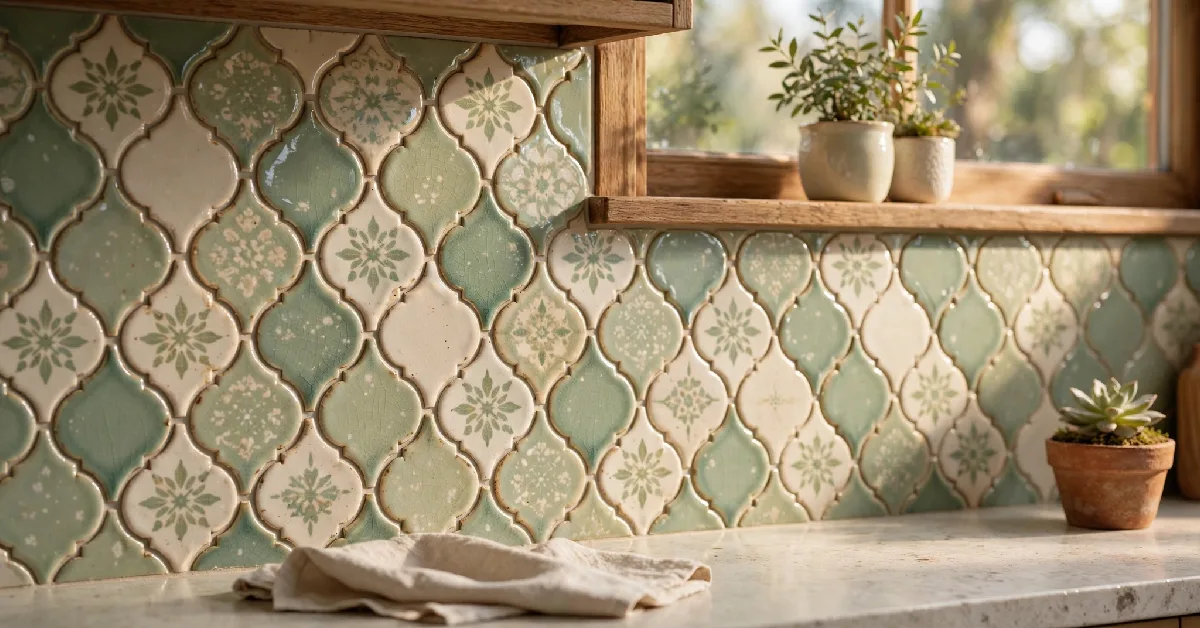
Ceramic tile remains a practical choice in many homes. It works well on drywall, such as a living room accent wall, a fireplace surround, or a kitchen backsplash away from the sink. The lower price stretches a budget, and the wide range of traditional and decorative designs gives you plenty of choice.
Ceramic is also easier to cut. That helps renovators working around radiators, door frames, and wall edges. Glazed ceramic handles light to moderate foot traffic well, so it can suit a guest bathroom floor with limited use or a bedroom floor.
Keep ceramic away from outdoor areas and constantly wet zones. Its higher absorption makes it more vulnerable to freeze and thaw damage and staining in those spots. If you plan a patio or a shower with daily use, porcelain is the safer investment. For more affordable ways to refresh a room, see our guide to budget-friendly decor ideas.
Choosing Tile for Walls, Floors, and More
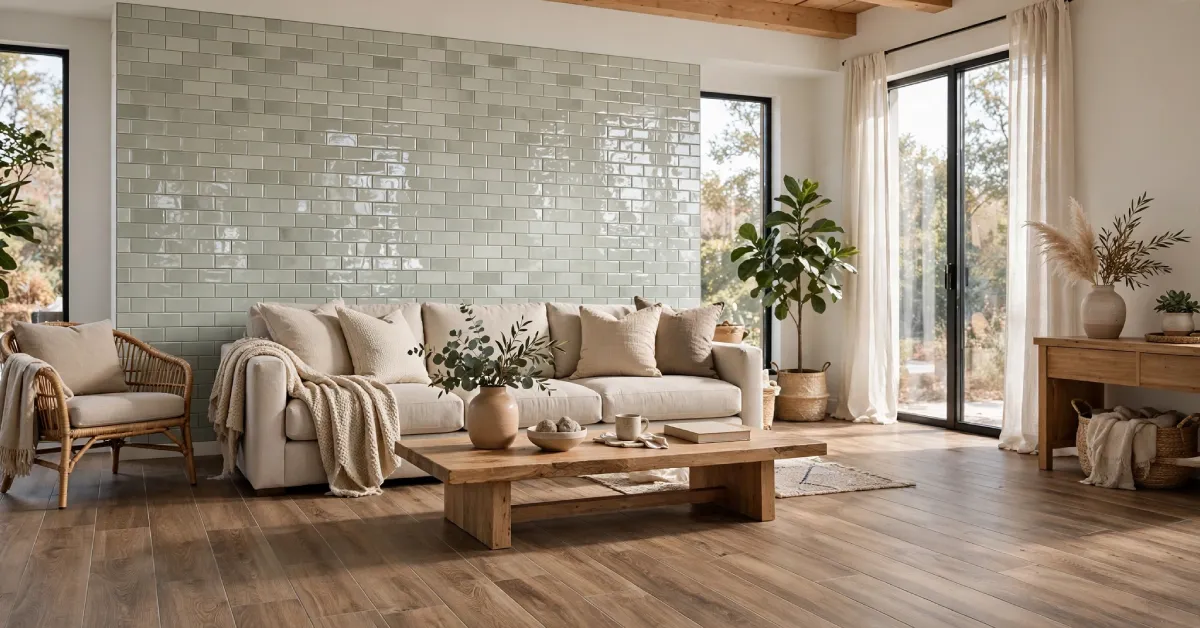
Each room places different demands on tile. Use this quick guide to match the material to the space.
- Bathroom floors and shower walls: Choose porcelain with an absorption rating of 0.5% or lower, since these areas stay wet for long periods.
- Kitchen floors: Porcelain resists spills and heavy foot traffic well, although many homeowners still prefer softer flooring underfoot.
- Kitchen backsplashes and drywalls: Ceramic works well, and glazed decorative options add colour at a lower price.
- Outdoor patios and entryways: Porcelain rated for external use offers the best resistance to frost and wear.
Homeowners weigh comfort and cost alongside durability. In the 2025 UK Houzz Kitchen Trends Study, vinyl was the most popular kitchen flooring at 25%, while porcelain tiles accounted for 16%. Porcelain still has a strong place in kitchens, but many people look for other options too.
For smaller upgrades that pair well with new tile, our guide to front yard ideas that stand out covers exterior touches that frame a patio or entry.
Checking Labels and Standards Before You Buy
Product labels reveal more than the tile name. Look for the water absorption rating first. A figure of 0.5% or lower confirms porcelain under the standard, while a higher figure means ceramic.
Next, check the PEI rating, which indicates surface wear resistance. Higher ratings suit busier floors. Then confirm frost resistance if the tile will sit outdoors. Manufacturers usually list these details on the data sheet, and a short call to the supplier can settle any uncertainty.
Some sources also disagree about where ceramic begins. Certain guides place the boundary at 0.5%, while others treat anything above 3% as the dividing line for more porous ceramic. Since the tested specification determines performance, rely on the measured number rather than the marketing label.
Budgeting Your Tile Project
Tile is only one part of a renovation budget, so plan the whole project early. The 2025 Houzz and Home UK report, based on a survey of registered Houzz users, found that median renovation spending rose from about £17,000 in 2023 to around £21,400 in 2024. Costs like these make it worth choosing tile that will last in the rooms where wear is heaviest.
Set aside a small contingency for surprises under floors and behind walls. Many contractors also suggest buying a spare box or two of the same batch. Tile produced in a different run can vary slightly in shade, and a matching batch can be hard to find years later.
Call to Action
Planning a tile upgrade? Compare your room’s moisture level, traffic, and exposure first, then match the tile to those conditions. Browse our other home improvement guides for more ideas before you buy.
FAQs
Is porcelain tile always better than ceramic?
Not always. Porcelain outperforms ceramic in wet areas, outdoor spaces, and busy floors. Ceramic can be the better value for dry walls and light-use rooms where cost matters most.
Can I use ceramic tile in a shower?
You can, but porcelain is the safer choice for shower walls and floors. Its low water absorption resists moisture, mould, and mildew better over time.
Does porcelain tile need sealing?
Glazed porcelain and ceramic generally do not need sealing. Some unglazed products do recommend a sealer, so check the manufacturer’s care instructions before installation.
Is porcelain more expensive than ceramic?
Usually, yes. Porcelain costs more because of its denser material and higher firing temperatures. Its durability makes it a sound investment in rooms that see heavy use.