

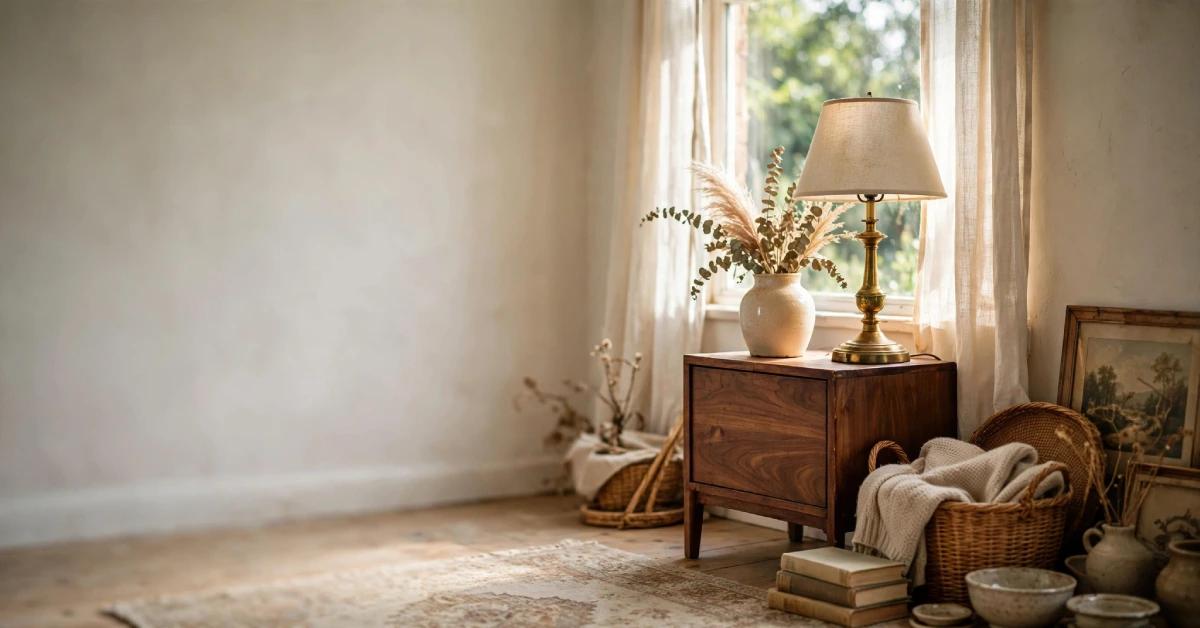
Online thrift stores for home decor sell secondhand vases, lamps, frames, textiles, and furniture through marketplaces and curated websites. Shoppers save money and find one-of-a-kind pieces, but they cannot touch items before buying. Measuring your space, studying photos closely, and reading seller policies help you avoid costly mistakes.
Vintage vases, woven baskets, and mid-century lamps now move through online channels faster than many shoppers expected. People who once searched only local flea markets now browse listings from across the country before breakfast. That shift creates a real opportunity for buyers who know what to look for. This guide explains how online thrift shopping works, where to find reliable inventory, and how to avoid the mistakes that catch first-time buyers.
Why Online Thrift Store Home Decor Is Growing
Secondhand shopping has moved from a niche habit to a mainstream choice. ThredUp’s 2025 Resale Report found that 46% of consumers say they will not buy an item new if they can find it secondhand. Online resale also grew 23% in 2024, nearly double its growth rate from earlier years.
Home decor has joined that momentum. Placer.ai reported that visits to thrift stores rose 39.5% in the second quarter of 2025 compared with the same period in 2019. Market researchers expect the trend to continue. Stratistics MRC projects the global online thrifting market to grow from $19.08 billion in 2025 to $46.59 billion by 2032, a compound annual growth rate of 13.6%.
Three reasons explain most of the interest. Prices are lower than retail, the purchase keeps usable goods out of landfills, and secondhand pieces often have character that mass-produced items lack. A brass candlestick with a warm patina or a solid wood side table with honest wear can make a room feel lived in rather than staged.
Where to Find Quality Pieces Online
Online home decor thrift sources fall into a few groups. Large resale marketplaces host thousands of individual sellers, which gives you the widest selection but the most variation in quality. Curated vintage shops usually inspect and describe their items more carefully, though prices run higher. Many local charity and thrift stores now post inventory online, so you can preview a piece and decide whether the drive is worth it.
Start by evaluating the seller before the item. Look for a steady record of positive feedback, a clear return policy, and listings with multiple photos. A seller who shows only one blurry image of a lamp is asking you to take a risk that you may not be able to see clearly.
If you plan to paint a thrifted dresser or refresh a bookshelf, choose a base colour that works with many finishes. A warm neutral such as Swiss Coffee gives you a flexible starting point. Read our guide to the Swiss Coffee paint colour before you choose a finish.
Checking Condition Before You Click Buy
Condition matters more online than in a store because you cannot run your hand over a surface or check the back of a drawer. Helaine Fendelman, an antiques appraiser and certified member of the Appraisers Association of America, advises buyers to be cautious about purchasing online because a photo rarely shows the entire piece. Her advice is practical: when possible, see the item in person before paying.
When you cannot visit, ask for more information. Request photos of every side, the underside, and any joints or seams. Close-up shots of stains, chips, or repairs tell you far more than a wide-angle does. If a listing does not include a top-down view of a table or dresser, ask for one. Missing photos often hide scratches, rings, or veneer damage.
Ask the seller direct questions. Find out whether the item came from a smoke-free or pet-free home, whether it has any odours, and why the seller is parting with it. Vintage pieces are generally old, so some wear is normal. Damage is different. A loose drawer runner can be repaired, while a warped panel or deep crack may not be worth the effort.
Watch for signs of pests as well. Holes, fine shavings, or dark spots on upholstery can point to woodworm, termites, carpet moths, or bed bugs. Walk away from any item that shows these signs, because a single infested piece can spread problems to the rest of your home.
Measuring and Matching Your Space
Measurements prevent the most common regret in home decor shopping: a beautiful piece that does not fit. Before you browse, record the width, depth, and height of the space you plan to fill. Keep those numbers in your phone so you can check them quickly while shopping on a small screen.
Next, use painter’s tape to mark the footprint of a sofa or cabinet on your floor. This simple step shows how much room a piece will take up and how it affects walkways. Also measure hallways, doorways, and stairwells, since a large item may not reach the room it was meant for.
Elizabeth Brown, CEO of the luxury consignment marketplace Viyet, has long advised buyers to plan rather than wander through stores. Her view is that browsing without a target often leads to impulse purchases that do not serve a room. Compare listed dimensions with your measurements before you save an item to your cart.
Colour and style matter too. Mixing old and new pieces often creates a more personal look, but a few shared tones help the room feel cohesive. Choose one or two finishes, such as brass and walnut, and let the rest of the room follow that palette.
Shipping, Returns, and Hidden Costs
Large decor pieces can cost more to deliver than the item itself. Read the shipping terms before you commit, and confirm whether the seller packs items for transit. A solid crate or padded wrapping protects glass, ceramic, and framed art far better than a thin cardboard box.
Inspect your package the moment it arrives. Photograph the box, the packing materials, and the item from several angles before you unwrap it fully. If the piece arrives damaged, most reputable sellers will work with you on disclosed damage or significant differences from the listing, but they usually expect a quick report. Waiting weeks can limit your options.
Budget for costs beyond the purchase price. Transport, repairs, new hardware, reupholstery, and cleaning can add up quickly. A lamp that costs $30 may need a new cord and shade, while a secondhand armchair may need fabric and professional cleaning. Add these expenses to your total before deciding whether the deal is truly a good one.
Returns deserve the same attention. Check whether the seller accepts returns for items that do not match the description, and find out who pays return shipping. Some vintage sellers sell everything as is, which means you carry more risk and should lower your expectations accordingly.
Common Mistakes to Avoid
Thrift shopping for home decor rewards patience, but a few errors appear again and again. Avoid these five mistakes to save money and frustration:
- Buying without measurements: Even a beautiful sofa becomes a problem if it blocks a doorway or overwhelms a small room.
- Chasing trends instead of personal taste: A piece that feels fashionable today may look dated in two years. Buy what you love, and you will keep it longer.
- Ignoring odours and pests: Smells from smoke, pets, or damp storage can cling to fabric and wood. Pests can spread quickly once they enter your home.
- Overlooking shipping and repair costs: A bargain price can turn into an expensive purchase once transport and restoration are included.
- Filling every corner too quickly: Secondhand finds tempt many shoppers to buy in bulk. Try a one-in-one-out policy so your home does not become a storage space for other people’s belongings.
Final Thoughts
Online thrift store home decor offers real value, from lower prices and sustainable choices to pieces with history and character. The market keeps growing, and more sellers now make it easier to browse from your couch. Success depends on preparation. Measure your space, study every photo, ask direct questions about condition, and factor in shipping and repairs before you buy.
If you are decorating a smaller home, secondhand finds can make a big difference in a compact layout. Oucosyzy apartment ideas guide shows how to balance pieces of different sizes and styles without crowding a room.
Start with one room and a short list of needs. You will learn faster, spend less, and build a home that reflects your taste rather than a catalogue’s.
FAQs
Is it safe to buy home decor from online thrift stores?
It can be, as long as you do your homework. Check the seller’s feedback, read the return policy, and ask for extra photos of any piece that interests you. Be extra careful with items you cannot inspect, and ask about odours, pests, and the item’s history before you pay.
How can I tell whether a vintage piece is damaged or just worn?
Vintage items are usually old, so light wear such as faded finish or small surface marks is normal. Damage includes deep cracks, warped panels, loose joints that cannot be repaired easily, and signs of pests. If a listing does not describe the condition clearly, ask the seller before you buy.
What should I do if my order arrives damaged?
Photograph the packaging and the item from several angles as soon as the box arrives, before you unwrap it fully. Contact the seller quickly and share your photos. Reputable sellers usually handle disclosed damage or major differences from the listing, but delays can limit your options, so act promptly.
Are online thrift home decor finds always cheaper than buying new?
Not always. Add shipping, repairs, new hardware, cleaning, and any upholstery costs to the purchase price before you decide. Once you count these expenses, a piece that looked like a bargain may cost about the same as a new item, so compare the full total before you buy.