

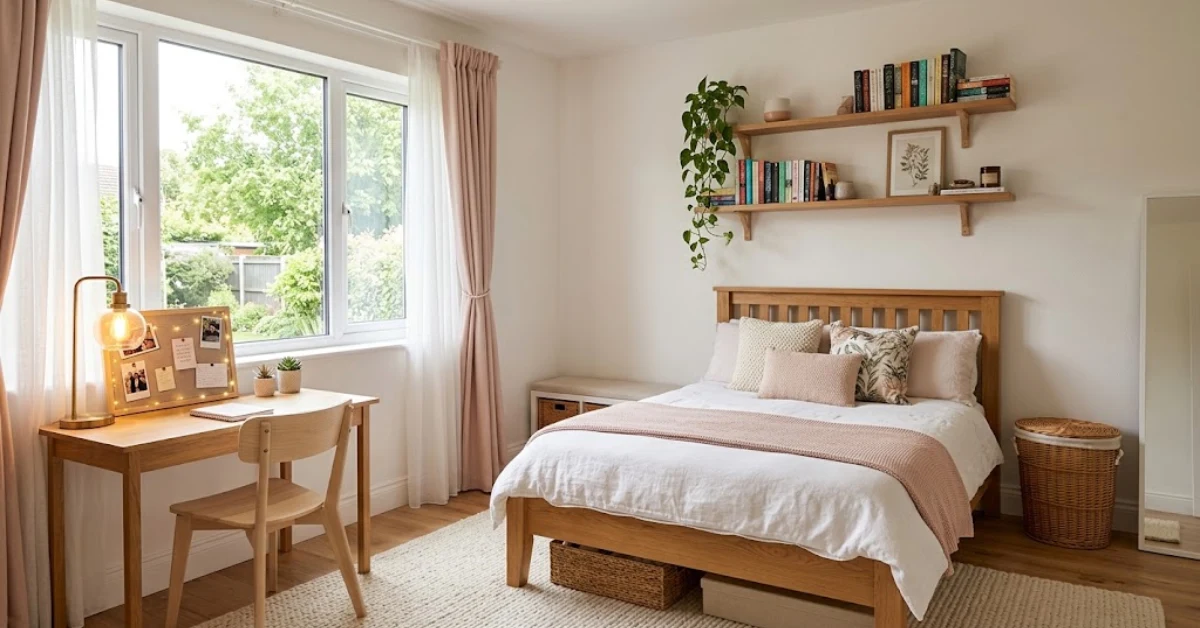
A girl’s bedroom works best when it balances her personality with practical needs like storage, study space, and rest. Start with a colour palette she chooses, pick a sturdy bed and at least one zone for homework or hobbies, and add personal touches she can change over time.
Good lighting and smart storage make a small room feel bigger.
Start With a Girls Bedroom Plan
Few rooms change as quickly as a girl’s bedroom. The space that suits a seven-year-old rarely works for a fourteen-year-old, and a teenager may want something different again by the time she starts university. Planning with change in mind saves money and prevents a full redecorate every couple of years.
Begin by listing how she uses the room. Does she sleep, study, paint, play music, or host friends? Write down each activity and note how much space it needs. This list becomes your guide for every decision that follows, from furniture size to wall colour.
Next, measure the room and sketch a floor plan. Mark windows, doors, radiators, and outlets. Keep at least 90 centimetres of clear walking space around the bed and in front of the wardrobe so the room does not feel cramped.
Choose a Colour Palette She Will Love
Colour sets the mood more than any other element. Involve her in the choice, but guide the process toward a palette that can evolve. A simple approach uses one main wall colour, one or two supporting tones, and a single accent colour for accessories.
Soft neutrals such as warm white, greige, or pale blush create a calm base. Once the walls are settled, she can change her accent colours with bedding, cushions, and rugs without repainting. If she loves bold shades, try them on a single feature wall or inside a built-in shelf unit.
For more ideas on tones that work with different light levels, read our guide to bedroom colours. Rooms that face north tend to look cooler, so warmer shades often help them feel welcoming.
Pick Furniture That Grows With Her
Furniture is the biggest investment in any bedroom, so choose pieces that adapt. A bed frame with a solid base and a simple headboard suits most ages. Avoid heavily themed beds that feel childish within a few years. Instead, look for designs in natural wood or neutral finishes that can take new bedding and accessories as tastes shift.
A desk is equally important as she grows. Even young children benefit from a dedicated surface for drawing or homework. Choose a desk with enough depth for a laptop and an open area for books. Adjustable chairs are a sound choice for older students who spend long hours studying.
Consider a bed with built-in drawers or a platform base with storage underneath. These designs add function without taking up extra floor space.
Smart Storage Ideas for Girls’ Bedrooms
Storage prevents clutter from taking over a room. Girls often accumulate clothes, books, art supplies, and keepsakes, so plan for each category. Wall-mounted shelving frees the floor and gives her space to display favourite objects. Under-bed boxes suit seasonal clothing and out-of-favour toys.
Here are a few practical storage options to consider:
- A wardrobe with adjustable shelves and hanging rails for both long and short garments
- Floating shelves above the desk for books, plants, and framed photos
- Labelled fabric bins on a shelf, so she can tidy up without a major clean-out
- A small chest or bench at the foot of the bed for blankets and cushions
Keep frequently used items within easy reach. If she has to climb to reach her school bag or shoes, tidying becomes a chore she will avoid.
Create a Study and Hobby Corner
Every girl’s bedroom benefits from a defined zone for focused activity. Position the desk near a window for natural light, but keep it away from the bed to help her separate work time from rest time. Even a small corner works if it has a comfortable chair, good lighting, and a pinboard for notes.
If she has a hobby such as painting, sewing, or music, give that activity its own space. A wall-mounted fold-down table, a small rug, or a dedicated storage tub keeps supplies organised and reduces the risk of spills on her bedding.
Many teenagers also enjoy decorating their rooms with digital design ideas. Virtual layouts can spark creative thinking before she commits to physical changes. The popular Bloxburg bedroom ideas collection, for example, shows how layout choices affect the feel of a room, which can help her test options before buying anything.
Lighting and Layout Tips for Small Rooms
Many bedrooms are small, but careful lighting and layout can make them feel open. Combine three light sources: a ceiling fitting for general brightness, a desk lamp for study tasks, and a bedside lamp or wall light for relaxing in the evening. Warm bulbs around 2700K suit bedrooms well because they feel calm at night.
Mirrors help reflect light and add visual depth. Place one opposite a window if possible. Keep the centre of the room open and push larger furniture against the walls. Lighter flooring also makes the space appear bigger than dark carpet or boards.
Limit the number of large items. Two substantial pieces, such as a bed and a wardrobe, often suit a small room better than four or five smaller ones that compete for attention.
Decor Ideas for Girls’ Bedrooms by Age
Decor should reflect her current interests without locking the room into one theme. For younger girls, soft textiles, playful lighting, and a reading nook work well. A canopy, a fairy light string, or a shelf of storybooks creates a cosy atmosphere. Keep themed items limited to a few accessories so they are easy to swap later.
Pre-teens often want more say in their décor. Let her choose a gallery wall of prints, posters, or photographs. Easy-to-hang frames and removable adhesive hooks make it simple to rearrange the display. Our article on posters on the wall in a bedroom offers layout ideas for showing off a collection without damaging the paint.
Teenagers usually prefer a room that feels like their own space. Give her control over bedding, cushions, and wall art. A large rug, a statement lamp, and a few plants can make the room feel personal and grown up.
FAQs
What colors work best for a girl’s bedroom?
Soft neutrals form the most flexible base. Warm whites, soft greys, and muted pinks or greens suit most ages. Use bolder colours on one wall or in accessories so they are easy to change. Test paint samples in morning and evening light before you commit.
How can I make a girl’s bedroom bigger?
Use light colours, reflective surfaces, and multi-purpose furniture. Keep the floor clear, add a mirror opposite a window, and choose wall-mounted storage. Layered lighting also helps a small room feel open and welcoming.
When should I redecorate a girl’s bedroom?
Plan a major update every three to five years, or when her interests change significantly. Keep the largest pieces, such as the bed and wardrobe, in neutral tones. Refresh bedding, wall art, and accessories in between, which costs far less than a full overhaul.