

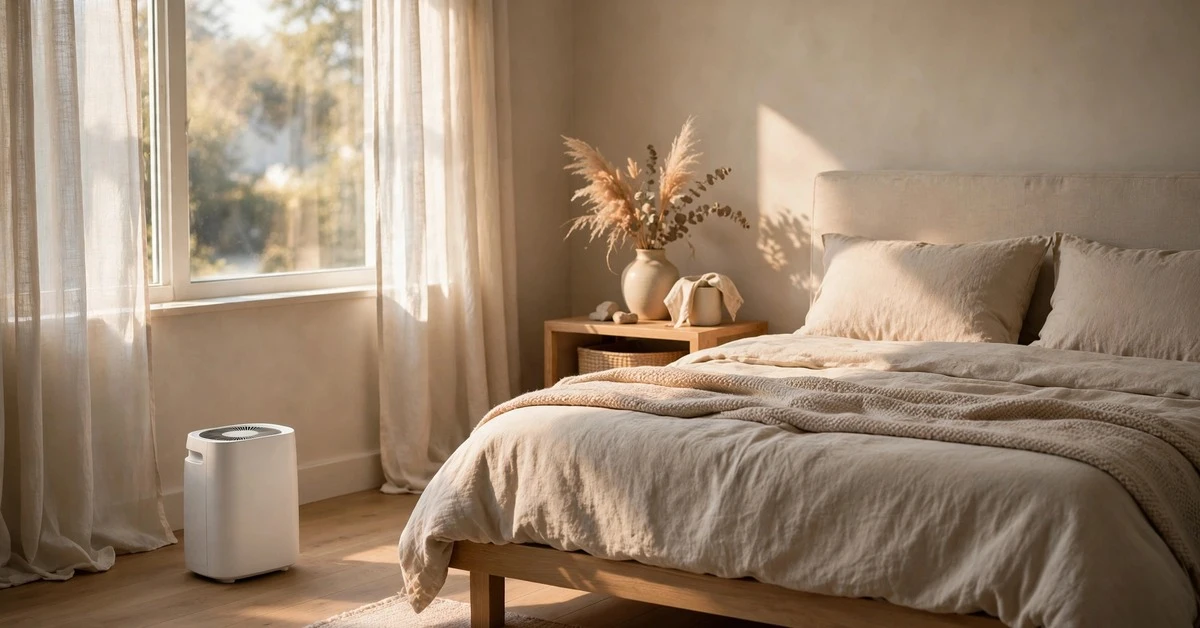
Can an air purifier remove dust? Yes. A unit with a true HEPA filter captures airborne dust effectively, but it cannot clean dust that has already settled on furniture, floors, or carpets. A recent study of occupied homes found that a portable HEPA cleaner cut fine indoor particles by about 60 Percent and coarser particles by about 37 Percent. Pair a purifier with regular vacuuming and dusting for the best results.
Dust returns faster than most people expect. You clean on Saturday, and by Tuesday a fine layer covers the TV stand again. Many homeowners buy an air purifier hoping it will end that cycle. Does it work, and how much can you expect? The answer depends on what you need the device to do and on the habits you pair it with.
Can an Air Purifier Remove Dust?
Yes, an air purifier removes dust from the air, and a model with a true HEPA filter does this well. Household dust is a mixture of fibres from fabrics, skin cells, pet dander, pollen, and fine soil carried in from outside. Many of these particles are small enough to drift for hours, which is why they reach your lungs and settle on every surface.
The limit is where the dust sits. A purifier only works on the air. Dust that has already landed on your shelves, sofa, or carpet stays there until you vacuum or wipe it away. Over time, though, a purifier lowers the amount of dust in the air, which slows how quickly new layers build up.
How Air Purifiers Capture Dust Particles
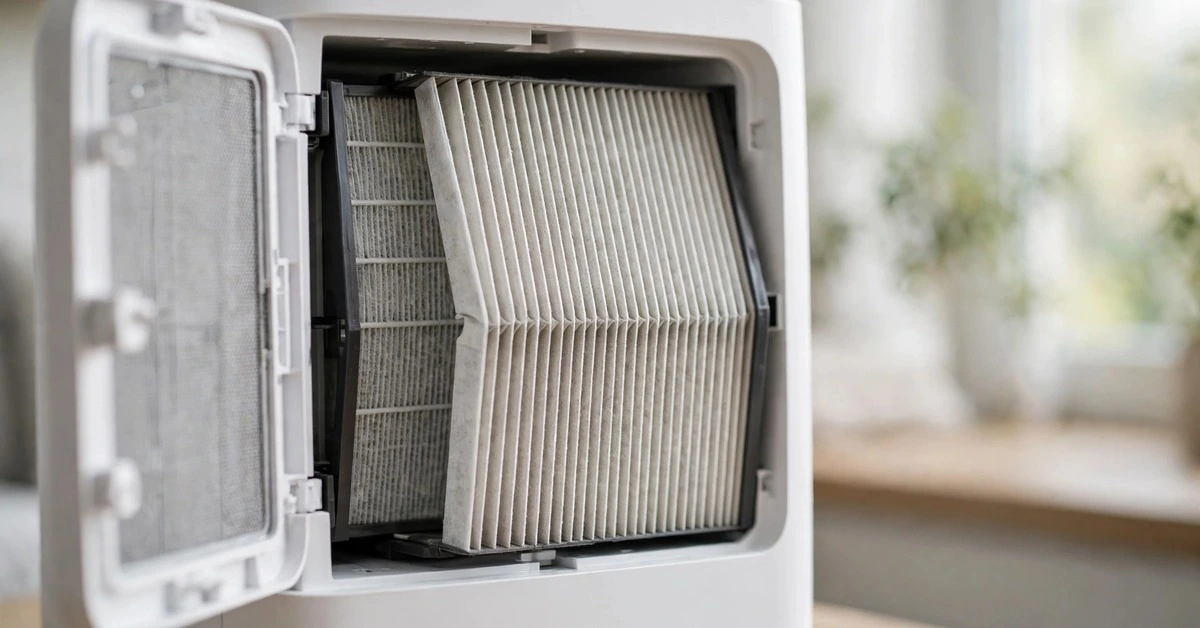
Most home units use a fan to pull room air through several layers. The first layer is usually a pre-filter. It catches hair, lint, and larger fibres so they do not clog the main filter. The main layer is the HEPA filter, a dense mat of fibres that traps particles as air passes through it.
A true HEPA filter must capture at least 99.97 Percent of particles at 0.3 microns. That size is the hardest for a filter to catch. Larger and smaller particles are generally captured at equal or higher rates, so the standard covers most of the dust you will find in a home.
Household dust covers a wide range of sizes. Visible specks of fabric fibre and soil can be tens of microns across, while the smallest particles are only a fraction of a micron. Fine particles stay airborne longest, which is why a purifier is especially useful for the dust you cannot see. Heavier specks drop quickly, so cleaning the surfaces they land on remains necessary.
Many units also include activated carbon. Carbon works on odours and some gases, but it does not trap dust. If dust is your main concern, the HEPA stage does most of the work. Carbon becomes useful when smoke, cooking smells, or chemical odours bother you as well.
When you shop, look for the words “true HEPA” or an H13 rating. Be cautious with vague terms such as “HEPA-type” or “HEPA-like,” because these may not meet the full standard.
What Research Shows About Dust Reduction
Measuring dust directly inside a home is difficult, so researchers often track particle concentrations instead. A recent study of occupied homes tested a portable HEPA cleaner and measured the change in indoor particles. Average fine particle levels (PM2.5) fell by roughly 60 Percent. Coarser particles in the PM10 to 2.5 range dropped by about 37 Percent, and the largest particles fell by about 32 Percent.
The coarser range matters for dust. Many particles that settle on furniture fall into that larger size band, so the result is relevant to household dust. The study did not measure settled dust directly, however, so it shows what happens to airborne particles, not to the layer on your shelves.
Real rooms behave differently from test conditions. Results depend on room size, airflow, how often doors open, and the sources of dust in the home. A unit rated for a small room will struggle to clear the air in a large one. Many studies also run for only a few weeks, so long-term effects are still less clear than the short-term numbers suggest.
Why Dust Keeps Coming Back Indoors
Dust is produced inside your home every day, so a purifier works against a steady supply. The most common sources include:
- Textiles: Bedding, curtains, and upholstery shed fibres as they are used and washed.
- Pets: Dander and hair cling to rugs and furniture, and they spread through the room as the animal moves.
- Outdoor air: Pollen and soil enter through open windows, ventilation systems, and shoes.
- People: Skin cells and hair fall throughout the day, even in tidy homes.
Each source keeps adding particles to the air. A purifier can remove a large share of them, but it cannot stop the supply. That is why cleaning habits remain part of the solution.
Which Air Purifier Features Matter Most
Start with the filter, since it decides how well the unit captures dust. A true HEPA filter should be the first requirement on your list. Next, look at the clean air delivery rate (CADR), which tells you how quickly a unit clears particles from a room. Manufacturers often list a CADR for smoke and dust, and a higher number means faster cleaning.
Match the unit to your room size as well. A purifier rated for a larger space usually runs more quietly at a given speed, which makes it easier to leave on all day. Check the noise level on the setting you plan to use most, not only the top speed.
Consider running costs too. Replacement filters are the main ongoing expense, so compare their price and the change interval the manufacturer recommends. Some brands offer subscription plans that help you keep up with replacements.
Finally, avoid units that promote ozone or ionisers as a main feature. Ozone can irritate the airways, and it does not remove dust as effectively as a HEPA filter does.
Where to Place Your Air Purifier
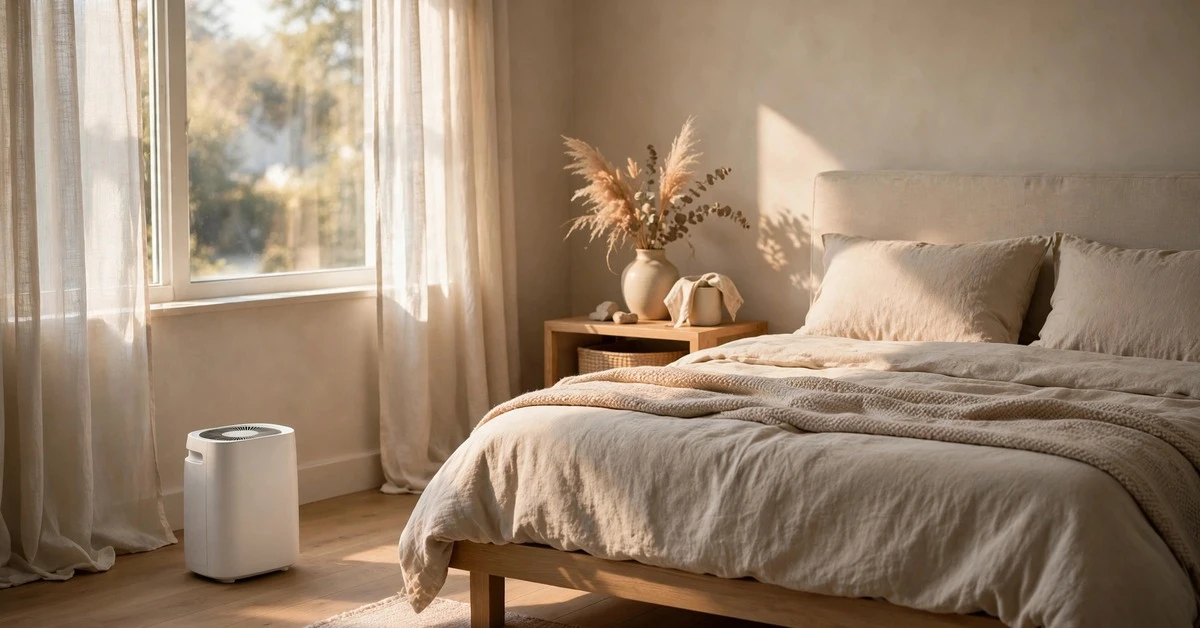
Place the unit in the room where you spend the most time, such as a bedroom or living room. Bedrooms deserve priority if dust affects your sleep or allergies, since you breathe the same air for hours each night. Choose a level spot away from corners, curtains, and furniture that could block the air intake or outlet.
Keep doors and windows closed while the purifier runs in one room. Open doors let dust from hallways and other rooms flow in faster than the unit can clean it. If several rooms need attention, many people move a portable unit from room to room during the day.
Pairing Purifiers With Regular Cleaning
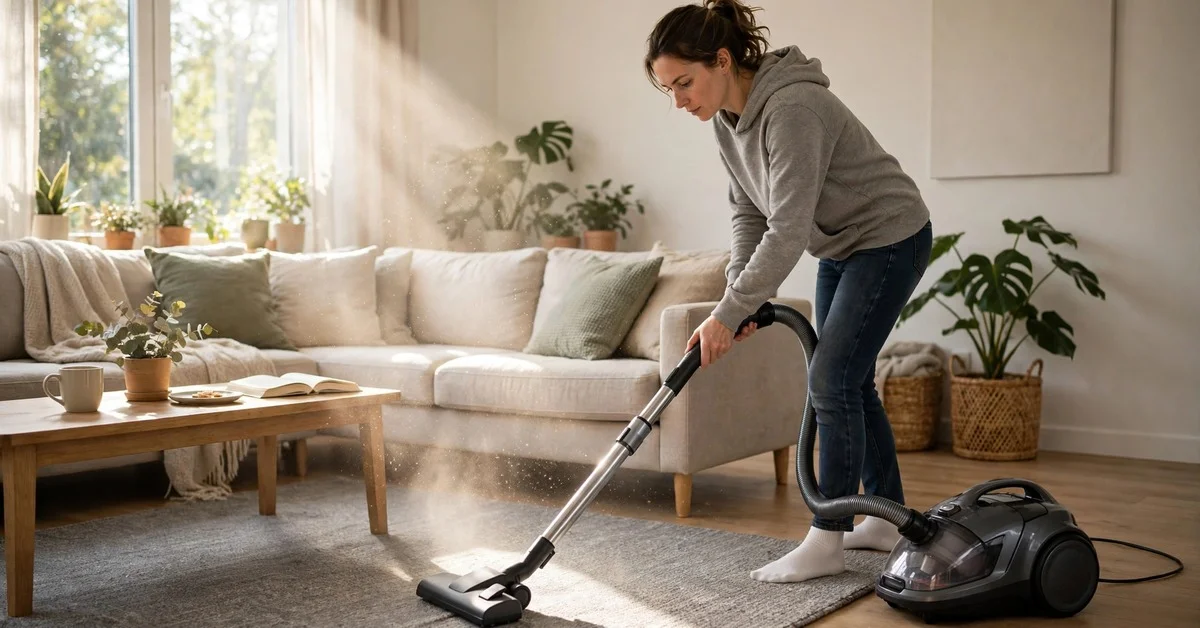
A purifier handles floating dust, but it cannot lift what has already landed. Cleaning is the second half of the job. Vacuum carpets, rugs, and upholstery at least once a week with a vacuum that has a HEPA filter. A standard vacuum can blow fine particles back into the air, which undoes some of your purifier’s work.
When you dust, use a damp or microfibre cloth. Dry dusting pushes particles into the air, where they can drift and settle again. Wash bedding, curtains, and pet beds in hot water on a regular schedule, since fabrics hold fibres and dust mite debris.
If you rent an apartment, a clear maintenance routine can also reduce dust that comes from shared building systems. For more on that, read our guide to apartment complex maintenance.
Entryway habits add another layer of control. Doormats trap grit before it reaches the floor, and a no-shoes rule keeps soil and pollen from being tracked through the home.
Signs Your Air Purifier Is Working
You may not notice a difference right away, so look for practical signs over several weeks. Dark furniture may take longer to show a visible layer of dust, because fewer particles are landing each day. Some units with a particle sensor display air quality readings, and a falling number after you switch the unit on is a useful sign.
Many people also notice fewer irritations in the nose or eyes on dusty days, although symptoms vary from person to person. To judge the change fairly, keep a simple log for a month. Note how often you dust and how the room looks each week. A clear pattern across several weeks tells you more than a single afternoon.
Limits of Air Purifiers for Dust Control
Purifiers have clear limits. They cannot remove dust that has settled on surfaces, woven into fabrics, or pressed deep into carpets. They also cannot stop dust that enters through open doors and windows, although they can reduce how much of it stays airborne.
Filters need replacing too. As a filter collects particles, airflow drops and cleaning power falls. Replacement intervals vary by model and by how dusty your home is, so check your manual and follow the schedule the maker sets. Many units also show a filter indicator that signals when a change is due.
If dust triggers allergies or asthma, a purifier can help with symptoms, but it works best as part of a wider plan. Talk with your doctor or pharmacist about treatment options alongside the changes you make at home.
FAQs
Can an air purifier eliminate all dust in my home?
No. Dust is produced constantly, and a purifier only captures what is floating in the air. Paired with regular vacuuming and dusting, a good unit keeps the overall level much lower than it would be otherwise.
Do air purifiers help with dust mites?
They can reduce airborne dust mite debris, which is one of the main triggers for allergy symptoms. They do not kill mites, so washing bedding in hot water remains necessary.
How often should I replace the filter?
It depends on the model and on how dusty your home is. Follow the manufacturer’s schedule, and replace the filter sooner if airflow drops or the indicator signals a change.
Is a HEPA purifier enough on its own?
For airborne dust, a true HEPA filter does most of the work. For the best results, combine it with vacuuming, dusting, and washing fabrics regularly.