

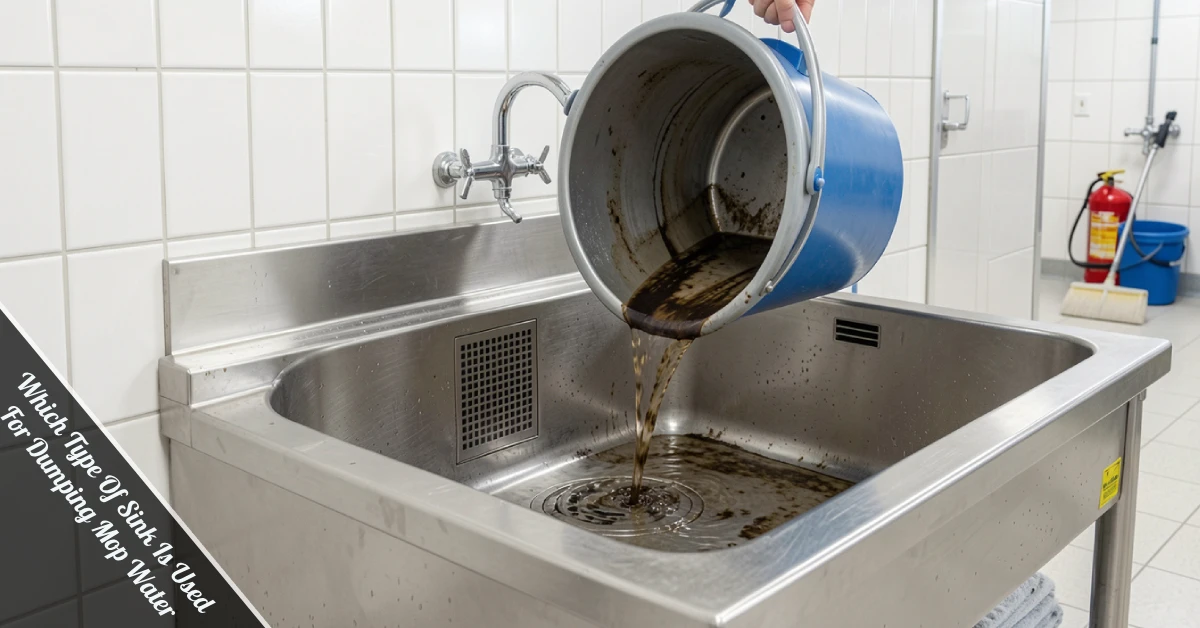
You’ve just finished mopping an entire floor. Now you’re staring at a bucket full of nasty, dirty water — where does it go?
Most people guess wrong. They dump it in the kitchen sink or a bathroom basin and wonder why there’s a clog the next morning.
Here’s the straight answer: which type of sink is used for dumping mop water is a service sink or a dedicated mop sink — built exactly for this job.
This guide breaks down every sink type, why some work and others don’t, and how to choose the right one for your setup.
The Right Answer: Which Type Of Sink Is Used For Dumping Mop Water?
A service sink — also called a janitorial sink or utility sink — is the gold-standard answer here. It’s designed to handle heavy-duty water disposal without complaints.
These sinks sit low to the ground, have wide basins, and come with a built-in strainer that catches debris before it hits your pipes. Practical, simple, no drama.
In commercial settings — restaurants, hospitals, schools, hotels — service sinks are a non-negotiable part of the cleaning station. They’re installed right where janitorial staff work, making the job faster and safer.
Think of it as the workhorse of your cleaning setup. It doesn’t look flashy, but it handles everything you throw at it — literally.
Why Does the Right Sink Actually Matter?
Dumping mop water in the wrong sink isn’t just annoying — it’s a real sanitation risk. Dirty mop water carries bacteria, cleaning chemicals, and fine debris.
Pour that into a kitchen sink or hand-washing station, and you’ve just cross-contaminated a surface that touches food or skin. Health codes exist for a reason.
Beyond hygiene, wrong sinks lead to clogged drains and plumbing headaches. Regular sinks aren’t built for debris-heavy water, and your plumber will charge accordingly.
A properly installed mop sink keeps contamination away, protects your plumbing system, and keeps your space compliant with local sanitation codes.
Types of Sinks Used for Mop Water Disposal
Not all sinks are built the same. Here’s a breakdown of the main options — and where each one fits best.
1. Service Sink (Top Pick)
Service sinks are the heavy hitters. Large, deep basins, durable stainless steel or enameled cast iron builds, and efficient drainage make them the first choice every time.
They’re built for commercial and industrial environments where mopping happens multiple times a day. If you manage a facility, this is your default go-to.
Installation is usually at or near floor level, so dumping heavy buckets doesn’t become a gym workout.
2. Mop Sink (Floor-Level Specialist)
Mop sinks are installed right at floor level — sometimes even recessed into the ground. You just tip the bucket and let gravity do the work.
They feature sloped basins and wide openings to prevent splashing. The built-in strainer catches all the gunk, keeping pipes clear and drainage smooth.
These are common in janitorial closets, school custodial rooms, and large commercial kitchens. If you mop daily, a mop sink is a serious quality-of-life upgrade.
3. Utility Sink (Flexible Option)
Utility sinks pop up in garages, basements, and laundry areas. They’re multi-purpose — and yes, you can use them for mop water in a pinch.
They won’t match the capacity or drainage efficiency of a proper service sink, but for light residential use, they do the job cleanly enough.
Just don’t treat them as a permanent solution in commercial environments. They’re not rated for the volume or chemical exposure involved in daily mopping.
4. Slop Sink (Heavy-Duty Beast)
Slop sinks are essentially the bigger, tougher cousin of the service sink. Extra-large basins, extra-durable materials — built for the most demanding cleaning jobs.
Industrial facilities, manufacturing floors, and large-scale institutional buildings tend to run slop sinks. When you’re dealing with serious mop water volume, these don’t flinch.
5. Laundry Sink (Last Resort Alternative)
Laundry sinks aren’t designed for mop water, but they can work in small residential spaces when no other option exists. Keep expectations realistic, though.
Their basins are shallower and less heavy-duty. Use a strainer, dump slowly, and clean thoroughly after. It’s not ideal, but it’s workable for occasional light use.
Quick Comparison: Sink Types for Mop Water
| Sink Type | Basin Size | Durability | Best For | Floor Level? |
| Service Sink | Large | Very High | Commercial | Yes |
| Mop Sink | Large | High | Janitorial | Yes |
| Utility Sink | Medium | Medium | Residential | No |
| Slop Sink | Extra Large | Very High | Industrial | Yes |
| Laundry Sink | Small-Med | Medium | Home Use | No |
What to Look For When Choosing Your Sink
Picking the right sink isn’t just about type — it’s about specs. Here’s what to evaluate before you commit.
Basin Size and Depth
You need a basin large enough to fit your mop bucket without wrestling with it. Deep basins also reduce splashing, keeping your floors — and your clothes — dry.
For commercial use, bigger is always better. For home use, a medium-depth basin handles most cleaning tasks without taking over your space.
Material Quality
Stainless steel is the top pick — rust-resistant, easy to clean, and built to last through harsh chemical exposure day after day without breaking down.
Enameled cast iron and heavy-duty porcelain are solid alternatives. Avoid sinks that feel thin or plasticky if you’re dealing with heavy daily use.
Drainage Efficiency
Look for sloped basins and wide drain openings. A built-in strainer or grate is essential — it catches debris and protects your plumbing from clogs.
Poor drainage = standing water = bacterial growth. That defeats the entire purpose of cleaning in the first place.
Plumbing Compatibility
Check that your new sink connects cleanly to your existing plumbing. For high-traffic settings, consider a backflow preventer to stop contamination from traveling upstream.
If you’re installing fresh, bring in a licensed plumber. Local building codes often have specific requirements for janitorial sinks in commercial properties.
How to Dump Mop Water the Right Way
Even with the right sink, technique matters. Here’s the simple process that keeps things clean and your plumbing happy.
- Find the right sink first — service sink, mop sink, or utility sink only.
- Remove large debris from the bucket before dumping. Use a strainer if needed.
- Position yourself close to the sink and tilt the bucket slowly to control the flow.
- Pour gradually — don’t rush it. Fast dumping causes splashing and mess.
- Rinse the bucket immediately after. Don’t let dirty water sit inside.
- Clean the sink after every use with disinfectant. Check the drain for buildup.
- Run clean water through the drain to flush any remaining residue out.
Regular sink maintenance isn’t optional — it’s what keeps your setup hygienic and functional for the long haul. A quick clean after each use takes less than two minutes.
Hygiene and Safety Rules You Shouldn’t Skip
Which type of sink is used for dumping mop water isn’t just a logistics question — it’s a health and compliance issue, especially in regulated environments.
Never dump mop water in a handwashing sink. This is a major violation in food service, healthcare, and hospitality settings. Cross-contamination risks are serious.
Don’t mix mop water disposal with prep sink use. These sinks touch food — keeping them clean means keeping them completely separate from cleaning tasks.
In healthcare facilities, mop water may carry pathogens. Proper disposal in a designated janitorial sink is non-negotiable and often required by facility protocol.
FAQs
Can I use a regular kitchen sink for mop water?
Not a great idea. Kitchen sinks aren’t built to handle debris-heavy water, and the drainage system isn’t rated for it. Clogs and hygiene issues follow quickly.
Where should a mop sink be installed?
Janitorial closets, utility rooms, or cleaning stations — anywhere your cleaning staff works regularly. Proximity to water supply and drainage is key for smooth operation.
Is a utility sink the same as a mop sink?
Not exactly. Utility sinks are multi-purpose and found in residential spaces. Mop sinks are specifically designed for floor-level access and heavy-duty water disposal.
What material is best for a mop sink?
Stainless steel wins every time. It handles chemical exposure, resists corrosion, and cleans up easily. Enameled cast iron is a close second for durability and looks.
Bottom Line
So, which type of sink is used for dumping mop water? Service sinks and mop sinks. Full stop. They’re built for this exact job, and everything else is a compromise.
Whether you’re managing a commercial facility, a restaurant kitchen, or just keeping your home clean, investing in the right sink saves you plumbing bills, sanitation headaches, and wasted time.
Pick the right sink, use it the right way, and your cleaning routine gets a serious upgrade. It’s a small detail that makes a big difference in how clean your space actually stays.
Got questions about specific sink models or installation? Drop them in the comments — happy to help you find the best setup for your space.