

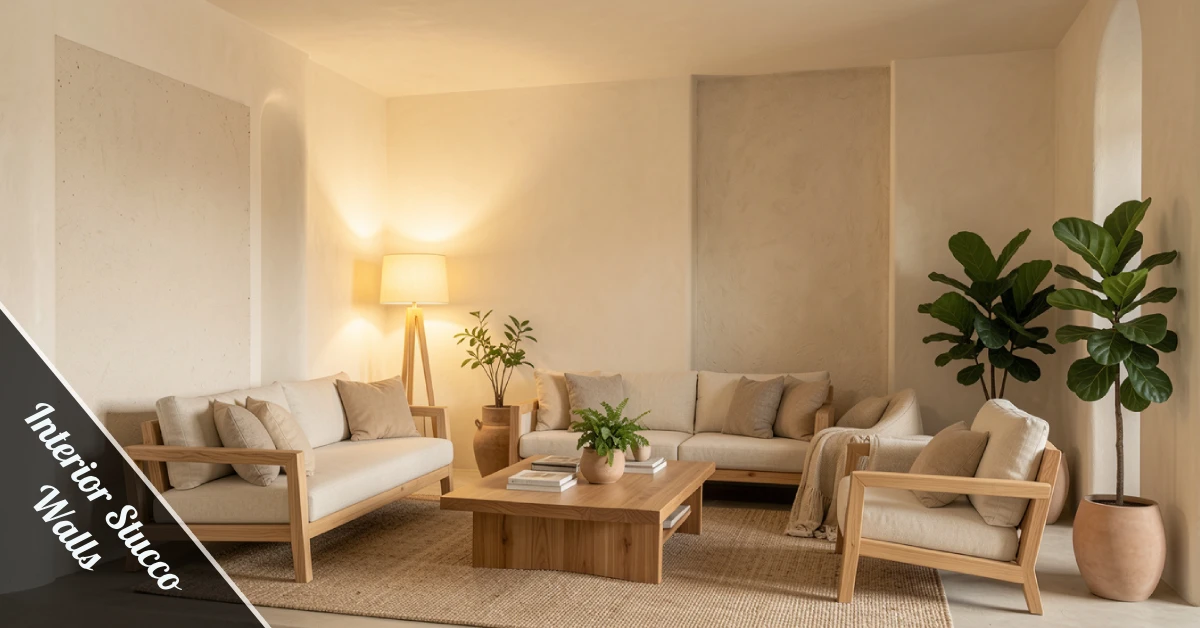
You’ve probably scrolled past a dozen boring wall options. Then you spot it — that rich, textured wall with depth and character. That’s the magic of interior stucco walls, and it’s not just a vibe.
This isn’t your grandfather’s exterior cement job. Modern indoor stucco is a full design flex — durable, moisture-resistant, and endlessly customizable.
From sleek minimalist apartments to cozy Mediterranean living rooms, stucco fits right in. It’s the cheat code for walls that actually have personality.
In this guide, you’ll get the full breakdown: benefits, finish styles, installation basics, painting tips, maintenance hacks, and design inspiration — all in plain language.
What Are Interior Stucco Walls, Exactly?
At its core, stucco is a blend of cement, sand, lime, and water — a plastering material with serious ancient credentials. Greeks and Romans were already fans.
Today, indoor stucco walls are applied in multiple coats directly onto your wall surface, building up a textured, breathable finish that no paint or wallpaper can replicate.
What makes it different from drywall? Stucco isn’t just a surface coating — it becomes part of your wall. It’s structural, breathable, and built to last for decades with minimal fuss.
Why Homeowners Are Choosing Stucco for Interior Walls
Let’s cut to it — stucco earns its spot on your walls. Here’s what you actually get:
Durability That Goes the Distance
Stucco walls resist cracks, chips, and general wear in ways that make regular drywall look fragile. Once it’s set, it’s set.
We’re talking decades of reliable performance here. It handles daily bumps, humidity swings, and temperature changes without flinching — that’s serious long-term value.
Built-In Moisture Resistance
Stucco is naturally breathable, which means it regulates moisture rather than trapping it. No moisture buildup means no mold, no mildew, no headaches.
This is a game-changer for kitchens, bathrooms, and basements, where other wall finishes often fail. Your indoor air quality improves as a bonus.
Energy Efficiency You’ll Feel on Your Bill
Stucco acts as a natural insulator, slowing heat transfer through your walls. According to research, homes with quality stucco application can save up to 20% on energy costs.
Think about that — your walls working like a thermostat assistant, keeping rooms warmer in winter and cooler in summer without extra effort.
Aesthetic Appeal and Customization
This is where stucco really shines. You get complete control — smooth, rough, layered, painted, or left natural. It pairs beautifully with wood, metal, tile, and stone accents.
Popular Interior Stucco Wall Finish Styles
Not all stucco looks the same, and that’s the whole point. Here are the styles worth knowing:
| Finish Style | Best For | Texture Level | Maintenance |
| Smooth Finish | Modern & Minimalist | Low | Easy |
| Skip Trowel | Rustic & Cozy | Medium | Moderate |
| Knockdown | Transitional Homes | Medium-High | Moderate |
| Venetian Plaster | Luxury & Elegant | High | Low (sealed) |
Smooth Finish
Clean, sleek, and modern — smooth finish stucco reflects light well, making rooms feel more open. It’s perfect for minimalist designs and contemporary spaces.
It’s also the easiest to paint over later, making it a smart base choice if you like switching up your interior color scheme every few years.
Textured Finishes: Skip Trowel and Knockdown
The skip trowel and knockdown techniques both create irregular, organic patterns with depth and dimension. They add warmth and naturally hide wall imperfections.
These are popular in transitional and rustic-style homes. The texture does the heavy lifting — furniture and decor almost style themselves around it.
Venetian Plaster and Decorative Stucco
Venetian plaster is stucco’s luxe cousin — polished to a marble-like sheen with incredible depth and color richness. It’s the flex for dining rooms and statement walls.
Decorative stucco opens the door to color washes, custom patterns, and niches built directly into the wall. Your wall becomes the art piece, not just the backdrop.
How to Install Interior Stucco Walls: The Basics
No sugarcoating — stucco installation is a skilled job. Here’s what the process looks like, so you know what to expect and can ask the right questions.
Surface Preparation
The surface must be clean, stable, and free of damage before anything goes on. Cracks get repaired, loose materials removed, and a bonding agent applied to help the stucco grip properly.
Applying the Coats
Stucco goes on in multiple layers — typically a scratch coat, a brown coat, and a finish coat. Each layer needs time to set before the next one goes on.
This layered approach is what gives stucco its strength and texture depth. Rushing this process is how you end up with cracking and uneven walls.
Curing and Finishing
After the final coat, stucco needs several days to fully cure and harden. Once cured, you choose your finish — smooth, textured, painted, or sealed.
The full installation timeline typically runs three to seven days, depending on project size. A good stucco contractor will give you an accurate project estimate upfront.
How to Paint Interior Stucco Walls the Right Way
Want to give your stucco a color upgrade? Painting it is straightforward — if you use the right tools and products.
Best Paint for Stucco Walls
Acrylic latex paint is your best friend here. It adheres well to rough surfaces, resists moisture, and comes in a huge range of colors, including low and no-VOC formulas.
For finish, go with eggshell or semi-gloss. Eggshell is easy to clean; semi-gloss adds a subtle sheen that highlights the texture. Flat paint on heavily textured walls can look patchy.
Tools You’ll Need
Use a thick-nap roller (around 1-inch nap) to push paint into the texture evenly. A wide nylon or polyester brush handles edge cuts and tight corners without mess.
Step-by-Step Painting Tips
Clean the wall with mild detergent and water first. Repair any cracks, wait at least seven days after patching before painting. The room temperature should sit between 50 and 90 degrees F.
Apply a stucco-specific primer first. Then roll paint in a W or M pattern for even coverage. Let the first coat dry completely before deciding if a second coat is needed.
Interior Stucco Walls vs Drywall vs Plaster
So how does stucco actually stack up against the competition? Here’s the honest comparison:
| Factor | Stucco | Drywall | Plaster |
| Durability | Excellent | Good | Very Good |
| Moisture Resistance | High | Low | Medium |
| Customization | Very High | Limited | Medium |
| Install Time | 3–7 Days | 1–2 Days | 2–4 Days |
| Long-Term Value | High | Medium | Medium |
Drywall wins on install speed and upfront cost, but stucco wins everything else. Plaster is solid but lacks stucco’s customization range. For long-term value and design freedom, stucco takes the crown.
Design Inspiration: Styling Your Stucco Walls
The best part about stucco? It plays well with every design vibe. Here are three directions that work especially well:
Rustic and Mediterranean
Think earthy tones — terracotta, warm beige, sandy brown. Pair textured stucco with wooden furniture, wrought iron fixtures, and natural textiles. Instantly cozy, endlessly timeless.
This style works beautifully in living rooms, dining areas, and entryways where you want guests to feel the warmth the moment they walk in.
Modern Minimalist
Smooth stucco in soft grays, crisp whites, or muted greens creates a clean, airy canvas. Let the texture do the talking while furniture stays simple and geometric.
Natural light bounces off the smooth surface beautifully, making even compact rooms feel open and breathable. It’s quiet luxury without the loud price tag.
Accent Walls and Custom Features
Don’t want stucco on every wall? Use it strategically — one bold accent wall transforms a bedroom or living room into something that actually looks designed.
You can also build functional features directly into stucco — recessed shelves, arched niches, and framed alcoves. Incorporating stucco with other materials like stone or tile creates layered, editorial spaces.
Maintenance Tips to Keep Your Stucco Looking Sharp
Good news: stucco doesn’t demand much from you. Here’s the low-maintenance routine that keeps it looking fresh:
- Dust and vacuum walls regularly using a soft brush or microfiber cloth.
- For stains, use a mild detergent diluted in water — no abrasive cleaners.
- Inspect walls seasonally for minor cracks — small issues are easy to patch early.
- Apply a sealant layer every few years if the walls are in high-moisture areas.
Visible cracks, peeling paint, or patches of discoloration are your signal to call a professional. Early stucco repair is always cheaper and simpler than letting damage spread.
Final Verdict
Short answer? Absolutely. Interior stucco walls deliver a rare combination: real durability, genuine design versatility, energy efficiency, and low long-term maintenance.
Whether you’re doing a full renovation or just upgrading one room, stucco gives your home that finished, intentional look that other wall materials simply can’t match.
Start with one room. See how the texture changes the energy of the space. Then decide if you want to take it further — most homeowners do.
Got questions about your specific space, finish style, or budget? Drop them in the comments below — we’re here to help you make the right call.