

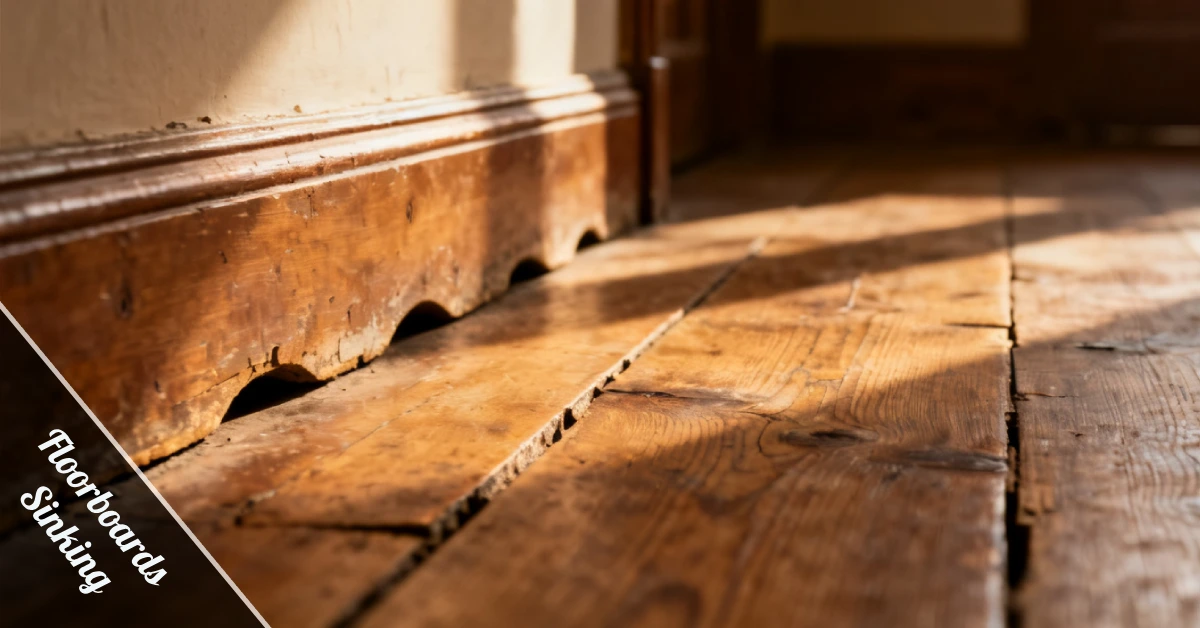
Your floor shouldn’t feel like a trampoline. If you’ve noticed soft spots, uneven surfaces, or that unsettling bounce underfoot, floorboards sinking is not something to brush off.
You walk across your floor every single day without thinking twice. Then one morning — something feels off. A slight dip near the hallway. A soft patch by the window. Maybe your coffee table started wobbling for no obvious reason. Sound familiar?
Here’s what most homeowners don’t realize: floorboards sinking is rarely just a cosmetic issue. It’s almost always a symptom of something deeper — moisture creeping into your subfloor, foundation movement shifting beneath your home, or support structures quietly losing the battle they’ve been fighting for years.
The good news? If you catch it early, most causes are very fixable. This guide breaks down exactly what’s happening under your feet, why it’s happening, and what you can realistically do about it — without the jargon, without the panic, and without burning through your savings unnecessarily.
The Problem Nobody Talks About Until It’s Too Late
Most homeowners notice it gradually. A slight slope here. A creaky dip there. That one corner of the living room where your coffee table wobbles every single time.
Here’s the truth — floorboards sinking rarely fix themselves. The longer you wait, the deeper the damage goes. What starts as a minor annoyance can quietly spiral into a structural nightmare that costs serious money to repair.
Early action isn’t just smart. It’s the difference between a weekend fix and a month-long renovation.
Early Warning Signs You Should Never Ignore
Your floor is already talking to you. The question is whether you’re listening closely enough to catch these signs early.
Walk across every room in your home. Do certain sections feel soft or springy? Are there spots where the floor dips slightly when you step on them? These sensory cues are your first red flag.
Gaps forming near your skirting boards or walls are another giveaway. When floors begin to sink, they pull away from surrounding structures, leaving visible spaces that weren’t there before.
Doors and windows that suddenly stick or refuse to close properly are a less obvious sign. Structural movement below affects alignment throughout your entire home, not just the floor.
Furniture that won’t sit level, visible cracks along wall edges, or a persistent creaking that you can’t explain — these aren’t just quirks of an older home. They’re a checklist of early symptoms pointing toward floorboards sinking beneath the surface.
What’s Actually Causing Your Floors to Sink?
Let’s break down the real culprits, because knowing what you’re dealing with determines exactly how you fix it.
Moisture and Timber Rot
Water is wood’s worst enemy. When moisture collects in crawl spaces or seeps under your flooring, it slowly weakens timber joists and beams over time.
The wood softens. It loses structural integrity. Eventually, it can no longer carry the weight it was designed for, and your floor starts its slow descent downward.
Controlling moisture early — through proper drainage, fixing leaks, and improving crawl space ventilation — is the single most effective prevention strategy available to homeowners today.
Foundation Movement
Soil shifts. It settles unevenly over time, especially after heavy rain, drought, or nearby construction activity. When the ground beneath your home moves, foundation settlement follows close behind.
That movement ripples upward into your floor structure. Sections drop. Angles change. The floor above mirrors every shift happening silently below.
Weak or Damaged Support Structures
Support beams and piers don’t last forever. They can sink into soft ground, shift out of position, or simply wear down after decades of carrying the load above them.
When they lose their grip, the floor they’re holding up starts to sag. This type of damage is often hidden inside crawl spaces, making it easy to miss during casual home inspections.
Pests and Structural Timber Damage
Termites and carpenter ants are the silent destroyers of wooden structures. They work from the inside out, hollowing timber joists until almost nothing of substance remains.
By the time you notice a sinking floor from pest damage, the underlying timber may already be severely compromised. Professional pest treatment combined with wood replacement is the only real solution here.
Upstairs vs. Ground Floor: Does Location Change Anything?
Yes — where your floor is sinking actually matters a lot. Ground floor problems almost always trace back to foundation issues or moisture in the soil beneath the home.
Upstairs floors are a different story. They rely entirely on joists and beams within the building’s frame for support. If those internal structures are damaged, overloaded, or poorly spaced, sagging follows.
There’s an extra complication with upper-floor problems, too. Sinking floorboards on a second floor can stress the ceilings and walls below, causing cracks and alignment issues to appear throughout multiple levels simultaneously.
The repair approach changes depending on location — so correctly identifying where the problem originates saves you time, money, and a lot of unnecessary guesswork during the repair phase.
Are Sinking Floors Actually Dangerous?
In the early stages, you’re mostly dealing with cosmetic inconvenience and minor structural weakness. But as damage progresses, the risk grows. Severely weakened joists or support structures can fail, and floor collapse — while rare — is a real possibility in extreme cases.
The warning signs of serious structural risk include large, noticeable dips in the floor, loud cracking sounds when you walk, visible cracks spreading across walls, and doors that have completely stopped functioning properly.
If you’re seeing several of these signs together, that’s your cue to stop DIY-ing and call a structural professional immediately. Some things really aren’t a weekend project.
How to Fix Sinking Floorboards — Based on What’s Causing Them
There’s no single fix for floorboards sinking. The right repair depends entirely on the root cause you’ve identified.
| Problem Cause | Recommended Fix | Difficulty Level |
|---|---|---|
| Moisture & Timber Rot | Dry area + reinforce or replace joists | Moderate |
| Foundation Settlement | Underpinning or foundation repair | Professional |
| Weak Support Structures | Install support jacks or new beams | Moderate |
| Pest Damage | Pest treatment + wood replacement | Professional |
| Subfloor Voids | Foam or resin injection to level the surface | Moderate |
Sistering Damaged Joists
When joists are weakened but still partially intact, sistering is your go-to move. You attach a new, strong joist alongside the damaged one. The old joist gets support; the floor gets its stability back.
It’s one of the more DIY-friendly repairs, provided you can access the crawl space and the damage isn’t too widespread.
Installing Support Jacks or Beams
Adjustable support jacks can lift a sagging floor back toward its original level. They redistribute weight across new support points and take pressure off compromised structures below.
This is particularly effective for ground-floor problems linked to failing piers or beams that have shifted or sunk into soft ground over the years of use.
Foundation Underpinning
If foundation settlement is the culprit, underpinning is the professional-grade fix. It involves stabilizing and lifting the foundation using specialized techniques and equipment.
This one is firmly in “call the experts” territory. Don’t attempt foundation work without a structural engineer in your corner — the stakes are too high.
Foam and Resin Injection
For subfloor voids — those empty spaces that develop beneath your flooring — foam or resin injection fills the gap and levels the surface from below. It’s quick, minimally invasive, and surprisingly effective for the right type of problem.
What Does Sagging Floor Repair Actually Cost?
Cost depends on severity, floor type, and how far the damage has spread by the time you address it.
Minor joist reinforcement or a small section of flooring replacement typically falls at the more affordable end of the spectrum. You’re looking at materials, access work, and a few hours of skilled labor.
Major structural repairs — foundation underpinning, full beam replacement, or extensive pest-damage remediation — increase significantly in both time and cost. The complexity of access, the size of the affected area, and the materials all factor into the final number.
The consistent truth across every price range: catching the problem early almost always means paying less. A small repair today beats a major structural overhaul six months from now.
Is Your Sinking Floor Covered by Insurance?
Sudden damage from a plumbing leak, a structural accident, or an insured event? That may well be covered under your standard home policy. Gradual damage from wear, long-term moisture exposure, or poor maintenance? Most policies specifically exclude that.
Foundation problems typically fall outside standard coverage unless they’re directly tied to a named insured event.
Review your policy carefully. If anything’s unclear, contact your insurer directly and walk them through the situation before you start any repair work. Knowing where you stand financially before you begin can make a real difference.
How to Stop It From Happening Again
Prevention is always the smarter play. Here’s what actually works long-term.
Control moisture religiously. Keep crawl spaces dry, fix leaks the moment they appear, and make sure your home has adequate ventilation beneath the floor. Moisture is the most common trigger for floorboards sinking, and it’s largely preventable.
Inspect regularly. Walk your floors every few months with intention. Check for new soft spots, gaps near walls, or doors that are suddenly harder to open. Catching subtle changes early is how small repairs stay small.
Maintain your foundation. Make sure drainage around your home directs water away from the base. Stable soil means a stable foundation, which means a stable floor above it.
Schedule periodic professional checks. Especially in older homes or properties in areas prone to soil movement, a structural inspection every few years is cheap insurance against expensive surprises later.
The Bottom Line on Floorboards Sinking
A sinking floor is a signal, not just a surface problem. It’s your home telling you that something structural needs attention — and the sooner you listen, the better your outcome.
Identify the cause before you touch the fix. Use the right repair for the right problem. Protect your investment with consistent moisture control and routine inspections going forward.
Floorboards sinking isn’t the end of the story. It’s just the beginning of a repair you’re now fully equipped to handle.
FAQs
What causes floorboards to sink the most?
Moisture damage leading to timber rot is the most common cause. Foundation settlement, weak supports, pest damage, and aging materials round out the usual suspects.
Can sinking floorboards be fixed without replacing the entire floor?
Yes — in most cases. If the support structure is the issue, reinforcing joists or adding support jacks resolves the problem without touching the floor surface itself.
Are sinking floorboards dangerous?
They can become dangerous if ignored. Severe sagging signals structural weakness that increases the risk of further damage or, in extreme cases, collapse.
How much does sagging floor repair cost?
It varies widely. Minor fixes are relatively affordable; major structural or foundation repairs are more significant investments. Early detection consistently keeps costs lower.
Is a laminate floor sinking a serious issue?
It points to subfloor problems beneath the surface. The laminate itself isn’t structural — but whatever’s causing the base to fail absolutely needs to be addressed.