

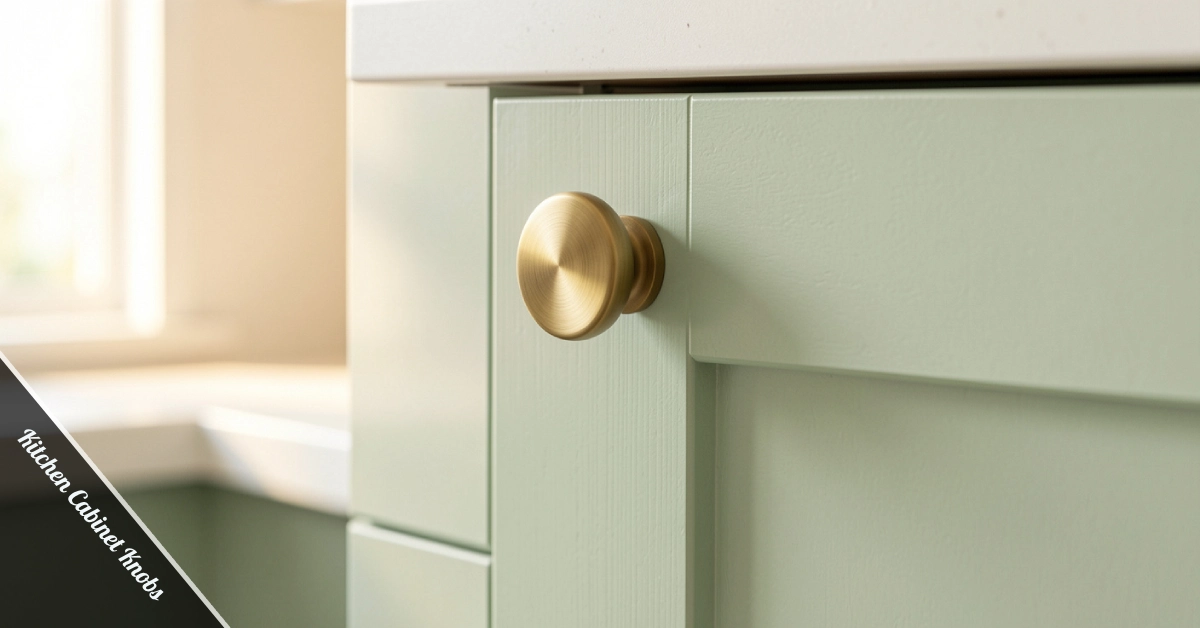
Kitchen cabinet knobs are small hardware pieces that attach to cabinet doors and give you a grip point to open them. The right knob should match your kitchen’s overall style, coordinate with your existing finishes, and sit at a size proportional to the cabinet door. Most standard knobs measure between 1 and 1.5 inches in diameter, while larger statement knobs can reach 2 inches or more. Matte black, brushed brass, and satin nickel lead finish choices in 2025 and 2026.
One Small Detail That Changes Everything
Walk into almost any kitchen, and your eyes land on the cabinets. They take up most of the visual space in the room. But what people notice just as fast, once they look closer, is the hardware.
Cabinet knobs are one of the cheapest updates you can make to a kitchen. A full set typically costs between $50 and $300, depending on the finish and brand. Yet they shift the entire feel of the space. Get them right, and your cabinets look intentional. Get them wrong and even quality cabinetry looks off.
This guide walks you through every decision you need to make, from style and material to size and placement.
What Makes a Good Kitchen Cabinet Knob
A good knob does two things: it functions well, and it looks like it belongs. That sounds simple, but plenty of homeowners choose hardware that checks only one of those boxes.
Function means the knob is comfortable to grip, sits at the right height on the door, and holds up under daily use. Aesthetics means the shape, finish, and scale feel consistent with the rest of your kitchen.
When both are in place, the hardware disappears into the design. You stop noticing it as a separate detail, and it just feels right.
Kitchen Cabinet Knob Styles to Know
Knowing the main style categories makes shopping much easier. Each one suits a different kitchen type.
Round knobs are the most traditional option. They work on raised-panel cabinet doors and suit transitional, farmhouse, and classic kitchen designs. Sizes typically range from 1 inch to 1.5 inches.
Square and rectangular knobs lean modern. They pair well with flat-front Shaker cabinets or slab doors where the clean geometry matches the cabinet’s profile.
Geometric and sculptural knobs are gaining ground in 2025 and 2026. Hexagonal shapes, ribbed textures, and tapered silhouettes give cabinets a more custom, handcrafted look. According to Top Knobs, designers are increasingly treating hardware as an architectural statement rather than a background detail.
Crystal and glass knobs remain a strong choice for traditional and glam kitchens. Their translucent quality catches light and adds detail without visual weight.
Mushroom and dome knobs offer a softer, organic shape. They fit well in natural-material kitchens that feature wood tones, stone counters, or earthy color palettes.
Finishes That Work in 2025 and 2026
Finish is often the decision people stress over most, and for good reason. Your knob finish should coordinate with at least two other metal elements in the kitchen, such as your faucet, lighting fixture, or range hardware.
Here are the finishes getting the most attention right now:
- Matte black: Strong contrast against white or light gray cabinets. Works in modern, industrial, and transitional kitchens. One of the most durable everyday finishes.
- Brushed brass: Warm tone that complements both dark and natural wood cabinets. Pairs especially well with greige, navy, and deep green cabinet colors.
- Satin brass: A more refined version of brushed brass with a consistent sheen. Preferred by designers for kitchens where the finish needs to stay looking clean over time.
- Brushed nickel: A reliable neutral that suits almost any style. It coordinates easily with stainless steel appliances.
- Oil-rubbed bronze: A darker, weathered finish that suits rustic and farmhouse kitchens.
- Unlacquered brass: Develops a patina over time. A good choice if you want hardware that looks aged and lived-in.
Mixed metals are also firmly in style. Many designers now layer two finishes across different elements, using matte black knobs on upper cabinets while running brushed brass on lower drawers, for example. The key is keeping the tones in the same temperature range, either all warm or all cool, so the combination reads as intentional.
How to Choose the Right Size
Size is where most people make mistakes. A knob that is too small looks lost on a large cabinet door. One that is too large looks heavy and out of scale.
A few rules that work:
- Standard upper cabinet doors do well with knobs between 1 inch and 1.25 inches in diameter.
- Larger base cabinet doors, 18 inches wide or more, can handle a 1.5-inch to 2-inch knob.
- If you are going for a statement look, a 2-inch or oversized knob works best on full overlay doors or slab fronts where the hardware has room to stand out.
Also consider the depth of the knob’s projection. Most standard knobs project between 0.75 inches and 1.25 inches from the cabinet surface. If your cabinets are close to a wall or an adjacent appliance, check the projection before ordering.
Knobs vs. Pulls: When to Use Each
This question comes up constantly. The short answer: knobs work best on lighter cabinet doors, and pulls work better on heavy drawers.
Upper cabinet doors are typically lighter and accessed with a pinch-grip motion. A knob handle that perfectly. Base cabinet doors also work well with knobs, especially when the door is a standard width.
For drawers, especially deeper or wider ones, a pull distributes your grip more naturally and reduces strain on your fingertips over time. Most kitchen designers recommend using knobs on doors and pulls on drawers for both practical and visual reasons.
That said, mixing both in the same kitchen is completely valid. A consistent finish across knobs and pulls is usually enough to hold the look together, even if the shapes differ.
Placement: Where the Knob Goes on the Door
Standard placement for a cabinet knob is in the upper inside corner of the door, about 2 to 3 inches from each edge. On base cabinets, the knob goes in the upper inside corner as well, so it sits at a natural grip height.
One trend gaining traction in 2025 is centered placement, where the knob sits at the center of the cabinet door rather than in the corner. It reads as more modern and balanced, especially on flat-front cabinets.
If your cabinets have a decorative frame or raised panel, stick to the traditional corner placement. It keeps the hardware aligned with the cabinet’s visual structure.
Materials: What Your Knob Is Actually Made Of
The material affects both how the knob looks and how long it lasts. Here is what you will commonly find:
- Solid brass: Heavy, durable, and resistant to corrosion. A premium choice that holds its finish well over time. Solid brass knobs feel noticeably different in the hand compared to lighter alloys.
- Zinc alloy: More affordable and available in many styles. Less durable than solid brass but fine for moderate-use cabinets.
- Stainless steel: Scratch-resistant and easy to clean. A practical option for busy kitchens.
- Ceramic and porcelain: Suit traditional, farmhouse, and cottage styles. Durable but can chip if dropped or hit by a hard object.
- Glass and crystal: Visually striking. Best for upper cabinets that are opened gently rather than frequently pulled.
- Wood and stone: A smaller but growing category. Both add organic texture and suit natural-material kitchen designs.
If you are buying hardware for a kitchen that gets heavy use, prioritize solid brass or stainless steel over zinc alloy. The weight difference is noticeable, and solid brass tends to maintain its finish under daily handling.
What to Budget for Kitchen Cabinet Knobs
Prices vary widely depending on brand, material, and finish. Here is a general breakdown for a single knob:
- Budget range: $2 to $6 per knob (zinc alloy, basic finishes)
- Mid-range: $7 to $20 per knob (solid brass, brushed finishes, branded hardware)
- Premium range: $25 to $60 or more per knob (designer brands, hand-finished, custom shapes)
For a kitchen with 20 cabinet doors, budget hardware costs roughly $40 to $120 for the full set. Mid-range hardware brings that to $140 to $400. If you are going with a premium brand like Rocky Mountain Hardware or Rejuvenation, plan for $500 or more for the full set.
One note: buying a few extra knobs is always worth it. Finishes can be discontinued, and having a spare makes it easier to replace one if it gets damaged.
FAQs
How many knobs do I need for a standard kitchen?
Count your cabinet doors, not your drawers. Most kitchens have between 15 and 30 upper and base cabinet doors. Add a few spares. If you are also using knobs on drawers instead of pulls, count those separately.
Can I mix cabinet knob styles in one kitchen?
Yes. Mixing shapes is acceptable as long as the finish stays consistent, or at least within the same metal temperature. Combining round knobs on upper cabinets with square knobs on lower ones can create a layered, intentional look.
What size screw do cabinet knobs use?
Most standard cabinet knobs use an 8-32 machine screw. The default length is usually 1 inch. If your cabinet doors are thick, you may need a longer screw. Many knobs come with a screw included, but it is worth checking before you order.
Do I need a professional to install cabinet knobs?
No. Installing cabinet knobs is a straightforward DIY task. You will need a drill with a cabinet hardware jig to keep placement consistent across all your doors. A jig typically costs $10 to $25 and saves significant time.
How do I clean cabinet knobs without damaging the finish?
Use a soft, damp cloth and mild dish soap. Avoid abrasive cleaners, steel wool, or anything acidic. For brass finishes, a gentle brass cleaner works well on tarnish. Dry after cleaning to prevent water spots on polished surfaces.