

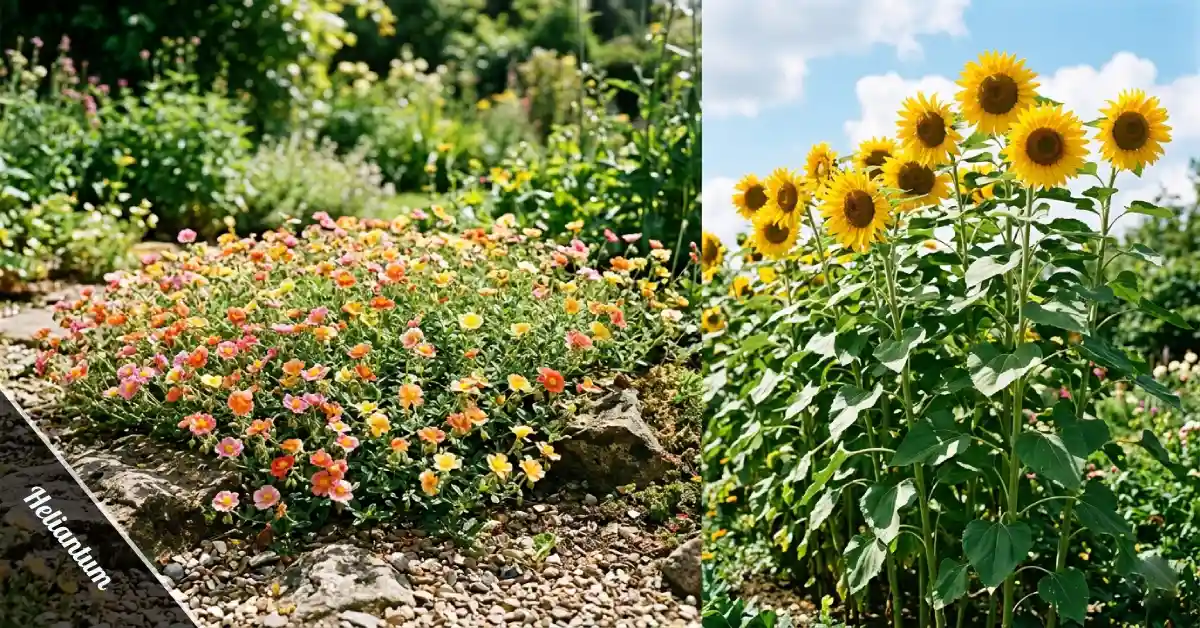
Heliantum is not a formal plant name. It is a widely used misspelling or variation of two distinct botanical terms: Helianthemum (sunrose or rock rose) and Helianthus (sunflower). Both are sun-loving plants with Greek roots. This guide explains the difference, covers key species, and helps you identify which plant you actually need for your garden.
What Does Heliantum Actually Mean?
You’ve seen the word heliantum online, maybe in a gardening forum or a plant product description. It looks official, but it isn’t a recognised botanical name.
In practice, heliantum functions as a catch-all misspelling that points to two very different plants: Helianthemum and Helianthus. Both names share the same Greek origin. “Helios” means sun, and “anthos” means flower. That shared root is exactly why the confusion keeps spreading.
Understanding which plant a source is actually discussing requires context. If the text mentions low groundcover or rock gardens, it almost certainly means Helianthemum. If it mentions tall blooms, seeds, or large flower heads, it is referring to Helianthus.
Helianthemum: The Most Likely Plant Behind the Term
When people type Heliantum into a search engine, Helianthemum is usually what they are looking for. These plants are commonly called sunroses or rock roses. They belong to the Cistaceae family and grow in a low, spreading pattern across the ground.
Helianthemum plants produce small, colourful flowers in yellow, orange, pink, red, and white. Their petals have a soft, tissue-like texture. They bloom heavily during spring and early summer, then taper off as temperatures rise.
What makes them popular with gardeners is their toughness. They thrive in poor, sandy, or rocky soil and tolerate dry conditions well. This makes them a reliable choice for slopes, borders, and rock gardens where other flowering plants tend to fail.
They are also low-maintenance. Once established, helianthemum plants need very little care beyond occasional trimming after the first bloom to encourage a second flush of flowers.
Helianthemum Key Growing Facts
- Hardiness zones: USDA zones 5 to 8, depending on the cultivar
- Light needs: Full sun, at least 6 hours per day
- Soil type: Well-drained, lean or slightly alkaline soil
- Water needs: Low; drought-tolerant once established
- Height: Typically 6 to 12 inches tall, spreading up to 24 inches wide
- Bloom time: Late spring through early summer
- Common cultivars: ‘Wisley Primrose,’ ‘Ben Hope,’ ‘Fire Dragon,’ ‘Raspberry Ripple’
Helianthus: The Sunflower Genus Explained
Helianthus is the scientific name for sunflowers, and it is the second most common plant people mean when they search Heliantum. The genus includes around 150 species, most native to North America. They belong to the Asteraceae family and produce rough, sandpaper-like leaves with showy, daisy-like flowers.
These are tall, upright plants. They are nothing like the low groundcover of Helianthemum. Helianthus plants can reach anywhere from 2 feet to well over 10 feet, depending on the species.
The genus name Helianthus comes directly from the Greek words helios (sun) and anthos (flower). That etymology is identical to Helianthemum, which is the main reason the two names are so frequently confused.
Annual vs. Perennial Helianthus
Not all sunflowers behave the same in the garden. There are two main categories you should know.
Annual types complete their full life cycle in one growing season. They germinate, flower, set seed, and die within a single year. Helianthus annuus, the common sunflower, is the most well-known annual. It is grown widely for its edible seeds, oil production, and ornamental value.
Perennial types come back year after year from the same root system. These are especially valued in garden design because they provide long-term colour without replanting. Popular perennial species include Helianthus angustifolius (swamp sunflower), Helianthus maximiliani (Maximilian sunflower), and Helianthus tuberosus (Jerusalem artichoke).
Jerusalem artichokes produce tasty, starchy edible tubers and are cultivated as a food crop in addition to being grown ornamentally.
Heliantum vs. Helianthemum vs. Helianthus: A Clear Comparison
Here is a side-by-side breakdown to remove any remaining confusion.
| Feature | Helianthemum (Sunrose) | Helianthus (Sunflower) |
|---|---|---|
| Plant type | Low groundcover | Tall upright plant |
| Family | Cistaceae | Asteraceae |
| Flower size | Small, delicate | Large, bold |
| Growth style | Spreads horizontally | Grows vertically |
| Water needs | Low (drought-tolerant) | Moderate |
| Life cycle | Perennial | Annual or perennial |
| Common use | Garden decoration | Seeds, oil, and garden design |
| Native range | Mediterranean, Europe | Mostly North America |
How to Grow Helianthus in Your Garden
Helianthus is one of the easier genera to work with, provided you get the basics right.
Sunlight is non-negotiable. Plant in full sun for the most blooms, and expect flowers from late summer until the first frost. Anything less than six hours of direct sun per day will reduce flower production noticeably.
Soil and drainage matter. Most Helianthus species prefer moderately moist, well-drained soil. Some species will tolerate poor drainage, but waterlogged roots over winter can kill perennial varieties.
Let the seed heads stand. This is one of the most practical tips for any gardener working with Helianthus. Leaving seed heads standing provides a late fall and winter food source for birds. Native bees also nest in the dead, hollow stems, so cut back dead stems to 12 to 24 inches and allow them to remain standing until they disintegrate on their own.
Watch for height. Taller varieties, particularly Helianthus annuus cultivars grown for cut flowers or seeds, may require staking. Position them against a fence or wall where natural wind protection is available.
Best Helianthus Species for Home Gardens
Choosing the right species depends on your space, climate, and goals. Here are the most useful options.
Helianthus annuus (Common Sunflower) is the annual species most people recognise. Grows from 2 to 12 feet depending on the cultivar. Available in single-stem and branching types. ‘Mammoth,’ ‘Lemon Queen,’ and ‘Autumn Beauty’ are strong performers for home gardens.
Helianthus angustifolius (Swamp Sunflower) A perennial species that tolerates wet soil better than most. Produces clusters of small yellow flowers in fall. Can reach 6 to 8 feet and spreads readily, so give it space.
Helianthus maximiliani (Maximilian Sunflower) A perennial prairie species native to central North America. Very drought-tolerant once established. Blooms in late summer and fall. Excellent wildlife plant, attracting bees, butterflies, and birds.
Helianthus tuberosus (Jerusalem Artichoke) is grown for its edible tubers as much as its flowers. Can become aggressive if not managed. Best planted in a contained area. Tubers are harvested in the fall.
Helianthus ‘Lemon Queen’ is a popular perennial hybrid producing masses of pale yellow flowers from midsummer into fall. Reaches 5 to 7 feet. A strong choice for the back of a mixed border.
Helianthus as a Wildlife Plant
Few plants in the North American garden do more for local wildlife than Helianthus. The flowers produce abundant nectar and pollen, making them a critical late-season food source for native bees, honeybees, and butterflies.
The seeds are particularly valuable. Finches, sparrows, chickadees, and nuthatches all feed heavily on helianthus seeds through fall and winter. A single mature plant can feed dozens of birds over several weeks.
According to research published by the Native Plant Trust, native sunflower species support specialist bee species that depend almost entirely on Helianthus pollen for reproduction. The genus Helianthus is catalogued as part of the Asteraceae family, a family that broadly provides some of the highest ecological value of any plant group in North America.
Planting even one or two helianthus plants in a home garden creates measurable benefits for local pollinators, particularly in areas where natural habitat has been reduced.
Common Mistakes When Growing Helianthus and Helianthemum
Even experienced gardeners make avoidable errors with these plants. Here are the ones that come up most often.
Planting in shade. Both Helianthemum and Helianthus need full sun. Partial shade will weaken growth, reduce flowering, and make plants more vulnerable to disease.
Overwatering Helianthemum. Sunroses are built for dry conditions. Watering them too frequently leads to root rot. Water only during extended dry spells once established.
Cutting Helianthus back too early. Removing seed heads in fall eliminates a critical food source for birds and destroys nesting sites for native bees. Wait until spring to cut stems back fully.
Ignoring spread. Perennial helianthus species spread aggressively through underground rhizomes. Without management, they can take over a border within two or three seasons. Divide clumps every two to three years to keep growth in check.
Mislabeling purchases. Garden centres occasionally mislabel plants, and the similar names of helianthus and helianthemum compound this. Always check the full botanical name, not just the common name, before purchasing.
FAQs About Heliantum
Is Heliantum a real plant?
No. Heliantum is not a recognised botanical name. It is a common misspelling or informal variation of either Helianthemum (sunrose) or Helianthus (sunflower). The correct plant depends on the context in which you encountered the term.
What is the difference between Helianthemum and Helianthus?
Helianthemum is a low-growing, drought-tolerant groundcover in the Cistaceae family. Helianthus is the sunflower genus in the Asteraceae family. Helianthemum spreads horizontally with small flowers, while Helianthus grows tall with large blooms.
Can Helianthus be grown as a perennial?
Yes. Many Helianthus species are perennial and return each year from the same root system. Helianthus angustifolius, H. maximiliani, and H. tuberosus are all perennial. Helianthus annuus, the common sunflower, is an annual.
Is Helianthemum the same as a rock rose?
Yes. Rock rose and sunrose are the two most common names for Helianthemum. The term “rock rose” reflects the plant’s preference for rocky, well-drained soil, while “sunrose” highlights its love of full sun and its rose-like flowers.
Does Helianthus attract pollinators?
Yes. Helianthus is among the most wildlife-friendly plants available to home gardeners. It attracts native bees, honeybees, butterflies, and a wide range of seed-eating birds. Leaving seed heads in place through winter maximizes its value to local wildlife.