

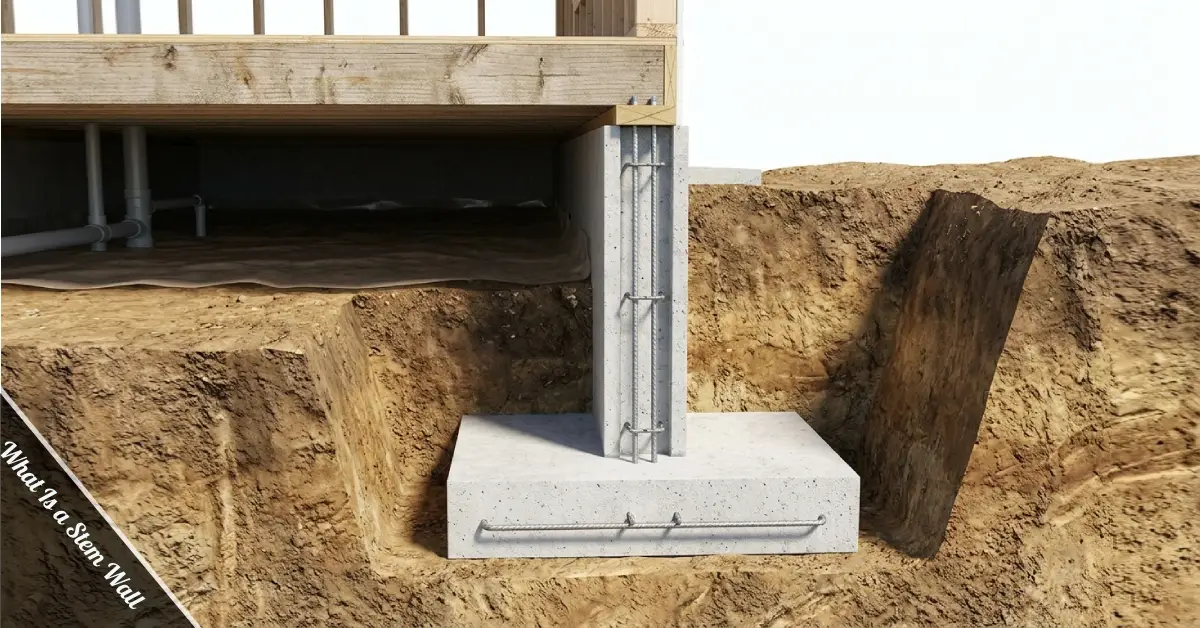
A stem wall is a short concrete or masonry wall that sits on top of a concrete footing and raises a building above ground level. It is most common in crawl space foundations and slab-on-grade construction. Stem walls protect the structure from moisture, pests, and soil movement, and are especially useful on sloped lots or in earthquake-prone regions.
If you are planning to build a home, add a garage, or repair your existing foundation, you have probably come across the term “stem wall.” It sounds technical, but the concept is straightforward once you break it down.
This guide covers everything you need to know, from how a stem wall looks and what it does, to how much it costs and where it falls short. By the end, you will have a clear picture of whether a stem wall foundation is the right choice for your project.
What Is a Stem Wall in Construction?
A stem wall is a vertical wall, typically made of reinforced concrete or concrete masonry units (CMU), that sits on top of a concrete footing. It forms the perimeter of the foundation and lifts the base of the building above the surrounding ground.
The term “stem” refers to the wall’s role: it acts like the stem of a plant, connecting the footing below to the floor structure above. It transfers the weight of the entire building down through the wall and into the footing, then into the soil.
Stem walls are a core part of the five main house foundation types used in the United States. They are most associated with crawl space foundations and two-pour slab foundations. They are built before the interior concrete floor slab is poured, so the slab rests within the enclosed perimeter they create.
In most residential construction, a stem wall stands anywhere from one to four feet tall. The exact height depends on local flood risk, frost depth, slope of the land, and building code requirements.
What Does a Stem Wall Look Like?
Visually, a stem wall looks like a short concrete wall forming a rectangle or any other perimeter shape around the base of a building. From the outside, it appears as a thick concrete band sitting at ground level before the home’s siding or framing begins.
Here is what you would typically see in a standard stem wall foundation setup:
- A wide concrete footing poured below the frost line, usually at least 12 inches wide and 12 inches deep
- A stem wall rising from the footing, typically 8 to 24 inches tall for slab applications, or up to 4 feet tall for crawl space foundations
- Vertical rebar running through both the footing and the stem wall for added structural strength
- Anchor bolts are embedded in the top of the stem wall to attach the wooden sill plate
- A concrete floor slab is poured inside the enclosure the stem walls create
If you look at a house under construction before the floor is poured, you will see the stem walls forming an open box around the perimeter. The inside is space or compacted gravel fill, waiting for the slab.
What Is a Stem Wall Foundation?
A stem wall foundation is a foundation system that combines a concrete footing, a stem wall, and a concrete floor slab. This is sometimes called a “two-pour foundation” because construction happens in two separate concrete pours: one for the footing, and one for the slab inside the stem wall enclosure.
This type of foundation is common in residential and light commercial construction. It creates a stable base by spreading the building’s load from the stem walls into the footings and then into the soil below.
Stem wall foundations are widely used in California, Texas, the Pacific Northwest, the Gulf Coast, and other areas where soil conditions, seismic activity, or flood risk make them practical. They are particularly well-suited to sloped terrain because builders can adjust the height of each section of the wall to match the grade of the land.
A crawl space foundation is closely related. In a crawl space setup, the stem walls are taller (usually three to four feet) to create a livable space beneath the house floor. This space houses plumbing, electrical wiring, and HVAC ductwork, making it accessible for inspections and repairs.
What Is a Stem Wall Used For?
Stem walls serve several important structural and protective functions. Understanding what a stem wall is used for helps you appreciate why builders choose this system over simpler alternatives.
Load transfer. The primary job of a stem wall is to carry the weight of the house down to the footing. A properly designed stem wall distributes this load across a wide footing area, reducing stress on any single point in the soil.
Moisture and flood protection. By raising the base of the house above grade, stem walls keep wooden framing away from direct ground contact. This dramatically reduces moisture absorption, rot, and termite damage. In flood-prone areas, the added height can keep the home above typical water levels.
Seismic resistance. Stem wall foundations are a preferred choice in earthquake zones. Vertical rebar ties the wall to the footing, and anchor bolts secure the house frame to the wall. This connection helps the entire structure move as one unit during ground shaking instead of separating.
Slope accommodation. On sloped lots, stem walls can be built to different heights at different points along the perimeter. A flat slab foundation would require expensive grading or a massive amount of concrete to fill in the low side of the slope. Stem walls solve this problem at a fraction of the cost.
Utility access. In crawl space applications, stem walls create an under-floor cavity that gives plumbers, electricians, and HVAC technicians easy access to systems without cutting through finished floors.
Stem Wall vs Slab Foundation: Key Differences
Many homeowners are deciding between a stem wall foundation and a monolithic slab. Both use concrete, both support residential structures, but they work in very different ways.
A monolithic slab is poured all in one piece. The footing, edges, and floor slab are all part of a single continuous pour. It sits directly on compacted soil or gravel, with the concrete thicker at the edges where walls will sit.
A stem wall foundation (also called a stem wall slab) involves two separate pours: footings first, stem walls second, and then the floor slab poured inside the enclosure. It takes more time and labour, but offers structural advantages a monolithic slab does not.
Here is a side-by-side comparison of the two:
| Factor | Stem Wall Foundation | Monolithic Slab |
|---|---|---|
| Number of concrete pours | Two (footing + stem wall, then slab) | One |
| Best terrain | Sloped, uneven, or flood-prone | Level, stable ground |
| Moisture protection | Higher (lifted above grade) | Lower (slab sits at grade) |
| Seismic performance | Better (tied footing-wall connection) | Less ideal |
| Cost | $7,000 to $21,000 | $5,200 to $13,000 |
| Construction time | Longer | Shorter |
| Crawl space option | Yes | No |
| Utility access | Easier (with crawl space) | Harder |
The right choice depends on your lot, local climate, building code, and budget. A structural engineer or licensed contractor can assess your specific site conditions before you commit to either system.
What Is a Stem Wall in a Garage?
Stem walls in garages follow the same principles as in residential foundations, but the specifics vary based on the garage size and how it connects to the main structure.
In a detached garage, a stem wall forms the perimeter of the concrete floor slab. The stem wall lifts the slab above the surrounding driveway or yard, which helps with drainage and keeps water from flowing inside during heavy rain. Most garage stem walls are shorter than those on a house, typically six to twelve inches above grade.
In an attached garage, the stem wall must align with and connect to the home’s existing foundation. Proper height matching is important here. If the garage slab sits lower than the house floor, there will be a step at the door threshold. Many builders keep the garage slab slightly lower intentionally to prevent water from entering the home.
Some garages in flood-risk zones use taller stem walls of 18 to 24 inches to elevate the slab. Mechanics and hobbyists who need a level work area on an uneven lot also benefit from the height adjustment capability of stem walls.
For garages in earthquake-prone areas, the anchor bolt and rebar connections between the stem wall and the wooden framing are especially important. Seismic retrofitting often involves reinforcing these exact connections in older structures.
Stem Wall Foundation Details and Plan
A well-executed stem wall foundation plan covers several technical specifications. Contractors and engineers look at these details before breaking ground.
Footing dimensions. The footing must extend at least 12 inches below the frost line and sit a minimum of 12 inches wide. In areas with sandy or expansive soils, footings are wider to spread the load over more surface area.
Wall thickness. Most residential stem walls are 6 to 8 inches thick. Taller walls or those carrying heavier loads may be 10 to 12 inches thick with additional rebar.
Reinforcement. Horizontal rebar runs through the footing, while vertical rebar ties the footing to the stem wall above it. The spacing of rebar depends on the design load and local seismic requirements. In California and other high-seismic zones, building codes specify minimum rebar spacing and lap lengths.
Anchor bolts. These are embedded in the top of the stem wall before the concrete sets. They secure the pressure-treated sill plate, which is the first piece of wood framing. Codes typically require anchor bolts every 6 feet, with additional bolts near corners and openings.
Slab details. The interior slab is poured on a compacted gravel base or moisture barrier. Slab thickness for residential construction is typically 4 inches for living spaces and 5 to 6 inches for garages or heavier loads.
Drainage. Interior drainage, gravel and a vapour barrier beneath the slab prevent moisture from wicking up through the concrete. In crawl space applications, vents are built into the stem wall to allow air circulation and prevent condensation buildup.
What Are the Disadvantages of Stem Walls?
Stem walls offer real benefits, but they come with trade-offs. Knowing the disadvantages helps you make an informed decision.
Higher cost than a monolithic slab. Because construction requires more labour, more concrete, and multiple pours, stem wall foundations cost more than a simple monolithic slab. A monolithic slab typically runs $5,200 to $13,000, while a stem wall foundation ranges from $7,000 to $21,000, according to 2025 data from HomeAdvisor and Angi.
Longer construction timeline. Each concrete pour requires a cure time before the next stage begins. A stem wall foundation can add several days to a week compared to a single-pour monolithic slab.
Potential for moisture issues in crawl spaces. If a crawl space is not properly ventilated, sealed, or waterproofed, it can become a breeding ground for mould, mildew, and wood rot. This requires ongoing maintenance and sometimes expensive encapsulation systems.
More points of potential failure. A two-pour system means two separate concrete placements. If either pour is done incorrectly, whether due to improper mixing, inadequate curing, or poor rebar placement, the structural integrity of the foundation can be compromised.
Not ideal on flat, stable ground. On a perfectly level lot with good soil bearing capacity, a monolithic slab is often the simpler and more cost-effective choice. The benefits of a stem wall matter most where terrain or environmental conditions make the added investment worthwhile.
Limited basement option. Stem walls create a crawl space, not a full basement. If you want usable below-grade living space, a basement foundation with full-height walls is a better fit.
How Much Does a Stem Wall Cost?
Stem wall foundation costs vary based on size, wall height, soil conditions, and local labour rates. Here are the key figures based on current pricing data.
Total project cost: Most homeowners pay between $7,000 and $21,000 for a complete stem wall foundation, including footings, stem walls, and the interior slab. This range, from HomeAdvisor (2025 data), reflects projects across various home sizes and U.S. regions.
Cost per square foot: Stem wall foundations run $6 to $18 per square foot. The lower end applies to smaller, simpler builds on stable soil. The higher end reflects complex designs, uneven terrain, or high-seismic zones requiring heavier reinforcement.
Cost per linear foot: For the stem wall itself, expect to pay $20 to $30 per linear foot, covering materials and labour. A full basement foundation wall, by comparison, can exceed $50 per linear foot.
Comparison with a monolithic slab: A monolithic slab foundation costs $5,200 to $13,000, or about $5 to $16 per square foot. The gap narrows on complex jobs where slab thickness must increase significantly.
Factors that affect your final price:
- Soil type and bearing capacity (sandy or expansive soils require wider footings)
- Local frost line depth (deeper footings cost more)
- Seismic zone requirements (more rebar, closer bolt spacing)
- Stem wall height (taller walls for slopes or flood zones use more material)
- Regional labour costs (West Coast and Northeast typically run higher than the South or Midwest)
- Permit and engineering fees (typically $350 to $2,000 depending on your city)
Always get three quotes from licensed contractors and ask each to include a line-item breakdown. Lump-sum bids make it hard to compare fairly or spot omissions.
FAQs
What is the difference between a stem wall and a foundation wall?
A foundation wall is the primary perimeter wall that forms a basement or full-height below-grade structure. It can be eight feet tall or more and is designed to hold back soil on the outside. A stem wall is much shorter, usually one to four feet, and sits on top of a separate footing. Its main job is to raise the building above grade, not to contain below-ground space. A stem wall is a type of foundation wall in a broad sense, but the two terms describe different applications.
What does a stem wall look like?
From the outside, a stem wall looks like a short concrete band running around the base of a building. Before a house is framed or sided, you can see the concrete walls forming a perimeter rectangle at ground level. They are usually 6 to 8 inches thick and vary in height from several inches to several feet. Vertical rebar sticks up from the wall before the sill plate is attached.
What is the difference between a slab foundation and a stem wall?
A monolithic slab foundation is poured in one continuous piece directly on the ground. A stem wall foundation (sometimes called a stem wall slab) is poured in two stages: footings and walls first, then the interior slab second. Stem wall foundations cost more and take longer, but they perform better on sloped lots, in flood zones, and in earthquake regions. Monolithic slabs are faster and cheaper, but work best on flat, stable ground.
What are the disadvantages of stem walls?
The main disadvantages are higher cost ($7,000 to $21,000 vs. $5,200 to $13,000 for a monolithic slab), a longer build timeline due to multiple concrete pours, and the need for proper crawl space moisture management. On flat, stable ground without seismic or flood risk, the added expense and complexity are hard to justify.
How much does a stem wall cost?
A complete stem wall foundation runs $7,000 to $21,000 for most residential projects. Per square foot, the cost of land is between $6 and $18. The stem wall itself, separate from the slab, runs $20 to $30 per linear foot for materials and labour. Costs vary widely based on wall height, soil conditions, seismic requirements, and local labour rates.


