

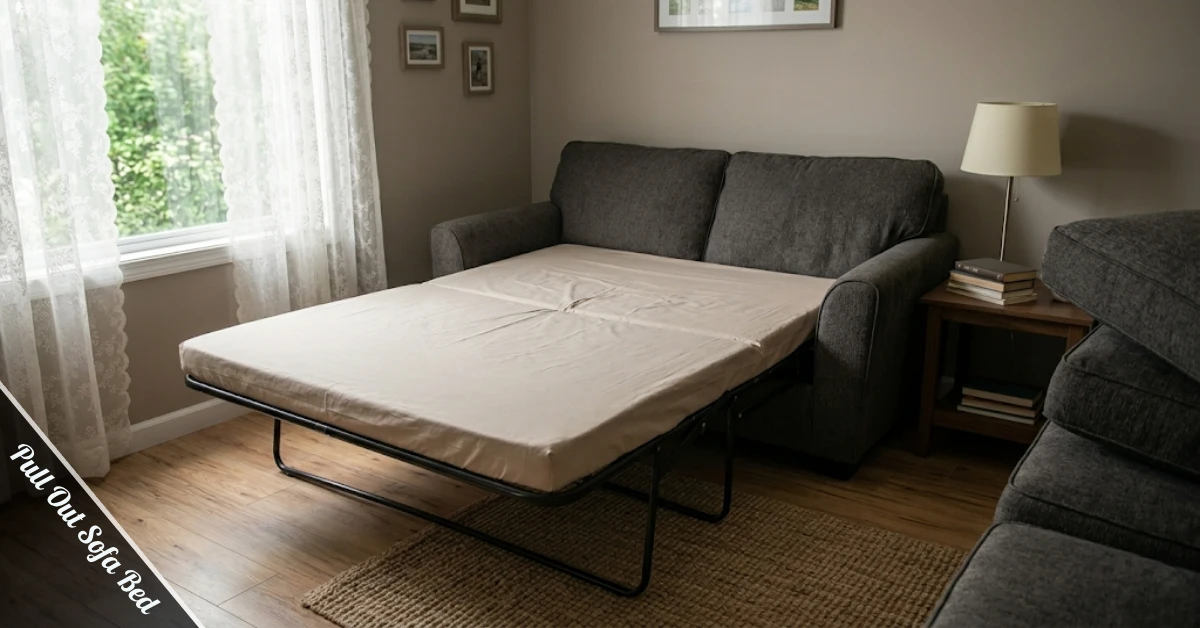
You pulled it out for your guests last weekend. They said, “It was fine.” But you saw their face in the morning — the slightly stiff walk, the quiet stretch before coffee. Pull Out Sofa Bed has a reputation, and honestly, a lot of it is deserved.
The good news? You don’t need to throw it out and start over. Most of the discomfort comes from two or three very fixable problems — and once you know what they are, the solutions are pretty straightforward. (The same principle applies to most home annoyances, whether it’s a running toilet disrupting your sleep or a sofa bed doing the same.)
Let’s get into it.
Why Pull Out Sofa Bed Feel So Uncomfortable (The Real Reasons)
Before you spend money on fixes, it helps to understand what’s actually making it bad. Most people assume it’s just a “cheap mattress problem.” Sometimes it is. But often, it’s something else entirely.
The Mattress Is Thinner Than You Think
Standard Pull Out Sofa Bed mattresses are usually 3.5 to 5 inches thick. A typical bedroom mattress? 10 to 14 inches. That’s not a small difference — that’s half the cushioning you’d normally sleep on.
Thin mattresses compress fast. One or two nights, and you’re basically sleeping on the metal frame underneath.
The Sagging Problem Gets Worse Over Time
The bar hits you immediately. Sagging is slower — but just as damaging to sleep quality.
A pull out sofa bed mattress that’s been folded and unfolded dozens of times develops a permanent compression pattern. The centre sinks, the edges stay higher, and you end up sleeping in a shallow valley.
You don’t notice it in the first few months. Then one morning, you wake up with lower back issues you didn’t have before, and suddenly the mattress that felt “okay” six months ago is clearly the problem. The memory foam topper fix coming up next handles this too — but it helps to know what you’re dealing with before you shop.
The Bar Problem Nobody Talks About
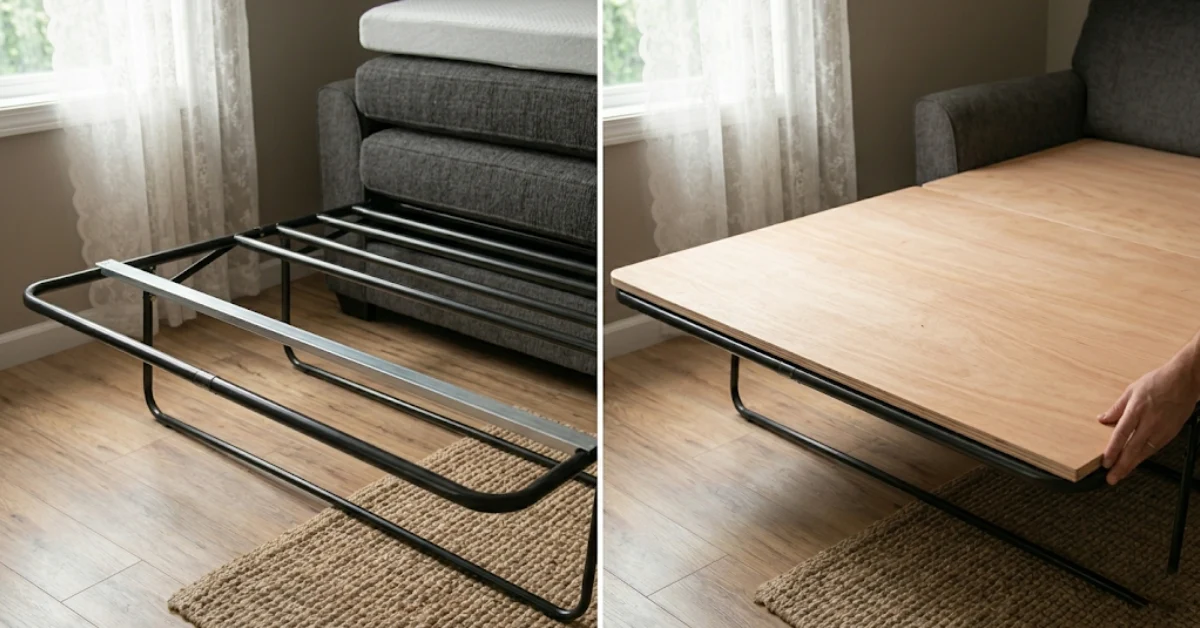
Here’s the thing that almost no furniture blog actually addresses: the horizontal metal support bar running across the middle of the frame.
You know the one. You feel it right across your lower back around 3 a.m., and suddenly, you’re wide awake, wondering if you made a terrible life decision.
That bar is structural — it keeps the frame from collapsing — but it’s also the number one complaint on every Reddit thread about pull out sofas. Most “how to improve a sofa bed” articles skip right past it. We’re not going to do that.
The Surface Is Uneven
When the mattress folds inside the sofa, it creates fold lines. Over time, those crease points become permanent ridges. You’re essentially sleeping on a surface with built-in lumps from the factory design.
Understanding these four problems means you can actually fix them — instead of just masking the symptoms.

7 Fixes That Actually Work
1. Add a Memory Foam Mattress Topper (This One’s Non-Negotiable)
If you do nothing else on this list, do this.
A 2 to 3-inch memory foam mattress topper transforms a pull out sofa bed completely. It adds real cushioning, distributes weight evenly, and covers up the crease lines from the folded mattress underneath. It also handles that slow sagging problem — the foam bridges the compressed centre and creates a flat, even surface again.
Look for one that’s specifically 2 inches if you want it to fold back into the sofa without a fight. Anything over 3 inches gets awkward to store.
A pull out sofa bed with a memory foam mattress topper is genuinely what most people say finally made the experience “actually comfortable.” It’s not a permanent mattress replacement — it’s a targeted fix for exactly the problems listed above.
Budget tip: You don’t need a $200 topper. A solid 2-inch option in the $40–$80 range does the job well.
2. Tackle the Bar Problem Directly
This is the fix nobody tells you about. Three methods that actually work:
Method A — The Plywood Layer: Cut a piece of thin plywood (½ inch thick) to the size of the mattress. Place it between the frame and the mattress. The board bridges the gap over the bar and creates a flat surface. It sounds low-tech because it is — and it works. If you’re curious about how structural support works in home construction more broadly, understanding what a stem wall is shows the same logic: a solid, continuous base prevents stress points from forming above it.
Method B — Folded Blanket Buffer: If you don’t want to cut wood, fold a thick blanket and place it directly over the bar area before putting the mattress back down. It won’t eliminate the bar, but it cushions the pressure point enough to make a real difference.
Method C — Mattress Topper Positioning: Position a thick topper so its centre aligns with the bar. The foam absorbs the pressure before it reaches the sleeper. Combined with Method A or B, this is the most complete solution.
3. Replace the Thin Mattress Pad With a Featherbed Layer
A featherbed (or down-alternative pad) adds a soft, cloud-like layer on top of your topper. It’s inexpensive, compresses easily for storage, and makes the whole sleep surface feel warmer and softer.
This is especially worth it if someone’s staying more than one night — a featherbed layer is the difference between “it was fine” and “I actually slept well.” They won’t know about your plywood fix. They’ll just wake up feeling rested.
4. Upgrade the Pillows Separately
The sofa bed mattress gets all the attention, but cheap pillows make everything worse. If you’re putting guests on a pull-out, give them actual bedroom pillows — not the decorative sofa cushions.
This sounds obvious. You’d be surprised how often it’s overlooked.
5. Use a Mattress Grip Pad Underneath
Pull out sofa mattresses slide. A lot. By 2 am, the mattress has migrated six inches toward the foot of the frame, and your guest is halfway on bare metal.
A non-slip grip pad placed between the frame and mattress keeps everything in place. They cost under $15 and solve a problem that wrecks sleep quality in a completely preventable way.
6. Consider a Lightweight Mattress Replacement
If your current mattress is beyond saving — genuinely flat, permanently creased, or over 8 years old — it might be time for a replacement. But you don’t have to buy a new sofa to do it.
Some brands sell replacement sofa bed mattresses in standard sizes (Full, Queen) that fit most pull-out frames. Look for one that’s 4 to 5 inches thick — enough comfort without being impossible to fold back in.
This is where pull-out sofa beds with a memory foam mattress built-in (as the primary mattress, not just a topper) really shine. Brands like Serta and Sealy make sofa bed-specific foam mattresses that are worth the $150–$250 investment if the sofa itself is still in good shape.
Using it every night? That changes the calculation. Most stock mattresses aren’t rated for daily use — they’re designed for occasional guests. If you’re sleeping on it every night, go straight to a replacement mattress rated for regular use and check that the frame is rated for 400+ lbs. With those two upgrades in place, a pull-out sofa bed works as a full-time sleeping setup. Without them, expect the mattress to wear out within 12–18 months.
7. Temperature Management Matters More Than You’d Think
Metal frames get cold. A lot of guest complaints about pull-out sofa beds are actually about temperature, not just firmness.
Add a fitted sheet that covers the mattress and tucks under the edges. Layer a light blanket between the mattress and the fitted sheet if the room runs cold. It sounds fussy, but it makes a real difference in how the bed feels from the first minute.
Best Pull Out Sofa Bed for Small Apartments (2025 Picks)
Shopping for a new one? If you’re working with a studio or tight floor plan, the sofa’s footprint matters as much as how it sleeps.
What to Look for in a Pull Out Sofa Bed for Small Apartments
- Frame size when folded: A 72-inch sofa fits most studio layouts. Anything over 84 inches starts eating into your walking space.
- Pull-out mechanism: Bi-fold mechanisms are easier to manage than tri-fold mechanisms in tight spaces.
- Arm height: Low-arm designs make the sofa look proportionally bigger in a small room.
A small Pull Out Sofa Bed for a studio apartment works best when the sofa profile is clean and compact, but the sleeping surface opens to at least a full-size. Queen in a studio is possible — just verify the room dimensions first, because you’ll need about 5 feet of clearance in front.
Not sure whether a pull-out sofa or a Murphy bed makes more sense for your space? The tradeoffs are bigger than most people realise.
Most Comfortable Pull Out Sofa Bed for Guests
If comfort for overnight guests is your main priority, there are three things worth paying for: a mattress at least 5 inches thick, a solid steel or hardwood frame (less squeaking, more stability during movement), and a mechanism that opens without a wrestling match.
Skip any one of these, and you’ll hear about it at breakfast.
The most comfortable Pull Out Sofa Bed for guests usually sits in the $600–$1,200 range. Below that, you’re often compromising on mattress quality or frame stability. Above it, you’re mostly paying for aesthetics — the sleep quality doesn’t jump dramatically past $1,200.
Affordable Pull Out Sofa Bed Under $500 — What’s Realistic
Can you find a decent, affordable Pull Out Sofa Bed under $500? Yes. Should you expect hotel-quality sleep? No. But with realistic expectations and the fixes above, it can absolutely do the job for occasional guests.
What to expect at this price point:
- Thinner mattress (3–4 inches) — plan to add a topper from day one
- Lighter frame — works fine for occasional use, not for nightly sleeping
- Basic mechanism — functional, but may need more effort to open and close
IKEA’s FRIHETEN is probably the most Googled option in this range — and honestly, it’s decent for occasional use once you’ve added a topper. Zinus makes a solid budget frame, too. Just go in knowing the mattress will need help, and read reviews specifically for “bar discomfort” and “mattress thickness” before buying — those two issues appear consistently in the $300–$500 category.
Wrapping Up
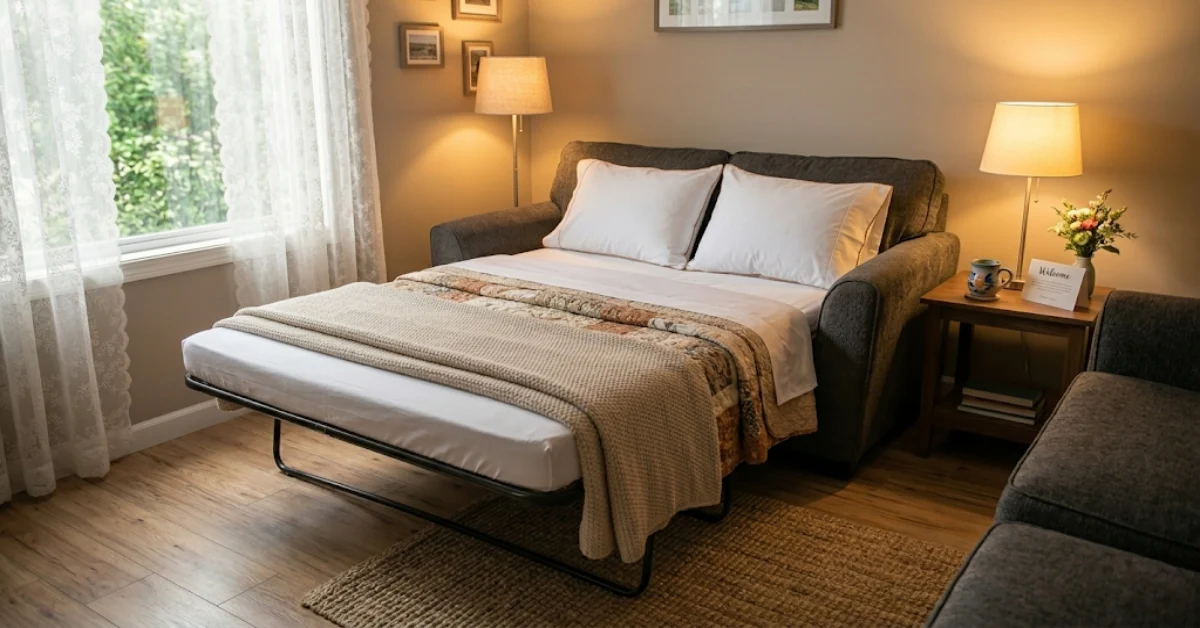
Pull Out Sofa Beds don’t have to be the furniture equivalent of a bad night. The discomfort is real, but it’s also very fixable. Start with a 2-inch memory foam topper and tackle the bar problem with a plywood layer — those two changes alone will make a noticeable difference before your next guests arrive. Much like keeping up with household maintenance tasks — scheduling a sewer line clean-out before a problem develops, for example — the key is knowing what to address and when.
If you’re shopping for a new one, prioritise mattress thickness and frame quality over appearance. The sofa can look great, but sleep terribly. Don’t let that be your experience.
Already got the topper sorted and wondering about the best setup for a studio or small space?
FAQs
Can you sleep on a Pull Out Sofa Bed every night?
Technically, yes — practically, it depends on what you’ve got. Most standard Pull Out Sofa Beds are designed for occasional use, and their mattresses reflect that. For nightly sleeping, you need two things: a replacement mattress rated for regular use (not the stock 3.5-inch version), and a frame with a 400+ lb weight rating for long-term durability. With those in place, some people genuinely use a pull-out as their primary bed in studio apartments. Without them, expect the mattress to wear out within 12–18 months and the frame to start showing stress earlier than it should.
What mattress topper thickness works best for a Pull Out Sofa Bed?
Two inches is the sweet spot. It adds meaningful cushioning without making the sofa impossible to fold back. If storage isn’t a concern — you leave it open most of the time — 3 inches gives noticeably better support.
How do I stop the mattress from sliding on the frame?
A non-slip grip pad is placed between the metal frame and mattress. Available at most home goods stores or online for under $15. Mattress stays put all night.
What weight capacity should I check before buying?
For a single sleeper, 250 lbs is the standard minimum. For couples or heavier sleepers, look for frames rated at 400+ lbs. This information is often buried deep in product specs — search for it specifically before purchasing.