

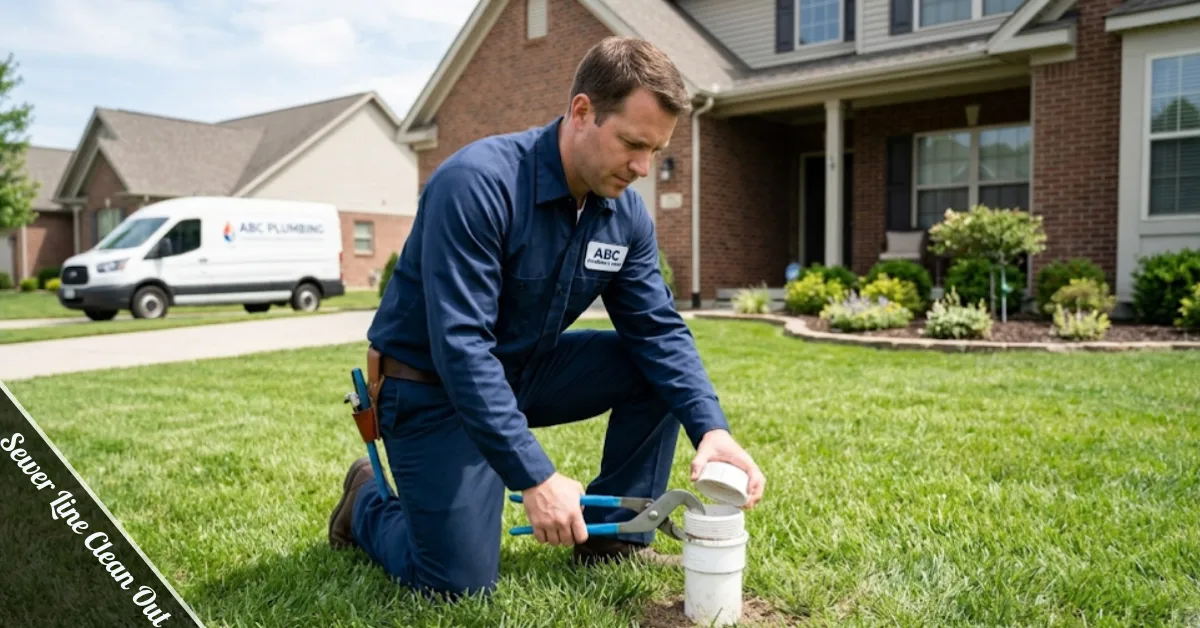
A sewer line clean out is a capped pipe that gives direct access to your home’s main sewer line. It lets plumbers insert tools, cameras, or water jets to clear blockages without digging up your yard or removing fixtures. Most homes have one located outside near the foundation or along the exterior wall. It is one of the most useful, and most overlooked, parts of your plumbing system.
Most homeowners never think about their sewer line until something backs up. By then, the damage is already underway. Drains slow down, toilets gurgle, and the smell of sewage creeps indoors.
A sewer line clean out is the one component that makes all of this far easier to fix and far cheaper to deal with. This guide explains exactly what it is, where to find it, how it works, and what it costs, so you are never caught off guard.
What Is a Sewer Line Clean Out?
A sewer line clean out is a short, capped pipe that connects directly to your main sewer line. It acts as a service access point. When a plumber needs to inspect, snake, or pressure-wash your sewer pipe, the clean out is where they start.
You will typically see it as a white or black PVC pipe sticking four to six inches above the ground. It has a threaded cap that screws on and off. Some older homes have cast-iron versions, and some clean outs are located flush with the ground or inside the home near the basement floor.
Without a clean out, a plumber must access your sewer line through a toilet or from the roof vent stack. Both options cost more time and money. The clean out removes that problem entirely by putting the access point exactly where it needs to be.
Where to Find Your Sewer Line Clean Out
Most sewer clean outs sit outside, close to the house. The exact location depends on your home’s layout and the direction your sewer line runs toward the municipal main or septic system.
Common locations to check:
- Along the exterior wall of the house, often near the bathroom
- In the front or back yard, close to the foundation
- Inside the basement or crawl space, on the floor or lower wall
- Near the garage or utility area in some newer builds
If your home has a stem wall foundation, the clean out pipe is often installed just outside that perimeter wall, at the point where the sewer lateral exits the structure. Understanding your home’s foundation layout helps you narrow the search. You can learn more about stem wall construction at this guide on stem walls.
Older homes built before the 1970s sometimes lack an outdoor clean out entirely. If you cannot find one, a plumber can confirm this during a routine inspection and install one if needed.
Types of Sewer Clean Outs Explained
Not all clean outs are the same. Knowing the difference helps you understand what you have and whether it covers your needs.
Two-way clean out: The most common type in modern homes. It gives access to the sewer line in both directions, toward the house and toward the street. This is the most useful option for diagnosing and clearing blockages anywhere along the line.
One-way clean out: An older or simpler version that allows access in one direction only. It works, but it limits what a plumber can do from a single entry point.
Test tee: A fitting used inside the wall or below the floor, mainly for testing drain pressure rather than routine cleaning. It is not useful for clearing mainline clogs.
Most plumbing codes in the United States now require two-way clean outs for new construction. If your home has an older one-way setup, upgrading is worth considering.
Warning Signs You Need a Sewer Line Clean Out
Your plumbing usually gives you notice before a full blockage happens. Catching these signs early can save you from a much larger repair bill.
Watch for:
- Multiple drains running slowly at the same time (not just one fixture)
- Gurgling or bubbling sounds from toilets or sink drains after using water elsewhere
- Water backing up in a tub or shower when you flush the toilet
- A persistent sewage smell inside or outside the home
- Soggy or unusually green patches in the yard above where the sewer line runs
- Water is pooling around the floor drains in the basement
One sign that homeowners often miss is a sudden increase in insects or pests inside the home. A small sewer crack or persistent moisture from a slow-draining line can attract certain insects. If you are also dealing with black ants appearing indoors, moisture from a plumbing problem below the floor could be part of the reason. This article on black ants in the house covers other moisture-related causes worth ruling out.
According to HomeAdvisor’s 2025 cost data, most plumbing professionals recommend scheduling a professional sewer line clean out every 18 to 22 months, even when no symptoms are present. Consistent maintenance prevents surprise blockages and keeps emergency call fees off your bill.
How Plumbers Use the Sewer Line Clean Out
When a plumber arrives at a clean out, they remove the cap and gain direct access to the main sewer line. From there, they have several tools available depending on what the line needs.
Drain snake (auger): A long, flexible metal cable fed into the line to break up or pull out clogs. It works well for standard blockages caused by grease, hair, and soft debris. An average clog takes one to two hours to clear this way.
Hydro jetting: A high-pressure water system that blasts the inside of the pipe clean. It removes grease buildup, mineral scale, and even early-stage root intrusion. It is more thorough than snaking and more appropriate for recurring clogs or older pipes with significant buildup.
Video camera inspection: A small waterproof camera on a flexible cable gives the plumber a live view of the pipe interior. This is the fastest way to confirm what is causing a problem, where exactly the blockage or damage sits, and whether the pipe has cracks, root penetration, or joint separation.
All three of these services are significantly faster and easier when accessed through a clean out rather than from a roof vent or pulled toilet. As TLC Plumbing notes, clean outs also keep the work outside, reducing the chance of mess inside your home.
Sewer gas is another concern during this process. If a plumber detects elevated gas levels after opening the clean out, proper ventilation becomes important. Homes that already deal with indoor air quality concerns, including excess humidity, should take note. Elevated indoor humidity can mask or worsen sewer gas odours. This resource on how to decrease humidity in your house is a useful background for homeowners managing air quality alongside plumbing work.
Sewer Line Clean Out Installation Costs
If your home does not have a sewer clean out, installing one is a straightforward job for a licensed plumber, though the cost depends on several factors.
According to Angi’s 2026 cost data, a two-way sewer clean out installation averages around $2,700, with most projects falling between $1,400 and $3,500. A one-way clean out typically runs between $650 and $2,000.
Key cost factors include:
- Linear footage: Installation costs range from $50 to $250 per linear foot, depending on how far the plumber needs to run pipe to connect to your sewer main
- Pipe depth: Deeper sewer lines require more excavation, which raises labour costs
- Soil and landscaping: Rocky ground, pavement, or mature tree roots near the line all add to the project scope
- Permit fees: Most municipalities require a permit for sewer work; fees range from $150 to $1,600, depending on location
For the clean out service itself (clearing an existing line), the national average falls between $200 and $600, according to Fixr’s January 2025 data. Hydro jetting specifically costs between $350 and $600.
Installing a clean out where there is none pays for itself quickly. Without one, a plumber must remove a toilet or access the line from the roof, both of which add time, risk, and cost to every service call.
How to Keep Your Sewer Clean Out in Good Shape
Once your clean out is installed and your line is clear, a little routine attention goes a long way.
Keep the cap secure at all times. A loose or missing cap allows debris, insects, and groundwater to enter the sewer line, which can cause a different kind of blockage entirely. If the cap is cracked or stripped, a replacement cap costs only a few dollars at any hardware store.
Keep the area around the clean out clear. Mulch, soil, and lawn overgrowth can bury the pipe and make it difficult to find in an emergency. Mark its location if needed, especially before winter when snow can obscure it.
Avoid planting trees or large shrubs near the sewer line path. Tree root intrusion is one of the most common causes of sewer line damage. Roots naturally track toward moisture in the soil and will work their way into even small pipe cracks over time.
Do not pour grease, wipes, or harsh chemical drain cleaners down your drains regularly. These do not address the source of a clog and can damage pipe material with repeated use.
Schedule a professional inspection every one to two years. A camera inspection through the clean out takes less than an hour and gives you a clear picture of what is happening inside the pipe before a minor buildup becomes a full blockage.
FAQs
Does every home have a sewer line clean out?
Not necessarily. Homes built before the 1960s often lack one, and some older builds only have interior access points like a basement floor drain. A licensed plumber can confirm whether your home has one and where it is located.
Can I open the sewer clean out myself?
You can remove the cap yourself, but you should not attempt to clear a main line blockage without professional equipment. Opening the cap on a fully blocked line can release pressurized sewage. If you suspect a serious blockage, call a plumber before removing the cap.
What happens if I do not have a sewer clean out?
Without a clean out, your plumber must access the line through a different route, usually by removing a toilet or running equipment down a roof vent stack. This takes longer, costs more, and carries a higher risk of accidental damage to your plumbing fixtures.
How do I know if my clean out cap is the right size?
Standard residential sewer clean outs use either a 3-inch or 4-inch pipe diameter. The cap size must match the pipe. Take the old cap to a hardware store or note the pipe diameter before buying a replacement.
Does adding a sewer clean out increase home value?
It can, particularly during a home inspection. Buyers and inspectors respond positively when a sewer line can be inspected easily by camera. Homes without clean outs may require the buyer to budget for installation or accept more uncertainty about the line’s condition.