

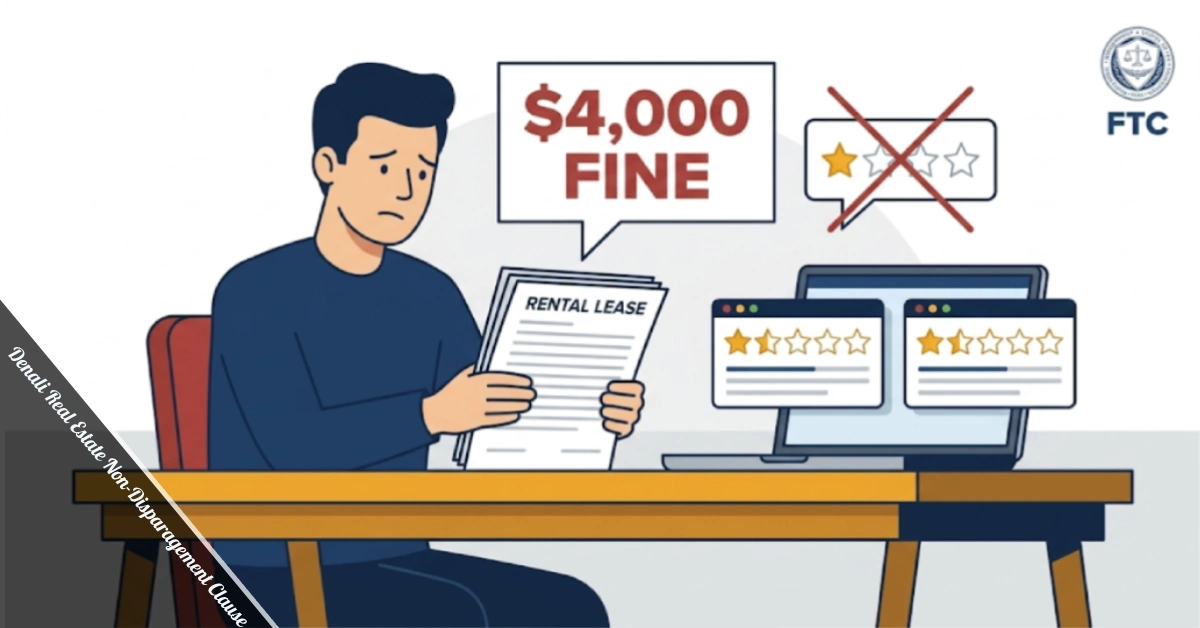
The Denali Real Estate non-disparagement clause fined a Scottsdale tenant $4,000 for posting honest online reviews. Under the Consumer Review Fairness Act (CRFA), such clauses are illegal in the United States. The FTC can pursue civil penalties of up to $53,088 per violation. Renters who face similar fines have the right to file complaints with the FTC, their state attorney general, and the BBB.
A $4,000 Fine for Leaving a Bad Review
Imagine paying $4,000 because you told the truth about a dirty rental. That is exactly what happened to Adrian Paull and his wife in Scottsdale, Arizona, in 2025.
The couple rented a short-term condo through Denali Real Estate after selling their home in North Scottsdale. They expected a clean, comfortable place to stay while searching for their next home. Instead, they say they found black mould under a piece of furniture in the master bedroom, holes in the walls, missing sections of carpet, and exposed carpet tacks.
After reporting the issues and receiving what they described as little response, they posted honest reviews on Google and Yelp. Within days, a $2,200 rental credit flipped to an $1,800 balance due. Denali Real Estate had charged them two $2,000 “non-disparagement” penalties.
What the Denali Real Estate Non-Disparagement Clause Actually Said
The clause was buried inside a 21-page lease agreement. It prohibited tenants from posting negative online reviews, negative ratings of three out of five stars or below, and negative posts on any social media or review platform.
Each violation carried a $2,000 fine. The Paulls posted two reviews, so Denali Real Estate billed them $4,000 total.
Clauses like this are sometimes called “gag clauses.” Landlords and businesses use them to suppress critical feedback and protect their online ratings. They are typically written in dense legal language that most renters miss when signing a lease.
Before you sign any rental agreement, it is worth reviewing more than just the price and the move-in date. Understanding how real estate markets work in different regions can help you ask better questions and spot unusual contract terms before committing.
Why Non-Disparagement Clauses Violate Federal Law
The Consumer Review Fairness Act (CRFA) was passed in 2016 and took effect on March 14, 2017. It makes it illegal for businesses to include clauses in form contracts that restrict a consumer’s right to leave honest feedback.
The law covers online reviews, social media posts, and even verbal feedback. If your lease or service contract contains a non-disparagement clause, it is unenforceable under federal law, even if you signed it.
The FTC’s Consumer Review Fairness Rule, which formally took effect on October 21, 2024, further strengthened enforcement. It classifies review-suppression conduct as unfair or deceptive, which gives the FTC faster access to civil penalties.
As Andrew Smith, former Director of the FTC’s Bureau of Consumer Protection, stated: “Many online shoppers use customer reviews and ratings to get information, but these companies used gag clauses in their form contracts to stop customers from posting honest but negative feedback. These gag clauses are illegal, and companies that know it but use them anyway will be subject to civil penalties.”
FTC Enforcement: What the Penalties Look Like
The FTC has taken action against multiple property management companies for using these clauses. In 2019, the FTC settled complaints against Shore to Please Vacations LLC in Florida and Staffordshire Property Management, LLC in Maryland. Both used non-disparagement clauses in their rental agreements.
Under those settlement orders, the companies were barred from using review-limiting terms in future contracts and required to notify existing tenants that any such clause was void and unenforceable. Shore to Please was also required to dismiss a lawsuit it had filed against a renter for violating its non-disparagement agreement.
By December 2025, the FTC had issued warning letters to 10 additional companies for possible violations of the Consumer Review Fairness Rule. Civil penalties can now reach up to $53,088 per violation.
Vacation and short-term rental agreements are particularly common places where these clauses show up. Even high-end properties are not immune; travellers booking through curated platforms such as luxury villa collections should still check rental contracts for any language that restricts their right to leave honest feedback.
What Happened After Denali Real Estate Faced Public Scrutiny
After 12News contacted Phoenix, Denali Real Estate issued a statement saying it takes “all feedback seriously” and submitted its lease agreement for legal review. Within hours, the company announced it would remove the non-disparagement clause from its contracts “immediately.”
Despite that reversal, it remained unclear whether Denali would drop the $4,000 charges against the Paulls. The company maintained that it had made multiple attempts to fix the condo’s problems, but said the Paulls had denied access to contractors. The Paulls disputed that account entirely and described ongoing issues inside the unit, including storm damage and animal waste.
Paull filed complaints with the Arizona Attorney General’s Office, the BBB, and the FTC’s complaint system. His case drew national attention and renewed calls for stricter enforcement of tenant review rights.
How to Spot a Gag Clause in Your Lease
Most non-disparagement clauses are not labelled clearly. They may appear under sections titled “Tenant Obligations,” “Social Media Policy,” or “Authorisation, Agreement and Release.” Here is what to look for:
- Any language that prohibits posting reviews, ratings, or feedback on third-party sites
- References to fines or financial penalties for “negative” or “disparaging” content
- Clauses requiring you to waive your right to leave reviews as a condition of the lease
- Language that transfers your review rights to the landlord or property manager
- Any mention of star ratings, Google reviews, Yelp, or social media platforms in a restrictive context
If you see any of these, the clause is almost certainly illegal under federal law. You do not have to accept it, and you cannot be legally penalised for leaving an honest review even if you signed a contract containing one.
Working with a reputable real estate professional can help you avoid these pitfalls. A licensed agent who understands tenant rights can review contract terms before you sign. Professionals like Alexander Boriskin of Douglas Elliman Real Estate represent the kind of informed guidance that can make a significant difference when evaluating any rental or purchase agreement.
What to Do If You Are Fined for a Negative Review
If a landlord or property manager charges you for posting a review, follow these steps:
- Do not pay the fine. The clause is unenforceable under the CRFA. Paying could be interpreted as admission.
- Document everything. Save copies of the lease, the reviews you posted, and any invoices or emails related to the fine.
- File a complaint with the FTC at reportfraud.ftc.gov.
- Contact your state attorney general. In Arizona, file at azag.gov/complaints/consumer. Most states have a similar consumer complaint portal.
- Report to the Better Business Bureau at bbb.org/file-a-complaint.
- Consult a tenant rights attorney. Many will review your lease for free or at a low cost during an initial consultation.
- Leave your review up. You have the legal right to keep honest feedback published.
What Property Managers Should Know
This issue is not just a problem for renters. Property managers who include non-disparagement clauses in their leases expose themselves to serious legal and reputational risk.
Under the FTC’s Consumer Review Fairness Rule, violations can result in federal lawsuits and civil penalties reaching $53,088 per violation. Businesses that enforce these clauses, even once, may face compliance monitoring, mandatory consumer notifications, and court orders requiring full removal of the clauses from all current contracts.
The Denali Real Estate case shows how quickly media attention can amplify a single enforcement complaint. Within days of the story breaking, national outlets picked it up, and the company reversed its policy under public pressure. The reputational cost far exceeded any fine the company might have collected.
FAQs
Is a non-disparagement clause in a lease enforceable?
No. Under the Consumer Review Fairness Act, non-disparagement clauses in standard consumer contracts are unenforceable. Even if you signed the lease, the clause has no legal effect. You cannot be fined or penalised for posting an honest review.
What is the Denali Real Estate non-disparagement clause case about?
In 2025, Scottsdale-based Denali Real Estate fined a tenant $4,000 for posting two negative reviews on Google and Yelp. The tenant, Adrian Paull, reported black mould and unfinished repairs at the property. After media coverage, Denali removed the clause from its leases, though the fine status remained unresolved.
How much can the FTC fine a company for using a gag clause?
As of the updated Consumer Review Fairness Rule, which took effect on October 21, 2024, civil penalties can reach up to $53,088 per violation. The FTC can also require companies to notify all affected consumers and submit to compliance monitoring.
What should I do before signing a rental lease?
Read the full contract, not just the rent amount and move-in date. Pay close attention to any section that mentions online reviews, social media, or tenant feedback. If you see any language that restricts your right to post reviews or threatens a fine for doing so, that language is illegal and should be flagged before you sign.
Can a landlord sue me for leaving a negative review?
A landlord can attempt to sue, but courts will not uphold a lawsuit based on a non-disparagement clause that violates the CRFA. In fact, the FTC has required at least one company to dismiss a lawsuit filed against a tenant for this exact reason. Your right to post honest, factual reviews is protected under federal law.