

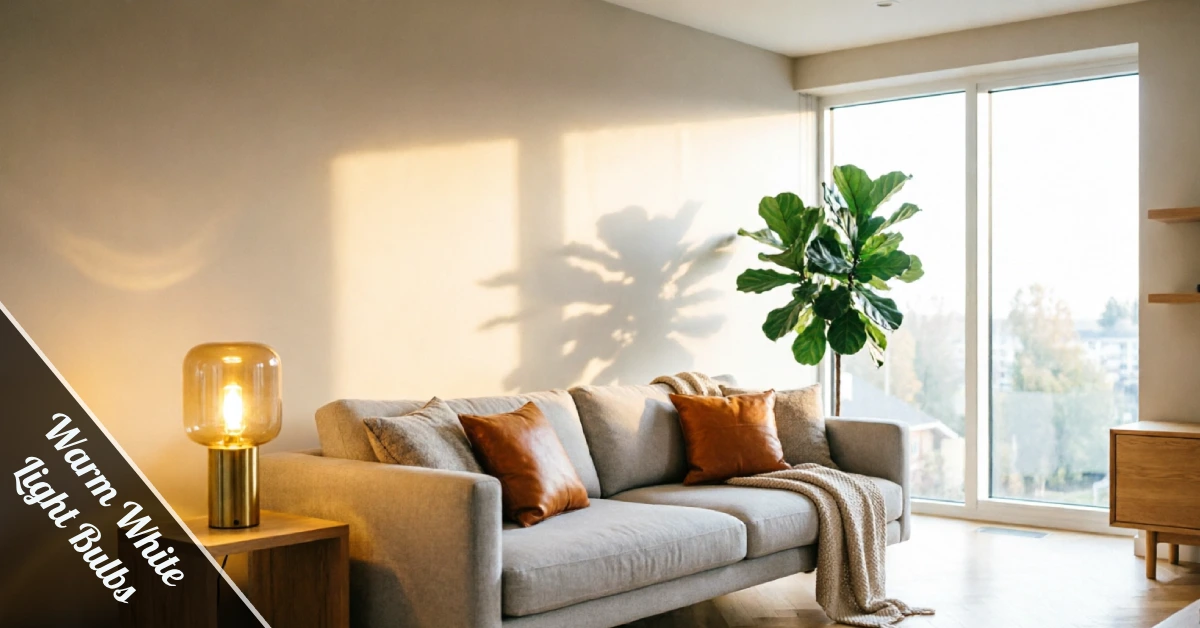
Lighting can make or break a room’s vibe, but a spilled coffee stain kills it fast. Snag the coffee stain removal guide. Warm white light bulbs wrap each room in a comfortable, flattering light that feels like home.
What Even Are Warm White Light Bulbs?
You flick a switch, and the room feels like a cashmere blanket. That’s exactly what warm white light bulbs do. They sit in the 2700K to 3000K range, tossing out a soft, yellowish-white glow. They replicate old-school incandescent warmth without the energy vampire act. LED versions sip electricity and last forever. These bulbs make skin tones look healthier, wood floors richer, and your Friday night takeout feel like a candlelit dinner. Warm white is the cheat code for instant atmosphere: no harsh blue tones, no clinical vibes. Interior designers call them the little black dress of home lighting—universally flattering and impossible to mess up. Once you go warm white, cold blue bulbs just feel wrong.
Kelvin Scale Made Simple
Kelvin sounds like a physics flex, but it’s just a number that describes light color. Lower numbers mean warmer, cozier light. 2700K gives you that classic incandescent amber glow.
Jump to 3000K, and you’re still warm but slightly cleaner, like morning sunlight through a sheer curtain. 3500K starts flirting with neutral territory, losing some of that fireside charm.
Stick to 2700K for bedrooms and living rooms. That’s where warm white light bulbs truly earn their keep. If you’re mixing bulbs in an open-plan space, keep all warm whites within 200K of each other or the vibe fractures.
Warm White vs Soft White vs Cool White
Most folks confuse warm white and soft white because lighting brands love making life complicated. Soft white hangs around 2700K and leans slightly more yellow. Warm white spans 2700K-3000K and feels a touch brighter while staying cozy. Think of soft white as a candlelit dinner, warm white as a stylish lounge bar at 8 p.m. Both are inviting, but the mood shifts. Cool white sits at 4000K and above—crisp, blue-ish, and built for task lighting, not relaxation. You don’t want cool white in your bedroom unless you enjoy interrogation-room aesthetics. Stick to warm white light bulbs for living spaces. Use cool white for garages, laundry rooms, or anywhere you need to spot stains instantly. Mixing color temperatures in one fixture makes a room look confused.
Where to Use Warm White Bulbs (And Where Not To)
Bedrooms demand warm white. It cues your brain that it’s time to wind down, not reply to emails. Living rooms thrive under 2700K-3000K light because it makes everything—upholstery, art, your pizza—look better. Dining areas become instant date-night material. Food looks more appetizing, skin tones glow, and the harsh overhead fixture suddenly feels intentional. If you just installed sleek LVP planks, warm white light makes the wood tones pop beautifully without any extra effort. Bathrooms can work with 3000K if you need decent visibility for shaving or makeup, but 2700K turns a bath into a spa. Skip warm white in home offices where you need alertness—3500K-4000K neutral white keeps your brain firing.
Lumens Over Watts: Real Brightness
Forget watts—that’s a dinosaur metric from the incandescent age. Lumens tell you how much light you actually get. A 60W incandescent equals about 800 lumens, and a warm white LED hits that while sipping 9 watts. In a bedroom, 400-800 lumens per fixture feels restful. Living rooms need 1,500-3,000 total lumens layered across lamps, sconces, and ceiling fixtures. Dining areas want 400-800 lumens centered over the table. It’s enough to see your steak without blinding your date. A simple lumen cheat code: multiply the room’s square footage by 20. That gives you a solid baseline; then tweak from there.
LED vs Incandescent: The Real Upgrade
Incandescent warm white bulbs gave us the nostalgic glow but burned out faster than a TikTok trend. LED versions match that same color but slash energy use by 80% and run for 15,000+ hours. You’ll replace an LED roughly once a decade. Incandescents die every year, and that cost adds up as daily coffee shop runs. Heat output is another win—LEDs stay cool to the touch, so you won’t scorch your fingers changing a bulb or bake your lampshade into a fire hazard.
The Efficiency Flex: Savings & Lifespan
Swapping five old bulbs for LED warm whites can save you around $75 a year. That’s a free dinner for two, just from flipping switches. Look for ENERGY STAR labels. They guarantee accurate color, proper dimming, and that the bulb won’t flicker like a haunted house prop.
Lifespan claims of 15,000 hours sound impressive, but that’s roughly 13 years if used three hours daily. You’ll probably redecorate before the bulb quits.
Dimmable & Smart Bulbs: Next-Level Control
Not all warm white LED bulbs dim smoothly—cheap ones flicker or buzz. Check the packaging for “dimmable” and pair with a compatible LED dimmer. Smart warm white bulbs connect to Wi-Fi or Bluetooth, letting you adjust brightness and schedule lights from your phone. You can wake up to a gentle glow instead of a blaring alarm. Voice control through Alexa or Google Home turns you into a lighting wizard. “Alexa, set living room to 50%” feels like effortless luxury.
Bulb Bases & Fitting Basics
The base is the metal part that screws or plugs in. E26 is the standard medium base in North America—fits most table lamps, floor lamps, and ceiling fixtures. E12 candelabra bases pop up in chandeliers and decorative sconces. B22 bayonet bases are common in the UK and require a push-and-twist motion. Always check your fixture’s sticker for the recommended base and max wattage. Using a bulb that’s too large or that exceeds the rating can damage the socket.
Buying Checklist & Expert Hacks
Here’s a no-nonsense table to keep you on track when you hit the lighting aisle.
| Feature | What to Look For |
|---|---|
| Color Temperature | 2700K for cozy, 3000K for slightly crisper warm |
| Brightness (Lumens) | Match room size & purpose (see lumen guide) |
| Dimmability | “Dimmable” is clearly stated; verify dimmer match |
| Base Type | E26, E12, or B22 depending on fixture |
| CRI | 90+ for true color rendering |
| Smart Features | Wi-Fi/Bluetooth if automation matters |
Stick this on your phone before shopping. It’s the difference between nailing the vibe and buying a bulb that ends up in the junk drawer.
CRI above 90 means colors look accurate, not washed out. In a space where you dress, apply makeup, or display art, that detail matters more than you think.
FAQs
Is 2700K the same as warm white?
Yes, 2700K is the classic warm white sweet spot. It delivers the candlelit, amber-toned glow that makes interiors feel intimate and relaxed. Almost every “warm white” LED on the shelf targets 2700K. Some brands label it soft white, but the effect is nearly identical.
Can I use warm white bulbs in the kitchen?
Absolutely, especially in open-concept kitchens where you want a seamless flow with the living area. 3000K warm white gives you enough clarity for chopping veggies without losing the inviting mood. Pair under-cabinet warm white strips with slightly cooler overhead task lights for the ultimate layered setup. It’s what pro designers call functional ambiance.
Do warm white LEDs look fake?
Cheap ones with low CRI can look artificial, almost plasticky. Spend a few extra bucks on bulbs with a CRI of 90 or above, and you’ll get that rich, natural warmth that rivals old-school incandescent. Modern high-CRI warm white light bulbs render skin, wood, and fabric so accurately you’ll swear the sun snuck inside.
How many warm white bulbs do I need for a bedroom?
Aim for three to four light sources: a ceiling fixture plus a pair of bedside table lamps or wall sconces. This layered approach kills harsh shadows and puts you in total control of the vibe. Total lumens around 1,200-1,800 will cover most bedrooms comfortably. Dim them down at night, and you’ve got a sleep sanctuary.
Conclusion
Before you fully kick back, deal with hidden mold safely so your fresh lighting doesn’t share the room with spores.
Now flip the switch tonight and let those warm white light bulbs bathe your space in flawless, feel-good light. Your home, your vibe, absolutely nailed.