

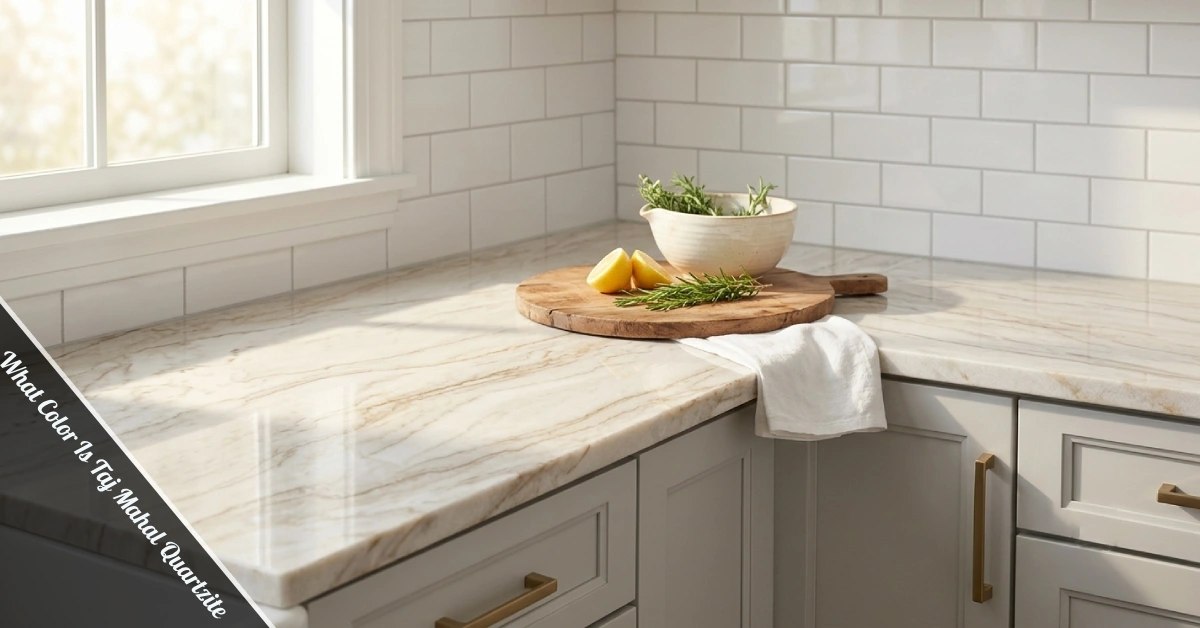
Taj Mahal quartzite features a soft ivory or creamy white base with warm taupe, beige, and light gold veining. The stone has subtle warm undertones, not cool or stark whites. Each slab varies slightly, but all share inviting warmth. When light hits the surface, the subtle veins create depth and movement, similar to marble but far more durable.
What Colour Is Taj Mahal Quartzite?
The short answer: a warm, creamy ivory with soft caramel and taupe veining.
The full story is more interesting. Taj Mahal quartzite is named after India’s famous monument, and the comparison makes sense. Like the Taj Mahal’s pale marble facade, this Brazilian stone delivers a sophisticated, light aesthetic. But the colour is far more complex than simple white.
When you look at a Taj Mahal slab, your eye sees layers. The background colour reads as soft ivory or cream, never bright white or cool white. Across the surface, delicate veins flow in shades of warm taupe, light beige, and subtle gold. Some call it “caramel,” others say “honey.” The truth is, colour shifts depending on light, angle, and the specific slab you choose.
According to MSI Surfaces, a major supplier, Taj Mahal quartzite contains “soft white background and subtle gold veins.” This description is accurate but understates the warmth. The stone doesn’t feel cold or clinical. Instead, it brings warmth into a space without being loud or trendy.
The Warmth Factor: What Makes It Special
What separates Taj Mahal from plain white countertops is warmth. True white surfaces—like many engineered quartz options—can feel sterile, especially under cool lighting. Taj Mahal avoids this pitfall entirely.
The warmth comes from two sources: the base colour and the veining. The base isn’t pure white. It’s closer to eggshell or cream, with soft beige undertones. This alone changes how the stone feels in a room. Add the golden and taupe veins, and the result is a surface that feels inviting, not clinical.
This warmth is why so many homeowners choose Taj Mahal over other natural stones. The colour works with both traditional and modern kitchens. Designers in New England report that demand for Taj Mahal quartzite has grown steadily since 2024, with particular interest in kitchen islands (according to Granite Guy Inc., a Massachusetts fabricator with over 10,000 installations).
The warmth also means Taj Mahal plays well with other materials. Wood cabinets embrace the golden undertones. White cabinetry gains sophistication from the soft veining. Even bold cabinet colours like navy or forest green find balance against the stone’s neutral warmth.
How Lighting Affects the Colour isn’t static. Taj Mahal looks different at 9 AM than it does at 5 PM. The finish also matters.
A polished finish catches and reflects light. This is why the polished Taj Mahal appears to glow. The cream base seems brighter, and the gold veins shimmer. In north-facing kitchens with limited direct light, polished is often the better choice because it amplifies available light.
A honed finish mutes the shine. The surface becomes matte, and the colour reads as softer, more subdued. The gold undertones are less obvious, and the taupe veining becomes more prominent. Honed finishes hide water spots and fingerprints better, which is practical for busy kitchens.
Leathered finishes add texture, creating subtle shadows that make the veining more dramatic. The colour doesn’t change, but perception does.
Direct sunlight intensifies the warm tones. A kitchen with south-facing windows will showcase the gold and caramel veins more than a north-facing room. This is important to consider during the selection process. Always view your specific slab in your specific kitchen lighting before committing.
Comparing Taj Mahal to Other Popular Countertops
Marble: Taj Mahal mimics marble’s look but delivers quartzite’s strength. Real marble is often cooler, with grey or blue-toned veins. Taj Mahal’s warmth sets it apart. Plus, marble etches from acid. Taj Mahal doesn’t.
Granite: Granite tends toward darker, speckled appearances. Even light granites feel busier than Taj Mahal. The stone’s clean, flowing veins differ sharply from granite’s granular look. Granite also prices lower ($50-80 per sq ft installed) but lacks Taj Mahal’s refined elegance.
Engineered Quartz: Quartz offers consistency since manufacturers control the colour. But many quartz options read as cold white or artificial. Taj Mahal’s natural variation feels more authentic. Quartz is non-porous and requires no sealing. Taj Mahal requires annual sealing but rewards you with genuine stone character.
Other Quartzites: Perla Venata, Perla Bianco, and Perla Rocca are geological neighbours from the same Brazilian region. Perla Venata is nearly identical to Taj Mahal and often costs slightly less. Perla Bianco is whiter and cooler, while Perla Rocca sits between the two. If budget is tight, Perla Rocca offers similar warmth at a lower price.
Design Styles That Showcase the Colour
Colour works in nearly every design context. Here’s why it succeeds:
Modern Farmhouse: The warm cream base pairs perfectly with shiplap, white subway tile, and natural wood. The soft veining prevents the look from feeling too stark. This style dominates in kitchens across New England and the Northeast.
Traditional: Taj Mahal looks at home in classic kitchens with raised-panel cabinetry and ornate hardware. The warm undertones complement cherry or walnut wood. The refinement of the stone elevates traditional designs without feeling dated.
Contemporary Minimalist: The clean veining and neutral palette support minimal aesthetics. Pair Taj Mahal with white cabinets, integrated appliances, and a minimal backsplash. The stone becomes the focal point without asserting itself loudly.
Transitional: This hybrid style benefits most from Taj Mahal. Mix modern and traditional elements without jarring contrasts. The stone’s versatility bridges the gap.
Coastal: The light, airy colour feels beachy. Pair with soft grey or blue cabinetry, natural textures, and plenty of light to achieve a relaxed, seaside aesthetic.
Cabinet and Hardware Pairings
The colour works with white, cream, soft grey, navy, and even wood cabinets. But pairings matter.
White Cabinets: Choose warm whites (off-whites, ivory) rather than cool or pure whites. The stone’s warmth will feel disconnected from a stark white box. Options like Benjamin Moore’s Swiss Coffee or Sherwin-Williams’ Alabaster create harmony.
Wood Cabinets: Any wood tone works. Light oak and maple echo the warmth. Cherry and walnut add depth. The stone complements all of them because its veining adapts to surrounding colours. Grey Cabinets: Soft greys, greiges, and warm greys pair beautifully. Cool or blue-grey cabinets can feel disconnected. Stick to warm undertones.
Navy or Dark Blue: These create dramatic contrast. The stone becomes a striking accent. This pairing works particularly well for kitchen islands.
Hardware: Gold, brass, and champagne finishes enhance the warm veining. Stainless steel works but offers less warmth. Matte black provides modern contrast. Avoid bright polished chrome, which can clash with the stone’s soft palette.
Maintenance and Colour Longevity
Taj Mahal’scolourr remains stable for decades when properly maintained. This is a key advantage over some engineered materials that yellow or darken over time.
The stone is UV-resistant, so sunlight won’t fade the colour. Yellow undertones won’t develop from sun exposure. This stability is crucial for kitchens with large windows.
Annual sealing keeps the stone protected and maintains its appearance. Without sealing, the porous surface can absorb oils and liquids, causing dark spots or stains. Sealed properly, the colour stays consistent and vibrant.
Most daily spills don’t stain Taj Mahal, especially if you wipe them immediately. The stone is forgiving compared to marble, which etches easily. But leaving acidic or oily spills overnight risks marks. Good habits preserve the colour and finish.
The Bottom Line
Taj Mahal quartzite’s colour is warm, sophisticated, and adaptable. It’s not stark white. It’s not cold or clinical. It’s creamy ivory with soft taupe and gold veining, named aptly after one of the world’s most beautiful monuments.
The colour stays true for decades, doesn’t fade from sunlight, and pairs with nearly every design style. For homeowners seeking elegance without trends, warm sophistication without coldness, and natural character without high maintenance (like marble), Taj Mahal delivers.
Your kitchen deserves a countertop that makes you happy every time you see it. Taj Mahal’s colour does exactly that.
FAQs
Does the colour vary between slabs?
Yes. Every slab is unique. Some lean more cream, others more ivory. Some have prominent gold veining, while others show more taupe. This variation is a strength, not a weakness. It means your kitchen won’t look like everyone else’s. Always view the exact slab before purchasing.
Is Taj Mahal the same as Perla Venata?
They’re nearly identical, from neighbouring quarries in Brazil. Some suppliers use the names interchangeably. Perla Venata is sometimes cheaper. Both feature the same warm cream and taupe palette.
What’s the best finish to show the colour?
Polished shows the most depth and allows the gold veins to shimmer. Honed offers a softer, more understated look. Leathered adds drama through texture. Your kitchen lighting and cabinet colour should guide the choice.
Will the colour match my existing décor?
Probably. The warm, neutral palette adapts to most colour schemes. Bring paint samples and fabric swatches when selecting your slab. View them together in your actual kitchen under your lighting. This step prevents regrets.
Is Taj Mahal out of style?
No. Designer demand remains strong in 2026. The warm, neutral colour transcends trends. Unlike bold colours or bold patterns, soft cream and taupe don’t feel dated. This is exactly why Taj Mahal commands premium pricing.
How does the colour compare to photos online?
Photos often lie. Cameras overexpose white surfaces or shift warm tones toward yellow. Always view the real slab in person. The colour in person is richer, more sophisticated, and more adaptable than photos suggest. This is a feature of natural stone.