

You’re standing in the cleaning aisle, staring at a shelf full of sprays, and wondering: will any of these actually damage my quartz? It’s a fair question. And the short answer is — yes, some of them will.
Quartz is engineered stone, which means it’s made from natural quartz crystals bonded together with resin. That resin is durable, but it has a weak point. The wrong cleaner — even one you’ve had under your sink for years — can slowly break it down, leaving your countertops looking hazy, dull, or permanently discoloured.
This guide cuts through the confusion. You’ll find the best DIY recipe with exact measurements, a list of store-bought cleaners that are actually safe, how to handle stubborn stains, and a quick-reference table of what to use — and what to throw out. By the end, you’ll have a cleaning routine that protects your countertops for the long haul.
Why Does the Right Cleaner Matter for Quartz Countertops?
What Makes Quartz Different from Natural Stone?
Granite, marble, and slate are natural stones pulled straight from the earth. Quartz countertops are different. They’re engineered, meaning manufacturers grind up natural quartz crystals and bind them together using polymer resins — typically around 90% quartz to 10% resin by weight.
That resin is what gives quartz its non-porous surface (no sealing required), its resistance to staining, and its uniform appearance. But it also means quartz responds to chemicals differently than natural stone does.
How the Wrong Cleaner Can Damage Quartz Resin
Acidic cleaners — vinegar, lemon juice, citrus-based sprays — eat away at the resin binder over time. Ammonia-based cleaners like standard Windex do the same thing, breaking down the polymer bonds that hold the surface together. Abrasive products physically scratch the polished finish. Once that resin is damaged, it can’t be restored.
Warren Weiss of Scrub! Residential Cleaning puts it plainly: “The surface of quartz is not invincible. Repeated exposure to the wrong chemicals creates micro-damage that builds up invisibly until one day the countertop just looks old.”
That’s why “just use a household cleaner” isn’t good enough advice for quartz. The cleaner that works on your tile floor may be exactly what’s dulling your kitchen countertop.
What Is the Best DIY Cleaner for Quartz Countertops?
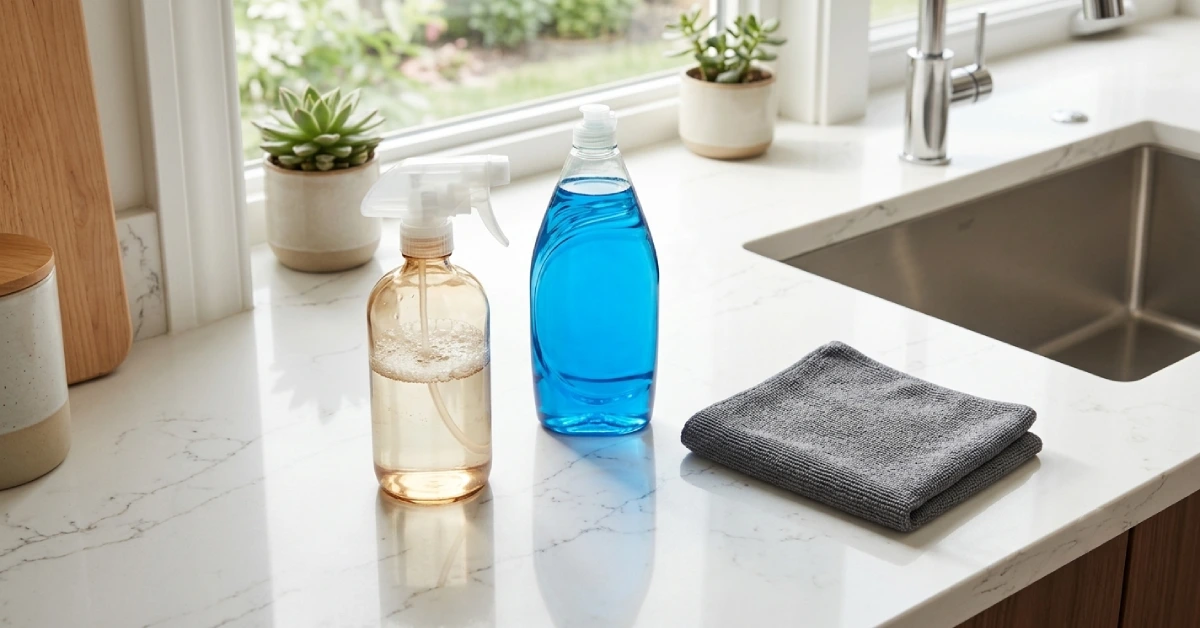
Honestly, you probably already have everything you need under your sink. The best daily quartz countertop cleaner isn’t a speciality product — it’s a simple mixture you can make in 30 seconds.
Simple Dish Soap and Water Recipe
This is the gold standard for everyday cleaning. Mild dish soap cuts through grease and food residue without breaking down the resin bonds that hold quartz together. Here’s the exact recipe:
- Fill a 16 oz spray bottle with warm water.
- Add 1 teaspoon of Dawn dish soap (or any mild, non-citrus dish soap).
- Cap and gently shake to combine — don’t shake hard or it’ll foam up.
- Spray directly onto the countertop surface.
- Wipe with a soft microfiber cloth in gentle circular motions.
- Rinse the cloth with clean water and wipe the surface again to remove any soap residue.
- Dry with a second dry microfiber cloth to prevent water spots.
A few things to skip: paper towels (they can leave lint and micro-scratches on a polished surface), abrasive sponges like Scotch-Brite, and anything with a scrubbing side.
Rubbing Alcohol Boost for a Streak-Free Shine
If your quartz tends to show streaks after cleaning — common in kitchens with overhead lighting — add a quick secondary wipe with 70% isopropyl alcohol. Apply a small amount to a clean microfiber cloth and buff the surface in long, straight strokes. It evaporates fast and doesn’t leave residue. This is particularly effective on bathroom quartz where toothpaste and soap buildup cause haze.
Which Store-Bought Cleaners Are Safe for Quartz?
The DIY soap-and-water recipe handles 95% of your daily cleaning needs. But for deeper cleaning or added protection, a few store-bought options are genuinely worth keeping around.
Weiman Quartz Clean & Shine
If I had to pick just one store-bought cleaner, it’d be Weiman — and here’s why. It’s formulated specifically for quartz surfaces, not stone in general. The formula is pH-neutral, which means it won’t disrupt the resin, and it leaves a light protective coating that resists fingerprints and smudges between cleanings. Spray it on, wipe with a microfiber cloth, and you’re done. No rinsing needed.
It’s a good pick if your kitchen countertops see a lot of traffic — post-cooking splatter, kids’ snacks, cooking oils — where a basic soap-and-water spray might need reinforcement.
Granite Gold Daily Cleaner
Granite Gold Daily Cleaner is another solid choice, and it’s widely available at most home improvement stores. Despite the name, it works well on quartz because it’s specifically designed for engineered stone and resin-bonded surfaces. The formula is non-acidic and streak-free, which makes it a reliable bathroom quartz cleaner where hard water deposits and soap scum are the primary enemies.
Marla Mock, president of Molly Maid, recommends products in this category for homeowners who want a quick-clean routine: “For quartz, consistency matters more than intensity. A gentle, pH-safe product used regularly will always outperform an occasional heavy scrub.”
How Do You Remove Stubborn Stains from Quartz Countertops?
Everyday spills — coffee, juice, spaghetti sauce — are easy to handle if you catch them fresh. But what about the ring left by a turmeric-stained pot, the dried-on residue from last night’s wine, or that mystery spot that appeared out of nowhere? Here’s how to handle the tough stuff.
For Disinfecting
Standard dish soap doesn’t disinfect. When you need to kill bacteria — especially on kitchen quartz after handling raw meat — 70% isopropyl alcohol is your best option. Apply to a microfiber cloth (not directly to the counter, which can create pooling) and wipe the area thoroughly. Let it sit for 30 seconds, then wipe dry. It’s safe for quartz resin and effective against most household bacteria.
Avoid bleach-based disinfectants. They’ll get the job done on bacteria, but they’ll also degrade your quartz surface and can void your manufacturer’s warranty.
For Stuck-On Food
Dried food — melted cheese, pancake batter, sticky sauces — needs a little dwell time. Here’s the process:
- Wet a microfiber cloth with warm water and lay it flat over the stuck-on spot.
- Let it sit for 5 minutes to soften the residue.
- Use a plastic scraper or the edge of a credit card to gently lift the loosened food.
- Follow up with your soap-and-water spray and wipe clean.
Never use a metal scraper or anything with a sharp edge. Quartz is hard, but the polished finish can still be scratched by metal.
For Tough Discolouration
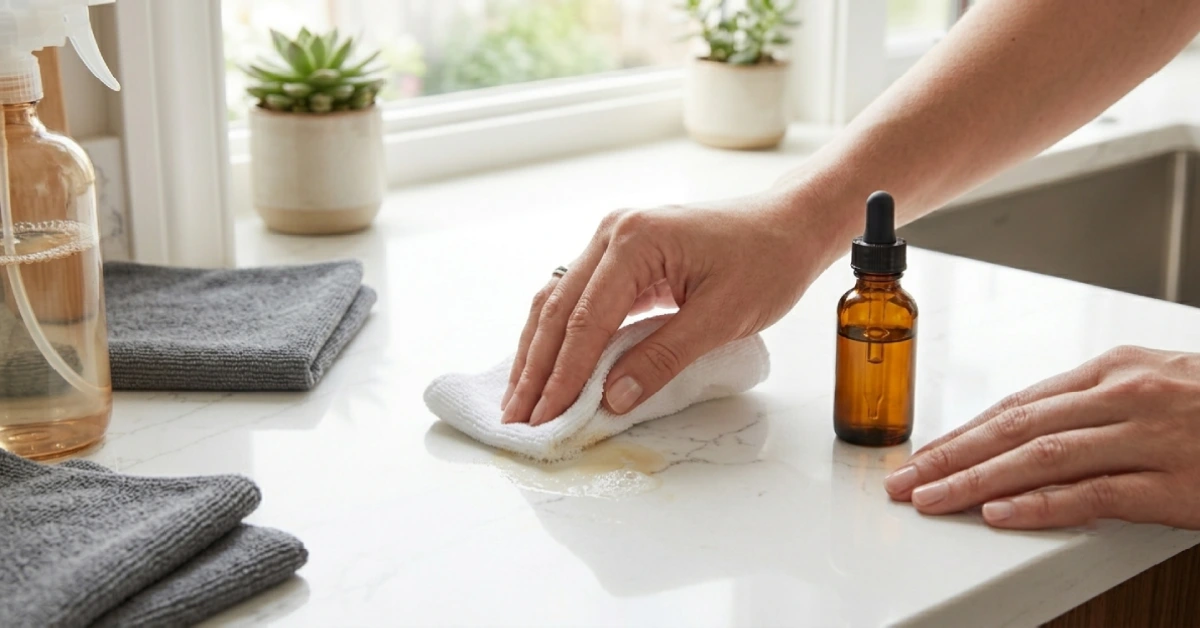
For stains that don’t respond to soap and water — turmeric, red wine, berries — a very small amount of 3% hydrogen peroxide (standard drugstore variety) can help. Apply a few drops directly to the stain, let it sit for no more than five minutes, then wipe away with a damp cloth and rinse thoroughly. Use this sparingly: hydrogen peroxide is mild, but repeated overuse can affect the surface over time.
Melissa Poepping, author of The Chemical Free Home, advises: “Hydrogen peroxide at the 3% concentration sold at pharmacies is a reasonable tool for spot-treating organic stains on quartz — just rinse well and don’t let it pool or sit too long.”
What to skip: baking soda paste. It’s a popular DIY suggestion online, but baking soda is abrasive enough to dull the polished finish on quartz over time. The gritty texture scratches on a microscopic level that you won’t notice until the shine is already gone.
Which Cleaners Should You Never Use on Quartz?
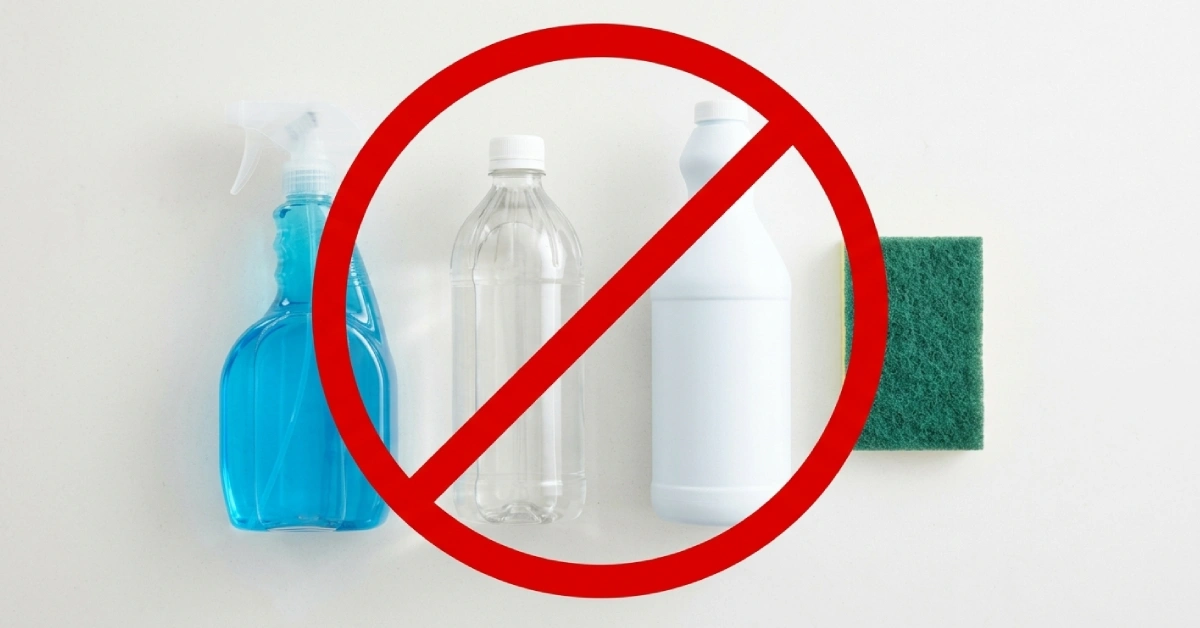
Here’s the quick-reference table you’ll want to screenshot and keep. It covers the most common household cleaners — the ones people reach for out of habit — and tells you exactly why some of them are a problem.
| Cleaner | Safe or Unsafe? | Why |
| Dawn dish soap + warm water | ✅ Safe | pH-neutral; dissolves grease without attacking resin bonds |
| Isopropyl alcohol (70%) | ✅ Safe | Disinfects and evaporates streak-free; won’t break down resin |
| Weiman Quartz Clean & Shine | ✅ Safe | Formulated specifically for quartz; pH-balanced |
| Granite Gold Daily Cleaner | ✅ Safe | Stone-safe, non-acidic formula designed for engineered surfaces |
| Hydrogen peroxide (3%) | ✅ Safe (sparingly) | Mild bleaching effect for tough stains; rinse thoroughly after |
| White vinegar | ❌ Unsafe | Highly acidic; breaks down resin over time, causes dulling |
| Windex (ammonia-based) | ❌ Unsafe | Ammonia degrades the resin binder; leaves hazy film |
| Bleach/chlorine cleaners | ❌ Unsafe | Discolours and weakens resin; voids most manufacturer warranties |
| Baking soda paste (scrubbing) | ❌ Unsafe | Abrasive micro-particles scratch the polished surface |
| Scotch-Brite / abrasive pads | ❌ Unsafe | Physical abrasion creates micro-scratches that trap dirt |
| Steel wool | ❌ Unsafe | Causes deep scratches; removes surface shine permanently |
| Lemon juice/citrus cleaners | ❌ Unsafe | Acidic like vinegar; same resin-degrading effect |
A few worth calling out specifically:
- Vinegar: Skip it. Every time. Homeowners who use vinegar on quartz consistently are the ones whose countertops start looking hazy within a year. The acid content is low enough that damage doesn’t show up immediately, which is why so many people assume it’s fine.
- Windex: The ammonia-based formula most people use in a blue bottle is a problem for quartz resin. There is a version of Windex labelled “ammonia-free” — that one is less harmful, but the standard blue bottle is not safe for regular use on quartz.
- Abrasive cleaners: Comet, Bar Keepers Friend (in powder form), and anything with “scrubbing” in the name will physically damage the polished surface. The scratches are invisible at first, but they become the places where grime builds up, and staining worsens.
How Often Should You Clean Quartz Countertops?
Marla Mock of Molly Maid recommends a simple two-tier approach: light daily maintenance plus a weekly deeper clean. “Most quartz damage comes not from one bad cleaning product but from neglect — letting spills sit and using whatever’s convenient instead of what’s appropriate.”
Daily Maintenance Routine
This takes about 30 seconds and makes the weekly clean much easier:
- After cooking or eating, spray the surface with your soap-and-water mixture.
- Wipe with a clean microfiber cloth, working in long strokes.
- Do a final dry wipe with a second cloth to eliminate water spots.
- Address any visible spills immediately — especially acidic foods like tomato, citrus, or wine.
Weekly Deep Clean Checklist
- Wipe down the entire countertop surface with soap and water.
- Use isopropyl alcohol on any areas that need disinfecting.
- Check for any dried-on food or mineral buildup around the sink area.
- Address hard water spots with a small amount of Weiman or Granite Gold if needed.
- Inspect for any new staining and treat with hydrogen peroxide if required.
- Finish with a streak-free dry wipe under good light to spot any residue.
For bathroom quartz specifically, add a monthly check for hard water buildup around faucet bases. Mineral deposits from hard water are one of the most common causes of long-term quartz discolouration — and they’re easy to prevent if you catch them early.
FAQs
Can I use vinegar to clean quartz countertops?
No. Vinegar is acidic, and quartz countertops are held together with a resin binder that degrades with repeated acid exposure. Even diluted vinegar can cause cumulative dulling over time. Stick with a pH-neutral soap-and-water solution for everyday cleaning.
What is the best homemade cleaner for quartz?
The simplest and most effective DIY option: 1 teaspoon of Dawn dish soap mixed into 16 oz of warm water in a spray bottle. For added disinfecting power, follow up with a wipe-down using 70% isopropyl alcohol.
Is Windex safe for quartz countertops?
Standard Windex contains ammonia, which breaks down the resin in quartz over time. The ammonia-free version is less harmful for occasional use, but neither formula is recommended for regular cleaning. Your soap-and-water spray is a better long-term option.
How do I remove stubborn stains from quartz?
For stuck-on food, use a damp cloth to soften the residue, then lift with a plastic scraper. For organic stains like turmeric or red wine, apply a small amount of 3% hydrogen peroxide to the stain, let sit for no more than five minutes, then wipe and rinse. Avoid baking soda paste — it’s abrasive enough to dull the finish.
Is baking soda safe to use on quartz?
Not as a scrubbing paste. Baking soda is mildly abrasive and can scratch the polished surface of quartz with repeated use. It’s a go-to for many surfaces, but quartz isn’t one of them.
How often should quartz countertops be cleaned?
Wipe down after everyday use with a soap-and-water spray. Do a more thorough clean once a week that covers the full surface, checks for mineral buildup, and disinfects high-contact areas. Address spills as soon as they happen — especially acidic foods.
Why are my quartz countertops hazy?
Haziness is usually caused by one of three things: soap residue left from cleaning (always do a rinse wipe and a dry wipe), mineral deposits from hard water, or accumulated damage from using the wrong cleaner — particularly ammonia or acid-based products. If the haze appeared after switching to a new cleaner, that’s almost certainly the cause. Switch back to pH-neutral soap and water and give the surface a few weeks to stabilise.