


To create a cozy bedroom, choose warm neutral colours, layer soft textiles like wool throws and knit blankets, add warm dim lighting, keep the room between 65 and 68 degrees for better sleep, and include natural materials such as wood and linen. Small personal touches make the space feel calm and inviting.
Cozy Bedroom Basics That Set the Mood
A cozy bedroom is calm, warm, and personal. It should feel like a place to slow down at the end of the day, not another busy room in the house.
Interior designers agree that this feeling starts with warmth and softness rather than one single item. Designer Sean Symington told Homes & Gardens that bedrooms are becoming calmer and more cocooning, with layered textures and warm, grounding colours that create a restful retreat.
The good news is you do not need a full renovation to reach that feeling. Small, deliberate changes to colour, texture, lighting, and temperature can turn almost any bedroom into a warm and inviting space.
Most people notice the difference within a single weekend of small updates. You do not have to tackle every element at once, and a few thoughtful changes usually go further than one expensive purchase. Here is a quick look at what matters most:
- Warm, neutral colour palette
- Layered soft textiles on the bed
- A comfortable sleep temperature
- Warm, dimmable lighting
- Natural materials like wood and linen
- A few personal touches, like books or art
Choose a Warm, Layered Colour Palette
Colour sets the tone for the whole room. Warm neutrals such as clay, taupe, caramel, and soft brown feel more inviting than plain white or cool grey.
According to Decorilla’s 2026 bedroom trend report, furniture and bedding in complementary neutral tones let one colour lead without competing accents. This layered neutral approach works in almost any bedroom size or style, from a small city apartment to a large primary suite.
If you want a bolder look, paint one deep, warm accent wall behind the headboard instead of the whole room. Pair it with lighter bedding so the space still feels balanced rather than heavy.
Rented spaces can still follow this approach without paint. Warm-toned curtains, a large area rug, and a few pieces of wood furniture can shift the whole feel of a white rental bedroom in an afternoon. Removable wallpaper is another option worth considering if your lease allows it.
For more direction on choosing a full colour scheme, our guide to bedroom ideas walks through several palettes that work well in different light conditions.
Get Your Bedroom Temperature Right
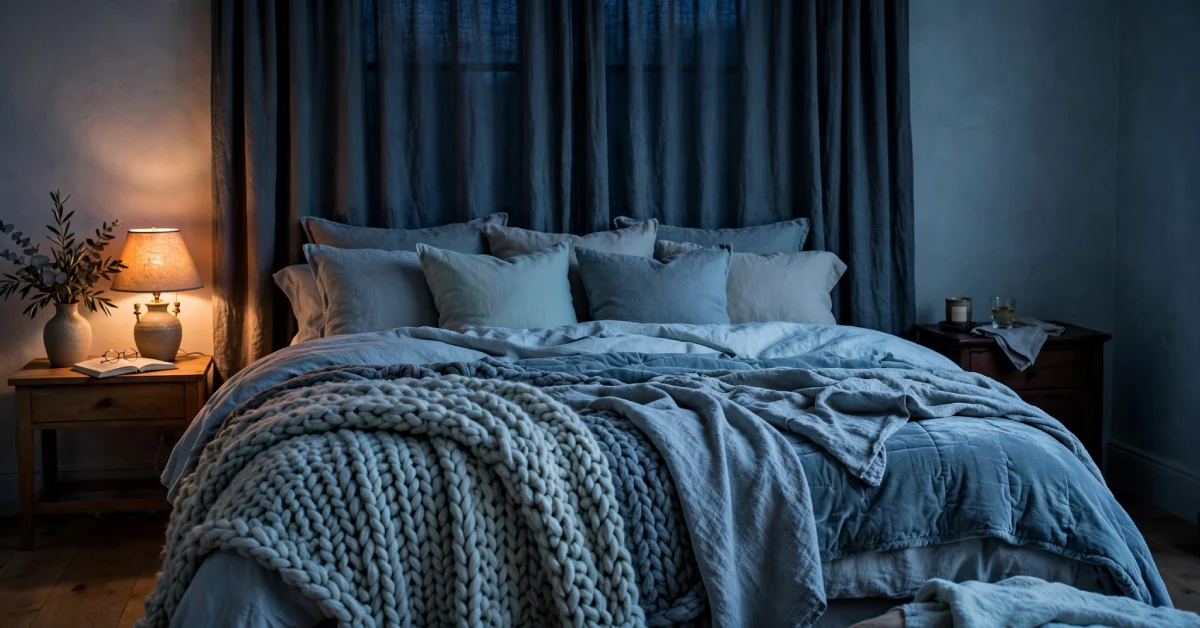
Temperature affects comfort more than most people realise. A large study covering more than 34,000 people found that sleep quality declines once bedroom temperatures climb above 60 degrees Fahrenheit, and the effect grows stronger as the room gets warmer.
A separate 2025 sleep report found that a room between 65 and 68 degrees produced the best mix of deep sleep and fewer nighttime wake-ups. Rooms above 73 degrees showed noticeably lower sleep quality scores in the same data set.
Research on temperature-controlled mattress covers supports this pattern. One study found that keeping sleepers at a steady, cooler temperature added about 27 minutes of total sleep time compared with a standard mattress.
A cozy bedroom should look warm while staying cool enough for good sleep. Layer a heavier blanket on top of lighter sheets so you can adjust without changing the whole bed. A programmable thermostat or a simple fan can help keep the room in that ideal range overnight.
If your bedroom tends to run warm, keep curtains closed during the day to block direct sun and open a window in the evening once outdoor temperatures drop. Cotton and linen sheets also breathe better than synthetic blends, which helps the room feel cooler even before you touch the thermostat.
Layer Textures With Bedding and Rugs
Texture does more for cosiness than colour alone. Mixing materials such as wool, linen, boucle, and knit cotton gives a bed visual depth and a softer feel underfoot and under the hands.
Start with a base layer of soft cotton or linen sheets, add a heavier quilt or duvet, and finish with two or three textured throw pillows. A folded wool or knit throw at the foot of the bed adds warmth without extra bulk.
A rug beside the bed does more than look good. It muffles footsteps, keeps floors from feeling cold first thing in the morning, and adds one more layer of texture to the room.
Consider swapping a few textiles by season instead of buying an entirely new bedding set each year. A lighter linen quilt in warmer months and a heavier wool blanket in colder months both work with the same base sheets, which keeps the look consistent while the room stays comfortable year-round.
For more layering combinations by season, see our bedroom inspirations guide.
Add Soft, Warm Lighting Layers
Bright overhead light rarely feels cosy. A warm bedroom usually relies on several smaller, softer light sources instead of one main fixture.
Fontanella, founder of Argent Design, told Veranda that plush bedding, blackout layers, and warm dim lighting create restful recovery zones in the bedroom. This layered approach to light works alongside soft textiles to build the same calm feeling.
Try a dimmable bedside lamp, a floor lamp in a reading corner, and a set of warm white string lights or candles for evening use. Keep bulb colour temperature on the warmer side, closer to 2700K, rather than the bright white common in kitchens and offices.
Blackout curtains or blinds add another benefit beyond darkness. They help block outside light and street noise, both of which support deeper, more consistent sleep.
If you enjoy candles, choose ones with a warm scent used in moderation, since heavy fragrance can work against a calm space rather than support it. Battery-operated candles are a safer option for nightstands and can still add the same warm glow.
Build a Small Reading Nook
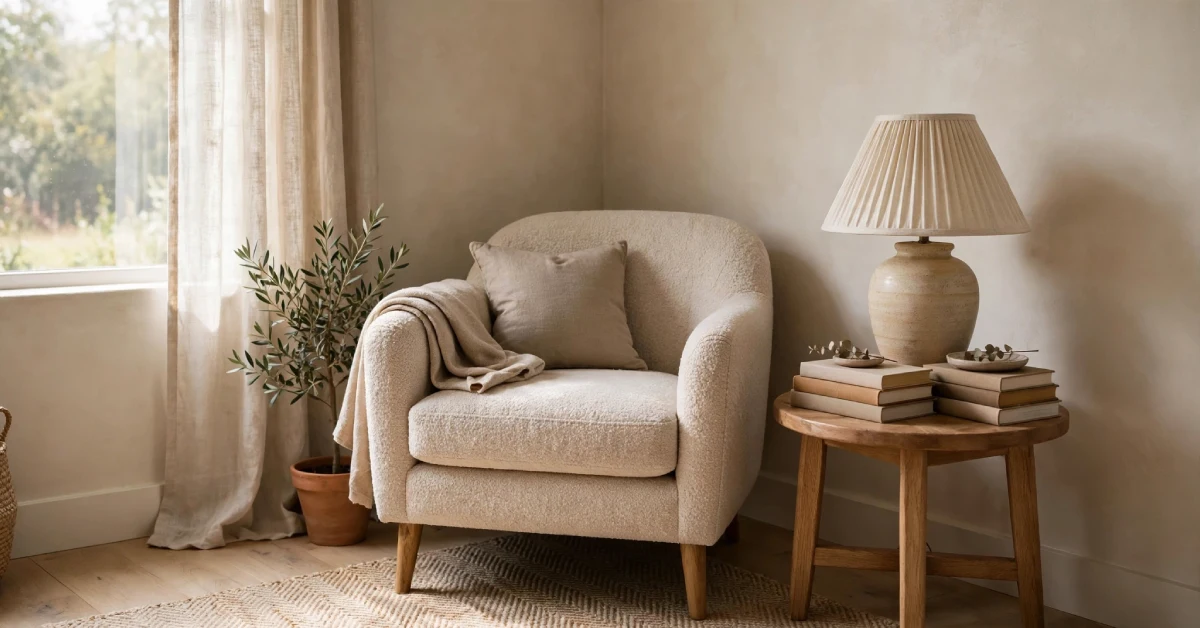
A dedicated corner for reading or quiet time makes a bedroom feel more personal. It does not need much space, just a comfortable chair, good lighting, and a small side table.
Interior designers report growing demand for these quiet corners. A well-lit bench or an armchair tucked into an unused corner gives a bedroom a place for calm, uninterrupted moments away from screens.
If floor space is tight, a wide windowsill with a cushion and a small reading lamp can serve the same purpose. Add a basket or small shelf nearby to hold current books and a throw blanket.
This kind of nook also pairs well with a canopy or four-poster bed, since layered fabric in both spots reinforces the cocooning look designers keep pointing to for 2026 bedrooms.
A nook does not have to be used only for reading. The same setup works for morning coffee, quiet phone calls, or simply sitting somewhere other than the bed for a few minutes before or after sleep.
Bring In Natural Materials and Plants
Natural materials add warmth that manufactured finishes struggle to match. Wood furniture, woven baskets, and linen textiles all bring a sense of comfort tied to nature.
Free-standing wood furniture, such as vintage dressers or armoires, is also making a comeback in place of built-in cabinetry. These pieces add character to a room and can move with you if you rearrange or relocate later.
A few houseplants can round out the natural feel. Low-maintenance options like snake plants or pothos add life and soften hard edges such as window frames and headboards.
If your bedroom gets limited natural light, choose plants suited to low light rather than forcing a sun-loving variety into a dim corner.
Small ceramic or stone accents, such as a textured vase or a simple tray on the dresser, add another natural note without taking up much space. These small details often matter more than one large statement piece when it comes to how warm a room feels day to day.
Cozy Bedroom Ideas for Small Rooms
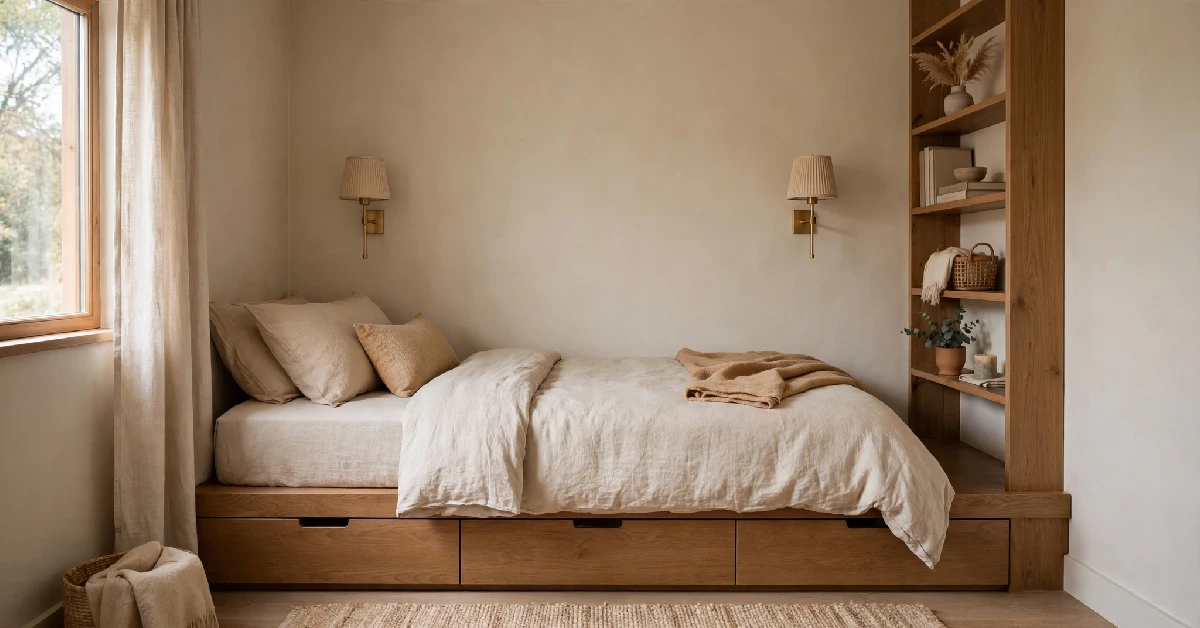
Small bedrooms can feel just as cozy as larger ones. The key is choosing furniture that fits the scale of the room and avoiding clutter that makes a small space feel smaller.
A platform bed with built-in storage frees up floor space for a chair or small desk. Wall-mounted sconces save nightstand space while still giving you warm, adjustable light near the bed.
Vertical storage, such as tall narrow shelving, keeps books and decor off the floor. Mirrors placed opposite a window can help bounce natural light around a compact room during the day.
Multi-use furniture makes a bigger difference in small rooms than in large ones. A bench at the foot of the bed that doubles as storage, or a nightstand with a drawer instead of open shelves, keeps everyday items out of sight while still leaving the room feeling calm.
For a full breakdown of layouts that work in tight spaces, our minimalist bedroom ideas guide covers furniture sizing and storage solutions in more depth.
Mistakes That Make a Bedroom Feel Cold
A few common habits can undo an otherwise cozy setup. Watch for these issues when you review your own bedroom:
- Too much bright, white overhead lighting
- Bare floors with no rug or soft flooring
- A cluttered nightstand or floor covered in clothes
- All-white or all-grey decor with no warm accents
- A room that runs too warm or too cold at night
- Heavy curtains left closed all day, blocking natural light
Fixing even two or three of these issues can noticeably change how a room feels. Start with lighting and temperature, since both affect comfort every day, then move on to colour and texture over time.
Once those basics are handled, revisit the room every season. What felt right in summer, such as lighter linens and more airflow, may need a small adjustment once colder months bring heavier bedding and earlier evenings back into the routine.
FAQs
What colour makes a bedroom feel the cosiest?
Warm neutral colours, such as taupe, caramel, and soft brown, tend to feel the cosiest. They read as warm without limiting your options for accent colours later.
What temperature should a bedroom be for the cosiest sleep?
Most sleep research points to a range between 65 and 68 degrees Fahrenheit. This balances a warm feeling in the room with the cooler body temperature needed for deep sleep.
How can I make a small bedroom feel cozy without losing space?
Use furniture with built-in storage, keep the colour palette consistent, and add layered lighting instead of one bright fixture. Vertical shelving also keeps items off the floor.
Do I need new furniture to create a cozy bedroom?
No. Textiles, lighting, and small layout changes can transform a room without buying new furniture. Many of the cosiest updates, like a rug or a warm throw, cost very little.
How many pillows should be on a cozy bed?
Two to four decorative pillows in addition to your sleeping pillows usually look layered without feeling excessive. More than that can make the bed harder to use each night.