

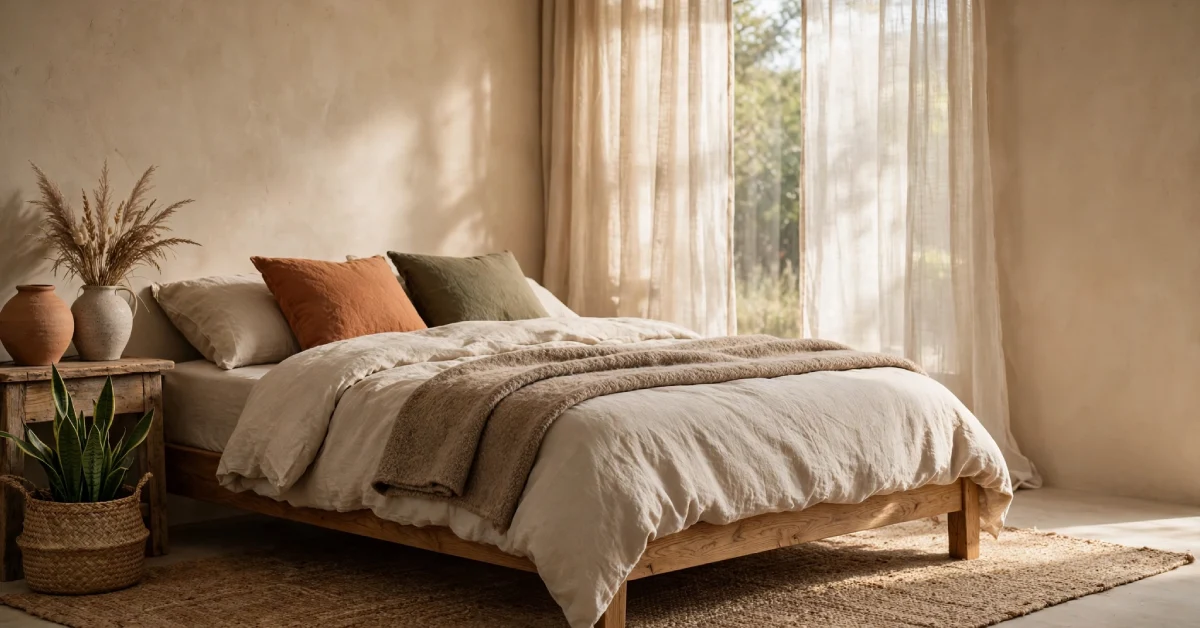
An earthy bedroom uses warm neutrals, clay and olive colours, natural materials, and soft lighting to create a calm sleeping space. Start with a base of oat, taupe, or sand. Add linen bedding, a wood bed frame, woven textures, and one or two plants. Keep the room cool at night for better sleep.
Cool greys and stark white walls dominated bedrooms for years. That is now changing. Crown Paints reports that interiors are becoming warmer, softer, and more expressive, and that earthy colours are taking centre stage in 2026.
An earthy bedroom follows this shift. It uses colours and materials taken from nature, such as clay, sand, moss, oak, and linen. The result is a room that looks relaxed and is easy to sleep in.
This guide shows you how to build one. You will learn which colours to choose, which materials work best, how to pick furniture and lighting, and which mistakes to avoid. Every idea works in a large main bedroom or a small spare room.
What Makes a Bedroom Earthy
An earthy bedroom draws on the colours, textures, and shapes found outdoors. Think of soil, stone, timber, dried grasses, and leaves. Three features define the style:
- Warm colours with brown, yellow, or red undertones
- Natural materials such as wood, wool, linen, jute, and clay
- Simple shapes with few bright or shiny surfaces
This differs from the beige-heavy schemes of the past. Crown Paints describes today’s earthy palette as layered and full of personality, mixing warm neutrals, muted greens, and clay-inspired tones.
The style also has a practical side. A 2025 study in Frontiers in Virtual Reality tested nature-inspired design in a full-size residential room using virtual reality. The findings suggest that biophilic design, which means adding natural features to interiors, can help people recover from stress and feel more comfortable at home.
Earthy Bedroom Colour Palettes to Try
Start with colour. It shapes the mood of the room more than any other choice.
Designers agree on the direction. Interior designer Jessica Whitley expects bedrooms to use “soft, enveloping neutrals that lean warm,” such as muted taupe, mushroom, and stone tones. She says people want protective, calming spaces, and these shades deliver that better than crisp whites or cool greys.
Designer Jacqueline Goncalves adds that earthy mauve suits bedrooms because it feels calming and pairs well with linen, oak, and wool. Other designers quoted by LuxeSource favour wheat, caramel, and terracotta, with burnt umber, clay, and dusty sage as accents.
Use the 60-30-10 rule with any of these palettes. Paint or upholster 60 percent of the room in your main colour, use 30 percent for a second colour, and keep 10 percent for an accent.
- Oat, terracotta, and olive: Oat walls and bedding, a terracotta rug, and an olive throw.
- Taupe, cream, and sage: A quiet scheme with low contrast. Try taupe walls, cream bedding, and sage curtains.
- Sand, caramel, and chocolate brown: A deeper scheme for rooms with strong daylight. Use brown on the headboard or curtains.
- Stone, clay, and soft blue: Dulux Trade’s ColourFutures 2026 forecast pairs sky blue with terracotta, brick, and clay for residential spaces that should feel comfortable and harmonious.
Match the palette to the light. South-facing rooms get warm light for much of the day, so cooler earth tones such as sage, stone, and misty blue balance it. North-facing rooms get cooler light, so warm oat, caramel, and terracotta work better.
Test paint samples on two walls and check them in the morning and the evening, because daylight changes how earth tones look.
Olive, moss, and sage all suit an earthy scheme. If you want more green combinations, see our green bedroom ideas.
Natural Materials and Textures That Work
Texture matters as much as colour. A room with one flat finish looks plain, even with a good palette. Mix soft and rough surfaces to add depth.
Use these five materials as a starting point:
- Linen: Use it for bedding and curtains. It is breathable and looks relaxed when creased.
- Wool: Add a throw or rug for warmth in winter.
- Jute or sisal: Choose a rug or basket with a rough weave that contrasts with soft bedding.
- Washed cotton: Pick matt fabrics in cream, stone, or rust.
- Ceramic and clay: Use lamp bases, vases, and bowls with an uneven glaze.
Use wood with a plan. A recent scoping review of 136 studies on biophilic design examined how much wood people see on walls, floors, and ceilings. Coverage of around 45 to 50 percent gave the best psychological results. At 90 percent coverage, results also showed signs of overstimulation.
This suggests wood works best when it shares the room with painted walls, fabric, and plaster. A wood floor, wood ceiling, and wood furniture in the same room may be too much.
Furniture Choices for an Earthy Bedroom
Furniture defines the shape of the room, so choose pieces with visible grain and simple lines.
- Bed frame: Choose oak, ash, walnut, or pine. A low frame or a linen headboard suits the style.
- Bedside tables: Look for reclaimed wood, rough-sawn timber, or a stone top.
- Storage: A woven trunk at the foot of the bed hides spare bedding.
- Dresser: Pick a matt or oiled finish. Avoid high gloss.
- Seating: A rattan or cane chair adds a light, woven shape.
Mix wood tones instead of matching every piece. Light oak next to darker walnut looks collected. Keep the undertones the same, so warm tones sit with warm tones.
For a larger main bedroom, see our luxury master bedroom ideas and apply the same earthy materials at scale.
How to Layer Earthy Bedding
Bedding is the fastest way to add texture. Build the bed in layers so it looks full without extra clutter.
Start with a fitted sheet and flat sheet in washed cotton or linen. Add a duvet in a matching neutral, such as oat or stone. Fold a wool or textured throw across the bottom third of the bed. Finish with two sleeping pillows, two smaller cushions in a second texture, and one accent cushion in rust, olive, or clay.
Keep the palette to three colours. Use one solid, one textured, and one pattern, such as a subtle stripe or check.
Wash new linen before you use it. Linen softens with each wash, and a relaxed finish suits an earthy room better than crisp pressing. Iron only if you prefer a tidier finish.
Lighting and Plants for a Calm Feel
Light changes how earth tones look, so decide on it early. Plan three layers: daylight softened by sheer curtains, lamps at bedside level, and a dimmable ceiling light. Choose warm-white bulbs, which suit clay, wood, and wool colours.
Pair sheer linen curtains with blackout blinds. You get soft daylight in the morning and full darkness at night.
Plants add green and soft shapes. Choose two or three low-care types, such as a snake plant, a pothos, or a rubber plant, and place them in clay or woven pots.
Temperature also affects how well you sleep in any bedroom. The Sleep Foundation explains that your body temperature drops during sleep, so a cooler room makes it easier to fall and stay asleep. The American Heart Association notes that the National Sleep Foundation puts the ideal range at 60 to 67°F, or about 15 to 19°C.
Breathable bedding in linen or cotton helps you stay comfortable in that range.
Wall Finishes and Decor Details
Walls cover the largest surface in the room, so they change the look most. Three finishes suit an earthy bedroom:
- Limewash or textured plaster paint for a soft, uneven surface
- A timber slat feature wall behind the bed
- Exposed or added wood beams on the ceiling
Keep decor simple and natural. Dried grasses in a stoneware vase, a driftwood piece, a woven wall hanging, or a framed botanical print all fit. Group objects in threes and leave empty space around them.
Place a wool or cotton rug under the bed so your feet land on a soft surface when you get up. Let the rug extend past both sides of the bed.
Earthy Bedroom Styles to Consider
Earthy colours work with several design styles. Pick the one that matches how you live.
- Organic modern: Clean lines, pale wood, and limewash walls. It suits people who like a tidy look.
- Japandi: Low furniture, oat and charcoal tones, and few objects. It suits small rooms.
- Rustic: Exposed beams, reclaimed wood, and heavy textiles. It suits older homes and cottages.
- Boho: Woven pieces, rust and mustard tones, and mixed patterns. It suits people who enjoy collecting objects.
Earthy Bedroom Ideas for Small Rooms
Small rooms suit earth tones when the palette stays tight. Use two or three colours from the same family. Painting walls, skirting boards, and doors in one shade reduces visual breaks and can make the room look larger.
Try these five ideas:
- Choose a light base such as sand or warm white to keep the room bright.
- Use one textured wall finish instead of many small decor items.
- Pick a bed with drawers or a slim storage trunk.
- Hang a round mirror opposite the window to reflect daylight.
- Fit wall-mounted lamps to free up bedside space.
Earthy tones also work in children’s rooms. For more layouts, see our boys bedroom ideas.
If your budget is tight, change bedding, curtains, and lampshades first. These cost less than furniture and change the look fastest. Paint the walls once you know which colours you prefer.
Step-by-Step Plan for Your Earthy Bedroom
Follow this order to avoid rework:
- Choose your palette and test paint samples for a week.
- Paint the walls or apply your chosen finish.
- Order a bed frame and bedside tables in matching undertones.
- Add a rug, curtains, and bedding in natural fibres.
- Install warm lighting and add two or three plants.
- Finish with a few decor pieces, then remove anything that crowds the room.
Common Mistakes to Avoid
Watch for these errors:
- Using only beige. Add a darker tone, such as chocolate or deep green, to give the room contrast.
- Adding too much wood. Balance timber with fabric, paint, and plaster.
- Matching every item. Vary tones and textures so the room looks collected.
- Skipping lighting. Cool white bulbs make earth tones look flat, so choose warm-white ones.
- Choosing gloss finishes. High gloss clashes with matt natural textures.
- Buying plants you cannot maintain. Choose low-care plants or use dried stems.
FAQs
What colours suit an earthy bedroom?
Warm neutrals such as oat, sand, taupe, and stone form the base. Add clay, terracotta, olive, sage, or chocolate brown for depth. Designers quoted by Homes & Gardens and LuxeSource both point to warm neutrals and earthy tones for 2026.
Can I create an earthy bedroom on a small budget?
Yes. Change your bedding, curtains, lampshades, and rug first. Add a few plants and clay or woven accessories. Paint one wall in a warm shade if you want a bigger change. Save furniture for later, since it costs the most.
Which bedding fabrics feel best in an earthy bedroom?
Linen and washed cotton suit the style and stay breathable. Add a wool throw for winter. Choose matt colours such as oat, stone, rust, and olive, and avoid shiny satin finishes.
Can I mix earthy tones with other colours?
Yes. Soft blue is a common partner for terracotta and clay, as in Dulux Trade’s ColourFutures 2026 forecast. Sage and olive greens also work. Keep the earthy tones as the main colours and use the second colour for about 10 percent of the room.
How do I stop an earthy bedroom looking dull?
Add contrast and texture. Include one darker tone, such as chocolate or deep green, and mix soft fabrics with rough ones like jute or wool. Use warm lighting in the evening, and add a few plants or dried stems for shape.


