

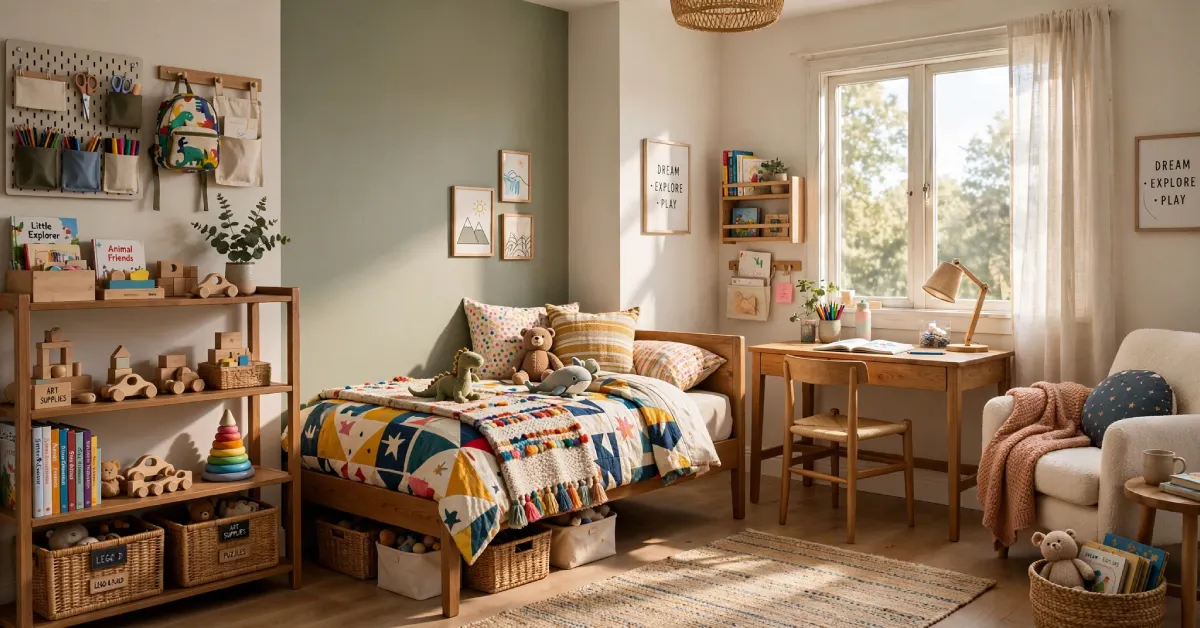
A well-designed kids bedroom combines safety, functionality, and fun. Successful rooms include proper storage, durable furniture, good lighting, and age-appropriate decor. Start with a color scheme your child likes, add multifunctional pieces, and plan storage from the floor up.
Modern kids bedrooms balance practical needs with personal style.
How to Plan a Kids Bedroom Layout
Start with the basics: measure your space and identify the fixed elements. Windows, doors, and closets shape everything else. A good layout keeps the bed as the focal point while leaving room to play, study, or relax.
The bed usually takes the most space. Position it away from doors and windows if possible. This creates a sense of security and keeps your child out of drafts. Leave walking paths clear between major furniture pieces. You want movement through the room to feel natural, not cramped.
Consider traffic flow from the door to the closet. Does your child need a desk for homework or creative work? If so, place it near natural light. A window-facing desk helps with focus and reduces the need for extra lighting during daytime study sessions.
Storage is the backbone of any functional kids bedroom. Use vertical space with shelves, wall-mounted organizers, and tall furniture. This approach keeps the floor open for play while maximizing storage. A clutter-free room is easier to keep clean and safer for active kids.
Choosing the Right Kids Bedroom Furniture
Quality furniture lasts through multiple children and years of use. Look for pieces built from solid wood or quality plywood, not particle board that warps easily. Metal frames and drawer slides should feel sturdy when you test them in person or check reviews carefully.
A bed frame with storage underneath saves significant space. Loft beds work well for older kids with enough headroom and good safety railings. Under-bed drawers slide out for seasonal clothing, extra bedding, or toy rotation.
Desks don’t need to be large. A compact desk with shelves above provides homework space without consuming the entire room. Many kids desks grow with your child, adjusting in height from age 5 to age 15.
Dressers serve double duty for storage and display. Open shelving on top holds books, trophies, or decorative items your child cares about. Closed drawers below keep folded clothes organized and out of sight.
Consider a chair or reading nook. A comfortable chair with good back support makes homework and reading more enjoyable. Add a small side table for drinks or books. This becomes a sanctuary within the larger room.
Colour Schemes That Work for Kids
Neutral walls create a flexible backdrop that lets your child’s personality shine through. Soft grays, warm whites, and light beiges work across age ranges. These choices also make it easy to update decor without repainting every few years.
If your child insists on color, choose one accent wall instead of painting all four. Deep teals, forest greens, and warm charcoal work better than bright neons that tire the eyes quickly. An accent wall behind the bed or near a reading nook creates visual interest without overwhelming the space.
Paint is temporary but impactful. A 7-year-old who loves dinosaurs can have a dinosaur accent wall. By age 12, a fresh coat of teal replaces it without major expense. This flexibility helps kids feel ownership over their space as their interests evolve.
Peel-and-stick wallpaper offers even more flexibility. Quality versions are removable without damage. They work on one wall or behind furniture as an accent, and they cost less than professional painting.
Storage Solutions That Keep Rooms Organized
Wall-mounted shelving holds books, collections, and display items while keeping surfaces clear. Install shelves at eye level for decorative pieces and at kid-height for toys they access daily. This teaches organization and independence when everything has a visible home.
Labeled bins contain small items and toys. Clear bins let your child see contents without opening each one. Labels with pictures help younger children put things away without reading skills.
A closet system maximizes the vertical space you already have. Install double hanging rods to store twice as many clothes. Add shelves above for off-season clothing or extra blankets.
Under-bed storage containers hold items used less frequently. Seasonal clothing, extra sheets, and sports equipment tuck away neatly. Rolling containers slide out easily when needed.
A toy rotation system keeps the room from becoming overwhelmed. Store half of toys in labeled bins in a closet or garage. Rotate them every month or two. This keeps the room manageable and makes old toys feel new and interesting again.
Lighting for Kids Bedrooms
Natural light matters more than parents typically realize. Position the desk near a window when possible. During school years, natural light improves focus and mood during homework time.
A main ceiling light provides basic illumination, but aim for layered lighting. A bedside lamp lets your child read independently before sleep. Wall-mounted reading lights behind the headboard save table space and direct light exactly where needed.
Task lighting over a desk or craft area prevents eye strain. Position the light to avoid glare on screens or study surfaces. LED bulbs stay cool and energy-efficient for extended use.
Dimmer switches allow mood adjustment as your child grows. A bright setting works for play and study. A dimmed setting creates calm for winding down before bed.
Avoid harsh fluorescent lights in the bedroom. They create fatigue and can disrupt sleep patterns. Warm white bulbs (2700K color temperature) feel more relaxing and bedroom-appropriate than cool whites.
Safety Considerations for Kids Bedrooms
Secure all furniture to walls with proper hardware. Dressers, shelves, and bookcases tip over more easily than parents expect, especially when kids climb or lean against them. Anchoring prevents serious injuries.
Check crib and bed rail safety standards before purchasing. Crib slats should be no more than 2.375 inches apart to prevent head entrapment. Bed rails on lofts and elevated beds need secure installation and regular inspection.
Window treatments should be cordless or have cord management systems. Long cords pose strangulation risks. Cordless cellular shades or roller shades keep children safe while providing light control and privacy.
Keep electrical outlets covered and limit accessible cords. Power strips and chargers should be out of reach or behind furniture. Teach older kids about electrical safety as they gain independence.
Flooring matters for active kids. Carpet feels comfortable for playing and provides cushioning during falls. Non-slip rugs on hard floors prevent sliding accidents. Area rugs also define different zones within one room.
Age-Appropriate Bedroom Designs
Toddlers and preschoolers need safety as the priority. Low furniture, secure storage, and soft furnishings work best. Bright colors and simple patterns appeal to this age group. Keep the design simple enough to update easily as interests change.
School-age kids develop specific preferences and hobbies. This is when to introduce organization systems they can manage independently. Include a study area and storage for school supplies, sports equipment, and hobby materials.
Tweens and teens want input on design choices. Let them select colors, posters, and décor within your budget. This age group benefits from a sophisticated layout that supports homework, socializing, and relaxation.
Budget-Friendly Kids Bedroom Ideas
Quality doesn’t always mean expensive. Check reviews carefully on online platforms where customers describe durability. A modestly priced wooden bed frame with solid reviews lasts longer than a fancy option with poor construction reports.
Second-hand furniture from reputable sources works well for kids pieces. Check for structural integrity, safety recalls, and stains that won’t come out. Thrift stores and online marketplaces offer significant savings on dressers, desks, and storage units.
Paint and textiles are the cheapest updates. New bedding, curtains, and a fresh wall color completely change a room’s feel. These updates cost under a few hundred dollars and don’t require professional installation.
DIY projects teach kids while saving money. Paint a mural, stencil a pattern, or arrange a gallery wall of their artwork. These personal touches mean more than expensive store-bought decor.
Common Kids Bedroom Mistakes to Avoid
Overcrowding with furniture limits play space and creates stress. Choose fewer, quality pieces that serve the room’s purpose. A bed, dresser, desk, and shelving usually suffice without feeling cluttered.
Ignoring your child’s preferences leads to decor they outgrow quickly. Ask what colors, themes, or styles interest them. Involvement makes the space feel theirs and increases long-term satisfaction.
Poor lighting makes homework harder and wastes your child’s time. Invest in task lighting over study areas and bedside reading lights. Good lighting improves mood and productivity during school years.
Choosing style over function creates rooms that don’t work well. A beautiful but uncomfortable chair or a fashionable but low dresser creates frustration. Function comes first, then aesthetics.
Skipping safety considerations is never acceptable. Anchored furniture, cordless window treatments, and outlet covers prevent injuries. Safety features should be invisible but absolutely present.
Decorating with Your Child’s Interests
Let your child take ownership through décor that reflects their interests. A sports enthusiast might choose equipment storage integrated into the design. An artist needs wall space for displaying creations.
Collections tell a story about your child. Display action figures, sports trophies, or book collections on open shelves. This personalization makes the room genuinely theirs, not a generic design.
Posters and wall art change inexpensively as interests evolve. Frame favorites or use removable wall decals for flexibility. Changing décor every year or two costs far less than repainting or replacing furniture.
Involve your child in decisions about textiles. Bedding, curtains, and rugs come in thousands of options. When kids choose their own colors and patterns, they take pride in the room and care for it better.
Final Thoughts
A successful kids bedroom balances multiple needs: safety, function, growth, and personal expression. Start with a solid foundation of quality furniture and good storage systems. These core elements support everything else as your child develops and interests change.
Your child’s input matters more than any design trend. The best room is one where your child feels comfortable, secure, and inspired. When kids help shape their space, they take ownership and care for it better.
Update the room gradually rather than starting from scratch every few years. Fresh paint, new bedding, and updated décor refresh the space affordably. This approach saves money while keeping the room current with your child’s changing interests.
Safety, organization, and flexibility should guide all decisions. Build in room to grow, change, and adapt. A thoughtfully planned kids bedroom serves its purpose for years while costing far less than trendy designs that become outdated quickly.
FAQs
What’s the best colour for a kids bedroom?
Neutral walls give flexibility as your child grows and interests change. If your child strongly prefers a colour, paint one accent wall or use removable wallpaper. Light colours make small rooms feel larger while keeping the focus on furniture and décor.
How much should I spend on kids bedroom furniture?
Quality matters more than brand names or price. A solid wood bed frame from a mid-range maker lasts longer than an expensive option with poor construction. Plan $1,500 to $3,000 for a basic, well-furnished kids bedroom with bed, dresser, desk, and storage.
When should I involve my child in design decisions?
Even young children can choose between two color options or pick their bedding style. Older kids benefit from real input on their space. Tweens and teens should help plan the layout and choose décor they’ll actually enjoy.
How do I maximise storage in a small kids bedroom?
Vertical storage is your best tool. Wall shelves, tall narrow dressers, and under-bed containers multiply available space. Closet systems with double rods and additional shelving also help significantly.
Is it worth investing in furniture that grows with my child?
Growth furniture like adjustable desks saves money over years. Buying cheaper furniture repeatedly costs more overall. One quality piece that adjusts from age 5 to 15 represents better value than replacing budget options three times.