

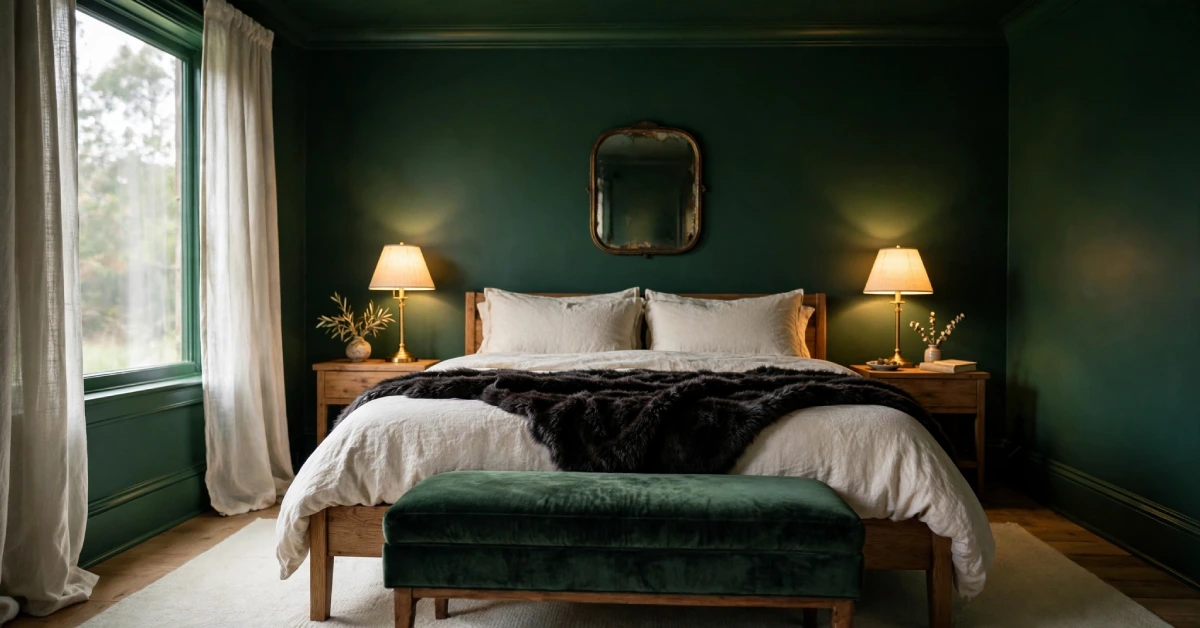
A moody bedroom uses deep, low-light colours such as charcoal, forest green, navy, or warm brown, paired with layered textiles and warm lighting. To make it work, paint walls and ceiling one shade, add light bedding for contrast, choose bulbs at 2700K, and mix velvet, linen, and wood so the room feels calm instead of heavy.
Most people paint a bedroom white and never think about it again. Then they see a deep green or charcoal room online and wonder if they could live in it. You can, and a dark bedroom is easier to get right than it looks.
The style depends on three things: rich colour, soft light, and layered fabrics. When those work together, the room feels calm and private. When they do not, the same colours make a room feel small and heavy.
This guide shows you which colours to choose, how to paint the room, how to add contrast, and how to light it. You will also find the mistakes that make dark bedrooms look worse, plus answers to common questions.
What Is a Moody Bedroom?
A moody bedroom uses deep, muted colour to make a private, restful room. The palette leans toward charcoal, forest green, navy, brown, or burgundy. The lighting is low and warm. Fabrics and finishes add texture so the dark colour does not look flat.
TheCoolist describes the style as rich tones, cosy textures, and a touch of drama. Bauwerk Colour, an Australian paint brand, points out that moody does not have to mean black or grey. Earthy reds, forest greens, and smoky blues all count.
Three features define the style:
- Deep colour on the walls, and often on the ceiling and trim too
- Warm light from lamps and dimmable fixtures instead of one bright overhead bulb
- Layered materials such as velvet, linen, leather, and wood
If your room has all three, it reads as moody even when the walls are a mid-tone instead of a very dark shade.
Why Moody Bedrooms Are Popular in 2026
Designers are moving away from cool, pale bedrooms. In a Good Housekeeping feature on colours to retire in 2026, designer Stacy Garcia said icy blues and washed-out pinks will feel dated. She said homeowners now look for colours that create calm and emotional connection.
Deeper shades fill that gap. TheCoolist published a round-up of 27 moody bedrooms in March 2026 and named deep charcoals, forest greens, and warm browns as the leading colours. Interior designer Mary Patton told Hunker that warm brown, used with care, feels chic, cosy, and grounding in a bedroom.
The style also works with furniture you probably own already. Wood beds, white bedding, and brass lamps all look good against a dark wall. You do not need to replace everything to try it.
Best Moody Bedroom Colours to Choose
Pick one main colour first. These five work well in most homes.
- Warm charcoal: Choose a charcoal that leans slightly brown or green instead of blue. TheCoolist shows charcoal panelling paired with crisp white bedding, warm wood, and a ceramic lamp.
- Forest or olive green: Dark green suits wood, brass, and natural linen. The Sleep Foundation notes that green tends to bring positive emotions.
- Deep navy or smoky blue: The Sleep Foundation says people link blue with calm and relaxation. Test it before you commit, though. Julia of Chris Loves Julia painted one bedroom slate blue and repainted it within days because it felt less relaxing than her warm browns.
- Chocolate or mushroom brown: Chris Loves Julia uses Farrow and Ball London Clay in its own bedroom. Julia says it reads as dark brown at some times of day and shows hints of red and purple at others.
- Burgundy, plum, or deep red: Bauwerk says deep reds cast a flattering, rosy light. Pair them with cream and wood to keep the room warm.
Test any shade in your own room before you buy full tins. The same paint looks different in morning light and under a lamp at night. Chris Loves Julia advises choosing a colour that holds up as the light changes through the day. Put two large sample patches on different walls and check them for three days.
If you prefer clay, sand, and terracotta tones with a moody feel, our earthy bedroom ideas show how to build that look.
How to Colour Drench Your Bedroom
Colour drenching means painting the walls, ceiling, and trim in the same colour. It removes hard lines between surfaces. Designer Filippo Calvagno of Studio Calvagno told Livingetc, “I rarely approach spaces any other way now.” Livingetc also notes that very deep greens work best when drenched, since contrast can look too harsh.
Bauwerk quotes designer Stephanie Wolf, who advises planning walls, ceiling, textures, and textiles as one colour concept. She includes the ceiling in that plan. Chris Loves Julia adds that painting extra surfaces raises the cost very little.
Follow these steps:
- Choose your colour and test samples on two different walls.
- Paint the ceiling first, then the walls, then the trim and doors.
- Use a matte or eggshell finish. Chris Loves Julia used Farrow and Ball Modern Emulsion, which it describes as close to eggshell.
- Paint built-in shelves or panelling in the same shade if you have them.
Limewash is another option. Bauwerk says its chalky finish adds soft movement to dark colours that standard paint does not give. The brand also notes that rendered walls suit limewash well.
Add Contrast So the Room Feels Balanced
Dark walls need something light to balance them. Chris Loves Julia warns that a dark bedroom can turn into a man cave without light elements. Her fixes are light bedding with a dark faux fur throw, a light area rug, and a mirror or metal piece that reflects light.
The Coolest examples follow the same idea. One room pairs charcoal panelling with white bedding and warm wood. Another pairs navy walls with rust bedding.
Use this list to plan contrast in your own room:
- Bedding that is lighter than the walls, such as cream, oatmeal, or white
- One metal finish, such as brass or aged gold, repeated on lamps, frames, and hardware
- A pale rug under the bed
- One mirror placed near a lamp or window
- One accent colour, such as rust or ochre, in a throw or cushion
Keep the accent small. One or two pieces are enough to change how the room looks.
Layer Textures for Depth and Comfort
Smooth fabrics on dark walls can look plain. Texture adds depth without adding more colour.
Chris Loves Julia recommends velvet for curtains, a bench, or a chair. She also suggests leather, which is naturally dark and has an organic texture. A leather chair, a leather box on the nightstand, or leather hardware all work.
Bauwerk shows a room by Studio Wolf that combines woven curtains, a fabric headboard, and patterned cushions. TheCoolist examples use linen bedding, rustic wood headboards, chunky knits, and faux fur.
Choose three or four textures and repeat each one twice in the room. For example, use linen bedding, a velvet bench, a wool rug, and a wooden nightstand. Keep the colours in one family so the room looks planned.
Lighting for a Moody Bedroom
Lighting decides whether dark walls look rich or dull. Use several low sources instead of one overhead fixture. Place a lamp on each nightstand, add a picture light over art, and put everything on dimmers.
Choose warm white bulbs between 2700K and 3000K. Lighting retailer Artika says this range supports natural melatonin production in the evening. It also says cool light at 5000K or above looks like midday sun and can reduce sleep quality. Check the bulb box before you buy, because many LED bulbs default to cooler tones.
A statement fixture can add character. Chris Loves Julia added a crystal chandelier from Pottery Barn and says it gave the room a boutique hotel feel. Vintage pieces work just as well. If you have a ceiling fan, pick a fan colour that matches the ceiling so it stays out of view.
Furniture, Art, and Wall Decor Choices
Keep the walls simple. Chris Loves Julia prefers trim to wall hangings in its bedroom. Box trim creates highlights and shadows, so the walls need less on them.
If you like art, choose one large piece over the bed. TheCoolist shows a navy bedroom where gallery-style artwork breaks up the wall colour and adds movement. For frame styles and layout ideas, see our bedroom wall decor ideas.
For the bed, a dark canopy frame or a tall upholstered headboard both suit the style. TheCoolist shows canopy beds in dark wood and in brass. Raw wood headboards look good against green, brown, and charcoal walls.
Add a plant or a few stems. Chris Loves Julia uses simple stems to bring in height and faux peonies to make the room feel more romantic. Both are easy to change with the seasons.
Moody Bedroom Mistakes to Avoid
Most problems with dark bedrooms come from a few repeated errors.
- Leaving the ceiling white. A bright ceiling against dark walls draws a hard line and makes the room look closed in.
- Choosing paint from a small chip. Dark shades change a lot with light, so always test a large sample.
- Using cool white bulbs. They flatten dark colour and make the room feel harsh in the evening.
- Making everything dark. Without light bedding or a pale rug, the room feels like a den.
- Hanging too much on the walls. Busy walls compete with the colour.
- Skipping texture. Flat fabrics make dark walls look plain.
Fix these six points and most dark rooms improve quickly.
Sleep Comfort in a Moody Bedroom
Does a dark bedroom help you sleep? The evidence is limited. The Sleep Foundation says little research directly links bedroom colour to sleep. It says colour may affect sleep through emotional changes, and that blue and green tend to bring more positive emotions than red.
Its main advice is simple. Paint the room a colour that helps you relax. If a shade feels stimulating after a week, change it.
For a calmer result, choose green, blue, or brown as your base. Use warm bulbs and dimmers, and lower the light as bedtime gets closer. Artika notes that dimmable fixtures let you reduce light gradually in the evening.
FAQs
Do dark colours make a bedroom look smaller?
They can if the room has little light and no contrast. Painting the walls and ceiling one colour, adding light bedding, and using warm lamps keeps the room balanced.
What colour goes with moody bedroom walls?
Cream, oatmeal, and white bedding stand out well against dark walls. Warm wood, brass, and leather add depth. A small amount of rust or ochre adds warmth.
Is a moody bedroom good for sleep?
The Sleep Foundation says direct research is limited. Blue and green tend to bring positive emotions, so they are safe choices. The best colour is the one that helps you relax.
Can I create a moody bedroom without dark paint?
Yes. Bauwerk shows a warm pinky brown paired with a rusty red headboard and dark linen. It also shows soft green limewash with an ochre velvet headboard and charcoal bedding. Texture and contrast do most of the work.