

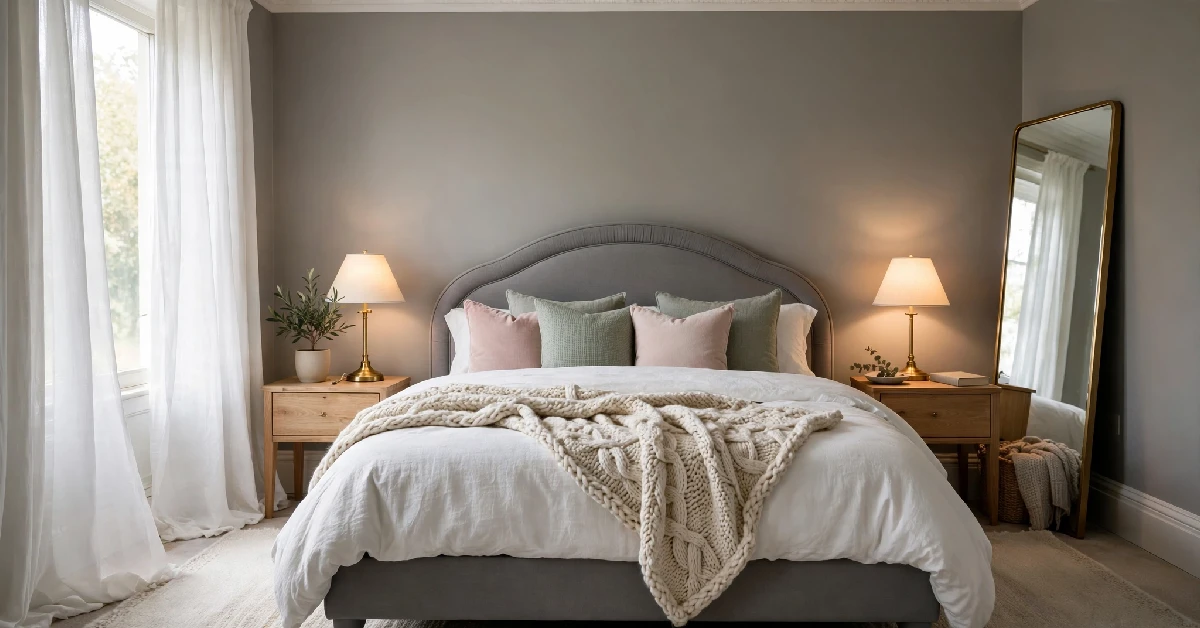
A grey bedroom creates a calm, restful space that works with any style. This versatile neutral pairs with warm wood tones, soft whites, and metallic accents. You can choose pale greys for a light, airy feel or deep charcoal for a cozy, cocooning retreat.
This guide covers paint shades, furniture choices, bedding, lighting, and styling tips to help you build a bedroom you will love.
Why Grey Still Works in Bedrooms
Grey remains one of the most popular bedroom colours for good reason. It sits between white and beige on the colour wheel, offering depth without overwhelming the eye. Cool greys with blue undertones feel fresh and modern. Warm greys with hints of beige or taupe feel softer and more inviting.
A 2025 Houzz survey found that designers chose blue or grey walls for 7 out of 10 of the most-saved new bedrooms on the platform. That is strong evidence that grey has staying power in sleep spaces.
The shift in 2025 and 2026 has moved away from cold, blue-based greys toward warmer versions. Think greige, which blends grey and beige, or stone-like greys with subtle brown undertones. These warmer shades feel more comforting while still giving you the neutral backdrop grey is known for.
Choosing the Right Grey Paint Shade
Paint sets the foundation for your entire room. The shade you pick changes how the space feels, how large it appears, and how other colours read in the room.
Light and Pale Greys
Light greys work well in smaller bedrooms or rooms with limited natural light. They reflect more light and make the space feel open and airy. Pair them with white trim and soft neutral fabrics for a breezy look. Farrow & Ball’s Dove Tale, a warm mid-tone grey with subtle lilac undertones, suits bedrooms well when paired with lighter tones.
Mid-Tone and Warm Greys
Mid-tone greys offer the most flexibility. They provide enough colour to feel intentional but stay neutral enough to pair with almost anything. Greige has become a go-to choice for designers. “Greige creates a calm, layered backdrop that goes well with natural materials like wood and stone,” says Jennifer Rogers, interior designer at BKC Kitchen and Bath.
Dark Greys and Charcoal
Deep greys and charcoal create drama and intimacy. These shades work best in larger bedrooms where they will not feel oppressive. Charcoal behind the bed as a feature wall creates a cozy, boutique-hotel feel. “It beautifully balances drama and richness,” Rogers adds. She suggests pairing charcoal grey with warm metallics or natural textures for a polished look.
A word of caution: dark grey in a small room can make the space feel smaller and darker. Interior designer Terry Fisher advises sticking with soft off-whites or pale greys with warm undertones for compact bedrooms.
Grey Bedroom Colour Combinations
One of the best things about grey is how well it pairs with other colours. Your accent choices completely change the mood of the room.
Grey and White
Grey and white is a classic pairing that feels clean and timeless. Light grey walls with white bedding and curtains create a fresh, open atmosphere. Add texture through woven throws, linen cushions, or a boucle chair to keep the space from feeling sterile. This combination works especially well in smaller rooms.
Grey and Beige (Greige)
Greige blends the cool sophistication of grey with the warmth of beige. It is one of the most popular neutral combinations right now. Use greige on the walls and layer in beige textiles, cream curtains, and natural wood furniture. This palette feels calm and collected without being boring.
Grey and Blush Pink
Soft blush pink adds warmth to grey without overpowering it. This combination works well for a romantic or feminine bedroom. Use grey as the base colour and bring in pink through bedding, artwork, or a cushioned bench at the foot of the bed.
Grey and Sage Green
Sage green and grey create a grounded, natural feel. Both colours have earthy qualities that work together. Use grey walls with sage green bedding or a sage green upholstered headboard. This pairing suits bedrooms that lean toward a calm, organic style.
Grey and Navy Blue
Navy blue adds depth and sophistication to a grey bedroom. Deep navy curtains or a navy upholstered bed frame against grey walls creates a strong, elegant contrast. This combination works well in larger bedrooms where you can afford richer colour.
Grey Bedroom Furniture Ideas
Your furniture choices shape how the room functions and feels. Grey works with a range of finishes and materials.
Upholstered Grey Beds
An upholstered grey bed frame is a natural centrepiece. Soft grey fabric beds with curved headboards feel contemporary and comfortable. Pair a grey upholstered bed with white bedding and a textured throw for a layered look. Feather & Black notes that a grey upholstered bed sets the tone for the rest of the space.
Grey Bedroom Furniture with Storage
Smaller bedrooms benefit from furniture that does double duty. A grey ottoman bed provides hidden storage under the mattress. Grey bedside tables with drawers keep essentials organised. Choose pieces that match your wall colour for a seamless look, or go slightly darker for subtle contrast.
Mixing Grey Furniture with Wood Tones
Grey furniture pairs naturally with wood. Warm oak, walnut, or ash tones bring warmth and texture to a grey room. A grey upholstered bed with wooden bedside tables creates balance. Light ash wood works well with warm mid-grey walls, while dark walnut adds richness against softer greys.
Layering Textures in a Grey Bedroom
Texture prevents grey from feeling flat. A room with all matte grey surfaces can feel cold and one-dimensional. Layering different textures adds depth and comfort.
Start with your bedding. A linen duvet cover has a natural, slightly rumpled texture that softens a grey room. Add a chunky knit throw at the end of the bed. A wool rug underfoot warms the space. Velvet cushions add a touch of luxury.
For walls, consider a grey textured wallpaper or a panelled feature wall. Feather & Black suggests creating contrast by pairing a pale grey base with a slate panelled feature wall to add visual interest. This approach gives the room architectural detail without adding colour.
Window treatments matter too. Heavy grey curtains block light and add fabric volume. Sheer grey or white voiles filter light while keeping the room bright.
Lighting for Grey Bedrooms
Grey changes character depending on the light. North-facing rooms tend to make cool greys look even cooler. South-facing rooms with lots of sunlight make grey look warmer and brighter.
Choose warm white bulbs (2700K to 3000K) for bedside lamps and ceiling fixtures. Cool white bulbs will make grey walls look clinical. Dimmable lighting lets you adjust the mood from bright for reading to soft for winding down.
Layer your lighting sources. A ceiling fixture alone creates harsh shadows. Add bedside table lamps, a floor lamp in a reading corner, and perhaps a small pendant light. Multiple light sources at different heights make the room feel more balanced.
Styling Your Grey Bedroom
The finishing touches turn a grey room into a personal retreat.
Bedding and Textiles
Start with white or cream bedding as a base. This brightens the room and lets your grey walls stand out. Layer a grey or patterned duvet on top. Add cushions in complementary colours like blush, sage, or navy. A textured throw blanket finishes the bed.
Artwork and Accessories
Grey walls act as a gallery backdrop. Artwork with warm tones, gold frames, or natural textures stands out beautifully. A large mirror reflects light and makes the room feel larger. Keep accessories intentional. A ceramic vase, a stack of books, and a scented candle on the bedside table are enough.
Plants and Natural Elements
A potted plant or a small arrangement of dried flowers brings life to a grey room. Natural materials like rattan, jute, and wood break up the grey and add warmth. A woven basket for blankets or a rattan pendant light shade introduces texture without competing with the colour scheme.
Current Trends and What to Watch
Grey bedroom design is shifting. Cool, blue-based greys are declining in popularity. The 2026 bedroom colour trends point toward warmer, more earthy tones. Warm neutrals, soft beiges, and greige are taking over from the cooler greys that dominated for years.
This does not mean grey is out. It means the way people use grey has changed. Instead of cool, flat grey walls with grey furniture and grey bedding, the approach now is warmer. Grey serves as a grounding base for richer, more personalised spaces.
“Grey and all its variations will be popular,” one designer noted. “However, there has recently been a move away from the cooler greys to those with warmer, friendlier undertones.”
For a bedroom that feels current, choose a warm grey or greige. Pair it with natural textures and one or two accent colours. The result is a space that feels calm and collected without being cold.
Making a Small Grey Bedroom Feel Larger
Small bedrooms need careful colour choices. Light greys reflect more light than dark shades. Use the same colour on walls and ceiling to blur the boundaries and make the room feel taller. Choose furniture with legs to show more floor space. A large mirror opposite the window doubles the light.
Keep clutter to a minimum. Storage beds and wall-mounted shelves keep surfaces clear. A grey bedroom with a clear layout and light tones will feel spacious even in a compact room.
Making a Large Grey Bedroom Feel Cosy
Large bedrooms can handle darker greys and richer textures. Use charcoal or deep grey on the walls to create a cocooning effect. Add a large area rug to define the sleeping zone. Layer curtains and cushions for softness. A bench at the foot of the bed or a reading chair in the corner fills the space and adds function.
For more ways to keep your home comfortable through every season, see our guide on keeping your home comfortable year-round.
Budget-Friendly Grey Bedroom Updates
You do not need a full renovation to refresh a grey bedroom. A new coat of paint is the most affordable change. Switching bedding and cushions updates the look instantly. Changing lamp shades or adding a new rug shifts the mood without major cost.
If you are building or renovating a home, explore our ideas for an atrium house or a small barndominium for more design inspiration.
Final Thoughts
Grey bedroom ideas work because grey works. It adapts to your style, your light, and your needs. Choose a shade that suits your space. Layer textures to add warmth. Use colour combinations that reflect your personality. Whether you prefer a soft, airy retreat or a deep, moody escape, grey gives you the foundation to create it.
FAQs
What is the best grey for a bedroom?
Warm greys and greige work best for most bedrooms. They feel softer and more inviting than cool, blue-based greys. For small rooms, choose lighter shades. For larger rooms, mid-tone to dark greys create depth.
Is grey still in style for bedrooms in 2026?
Yes, but the trend has shifted. Cool greys are declining. Warm greys, greige, and grey paired with earthy accents are the current direction. Grey remains a top-five bedroom colour.
What colours go with grey in a bedroom?
White, beige, blush pink, sage green, and navy blue all pair well with grey. Warm wood tones and metallic accents like brass or gold also work.
How do I stop a grey bedroom from looking cold?
Add warm textures like wool, velvet, and linen. Use warm white lighting. Bring in natural materials like wood and rattan. Choose a warm grey or greige paint instead of a cool grey.
Can I use dark grey in a small bedroom?
Dark grey can work in a small bedroom if you use it strategically. Paint one feature wall behind the bed and keep the other walls light. Use mirrors and layered lighting to prevent the room from feeling closed in.