

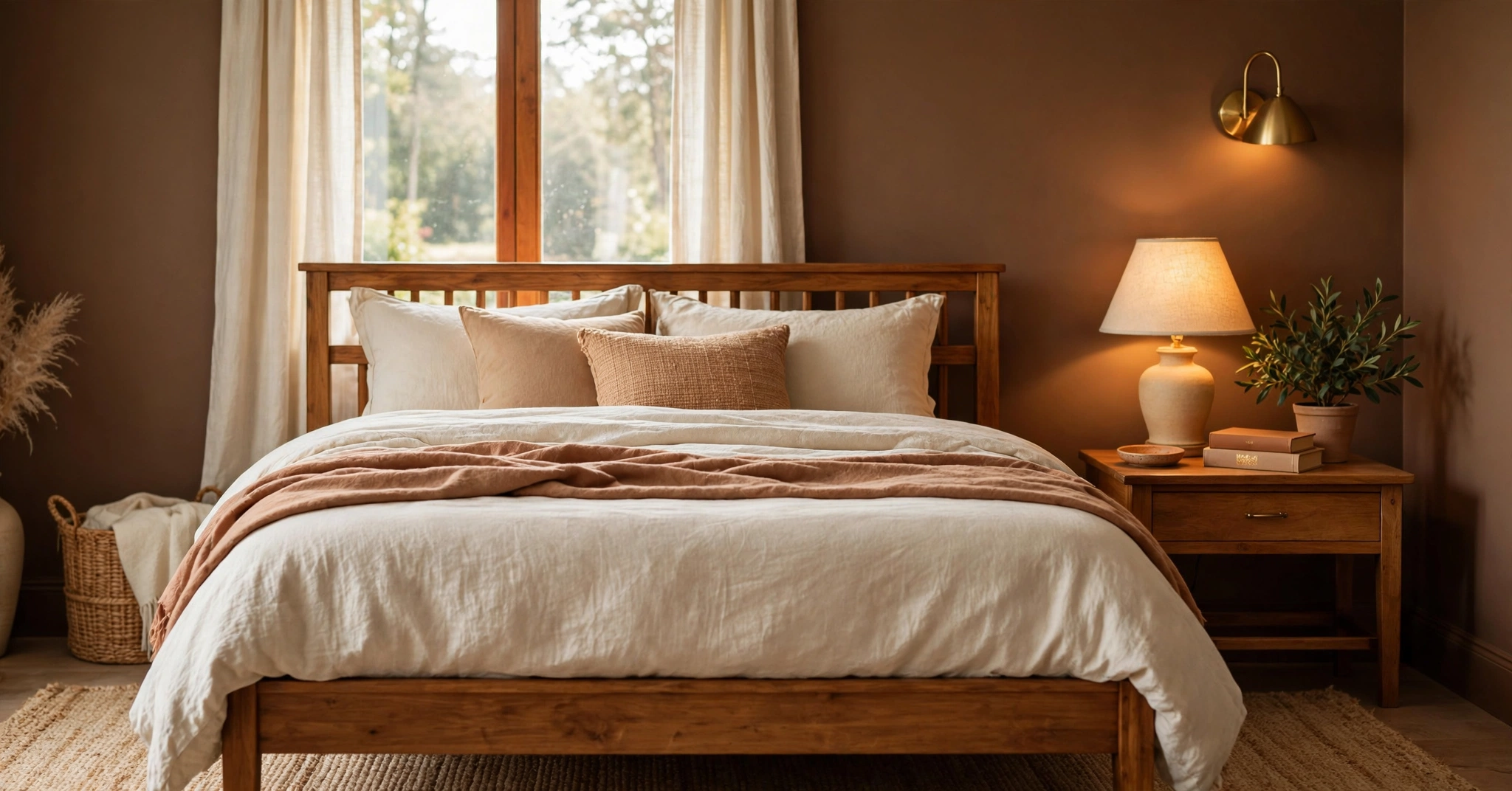
A warm bedroom aesthetic combines earthy tones, natural materials, and layered lighting to create a space that feels both comforting and relaxing. Focus on wood furniture, soft textures, plants, and warm colour palettes like terracotta, mocha, and sage green to achieve this inviting look that promotes better sleep and well-being.
Why a Warm Bedroom Aesthetic Matters
Your bedroom should be a refuge from daily stress. The space where you sleep affects everything from your rest quality to your mental health. A warm bedroom aesthetic doesn’t just look good; it actively improves how you feel in the space.
Recent design research shows that warm, inviting bedroom environments reduce anxiety and support better sleep. The trend toward warm tones has grown so significantly that Pantone named Mocha Mousse its 2025 color of the year, highlighting how much people crave warmth and comfort in their homes. This shift reflects a broader desire to move away from cold, minimalist designs and create spaces that feel like a genuine retreat.
The warm bedroom aesthetic combines several key elements: colour, lighting, materials, and personal touches. When done well, it makes your bedroom feel like a natural extension of who you are, not just a place to sleep.
Choose Warm, Earthy Colour Palettes
The foundation of any warm bedroom aesthetic starts witcolouror. The palette you select sets the emotional tone for the entire room.
Warm earthy tones dominate bedroom design in 2025. Mocha brown, soft terracotta, warm taupe, and creamy ivory create the base layer of warmth. These colours work because they connect to nature and feel inherently calming. Unlike cool greys or stark whites, warm tones wrap a room in visual comfort.
According to design experts at Wren, “In 2025, bedroom colour trends are embracing warm, earthy tones that create a cosy and inviting atmosphere. This colour palette extends beyond walls to bedding and accent pieces to create a sense of comfort and indulgence.” Adding secondary colours like sage green, muted terracotta, or soft ochre brings depth without disrupting the warm feeling.
The key is to use warm tones strategically:
- Paint walls in soft brown, warm beige, or light terracotta shades
- Use white or cream trim to keep the space feeling bright
- Add accent colours through textiles, art, or small furniture pieces
- Layer multiple warm tones rather than sticking to just one
Many people worry that warm, darker colours will make a room feel small. The solution is simple: balance with plenty of natural light, light-colored textiles, and reflected light from mirrors and lamps.
Build Layers of Lighting for Warmth
Lighting transforms how your space feels at different times of day. A warm bedroom aesthetic requires intentional lighting design that moves away from harsh, single overhead fixtures.
Layered lighting creates flexibility and warmth. This means combining three types of lighting: ambient (overall room light), task (bedside reading), and accent (highlighting specific areas). Warm-toned bulbs, around 2700 Kelvin, create the cosy feeling you want.
Design expert Claire German, CEO of Design Centre, Chelsea Harbour, emphasises that “layered lighting with a mix of wall sconces, bedside lamps, and even candles” creates warmth and softness. This approach lets you adjust the mood based on time of day and your needs.
Practical lighting solutions for a warm bedroom aesthetic include:
- Wall sconces on either side of the bed for soft, focused light
- A ceiling fixture on a dimmer for flexible ambient light
- Bedside table lamps for reading and relaxation
- Accent lighting behind shelves or artwork to add visual interest
- Candles or salt lamps for occasional warm, atmospheric lighting
Position lighting to avoid glare, and consider smart bulbs that let you adjust colour temperature throughout the day. Warm light helps your body prepare for sleep, supporting both comfort and sleep quality.
Incorporate Natural Materials and Textures
Raw, natural materials are central to a warm bedroom aesthetic. They bring authenticity and tactile comfort to the space.
Wood is experiencing a major comeback in bedroom design. Rather than sleek modern styles, warm woods like walnut, oak, and mango bring character and warmth. A wooden bed frame or wooden nightstands immediately shift the mood of a room. Wood doesn’t have to mean heavy or traditional; modern designs use wood in clean lines while preserving its natural warmth.
Beyond wood, natural fabrics create texture and comfort. Linen bedding, cotton sheets, and wool area rugs add tactile interest. These materials also support the wellness trend; they’re breathable, durable, and connect you to natural elements.
Include natural materials throughout the room:
- A wooden bed frame or headboard as a focal point
- Wooden nightstands or dressers in warm tones
- Linen or cotton bedding in cream, soft white, or warm neutrals
- A natural fibre area rug like jute or sisal
- Wool blankets or cotton throws for layering
- Wooden wall shelves for decor and books
- Woven baskets for storage
Rough textures (like a woven jute rug) paired with soft textures (like linen bedding or a boucle accent chair) create visual and tactile interest. This mix prevents the room from feeling too heavy or one-dimensional.
Add Plants for Life and Colour
Biophilic design, which brings nature into interior spaces, is a major trend for warm bedrooms. Plants add colour, improve air quality, and create a connection to the natural world.
Plants work in any bedroom size. A large fiddle leaf fig in a corner makes a design statement, while small potted succulents or trailing pothos on shelves add subtle green accents. Avoid plants that require intense care; choose hardy varieties that thrive in typical bedroom light conditions.
The best plants for a warm bedroom aesthetic include:
- Snake plants (low maintenance, tall accent)
- Pothos or philodendron (trailing vines for shelves)
- ZZ plants (glossy leaves, air-purifying)
- Monstera (statement plant for larger spaces)
- Succulents (minimal care, architectural appeal)
- Ficus trees (warm wood tones complement well)
Place plants on nightstands, shelves, windowsills, or the floor. Group small plants together to create a mini garden effect. Use natural wood or ceramic pots that match your warm colour palette. The combination of green foliage and warm earth tones feels both grounded and alive.
Curate Decor and Personal Touches
A warm bedroom aesthetic should reflect your personality. Generic hotel-style bedrooms are out; hand-picked, intentional decor is in.
This means moving away from matching sets and mass-produced art toward pieces that genuinely speak to you. A collection of smaller artworks, family photos in warm wood frames, or vintage books stacked on a nightstand create character.
Warm materials extend to decor choices too. Look for:
- Art prints in warm tones (landscapes, botanical prints, abstract warm colours)
- Brass or matte black metal fixtures (mirrors, lamp bases, drawer handles)
- Ceramics or pottery in earth tones
- Wooden or woven picture frames
- Vintage or antique pieces that add warmth and history
- Soft rugs, pillows, and throws in textures like velvet, linen, or wool
Avoid overdecorating. A few meaningful pieces create a stronger, warm, inviting feeling than a cluttered shelf. Quality over quantity makes spaces feel intentional and relaxing.
Create Comfort Through Textiles
Bedding and soft furnishings are where you spend most of your time, so they deserve careful attention in creating a warm bedroom aesthetic.
High-quality bedding in warm tones becomes both practical and decorative. Choose sheets in cream, soft white, warm grey, or light terracotta. Layer with blankets and throws in complementary warm tones. A textured throw blanket in cream or oatmeal adds visual and tactile interest.
Pillows serve dual purposes: comfort and design. Mix pillow shapes and sizes while keeping the colour palette warm and cohesive. Boucle, linen, and velvet textures add sophistication while maintaining comfort.
Key textile elements for a warm bedroom aesthetic:
- High-quality cotton or linen sheets in warm neutrals
- Multiple layers of blankets and throws
- Mix of pillow textures (smooth, textured, patterned)
- A warm-colored duvet or quilt as the bed’s centrepiece
- Textured area rug to define the sleeping zone
- Lightweight curtains in warm, light colours to control light
Textiles can be your most flexible design element. Swapping pillows, blankets, or curtains lets you refresh the room seasonally while maintaining the warm aesthetic.
Work with Limited Space
Not everyone has a large bedroom. A warm aesthetic works beautifully in smaller rooms when you make intentional choices.
Light colours on walls expand visual space while maintaining warmth. A soft cream, warm taupe, or pale terracotta prevents the room from feeling cramped. Add warmth through accessories rather than large furniture pieces. One statement item like a wooden bed frame or plants can define the aesthetic without overwhelming the space.
Vertical storage using floating shelves keeps floor space clear. Mirrors reflect light and make rooms feel bigger. A single layered lighting solution rather than multiple fixtures keeps the space feeling open.
For smaller bedrooms:
- Use one warm wall colour to maintain visual calm
- Choose a bed frame that feels proportional to the room
- Rely on wall-mounted lighting and shelving
- Keep nightstands minimal or wall-mounted
- Use mirrors to reflect light and expand space
- Limit decor to a few carefully chosen pieces
Start Creating Your Warm Bedroom Today
Building a warm bedroom aesthetic is an investment in your comfort and well-being. It doesn’t require a complete redesign or a large budget. Start with one or two changes: warm wall paint, new bedding, or better lighting. Add natural materials and plants gradually.
The goal is a space that feels like you, that wraps you in comfort, and that supports good rest. A warm bedroom aesthetic achieves this by combining thoughtful colour, soft lighting, natural materials, and personal touches into one cohesive, inviting space.
If you’re planning a bedroom refresh beyond just aesthetics, explore other design approaches. For cool-toned alternatives, consider grey bedroom ideas or pink bedroom ideas for different moods. And if you’re looking for unconventional bedroom inspiration, even creative concepts like Minecraft bedroom ideas show how different colour palettes and materials can transform a space.
Start with your walls and build from there. The warm tone becomes your foundation, and everything else follows naturally.
FAQs
Will warm colours make my bedroom feel smaller?
Not if you balance them with light colours and good lighting. Pair warm walls with white trim, light bedding, and reflective surfaces like mirrors. Layered lighting adds perceived depth.
What’s the best wall colour for bedroom walls?
Soft brown, warm taupe, and pale terracotta are safest choices. Test paint samples in your room’s natural and artificial light before committing. What looks one way in the store may read differently in your space.
How do I maintain a warm aesthetic on a budget?
Focus on affordable basics like bedding, paint, and plants. Thrift stores often have wooden furniture and decor at low prices. Paint, textiles, and plants create impact for less money than new furniture.
Can I combine warm colours with cool tones?
Yes, but keep warm tones dominant. A touch of cool tones (like soft blue-green in pillows) can add interest without disrupting the warm feeling.
How often should I refresh a warm bedroom?
The beauty of a warm aesthetic is its timelessness. Swap textiles seasonally to keep it fresh without major changes. Warm tones stay in style far longer than trendy pastels or cool minimalism.