

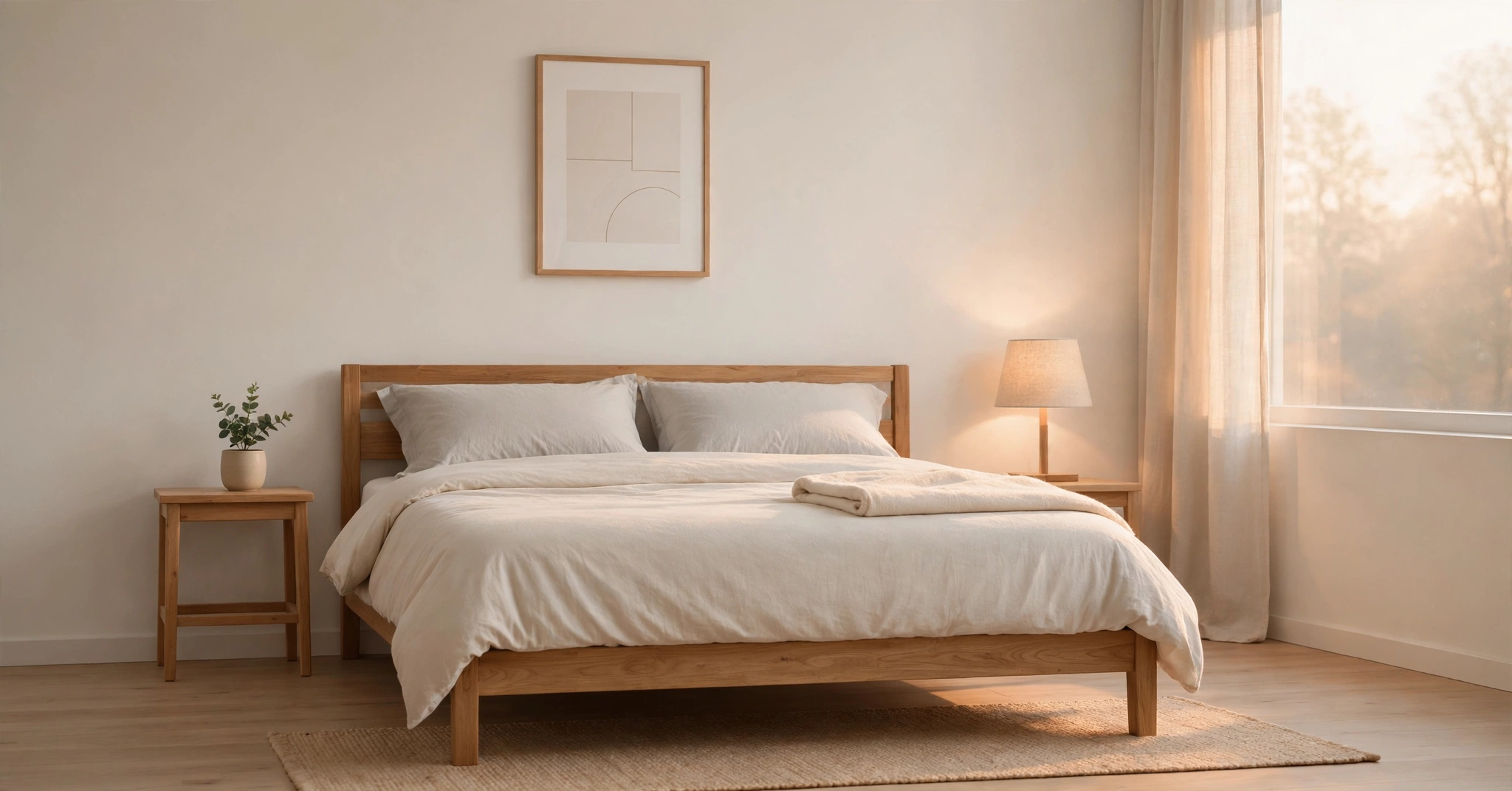
When you walk into most bedrooms, dressers, nightstands, accent chairs, wall art, and decorative items compete for attention. A minimal bedroom takes the opposite approach. Instead of filling the space, it breathes.
Minimal bedroom design is no longer a niche trend. According to a 2024 survey by the National Sleep Foundation, 67% of Americans report that a cluttered bedroom negatively affects their sleep quality. The same study found that people who maintained tidy, organised bedrooms slept an average of 26 minutes longer per night.
This article shows you how to design a minimal bedroom that feels intentional, peaceful, and genuinely livable. You’ll learn which furniture to keep, how to choose a colour palette, and the practical steps to transform your space without starting from scratch.
What Defines a Minimal Bedroom
Minimalism isn’t about having an empty room or creating a sterile environment. It’s about intentional choices. Every item in a minimal bedroom serves a purpose, contributes to the aesthetic, or both.
A true minimal bedroom typically includes:
- A bed frame and mattress
- One or two bedside tables
- A small dresser or closet storage
- Basic lighting (overhead fixture or bedside lamp)
- Window coverings for privacy and light control
- 1-2 pieces of wall art or none at all
What a minimal bedroom excludes:
- Excess throw pillows and decorative cushions
- Accent chairs or seating
- Multiple mirrors
- Collections or displays
- Wall-to-wall decorative items
- Heavy, patterned wallpaper or busy prints
The key difference between minimal and sparse is intention. A sparse room feels incomplete. A minimal room feels complete because every element was chosen with purpose.
The Colour Palette for a Minimal Bedroom. Colour forms the foundation of any minimal bedroom. Your palette should be limited to three colours maximum.
Most minimal bedrooms rely on neutral tones as their base:
- Whites and off-whites (ivory, cream, eggshell)
- Greys (light grey, warm grey, cool grey)
- Warm beiges and taupes
- Black or charcoal for accent pieces
These neutrals work because they create a calm backdrop without competing for attention. They also make the space feel larger and more open.
You can introduce one accent colour if you want personality. Soft sage green, dusty blue, or warm terracotta can appear in bedding, a single wall, or small furnishings. The rule is restraint. Your accent colour should feel like an accent, not a dominant feature.
Research from the Journal of Environmental Psychology (2023) shows that bedrooms with neutral colour schemes reported 31% fewer instances of visual stress compared to rooms with multiple competing colours.
Essential Furniture for a Minimal Bedroom
Choosing the right furniture is where minimalism becomes practical. Each piece should earn its place.
The Bed
Your bed is the bedroom’s focal point. In minimal design, a simple bed frame works best. Platform beds, low-profile frames, or wooden frames in natural finishes suit this style. Avoid ornate headboards or heavily upholstered frames that draw excessive attention.
The mattress should be quality. Minimalism doesn’t mean cutting corners on comfort. A good mattress directly affects your sleep quality and longevity.
Bedside Tables
One or two minimal nightstands are practical. A simple wooden side table or a small floating shelf provides space for a lamp and your phone. Avoid bulky nightstands with multiple drawers or ornamental details.
If your bedroom is small, consider a single small table on one side only.
Storage Solutions
Dressers in minimal bedrooms are typically low-profile and simple. A solid-wood dresser without decorative hardware or a sleek, modern design works well. The dresser’s purpose is function. It shouldn’t be a decorative statement.
If you have closet space, your dresser can be minimal or absent entirely. Some minimal bedrooms skip the dresser and use closet storage exclusively.
Lighting
A simple ceiling light or pendant fixture provides ambient lighting. A bedside lamp offers task lighting for reading. These two sources are usually sufficient. Avoid multiple lamps or decorative lighting fixtures.
Flooring and Window Treatments
The floor and windows matter in a minimal bedroom.
For flooring, hardwood or light-colored tile works well. If you want a rug, choose a neutral colour and simple design. A grey or beige rug defines the space without adding visual complexity.
For windows, simple roller shades or basic linen curtains keep the look clean. Avoid heavy drapes, ornate curtain rods, or patterned fabrics. Light-filtering or blackout shades in white, grey, or beige serve the practical purpose of controlling light and privacy.
If you prefer natural light, consider no window treatment at all, or very minimal options like simple wooden shutters.
Wall Art and Decor in Minimal Spaces
In a minimal bedroom, less is genuinely more when it comes to wall art.
Most minimal bedrooms feature either:
- One large, simple piece of art
- Two small pieces arranged minimally
- No wall art at all, letting the wall colour stand alone
If you choose art, it should be meaningful to you. A black-and-white photograph, a simple abstract piece, or a single framed print works well. Avoid gallery walls, busy compositions, or frames that compete with the room’s calm.
Some minimalists skip wall art entirely, allowing the textured wall or simple colour to speak for itself.
For plants, one or two in simple ceramic or concrete pots can add life without clutter. Plants with minimal visual weight (like snake plants or pothos) fit the aesthetic better than large, showy varieties.
Textiles and Bedding
Your bedding and textiles should be high quality and purposeful.
For bedding, choose a neutral-colored duvet, sheets, and pillows. Quality linen or organic cotton in white, light grey, or soft beige creates a cohesive look. Keep throw pillows minimal. One or two pillows in solid colours, or none at all, keeps the bed from looking cluttered.
A simple throw blanket in a neutral tone can drape over the foot of the bed. Avoid multiple throws or heavily patterned textiles.
Lighting for Function and Mood
Lighting affects how a minimal bedroom feels.
Install dimmable lights if possible. Dimmers allow you to adjust brightness based on time of day and mood, which helps support your natural sleep cycle. Soft, warm lighting (2700K colour temperature) is better for bedrooms than cool, bright light.
Bedside lamps should be simple. A ceramic or metal base with a linen or cotton shade works well. Avoid decorative or ornate lamp bases that compete for visual attention.
Consider a small reading light if you read in bed. This keeps you from needing multiple lamps on your nightstand.
Storage Strategies for a Clutter-Free Bedroom
A minimal bedroom requires smart storage. Items you don’t use should be out of sight. Utilise your closet fully. Invest in good hangers and simple shelving. Keep seasonal items in storage boxes under the bed or on a closet shelf. The bedroom itself should only contain items you use regularly.
For items you must keep visible (like bedside essentials), use simple containers. A small box or tray corrals remotes, glasses, or jewellery neatly.
If your bedroom doubles as a workspace, consider a minimal desk that can fold away or blend seamlessly with the room’s design. The desk surface itself should be clear of unnecessary items.
Common Mistakes When Creating a Minimal Bedroom
Even with good intentions, people often miss the mark. Here are common pitfalls to avoid.
Over-Decorating with “Minimal” Pieces
Just because something is simple doesn’t mean you need multiples of it. Five neutral picture frames are still clutter. Stick to your limit.
Choosing Cheap Furniture
Minimal bedrooms highlight every piece. Low-quality furniture is more noticeable, not less. Invest in solid construction and quality materials.
Ignoring Functionality
A beautiful minimal bedroom that requires you to store things elsewhere isn’t practical. Storage must work for your lifestyle.
Keeping Items Out of Guilt
If you own something but don’t use it, it doesn’t belong in your bedroom. Donate or sell items that don’t serve you.
Forgetting About Personal Touches
A minimal bedroom should still feel like yours. One piece of art you love, or a family photograph, grounds the space emotionally.
How to Transition Your Bedroom to Minimal
You don’t need to overhaul everything at once. A gradual approach works better.
Start by removing items you don’t use or love. Go through each nightstand drawer, closet shelf, and wall. If you haven’t used something in a year and it doesn’t bring you joy, it goes.
Next, organise what remains. Group similar items, use storage solutions, and keep surfaces clear. This step alone often makes a dramatic difference.
Then, address furniture. If you have bulky pieces you don’t need, remove them. Replace them gradually with simpler alternatives if necessary.
Finally, settle on your colour palette. Paint walls if needed, update bedding, and choose simple window treatments.
This process typically takes a few weeks to a few months, depending on how much you’re changing.
Real-World Minimal Bedroom Examples
Different minimal styles can still feel very different depending on material choices and colour.
Scandinavian Minimal
Think light wood, white walls, and natural light. Furniture is functional and beautifully made. Textiles add warmth through wool or linen in creams and greys.
Modern Minimal
Clean lines, possibly a platform bed, and a mix of materials like metal and concrete. Colour remains neutral, but there may be subtle texture through materials.
Japandi Minimal
Combines Japanese minimalism with Scandinavian warmth. Natural wood, low furniture, and an emphasis on craftsmanship create a grounded, calm space.
All three approaches share the same principle: intentional choices, quality over quantity, and maximum calm.
The Health Benefits of a Minimal Bedroom
Beyond aesthetics, science supports minimal bedroom design.
Better sleep is the primary benefit. A 2023 study published in Sleep Health Review found that people in less cluttered bedrooms reported 19% better sleep quality on average.
Reduced stress is another benefit. Visual clutter activates the amygdala, your brain’s stress centre. A calm, uncluttered space keeps your nervous system relaxed.
Easier cleaning and maintenance means less time spent on housework, which reduces decision fatigue and stress.
A minimal bedroom also tends to be cooler, which supports better sleep. Fewer items and less furniture mean better air circulation.
Minimal Bedrooms for Small Spaces
If your bedroom is small, minimalism becomes even more valuable.
In a small room, every item matters more. Remove anything unnecessary to maximise the feeling of space. A single nightstand instead of two, a small dresser or wall-mounted storage, and one simple wall hanging all preserve space.
Light colours and minimal visual clutter make small bedrooms feel larger. Mirrors can technically make a space feel bigger, but if they’re not essential to your function, skip them to maintain the minimal aesthetic.
Related Reading: Learn how to make the most of limited space with our guide to grey bedroom ideas, or explore other design directions like a warm bedroom aesthetic.