

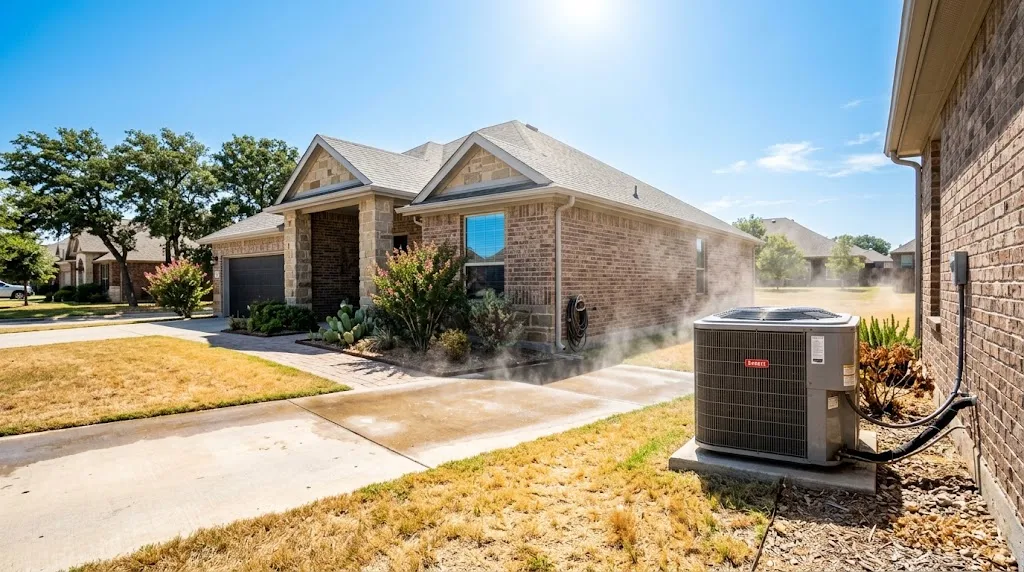
A normal year in Dallas-Fort Worth brings about 20 days of 100-degree heat. This year brought at least 52.
That’s from preliminary National Weather Service data through late September. It ties 2026 for the fifth-most triple-digit days DFW has ever recorded.
Your air conditioner felt every one of them. On a 100-degree day, most units barely shut off. And while the brochures still promise 15 years or more, plenty of North Texas systems don’t get close.
Here’s what the numbers say about the heat, what it does to your AC and how to tell if yours is wearing out early.
Is Texas hotter than it’s ever been?
Not quite. But it’s getting close more often.
The worst DFW summer on record is still 2011. That year had 71 days at 100 or higher. Next is 1980, with 69. That summer also holds the record for the longest streak, 42 days in a row from late June into August. DFW’s hottest day ever, 113 degrees, came in June 1980 too.
So what’s different now? Bad summers keep coming back. Here are the 10 years with the most 100-degree days at DFW, according to the National Weather Service:
- 2011: 71 days
- 1980: 69 days
- 1998: 56 days
- 2023: 55 days
- 2026: 52 days (tie, preliminary)
- 1954: 52 days (tie)
- 1956: 48 days
- 2022: 47 days
- 2000: 46 days
- 1952: 44 days
Four of those years came after 2011. Three came in the last five summers.
The heat sticks around longer, too. North Texas had 12 triple-digit days in September 2026, a record for the month, KERA News reported. Texas’ 2023 summer was the second-hottest statewide, with an average high of 98.3. NOAA scientists say the hot season now starts earlier and runs later.
The short answer? 2011 still wears the crown. But 50-plus-day summers used to show up once a generation. Now they show up every few years.
How long do AC units last now?
Most central air conditioners last 10 to 15 years. ASHRAE and the U.S. Department of Energy both use about 15 years as the typical lifespan. Heat pumps run a little shorter, around 14.
Manufacturers like bigger numbers. Carrier says many of its systems last 15 to 20 years with good care. But Carrier also says a neglected unit may only last 10 to 12. And it says units in hot southern climates wear out faster.
Think about what “average” means. A unit in Minneapolis works hard for maybe six weeks a year. A unit in Frisco or McKinney works hard from May to September. Sometimes October.
Why Texas heat wears your AC out faster
Your AC doesn’t age by the calendar. It ages by the hour. And by how hard those hours are.
Your unit was rated on a cooler day. Federal efficiency ratings are tested at 95 degrees outside. At 105, the outdoor unit has to dump heat into air that’s already scorching. It loses capacity. It loses efficiency. So the compressor runs longer to keep up.
Long run times add up. On a 100-degree afternoon, a lot of systems never cycle off. The compressor, fan motors, capacitors and contactors all wear a little more every hour. One North Texas summer can put as many hours on a unit as two or three summers up north.
Hot nights take away the break. When it’s still close to 80 at midnight, your AC keeps grinding. Parts stay hot. Electrical components take a beating.
Drought means dirt. DFW went more than 60 days without measurable rain this summer. Dry spells mean dust on the outdoor coil. A dirty coil makes a struggling system struggle more.
What to expect at each age in North Texas
This is a rough guide, not a promise. Sizing, installation and maintenance change everything.
- 0–5 years: Few big repairs, and parts are usually under warranty. What to do: Get a tune-up every spring and make sure the warranty is registered.
- 6–10 years: Capacitors, contactors and fan motors start failing, especially after rough summers. What to do: Fix small stuff fast. Have a tech check refrigerant and coil condition.
- 11–15 years: Compressor and coil failures get more likely, and efficiency drops. What to do: Price repair vs. replacement before each summer.
- 15+ years: On borrowed time in this climate. What to do: Plan a replacement before August plans it for you.
The refrigerant change you should know about
Got an older system? There’s one more thing to weigh.
Under the federal AIM Act, manufacturers had to stop making new home AC units with R-410A refrigerant on Jan. 1, 2025. New units use refrigerants like R-454B instead.
Your R-410A system isn’t illegal. You can still run it and repair it. But supply will shrink, and recharges will likely cost more over time. That’s what happened when R-22 was phased out. If an old R-410A unit needs a big refrigerant repair, that money might be better spent on a new system.
Signs your AC is losing to the heat
- It runs all afternoon, but the house never hits the thermostat setting
- Some vents blow warm air, or the airflow feels weak
- The outdoor unit hums, clicks or buzzes but won’t start
- Ice shows up on the refrigerant lines or indoor coil
- Your electric bill jumps and you can’t explain why
- You’ve needed more than one repair this season
A small problem in June is often a dead unit in August. That’s also when every repair company is booked solid. If you see any of these signs, get it checked before the next heat wave. Homeowners in Collin and Denton counties can call a local AC repair in Frisco, TX company to check refrigerant, electrical parts and airflow in one visit.
How to help your AC last longer
- Book a spring tune-up. A tech can clean the coils, test capacitors and check the refrigerant charge before peak season hits.
- Change your filter every one to three months. In a dusty summer, check it monthly.
- Give the outdoor unit room. Keep 2 feet clear around it. Rinse the coil gently with a hose when it looks dirty.
- Skip the big thermostat swings. Dropping it 10 degrees when you walk in forces a long, hard run. A smart thermostat can cool the house down slowly instead.
- Keep heat out in the first place. Blinds, attic insulation and sealed ducts all mean less work for your AC.
The bottom line
This isn’t the hottest Texas summer ever. But hot summers are piling up, closer together, and they’re lasting into fall. That’s more hours on every AC in North Texas.
Fifteen years is still a fair goal. You just won’t get there by accident. When 50-day heat seasons are normal, maintenance and fast repairs are what keep your AC alive past August.