

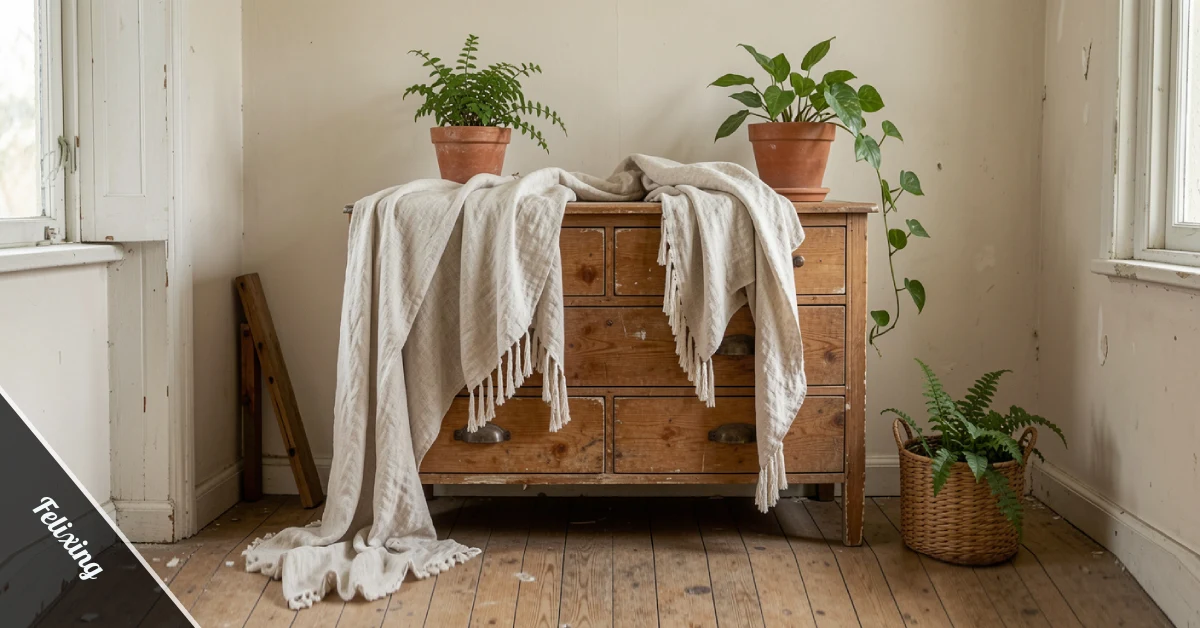
Felixing is a home improvement approach where you work with what you already own, repair before replacing, and choose eco-conscious materials when you do buy something new. The goal is a refreshed space without the waste, the debt, or the guilt that usually follows a traditional makeover. Think of it as the opposite of ripping everything out and starting over.
What makes felixing different from regular DIY is the mindset behind it. You are not chasing a catalog look. You are asking what your space actually needs to feel better, then meeting that need with the least amount of new consumption possible. For homeowners and renters alike, this approach saves money, reduces indoor air pollution, and builds a home that reflects your real life rather than someone else’s design formula.
Why the Old Makeover Model Does Not Work Anymore
For years, the home improvement industry sold a straightforward idea: if your space feels stale, buy your way out of it. New sofa. New floors. New everything. The catch is that cycle creates enormous waste. According to the EPA, construction and demolition debris generates more than twice the volume of all municipal solid waste combined. A huge portion of that comes from renovation projects where perfectly functional materials get thrown out simply because they looked dated.
Beyond the environmental cost, there is a personal one. You spend a lot of money making your home look like a showroom, and six months later it still does not feel like yours. That disconnect is what draws so many people toward felixing. The approach starts with a different question: What can I do with what I already have?
What Felixing Actually Means in Practice
The term blends “fixing” with intentionality. When you are felixing, you are not just patching a crack or touching up paint. You are looking at every room and deciding what genuinely needs attention versus what you have been conditioned to think needs replacing.
In my experience, the first pass through your own home is always surprising. You realize the dining table just needs a good sanding. The kitchen cabinets only look tired because of the outdated hardware. The guest room lamp would look great in the living room. Felixing turns that kind of observation into a practice.
A few things separate this from regular DIY:
- Regular DIY usually starts with a trip to the hardware store. Felixing starts by shopping your own home first.
- Regular DIY focuses on a specific outcome. Felixing focuses on reducing what you consume in the process.
- Regular DIY can still generate significant waste. Felixing treats waste prevention as part of the project itself.
Deconstruct Before You Demolish
The first rule of any felixing project is to slow down before you start pulling things apart. If you want to update a kitchen, do not grab a pry bar on day one. Walk through the space and ask: what here can be repaired, moved, or donated?
Deconstruction—the careful removal of materials to preserve them—is worth learning for older homes especially. If your house was built before 1980, check for lead paint or asbestos before removing walls or flooring. A $30 test kit from a hardware store can save you a costly mistake. For safe removal, basic tools like a flat pry bar, an oscillating multi-tool, and a stud finder will handle most surfaces without destroying the material underneath.
Whatever you remove that is still usable, list it. Local salvage shops, Habitat for Humanity ReStores, and neighborhood online marketplaces will take cabinets, tiles, fixtures, and doors. Keeping those materials out of a landfill is not a small thing. Refinishing a solid wood dresser instead of buying a new one keeps roughly 150 to 200 pounds of material out of the waste stream and avoids the carbon cost of manufacturing and shipping a replacement.
Shop Your Home Before You Buy Anything
This is the most practical part of felixing, and it costs nothing. Before purchasing a single item for a makeover, walk every room with a notepad. You are looking for pieces that are underused, misplaced, or simply forgotten.
I did this in my living room last year. A woven basket from the guest room became a magazine holder. A floor lamp from the home office fit the living room perfectly. A set of art prints I had stored in a closet for two years finally went on the wall. The room felt completely different, and the total cost was zero.
Some quick ways to start:
- Swap art between rooms instead of buying new frames.
- Move a side table from the bedroom to the entryway.
- Combine mismatched dining chairs for a layered, collected look.
In most cases, you already own 70 to 80 percent of what you need for a refreshed room. Felixing just trains you to see it.
Choose Better Materials When You Do Buy
When you do need something new, the materials you choose affect your home long after the project ends. Conventional paints, sealants, and particleboard furniture release volatile organic compounds (VOCs) into your indoor air, sometimes for years. Low-VOC and zero-VOC paints have caught up in quality. They cover well, the color holds, and you do not spend a week airing out the room after painting.
For flooring, if you have hardwood hiding under old carpet, refinish it with a water-based sealant rather than laying something new on top. For reupholstery, choose natural fibers like cotton, linen, or wool over synthetic blends treated with chemical coatings. For new furniture purchases, reclaimed wood, bamboo, and recycled-content pieces carry a lower environmental cost and tend to hold up better over time than flat-packed alternatives.
This is where sustainable home renovation pays off beyond the planet. Better materials do not off-gas into your living space, they age well, and you do not replace them as often.
Water Efficiency in the Kitchen and Bathroom
A felixing approach to the bathroom or kitchen focuses on the internal components, not just the aesthetics. Swapping a vanity looks nice. Upgrading what is inside it does more.
A high-efficiency faucet aerator costs around ten dollars and can reduce water flow by 30 percent without any noticeable drop in pressure. If your toilet was installed before 2000, it likely uses 3.5 to 5 gallons per flush. A dual-flush conversion kit gives you two flush options and can be installed in under an hour without replacing the whole unit. These are not glamorous changes, but they reduce your water bill every single month.
Upcycling Furniture and Second-Hand Finds
This is where a felixing home starts to develop real personality. Instead of a matching furniture set from a big-box store, you source second-hand pieces and give them a second life.
Solid wood furniture from the 1960s and 1970s is often stronger and denser than anything at a comparable price point today. A $50 oak dresser from a local marketplace, sanded down and finished with linseed oil, will outlast a $300 pressed-wood equivalent by decades.
Upcycling takes that further. Mount an old wooden ladder horizontally on the wall with two L-brackets, and you have a shelf that holds books or plants. Add hairpin legs to a flat wooden door, and you have a dining table. These are not difficult projects. Felixing does not require you to build furniture from scratch. It only requires the decision to repair instead of replace. Starting with something small, like re-gluing a wobbly chair leg or replacing worn upholstery on a cushion, is enough to begin.
Why This Matters Beyond Right Now
Homes that prioritize quality materials and thoughtful maintenance hold their value better. As energy costs continue shifting and supply chains remain unpredictable, the ability to repair and maintain what you own is a real advantage. You stop being dependent on the next product release to feel comfortable in your space.
There is also a clear generational shift. Younger homeowners are asking harder questions about where their furniture came from, how long it will last, and what happens to it when they are done with it. Felixing builds habits that answer those questions through action rather than intention.
FAQs
What is the difference between felixing and regular DIY?
Regular DIY often starts with a project goal and new materials. Felixing starts with a philosophy: use what you have, repair before replacing, and reduce waste throughout. DIY is the method. Felixing is the reason behind it.
Can renters do felixing?
Felixing works well in rentals. Since structural changes are off the table, the focus shifts to removable improvements: peel-and-stick wallpaper, swapped cabinet hardware, second-hand furniture, and plants. You build a better space and take everything with you when you leave.
Does buying second-hand actually help the environment?
Yes. When you buy second-hand, you extend the life of an existing item and eliminate the demand for new manufacturing, raw material extraction, and long-distance shipping. For furniture specifically, it is one of the most direct ways to reduce your home’s environmental footprint.
How do I dispose of old paint or construction materials responsibly?
Never pour liquid paint down the drain or bin it. Most cities have hazardous waste drop-off sites that handle paint disposal. For salvageable materials like old tile, wood, or fixtures, Habitat for Humanity ReStores accept donations so someone else can put them to use.
Do I need to be handy to start felixing?
Not at all. Start with something small: re-glue a wobbly chair leg, clean up a vintage rug, or swap hardware on kitchen cabinets. Felixing begins with the decision to look at what you own differently. The skills build from there.