

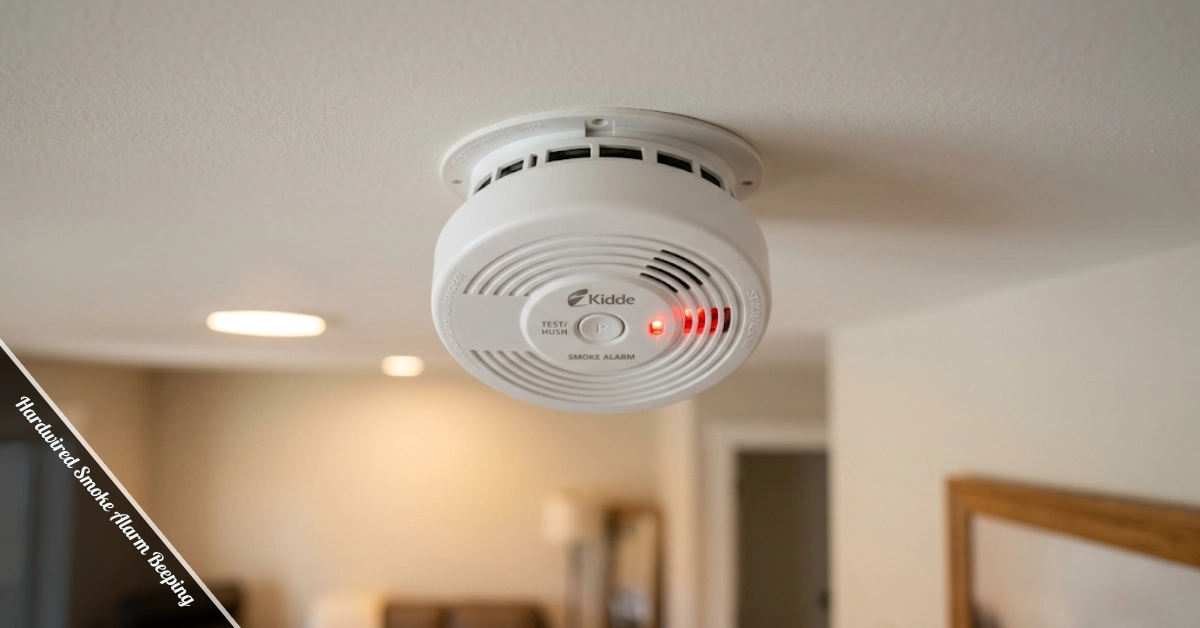
A hardwired smoke alarm beeps because of a low backup battery, dust buildup inside the sensor, age-related failure, or electrical issues like power surges or loose wiring. Single chirps every 30 to 60 seconds usually point to a dying battery. Three-beep patterns signal detected smoke. Five beeps mean the unit has reached the end of life and needs replacement.
That chirping sound at 2 a.m. is one of the most frustrating things a homeowner can hear. You know it is not a fire. But it will not stop. And because the alarm is hardwired, just pulling out a battery does not fix it.
This guide explains exactly why your hardwired smoke alarm is beeping, how to decode the pattern, and how to stop it, step by step. You will also find out when a simple battery swap is enough and when to call a licensed electrician.
What Makes a Hardwired Smoke Alarm Different
Most homes built after 1993 have hard-wired smoke alarms. These units pull power directly from your home’s electrical circuit. They are more reliable than battery-only alarms because they cannot go fully dead in the same way.
Here is the catch: nearly every hardwired smoke alarm also has a backup battery. This battery keeps the alarm working during a power outage. It is usually a 9-volt battery, though some newer models use a sealed lithium battery that lasts up to 10 years.
When that backup battery starts to fail, the alarm chirps. Because it is hardwired, many homeowners assume the alarm is getting electricity and ignore the chirp. That is a mistake. The backup battery is a separate system, and it needs its own attention.
How to Read Your Alarm’s Beep Pattern
Not every beep means the same thing. Before you fix anything, listen carefully.
- One short chirp every 30 to 60 seconds: Low or dead backup battery. This is the most common cause.
- Three consecutive beeps, repeated: The alarm has detected smoke or combustion particles. Treat this as a real alert. Get everyone out first.
- Three beeps followed by a pause: Some models use this to signal a malfunction rather than smoke. Check your manual.
- Five chirps in a row, then silence: End-of-life alert. The alarm has passed its 8- to 10-year lifespan and must be replaced.
- Continuous, rapid beeping: Active alarm. Evacuate immediately and call 911.
Knowing the pattern saves you from either ignoring a real warning or tearing apart a perfectly functional alarm looking for a problem that is not there.
Why Your Hardwired Smoke Alarm Beeping Is So Common
Hardwired alarms are reliable, but they have several known failure points. Here are the most common causes of that beeping sound.
Low or Dead Backup Battery
This is the number-one cause. Even though the alarm runs on household current, the backup battery drains over time. Most manufacturers recommend replacing it every six to twelve months.
A weak battery will trigger chirping even when your home’s electricity is working perfectly. The alarm is not confused. It is telling you the backup is failing.
Dust and Debris Inside the Sensor
Smoke detectors work by sensing particles in the air. If enough dust, pollen, or small insects collect inside the unit, the sensor can read those particles as smoke and trigger an alert.
This is especially common in homes with forced-air heating or cooling, where dust circulates constantly. Central air conditioning systems can also introduce mould spores into the airstream, which may trigger sensitive smoke detectors over time. If you suspect your AC unit is contributing to air quality problems, our guide on air conditioner mold covers the warning signs and next steps. According to alarm manufacturers, cleaning your detector every six months with compressed air or a vacuum nozzle prevents most false alarms caused by dust.
End of Life
Smoke alarms do not last forever. Most have a rated lifespan of 8 to 10 years. Once they pass that point, the internal sensor degrades, and the alarm begins chirping to signal it needs replacement.
The National Fire Protection Association (NFPA) recommends replacing all smoke alarms, including hardwired models, every 10 years. Check the manufacture date printed on the back of your unit. If it is more than a decade old, replace it regardless of how it seems to be performing.
Electrical Issues
Hardwired smoke alarms can also beep due to problems with your home’s electrical system. Power surges, loose wiring at the terminal, or a tripped circuit breaker can cause intermittent chirping or false alarms. If you have also noticed your lights flickering around the same time the alarm started chirping, that combination points even more strongly to an underlying electrical fault — our guide on calling an electrician for flickering lights explains when that issue warrants professional attention.
If replacing the battery and cleaning the unit does not stop the beeping, the issue may be in your wiring. A qualified electrician should inspect the unit and the circuit it runs on.
Temperature and Humidity
Smoke alarms are sensitive to their environment. Steam from a shower, high humidity in a bathroom, or a sudden temperature shift near a heating or cooling vent can trigger a false alarm.
If your alarm sits within 10 feet of a kitchen or bathroom, that location may be the problem. Relocating the unit even a few feet can stop nuisance alerts.
Interconnected Alarm Signal
Most hardwired systems connect multiple alarms in a loop. When one unit goes into alert, it signals all the others. If you have six alarms in your home and only one is chirping intermittently, the chirping unit is usually the one with the problem. But if all alarms are sounding, you need to find which unit started the chain reaction.
Look for a blinking indicator light. On most models, the unit that initiated the alarm shows a faster or different blink pattern than the others.
Step-by-Step Fix for a Beeping Hardwired Smoke Alarm
Follow these steps in order. Most beeping issues are solved within the first two steps.
Step 1: Identify the beeping unit. Walk through your home and listen carefully. In interconnected systems, all alarms may chirp, but only one is the source. Look for the faster-blinking LED light on the unit triggering the alert.
Step 2: Replace the backup battery. Turn off the power at your circuit breaker before touching a hardwired alarm. Twist or pull the unit away from its mounting bracket. Open the battery compartment and replace the old battery with a fresh one of the correct type, usually a 9-volt alkaline. Some newer alarms use a sealed lithium battery; if yours does, replace the entire unit when the seal beeps.
After inserting the new battery, press and hold the test/reset button for about 15 seconds. This clears any stored alerts and resets the alarm.
Step 3: Clean the sensor chamber. With the alarm removed from the bracket, use a can of compressed air or a vacuum with a soft brush attachment. Blow or suction gently into the vents around the perimeter of the unit. Do not insert any tools into the sensor chamber itself.
Step 4: Restore power and test. Restore circuit power, reattach the alarm to its bracket, and press the test button. The alarm should sound one loud beep and then go silent. If it passes the test and does not chirp again within 10 to 15 minutes, the issue is resolved.
Step 5: Check the circuit breaker. If the alarm continues beeping after a fresh battery and cleaning, go to your electrical panel. Find the breaker for the smoke alarm circuit and flip it off, then back on. This resets the hardwired power supply.
Step 6: Replace the unit. If none of the steps above work, and especially if the alarm is more than 8 years old, replace it. When installing a new hardwired unit, make sure it is compatible with your existing wiring and interconnect system.
Why Working Alarms Are Not Optional
The stakes here are not small. According to NFPA’s 2024 report on smoke alarms in U.S. home fires, working smoke alarms cut the risk of dying in a home fire by more than 60 Percent. Yet nearly three out of five home fire deaths occur in homes where alarms are either absent or not working properly.
A 2024 U.S. Consumer Product Safety Commission survey found that nearly one in five households that believed all their alarms were functional had at least one with a malfunction, most often a dead battery. Ignoring a chirp because the alarm is hardwired is one of the most common and preventable causes of detector failure.
In 2024, home structure fires caused approximately 2,920 civilian deaths and over 8,900 injuries in the United States, according to NFPA’s 2024 Fire Loss Report. Those numbers make a working smoke alarm one of the most cost-effective safety tools available.
When to Call a Licensed Electrician
Some beeping issues go beyond a battery swap. You should call a licensed electrician if:
- The alarm keeps chirping after a new battery and a full reset.
- You notice scorch marks, burning smells, or discolouration near the alarm’s wiring.
- Multiple alarms on the same circuit behave erratically, even after battery replacement.
- The circuit breaker for the alarm keeps tripping.
- The alarm is wired into an older panel, and you are unsure about compatibility.
Loose or corroded connections in the wiring can cause intermittent voltage drops. These drops are sometimes misread by the alarm as a low-battery condition, creating chirping that a battery swap alone will never fix. An electrician can test the terminal connections and repair or replace the wiring safely.
For interconnected systems in older homes, a wiring fault in one unit can disrupt the entire alarm network. That is not a DIY repair. Smoke alarms are also easy to overlook during routine home upkeep, much like other fixtures that only get attention once they fail — if you are already scheduling a maintenance visit, it is worth addressing other outstanding issues at the same time, such as a snapped door handle that has been on the to-do list.
How Long Hardwired Smoke Alarms Actually Last
The NFPA recommends replacing smoke alarms every 10 years, and some manufacturers suggest as few as five to eight years for certain models. The internal photoelectric or ionisation sensors lose sensitivity over time, even if the unit still passes its own self-test.
Check the manufacturing date printed on the label on the back of each unit. Write it down or take a photo. If the date is missing or illegible, replace the alarm. You should not be relying on a unit of unknown age.
Replacing a hardwired smoke alarm is a manageable project for a confident DIYer. The new unit typically snaps into the same bracket and uses the same three-wire connector as the old one. Always turn off the circuit breaker first and confirm the power is off with a non-contact voltage tester before disconnecting any wiring.
For related guidance on home electrical safety, see our article on [how to safely reset a tripped circuit breaker] and our guide on [when to schedule a home electrical inspection].
FAQs
Why does my hardwired smoke alarm chirp even with a new battery?
If you just replaced the battery and the chirping continues, the alarm may not have been fully reset. Press and hold the test/reset button for 15 to 20 seconds after installing the new battery. If it still chirps, the unit may have dust in the sensor, an electrical issue, or it may be past its replacement date.
Can I disconnect a hardwired smoke alarm to stop the beeping?
You can remove the unit from its bracket and disconnect the wiring harness to stop the noise temporarily. But you should not leave it disconnected. A home without working smoke alarms is a serious safety risk. Identify and fix the root cause as soon as possible.
Why does my smoke alarm beep only at night?
Temperature drops during the night reduce battery voltage, which can trigger a low-battery chirp even from a battery that seems fine during the day. Night air can also raise indoor humidity slightly, which some sensors interpret as smoke particles. Both issues are more noticeable in the quiet of the night.
How do I find which alarm in my interconnected system is the problem?
Each hardwired alarm has an LED indicator. In many interconnected systems, the alarm that initiated a signal blinks at a faster rate than the others. Walk from room to room and compare the blink rates. You can also press the test button on each unit individually. The one that triggers all others when tested is typically the initiating unit.
Is a hardwired smoke alarm better than a battery-only alarm?
For most homes, yes. Hardwired alarms cannot fully lose power from a dead battery alone, and they can interconnect so all alarms sound when one detects smoke. They also tend to be more reliable over time. The backup battery is still critical for outages, so it must be maintained just like a standalone battery alarm.