

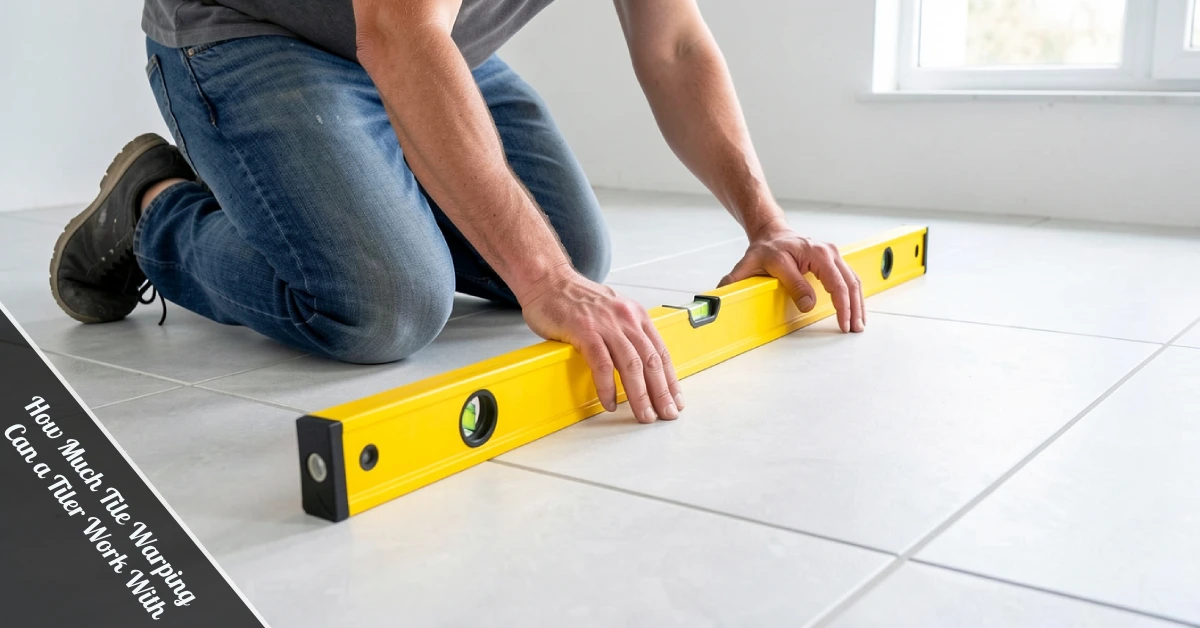
You’ve just bought gorgeous tiles for your kitchen floor. Then you notice one rocking. Panic mode: how much tile warping can a tiler work with before the whole job goes sideways? Let’s get into it.
Tile warping isn’t some rare defect reserved for bargain-bin materials. It happens to porcelain, ceramic, and even natural stone — all because of how tiles are fired in kilns. When cooling is uneven, you get a slight bow, crown, or curve. Totally normal. Not always a dealbreaker.
Here’s what separates a confident pro from a panicked DIYer: knowing exactly where the line is. Minor warping? Manageable with the right layout and mortar game. Excessive bowing? That’s when you reject the batch, not force the install.
This guide breaks it all down — no fluff, no guesswork, just real-world tiling knowledge that saves your floor and your sanity.
Tile Warpage vs Tile Lippage: Two Different Problems
Most people use these terms as if they mean the same thing. They don’t — and mixing them up leads to blame games between homeowners and installers that go nowhere fast.
Tile warpage is a manufacturing issue. It’s the physical bow, curve, or twist baked into the tile before it ever touches your floor. The tile itself is not perfectly flat — and that’s often within legal tolerances.
Tile lippage is an installation outcome. It’s the visible height difference between two adjacent tiles once they’re laid. Lippage can come from warped tiles, yes — but also from a poorly prepped subfloor or a rushed job.
Why does it matter? Because a tile can pass every manufacturing standard for warpage and still create ugly, trip-hazard lippage after install. When that happens, the tile played a role — even if the installer gets the blame.
The Real Numbers: Industry Standards for Tile Warpage
0.75% — The Magic Number You Need to Know
According to ANSI A137.1 — the go-to industry standard for ceramic and porcelain tiles — most tiles are allowed approximately 0.75% warpage based on the tile’s length. Warpage is measured using ASTM C485 methods.
Sounds tiny, right? On a 24-inch tile, that’s several millimetres of actual bow. And on the floor, those millimetres matter — a lot. That’s when one tile’s high center meets its neighbor’s low edge. Hello, lippage.
Rectified tiles — the ones with edges precision-ground square after firing — look ultra-modern and sleek. But they’re installed with tighter grout joints, which means any warping becomes more visible, not less. Non-rectified tiles with wider joints actually hide small imperfections better.
Quick Reference: Warpage Workability Guide
| Factor | Workable Range | When It’s a Problem |
| Tile warpage | Within ANSI A137.1 limits | Visible edge height after layout |
| Tile size | Small to medium tiles | 12×24 and plank tiles exaggerate bow |
| Layout pattern | 1/3 offset or straight lay | 50% offset on rectangular tiles |
| Subfloor flatness | Very flat substrate | Dips or humps amplify lippage |
| Mortar coverage | LHT mortar + back-buttering | Thin or hollow spots under the tile |
| Final result | Lippage feels and looks acceptable | Sharp edges, trip hazards, visible glare |
Why 12×24 and Plank Tiles Are the Trickiest to Work With
Long rectangular tiles are the final boss of tile installation. The longer the tile, the higher the chance its center crowns upward during kiln cooling. That creates a natural bow along the length of the tile.
Wood-look plank tiles make this even spicier. People want tight grout joints and long staggered layouts — which is exactly the combo that leaves zero room to absorb any warping. It’s a recipe for noticeable lippage.
When you stagger these tiles at a 50% offset — the classic brick pattern — the highest point of one tile lines up directly with the lowest edge of the next. That’s not an installer error. That’s physics working against you.
Layout Choices That Reduce Lippage
The 1/3 Offset Rule: Your Cheat Code for Plank Tiles
The 1/3 offset rule is the industry’s answer to the 50% problem. Instead of shifting each row by half the tile length, you only shift by one-third. This prevents high points from lining up against low points — reducing visible lippage without sacrificing the pattern’s look.
Straight lay patterns work even better for heavily warped tiles. Yes, it’s less dynamic visually, but when your tile has a pronounced bow, a straight lay is often the only way to keep lippage in check without heroic mortar work.
The bottom line on layout: always dry-lay tiles before you commit to mortar. Place them face-to-face and check for rocking. If they wobble badly, you’ve caught the problem before it’s permanent.
Installation Factors That Control the Outcome
Even tiles within acceptable warpage standards can look terrible if installation conditions aren’t right. Subfloor flatness is the biggest variable — an uneven surface amplifies every imperfection in the tile.
LHT (Large Heavy Tile) mortar and back-buttering are non-negotiables when working with larger formats. Full mortar coverage means the tile is supported everywhere, not just at the corners — which is how you stop one edge from sitting higher than the other.
Tile leveling systems — clips and wedges — hold adjacent tiles at equal height while the mortar cures. They’re not a fix for severe warping, but they’re an excellent assist when variations are minor. Think of them as the safety net, not the solution.
Grout joint width is a quiet but powerful tool. Slightly wider joints soften small height differences visually. Narrow joints look sharp and modern, but they expose every edge variation. That tradeoff is real.
Signs the Warping Is Too Severe to Install
There’s a point where skill and tools can’t save you. Knowing when to reject tiles before starting is cheaper than fixing a finished floor that looks like a mountain range.
The face-to-face test is simple and effective: place two tiles face-to-face. If they rock or show a strong gap in the middle, the bow is excessive. Good tiles touch evenly. Problematic tiles don’t lie.
Watch for tiles that rock on a flat surface with visible gaps at the edges or center. If lippage persists despite leveling systems and proper layout, the tile quality itself is the bottleneck — not the installer’s technique.
Returning a bad batch early is always the smarter call. Ripping out a completed floor because the tiles were never workable? That’s the expensive lesson nobody wants.
When to Work With It vs When to Return It
| Situation | Verdict | Action |
| Minor bow, flat subfloor, 1/3 offset | Workable | Install with LHT mortar + leveling clips |
| Crown visible but within ANSI limits | Borderline | Adjust layout, wider grout joints |
| Tile rocks face-to-face on a flat surface | Reject | Return batch to supplier |
| Lippage visible under raking light despite leveling | Reject | Do not proceed — replace tiles |
| 50% offset on a large plank with a bow | Avoidable | Switch to 1/3 offset or straight lay |
Common Mistakes That Make Warping Worse
Homeowners and first-time DIYers often skip the pre-installation check entirely. Inspecting tiles before you start costs nothing. Discovering the problem after you’ve spent 40 square feet costs everything.
Choosing a pattern based on Instagram photos without thinking about tile flatness is another classic move. That long herringbone layout looks fire online — but on a warped plank tile, it’s going to be a nightmare in real life.
Another myth worth busting: grout will hide it. No. Grout softens minor variations — it doesn’t correct structural lippage. Relying on grout to fix a flat problem is like using concealer on a bruise. It doesn’t heal anything.
The Bottom Line on Tile Warping Limits
So, how much tile warping can a tiler work with? Enough to stay within lippage tolerance, meet installation standards, and still look good under real-world lighting — and no more than that.
The workable limit isn’t one fixed number. It shifts based on tile size, layout choice, grout joint width, subfloor flatness, and mortar technique. Change any one of those variables and the threshold moves with it.
Skilled tilers can pull off clean installs with slightly bowed tiles when the conditions are right. But no amount of talent or tooling can rescue tiles that are genuinely too warped to work with. The smart move is knowing the difference before the first tile goes down.
FAQs
What is the ANSI tolerance for tile warpage?
Most ceramic and porcelain tiles are permitted around 0.75% warpage relative to their length under ANSI A137.1. Larger tiles can legally have more bow in raw millimetres — but that doesn’t make them easier to install.
Why is 50% tile offset not recommended for plank tiles?
A 50% offset lines up the highest midpoint of one tile directly against the lowest edge of the next. On rectangular or plank tiles with any bow at all, this pattern almost guarantees visible lippage regardless of how carefully the installer works.
Can leveling systems fix warped tiles?
Leveling clips and wedges help maintain consistent height between adjacent tiles while the mortar cures, but they can’t correct severe warping or compensate for an uneven subfloor. They assist with minor variations, not structural tile defects.
When should warped tiles be returned?
If tiles rock noticeably on a flat surface or show strong gaps during a face-to-face test, return them. Tiles that create persistent lippage despite correct layout and leveling tools are beyond workable limits.
Does grout hide tile warping?
Slightly wider grout joints can visually soften very minor height differences between tiles. But grout is not a fix for real lippage — it can’t lower a raised tile edge or compensate for significant bowing.


