

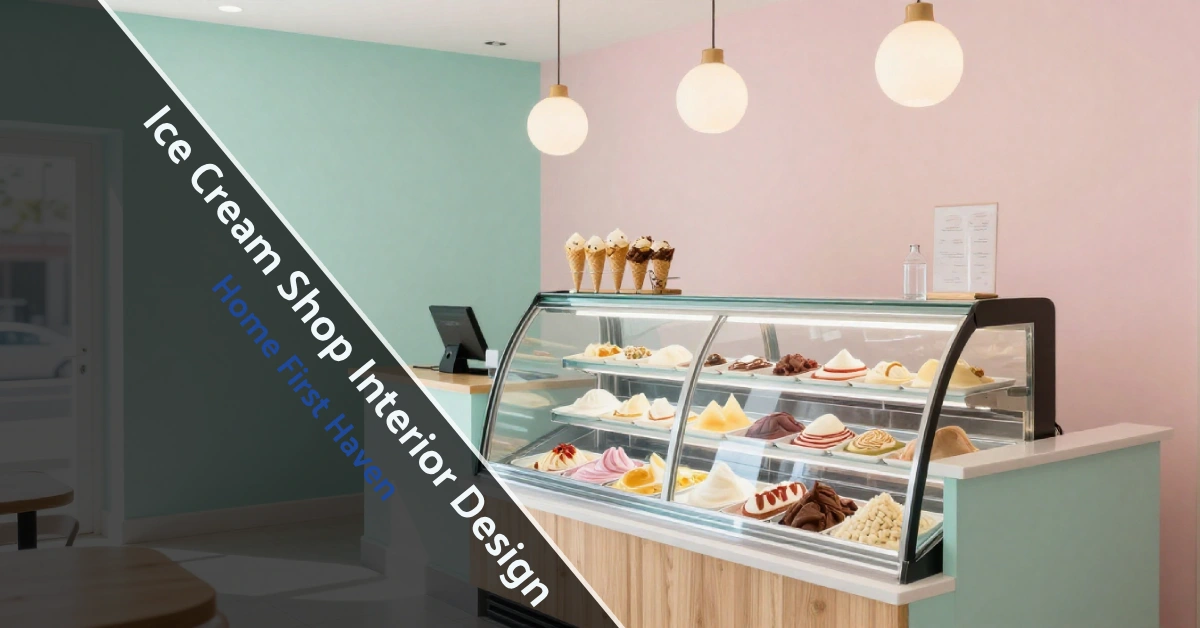
You’re not just selling ice cream. You’re selling the vibe, the memory, the moment someone walks in and immediately feels happy.
Ice cream shop interior design isn’t about throwing up some pastel paint and calling it a day. It’s about creating a space that makes people stop scrolling, walk in, and stay longer than they planned. Good design moves product. It turns first-timers into regulars and regulars into your biggest promoters on Instagram.
Whether you’re opening your first shop or giving your current spot a fresh look, this guide breaks down what actually works. We’re talking layouts that flow, colors that pop, lighting that makes every scoop look irresistible, and seating that keeps people comfortable enough to order that second cone.
Start With Layout: Make Every Square Foot Work
Your layout is the backbone of everything. Get this wrong, and nothing else matters. Customers should move from door to counter to seat without confusion or bottlenecks.
Place your ordering counter where people naturally gravitate when they enter. Keep the queue simple and spacious so nobody feels cramped while waiting. Position your menu where customers can see it early, ideally before they reach the front of the line.
Your prep area should sit close to the counter. Staff need quick access to toppings, cones, and mix-ins without running across the room. Open prep stations let customers watch their sundae come together, which builds anticipation and often bumps up sales.
Cashier stations belong at the end of your counter, creating a natural flow from selection to payment. Leave enough space here so multiple customers can wait comfortably for their orders without blocking others.
Doors should align with your queue, but not dump people directly into the line. A small buffer zone near the entrance prevents crowding and gives newcomers a moment to take in your space.
Seating areas work best when they’re separate from high-traffic zones. Customers enjoy their treats more when they’re not dodging people still ordering. If your space is tight, wall-mounted tables or high stools maximize seating without eating up floor space.
Keep kitchen access and storage behind the scenes. Your customers don’t need to see the back-of-house chaos. The same goes for restrooms, which should be easy to find but not front and center.
Small shops need ruthless efficiency. Every inch counts, so think vertical storage, compact furniture, and multi-purpose fixtures.
Choose Colors That Match Your Brand
Color sets the mood faster than anything else. Walk into a shop with soft pinks and mint greens, and you immediately feel relaxed. Hit a space with bold yellows and electric blues, and energy spikes.
Pastels work for brands going after a sweet, nostalgic, family-friendly vibe. Think vintage parlor meets modern clean lines. These shades feel approachable and Instagram-ready without trying too hard.
Bright, saturated colors scream fun and youth. Perfect if your target audience skews younger or you’re leaning into a playful, pop-culture-driven brand. Neon signs and murals fit naturally here.
Neutrals with pops of color create a more sophisticated, upscale feel. White walls with wood accents and one bold accent wall in coral or navy signal quality without feeling stuffy.
Whatever palette you pick, stay consistent. Your walls, furniture, signage, and even staff uniforms should all speak the same visual language. Customers subconsciously trust brands that look cohesive.
Test your colors against your product. Ice cream looks best under warm, natural tones that don’t distort the actual hues of your flavors. Nobody wants a pistachio that looks gray under harsh lighting.
Your color scheme should also tie into your logo and packaging. If your branding already leans into specific shades, bring those into your physical space. Consistency builds recognition.
Don’t overdo it. Too many competing colors create visual noise. Stick to three or four main shades and let them breathe.
Master Lighting: Make Every Scoop Look Delicious
Bad lighting kills appetite. Good lighting makes customers crave everything behind that glass. This is where most shops drop the ball.
High CRI lighting (Color Rendering Index) is non-negotiable for your display case. It shows off the true colors of your ice cream, toppings, and cones. Incandescent and LED bulbs with high CRI make strawberries look vibrant red, not dull pink.
Bright, focused lighting over your counter draws eyes exactly where you want them. Pendant lights or track lighting work great here. You want customers zeroing in on your product from the moment they walk up.
Ambient lighting throughout the rest of your shop should feel warm and inviting. Soft overhead fixtures or wall sconces create a comfortable atmosphere without harsh shadows. Think cozy, not clinical.
Accent lighting highlights key design elements like wall art, your logo, or architectural features. Spotlights or small LED strips add depth and visual interest without overwhelming the space.
Natural light is your friend if you have windows. It makes spaces feel bigger and more welcoming. Just make sure sunlight doesn’t hit your ice cream display directly, or you’ll spend all day managing melt.
Avoid fluorescent lighting unless you want your shop to feel like a dentist’s office. It’s cheap, sure, but it flattens everything and makes colors look off.
Layer your lighting. Mix ambient, task, and accent sources so you can adjust intensity based on time of day or the mood you’re trying to create.
Pick Furniture That Looks Good and Lasts
Your seating makes or breaks the customer experience. People won’t stick around if chairs are uncomfortable, tables are wobbly, or the vibe feels off.
Mix seating types to accommodate different groups. Round tables for families, bar stools for solo visitors, booths for couples, and maybe even a couch or two for a lounge feel.
Materials matter. Go with easy-to-clean surfaces like laminate, treated wood, or metal. Ice cream is sticky, and spills happen constantly. If your furniture can’t handle daily abuse, it won’t last a summer.
Outdoor seating extends your capacity and gives customers a reason to linger. Benches, bistro tables, or even hammocks create a laid-back vibe that encourages people to slow down and enjoy.
Shade structures are essential for outdoor areas. Nobody wants to eat melting ice cream in direct sunlight. Cantilevers, sails, or multi-sided structures keep your patio comfortable and usable even during peak heat.
Style your furniture to match your overall theme. Vintage parlor? Go with retro barstools and checkered flooring. Modern minimalist? Sleek chairs and clean lines. Beach vibes? Bright colors and casual seating.
Don’t cram too much into your space. Leave enough room for people to move around comfortably. Tight quarters make customers anxious and staff less efficient.
Storage-friendly seating like benches with built-in compartments can help small shops maximize functionality without sacrificing style.
Display Your Product Like It’s the Star
Your ice cream display is your storefront within your storefront. If customers can’t see it clearly, they won’t buy it.
Open dipping cabinets with glass fronts showcase every flavor. Customers love seeing the full lineup before ordering, and it speeds up decision-making when they can point directly at what they want.
Keep your display case well-lit and spotless. Smudges, frost buildup, or dull lighting make even premium ice cream look questionable. Clean daily, no exceptions.
Place toppings in clear containers near your prep counter. Seeing sprinkles, chocolate chips, and fresh fruit triggers upsells. Customers often add extras when they watch staff prep their order.
Wall art and menu boards should complement your display, not compete with it. Professional photos of your best sellers or hand-painted illustrations of flavors add personality without distraction.
Rotate featured flavors seasonally and highlight them with small signs or chalkboard callouts. Limited-time offerings create urgency and give repeat customers something new to try.
Keep your prep area visible. Watching staff make fresh waffle cones or mix ingredients into soft serve builds trust and entertainment value. It’s dinner and a show.
Organize your display logically. Group flavors by type (fruit, chocolate, specialty) or arrange them by popularity. Make it easy for customers to scan and choose.
Build an Instagrammable Space
Social media visibility is free marketing. If your shop looks good enough to photograph, customers will do your advertising for you.
Create dedicated photo zones. A colorful mural, a neon sign with your logo, or a quirky art installation gives people a reason to pull out their phones.
Design elements that pop visually include bright accent walls, fun furniture, and unexpected touches like a vintage ice cream truck or oversized cone sculptures. Make your space memorable.
Good lighting makes selfies better. Ensure your photo-worthy spots have flattering, even lighting. Nobody wants to post a shadowy, grainy pic.
Keep backgrounds clean and clutter-free. A messy space doesn’t photograph well. Customers gravitate toward spots where they’ll look good, not where they’re competing with visual noise.
Encourage tagging by displaying your social handles prominently. A simple sign near your photo zone or on your counter reminds people to tag you when they post.
Seasonal decor refreshes your look and gives regulars a reason to come back and capture new content. Rotate themes for holidays, summer, or special events.
Don’t Ignore Outdoor Spaces
If you have outdoor space, use it. People love eating ice cream outside when the weather’s right, and extra seating means higher capacity.
Shade structures like cantilevers or sails protect customers from the sun and light rain. They also extend your usable hours since people won’t bail when it gets too hot.
Landscaping adds polish. Low-maintenance plants like hydrangeas, boxwood shrubs, or black-eyed Susans soften your exterior and make your shop feel more inviting.
Outdoor lighting lets you serve customers into the evening. String lights, spotlights, or yard lights create ambiance and improve visibility.
Fun elements like lawn games, a small playground, or photo cutout boards give families a reason to stick around longer. Longer visits usually mean higher sales.
Flexible seasonal setups let you adapt to weather changes. Store furniture during winter, rotate decor for holidays, and adjust your outdoor menu based on demand.
Signage matters just as much outside. Bold, clear branding on your storefront catches foot traffic and makes your shop easy to spot.
Match Your Design to Your Brand
Your interior should tell your brand story without you saying a word. Every detail reinforces who you are and why customers should care.
Premium brands lean into clean lines, neutral colors, and high-end materials like marble or polished wood. The space feels curated, not chaotic.
Family-friendly brands go warm and playful. Bright colors, cozy seating, and fun decor signal that kids are welcome and everyone’s here to have a good time.
Trendy, youth-focused brands embrace bold design. Think street art, neon signs, and furniture that doubles as art. These spaces feel like a vibe, not just a shop.
Your logo should appear naturally throughout the space. On the wall behind your counter, in your menu design, maybe even subtly worked into light fixtures or furniture.
Consistency builds trust. If your packaging screams fun and colorful, your shop had better match that energy. Mixed signals confuse customers.
Keep It Functional Behind the Scenes
Pretty doesn’t matter if your staff can’t work efficiently. Back-of-house functionality impacts everything from speed of service to employee morale.
Place storage close to where items are used. Toppings near the prep counter, cones near the serving line, and cleaning supplies near the sink. Every second saved adds up during rush hours.
Invest in durable, easy-to-clean materials for floors and counters. Tile, laminate, and treated wood hold up better than carpet or unsealed surfaces. Spills happen constantly in an ice cream shop.
Non-slip flooring prevents accidents. Ice cream shops are wet environments, and staff are constantly moving fast. Safety isn’t optional.
Leave space for multiple people to work without colliding. Cramped back areas slow down service and frustrate employees.
Proper ventilation keeps your shop comfortable for staff and customers. Ovens for waffle cones or hot fudge generate heat. Make sure air circulates.
Final Thoughts
Ice cream shop interior design isn’t about following trends blindly. It’s about knowing your brand, understanding your customer, and building a space that serves both.
Great design pulls people in, keeps them comfortable, and makes your product look irresistible. It turns transactions into experiences and experiences into loyalty.
Start with the layout. Get your flow right. Choose colors that match your vibe. Light your space like you’re staging a photoshoot. Pick furniture that works hard and looks good. Display your product like the star it is.
Don’t skip the small stuff. Branding, outdoor spaces, photo-worthy corners, and functional back-of-house setups all contribute to your bottom line.