

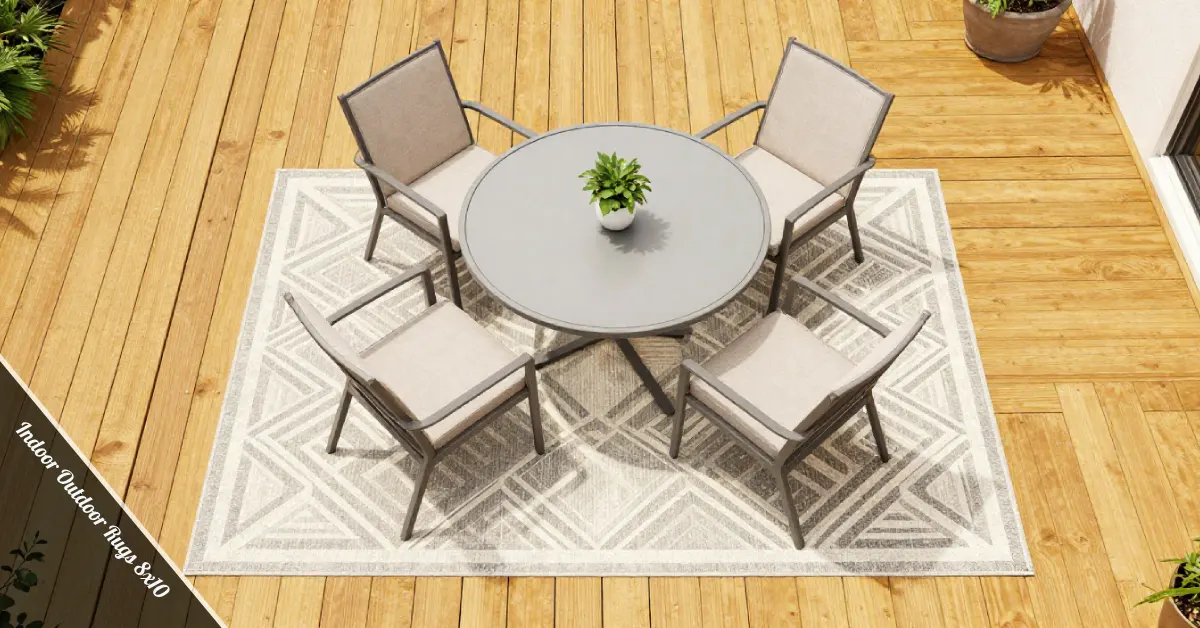
An Indoor Outdoor Rugs 8×10 size works for most standard patios, dining spaces, and living rooms where a four-seat furniture set sits. The best ones use polypropylene or recycled PET fibers, resist UV fading, and clean with a garden hose. To get the most out of yours, match the material to your climate, keep pile height low for wet or high-traffic areas, and always use a rug pad to prevent corner curl and slipping.
An 8×10 rug covers 80 square feet, which is enough to anchor a sectional sofa or fit under a standard dining table with room for chairs to slide out without catching the edge. At this size, you get serious design presence without overwhelming a mid-size space. The decisions that matter most, though, are not about size. They are about material, pile height, and whether the rug can actually survive where you plan to put it.
Why an 8×10 Works for Most Spaces
Ask yourself: Does your four-chair dining table or L-shaped sofa feel unanchored? A rug in the 8×10 range solves that problem without eating up your entire floor plan.
For a dining setup, the 8-foot width gives chairs enough room to slide back without leaving the rug. For a living room or patio seating area, the 10-foot length lets you place all front legs of a sofa and two accent chairs on the rug simultaneously. That creates visual cohesion across the whole arrangement.
A 5×7 rug, by comparison, often ends up looking like a postage stamp under a full sofa. A 9×12 can crowd a standard-size patio or spare bedroom. The 8×10 sits in a range that fits the majority of mid-size rooms and outdoor living spaces without requiring custom furniture arrangements.
According to retail data from 2024 and 2025, 8×10 is consistently one of the top three most-searched rug sizes, alongside 5×7 and 9×12. It sells well because it fits real rooms, not showroom floors.
What “Indoor Outdoor” Actually Means
The term gets used loosely, so it is worth being precise. A true indoor-outdoor rug is built with synthetic fibers, typically polypropylene or recycled polyethylene terephthalate (PET), that resist moisture, UV rays, and mold without deteriorating.
Regular indoor rugs use natural fibers like wool or cotton. Those materials absorb water and break down when exposed to the elements. Take a wool rug outside for one rainy season, and you will have mold, shrinkage, and fiber damage.
An indoor-outdoor rug, by contrast, can be hosed off and left to air dry. UV-resistant fibers hold their color under direct sun exposure. The backing, usually latex or a woven polypropylene base, does not trap moisture underneath.
This construction makes these rugs useful in spaces beyond just a patio. Mudrooms, entryways, laundry rooms, and covered porches all benefit from a rug that cleans up without drama. You can vacuum it, hose it down, or wipe up spills with a damp cloth and move on.
Materials That Hold Up Outdoors
Not all indoor and outdoor rugs perform the same way. The material you pick should match your climate and how much sun or rain your space receives.
Polypropylene is the most common material at this price point. It resists water, fades slowly under UV exposure, and costs less than most alternatives. For covered patios and shaded decks, a polypropylene 8×10 with a flatweave construction is a reliable choice. A designer who spoke with Tufts Knots in 2025 recommended applying a UV-protectant spray like Scotchgard Outdoor every six months, noting that treated rugs showed around 50% less fading compared to untreated ones in humid test environments.
Recycled PET is polypropylene’s more sustainable cousin. Made from post-consumer plastic bottles, it offers comparable durability with a smaller environmental footprint. Many brands, including options at Wayfair and Loloi’s Chris Loves Julia collection, have moved to OEKO-TEX certified PET construction, meaning the materials pass independent testing for harmful substances.
Nylon costs more but handles heavy foot traffic better than polypropylene over the long term. For a high-use entryway or a back porch that sees daily activity, nylon justifies the price difference.
Natural fibers like seagrass or jute need a different conversation. They look great but belong in dry, low-humidity climates. If you live somewhere with regular rain or humidity above 60%, skip them for outdoor use. Seagrass dries out and cracks in arid conditions, while jute deteriorates rapidly when wet.
Pile Height: The Detail Most Buyers Ignore
Pile height affects how the rug performs outdoors more than most buyers realize before they own one.
A low pile, between 0.1 and 0.35 inches, prevents water from pooling inside the fibers. Water drains quickly, the rug dries faster, and mold has less opportunity to develop. Low-pile rugs also sit flatter on the floor, reducing the trip hazard on slightly uneven outdoor surfaces.
A mid-pile rug, between 0.35 and 0.75 inches, offers more underfoot comfort and works well in covered spaces or rooms where the rug stays dry. If you are putting an indoor-outdoor rug in a living room or family room, a mid-pile option will feel better underfoot and won’t look too flat.
For any space that gets direct rain or regular foot traffic from outside, stay at 0.35 inches or under. When you read product listings, look specifically for the pile height number. Descriptions like “low profile” or “flatweave” often correspond to 0.01 to 0.25 inches.
How to Style an 8×10 Indoor Outdoor Rug
Styling an indoor-outdoor rug at this size is mostly about placement and color logic, not decoration trends.
For a patio dining setup, center the rug under the table so that all chairs sit fully on it with at least 2 feet of rug extending beyond each side of the table. That prevents chair legs from catching the edge when someone stands up.
For a seating area with a sofa and two chairs, place all front legs on the rug. This is a widely used arrangement because it visually connects the furniture without requiring all four legs of every piece to sit on the rug.
On color, match the rug to the least flexible element in your space. If your sofa or patio furniture is a fixed neutral, you can introduce a geometric pattern or a warmer tone in the rug. If your cushions already carry a bold pattern, use a solid or textural rug to create balance. One reviewer on Wayfair described choosing a stripe rug with denim blue tones specifically to echo the blue in nearby chair cushions without repeating the pattern exactly. That kind of intentional pairing works better than trying to match colors exactly.
Keeping Your Rug Clean and Long-Lasting
Cleaning an indoor or outdoor rug is straightforward. Most polypropylene and PET rugs can be rinsed with a garden hose, scrubbed with mild soap, and left to dry in the sun. Avoid using a pressure washer at close range, which can damage the weave on flatweave or tasseled styles.
For indoor use, vacuum without a beater bar. The rotating brush can snag flatweave rugs or pull at fringe. A suction-only setting works better.
To extend the rug’s life outdoors, roll it up or bring it inside during extended periods of heavy rain or winter weather if you live in a cold climate. Even the most durable polypropylene rugs last longer when they are not sitting under snow and ice for months at a time.
A rug pad is non-negotiable on smooth surfaces. Multiple buyer reviews on Wayfair and Joss and Main specifically call out corner curling as a problem solved by a rug pad. On a deck or hardwood floor, the pad also prevents the rug from migrating under foot traffic.
FAQs
Can an 8×10 indoor outdoor rug go under a full dining table?
Yes, provided the table itself is no wider than 5 to 6 feet. An 8-foot width gives you roughly 12 to 18 inches of rug on each side of the table, enough for chairs to slide out fully.
Do indoor-outdoor rugs work in living rooms?
Yes. Polypropylene and PET rugs are durable, stain-resistant, and easy to clean, making them practical for families with kids or pets. They tend to be thinner than traditional wool rugs, so a rug pad adds comfort.
How do I stop the corners from curling?
Use a rug pad. Flat corners are almost always a pad issue, not a rug defect. On outdoor decks, rug corner clips or double-sided tape rated for outdoor use also work.
What is the difference between a polypropylene rug and a recycled PET rug?
Both are synthetic and weather-resistant. PET uses recycled plastic bottles as the fiber source and typically carries OEKO-TEX certification. Polypropylene is more common and often slightly less expensive.
How often should I clean an outdoor rug?
Rinse it monthly during active use. Spot clean spills immediately. At the end of each outdoor season, give it a full hose-down, let it dry completely, and store it rolled, not folded.