

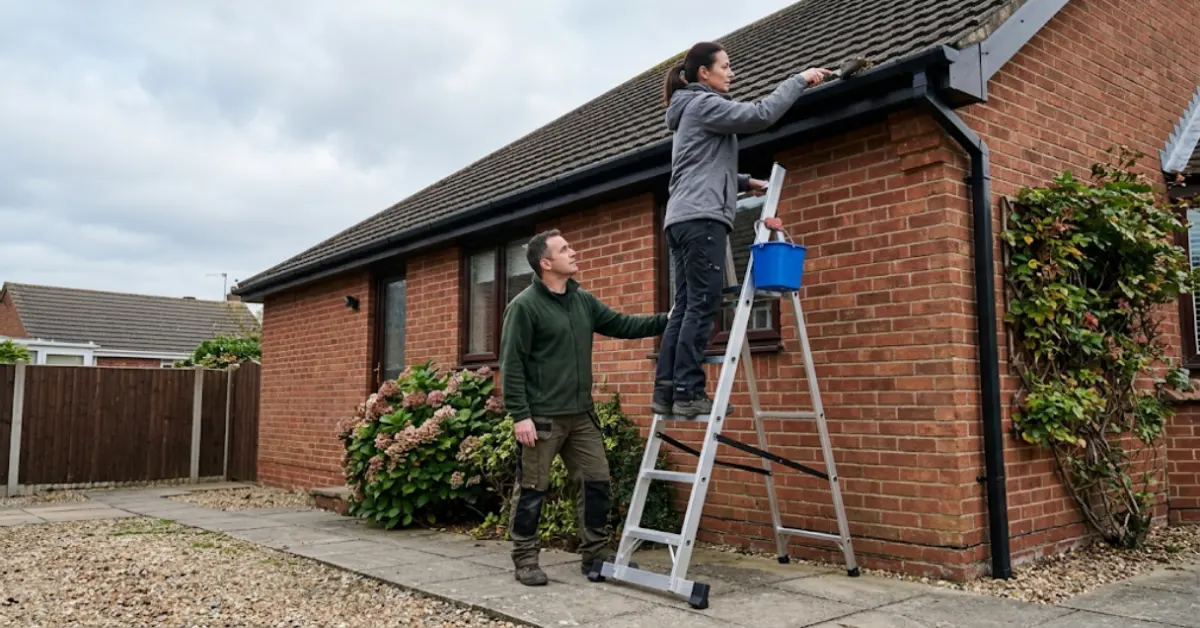
Choosing the right ladder for gutters comes down to height, stability, and setup. A ladder must reach the gutter without leaning or overreaching, and it must sit on firm, level ground. Stabiliser bars, a secure working platform, and a second person to foot the ladder all reduce risk.
Falls from height remain the leading cause of work-related deaths in Great Britain.
What Ladder for Gutters Should You Choose
Most homes need a standard domestic stepladder or a single extension ladder. A stepladder suits gutters that sit no higher than your reach from the top step, usually a single-storey property. An extension ladder works better for two-storey homes, but it takes more skill to set up and secure.
Look for a ladder that carries a current safety standard mark. In the UK, the EN 131 standard covers portable ladders, and it sets requirements for strength, construction, and labelling. Check the load rating printed on the stiles. It should comfortably exceed your body weight plus the weight of your tools, a bucket, and any debris you carry up.
Materials matter too. Aluminium ladders are light and easy to move, but they conduct electricity, so avoid them near overhead power lines. Glass-fibre ladders are non-conductive and a better choice if you work near wiring. Timber ladders are heavy but durable, and they need regular inspection for cracks and splits.
Inspect any ladder before each use. Check for bent rungs, loose joints, worn feet, and damaged locking mechanisms. A ladder with any defect should go out of service until a competent person repairs or replaces it.
Why Ladder Safety Matters for Gutter Cleaning
Gutter cleaning feels routine, which is exactly why people underestimate it. Many homeowners climb a ladder only once or twice a year, and they often skip the setup steps that professionals never skip.
The Health and Safety Executive (HSE) publishes annual figures on workplace deaths. Its 2024/25 statistics recorded 124 worker deaths in Great Britain, and falls from a height caused 35 of them. That makes falls the single largest cause of fatal injury at work for that period. Our own homes are not workplaces, but the same physics applies to a ladder leaning against a wall.
The HSE also reports that self-employed workers accounted for about 40% of fatal injuries in 2024/25, although they make up roughly 15% of the workforce. Many gutter cleaners and handymen work alone and are self-employed, which means they often lack a second person to steady the ladder. If you run a gutter service, this statistic should shape how you plan every job.
In its annual fatality report, HSE Chief Executive Sarah Albon noted that Great Britain is one of the safest places in the world to work. She also stressed that each death represents a tragedy for families, friends, and communities. That balance is worth keeping in mind: the overall picture is improving, yet falls remain a serious risk.
Setting Up Your Ladder on Solid Ground
Setup decides whether a ladder stays put. Start by checking the ground. It must be firm, level, and free of loose soil, wet leaves, or paving slabs that might shift. Never place a ladder on boxes, bricks, or other unstable supports to gain extra height.
Position the ladder so its feet sit about one quarter of its working length away from the wall. This angle, often described as the 4 to 1 rule, gives the most stable lean. For a ladder that reaches 4 metres up the wall, the feet should sit about 1 metre out.
Extend the ladder so it rises at least one metre above the gutter edge. This gives you a handhold when you step onto or off the top. Do not stand on the top three rungs of a stepladder or the top rung of a standard ladder.
Fit stabiliser bars where the manufacturer provides them. These wide bars spread the load and reduce the chance of the ladder tipping sideways. Make sure the ladder feet are clean and grippy. Worn or muddy feet lose traction quickly.
Ask someone to foot the ladder while you climb. Their job is to hold the base firmly and watch the ground around it. If no one is available, consider a ladder stabiliser that attaches to the top of the ladder and rests against the gutter or wall. Some stabilisers sit on the roof edge and offer extra support. Use these accessories only as recommended, and never use one to bypass a proper setup.
Working Safely Once You Are Up the Ladder
Once you climb, keep your body centred between the stiles. Leaning sideways to reach a far section of gutter is the most common route to a fall. Move the ladder instead of stretching. Descend, shift the ladder along the wall, and climb again.
Keep both hands free when you climb. Use a bucket hook or a belt bag to carry tools, or lower items on a rope. A bucket carried in one hand leaves you with only one grip on the rungs.
Wear footwear with good grip, and avoid slippery soles. Wet leaves and moss make rungs dangerous, so wait for dry conditions. Gutter cleaning in wind or rain adds risk, and you should postpone the job if the weather turns.
Think about what is above you as well. Check for overhead cables and keep the ladder well clear of them. Keep children and pets out of the work area, and close any gates or doors that could let someone walk beneath the ladder.
When you finish, lower debris gradually and never throw it. Store the ladder flat or hang it securely so it does not warp or fall.
Common Mistakes That Lead to Gutter Falls
Several mistakes show up again and again in accident reports. Recognising them helps you avoid them.
- Overreaching is the most frequent error. People shift their hips beyond the stiles to reach a few extra centimetres of gutter.
- Skipping the foot check leads to slips on uneven paving, soft lawns, or leaf-covered drives.
- Using the top rung of a ladder removes the balance margin you need.
- Working alone without stabilisers or a footer turns a small wobble into a fall.
- Ignoring damage on an old ladder allows a cracked rung or loose hinge to fail under weight.
None of these mistakes requires expert knowledge to prevent. They require a short pause before each climb and a willingness to reposition the ladder rather than stretch.
Final Thoughts on Using a Ladder for Gutters
A ladder for gutters serves a simple purpose, but it demands respect. Choose a ladder rated for your weight and job, inspect it before use, set it at the correct angle on firm ground, and keep your body within the stiles. Have someone foot the ladder whenever possible.
Gutter cleaning is one of the few home jobs where a small error can cause a serious injury. Taking an extra two minutes to check the ground and the ladder feet costs very little compared with the consequences of a fall. If a roof is steep, a gutter sits high, or the weather looks unsettled, consider hiring a qualified professional who carries proper insurance and training.
FAQs
What height ladder do I need for gutters?
Measure the distance from the ground to the gutter. Choose a ladder that extends about one metre above the gutter, so you have a secure handhold. For most single-storey homes, a standard stepladder or a short extension ladder works well.
Is a stepladder safe for cleaning gutters?
A stepladder suits low gutters if you stand no higher than the second or third step from the top. Never stand on the top step, and avoid using a stepladder against a wall, since it is designed to stand freely.
Can I clean gutters alone?
You can, but working alone increases risk. Use stabiliser bars, set the ladder carefully, and consider a ladder stabiliser that rests on the gutter or wall. A second person to foot the ladder remains the safest option.
How often should I clean gutters?
Most homes benefit from cleaning gutters twice a year, usually in spring and autumn. Homes near mature trees may need more frequent cleaning.