

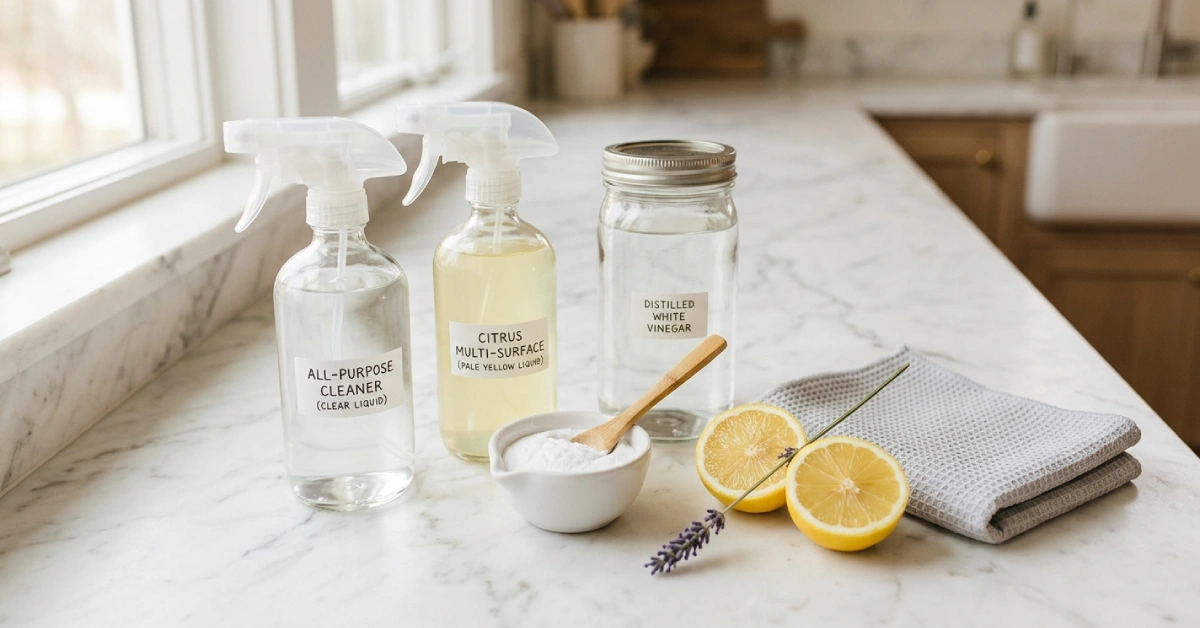
Most people don’t think twice about the spray bottle under their sink. But many conventional cleaning products release volatile organic compounds, or VOCs, that can trigger chronic breathing problems, allergic reactions, and headaches. Even products labelled “green” or “natural” aren’t automatically safe. Manufacturers aren’t always required to list every ingredient on the label, which means you could be cleaning your kitchen with chemicals you can’t even identify.
That’s where natural household cleaning solutions come in. Ingredients like white vinegar, baking soda, and castile soap have cleaned homes for generations, long before spray bottles filled with unpronounceable chemicals lined store shelves. They work, they’re inexpensive, and you know exactly what’s in them because you put it there yourself.
This guide walks you through the science behind each ingredient, the safety rules you need to know before you start mixing, and more than ten tested recipes for every room in your home. By the end, you’ll have everything you need to replace most of your cleaning cabinet with a handful of simple, affordable ingredients.
What Makes Conventional Cleaning Products Dangerous
VOCs and Indoor Air Quality
VOCs are chemicals that turn into vapour at room temperature. You breathe them in without noticing, and over time that exposure adds up. They’re linked to chronic respiratory problems, allergic reactions, and headaches. Interestingly, even natural-smelling ingredients like citrus can react with other compounds in the air to form indoor pollutants.
Products that commonly release VOCs include aerosol sprays, air fresheners, chlorine bleach, laundry detergents, furniture polish, and oven cleaners. If your home smells strongly “clean” right after you finish scrubbing, that scent is often a sign of chemical off-gassing rather than actual cleanliness.
The Greenwashing Problem
A product doesn’t have to be safe just because the label says “natural” or “eco-friendly.” These are marketing terms, not regulated claims. A bottle can say “green” and still contain ingredients linked to health concerns.
The EPA’s Safer Choice program solves this problem by independently certifying products that meet strict ingredient safety standards. The agency also runs a Design for the Environment label for antimicrobial products like disinfectants and sanitisers. If you want to buy rather than make your own cleaner, these labels are the ones worth trusting.
Health Effects at a Glance
Conventional cleaning chemicals have been connected to eye, skin, and throat irritation, headaches, and in some cases occupational asthma. Certain surfactants, including alkylphenol ethoxylates, have shown endocrine-disrupting effects in laboratory studies. And one warning deserves its own paragraph: never mix bleach or any bleach-containing product with a cleaner that contains ammonia. The gas produced by that combination can cause serious breathing problems and has led to fatalities.
The 5 Core Ingredients That Clean Almost Everything
White Vinegar
White vinegar contains around 5% acetic acid, which loosens dirt and grease and slows microbial growth. Research has shown vinegar can deactivate certain viruses and bacteria. Its low pH also breaks down mineral deposits and soap scum with ease.
One caution: don’t use vinegar on natural stone like marble or granite, unsealed hardwood floors, or cast iron. The acid can etch these surfaces over time.
Baking Soda
Baking soda, or sodium bicarbonate, is mildly alkaline and works as a gentle abrasive. It scrubs away grime without scratching most surfaces, and it neutralizes odors through a simple acid-base reaction rather than just masking them. Combine it with vinegar, and you get a fizzing reaction that helps loosen buildup, which is especially useful for clearing slow drains.
Castile Soap
Castile soap is a plant-based soap made from vegetable oils like olive, coconut, or palm. People have used versions of it since the 11th century. It works as a surfactant, lifting dirt, bacteria, and grime off surfaces so you can wipe them away. It’s worth noting that castile soap doesn’t kill bacteria the way antibacterial products do. It simply removes it, which is often all a routine cleaning job requires.
Essential Oils
Essential oils add scent and, in some cases, a bit of extra cleaning power. Tea tree oil has antifungal and antibacterial properties and shows up often in disinfectant wipes. Lemon oil cuts through grease and leaves a fresh scent. Eucalyptus has antimicrobial qualities, and lavender adds antibacterial properties along with a calming scent. None of these is strictly necessary, but they make a noticeable difference in how your cleaners perform and smell.
Hydrogen Peroxide
A 3% hydrogen peroxide solution is an effective disinfectant. It oxidises organic material, breaking down the cell walls of bacteria and viruses, and it’s a gentler alternative to chlorine bleach because it decomposes into just water and oxygen. Keep it in a dark bottle, since light breaks it down over time.
Safety Guidelines Before You Start
Before you start mixing your own cleaners, a few rules will keep you and your household safe.
Never combine bleach or any bleach-containing product with an ammonia-based cleaner. The resulting gas can cause serious respiratory harm.
Avoid using vinegar on natural stone, hardwood, or certain metals, since the acid can cause lasting damage.
Don’t mix hydrogen peroxide with vinegar in the same container. Together they form peracetic acid, which can be irritating and unstable.
Store your homemade cleaners in glass spray bottles when you can, and use distilled water rather than tap water to extend shelf life. Label every container clearly, especially if you have kids or pets in the house.
Ventilate the room while cleaning, even with natural products. Open a window or turn on a fan. And use essential oils sparingly, particularly tea tree oil, which can be harmful to cats.
Kitchen Cleaning Solutions
All-Purpose Kitchen Cleaner. Combine vinegar, a spoonful of baking soda, a few drops of essential oil, and water in a 12-ounce glass spray bottle. This handles countertops, stovetops, sinks, and most appliances. Skip it on natural stone or unsealed wood.
Soft-Scrub Cleaner for Sinks and Stovetops. Mix baking soda with a small amount of an environmentally safe liquid laundry soap and a few drops of tea tree, lavender, or lemon essential oil until you get a paste. Store it in an airtight container and add a splash of water if it dries out.
Homemade Dish Soap. Combine distilled water, a pinch of salt, a splash of vinegar, a plant-based surfactant like Sal Suds, and a bit of lemon juice with lemon essential oil. Sal Suds isn’t the same as castile soap, but it works well for cutting through grease on dishes.
Dishwasher Detergent. Mix salt, baking soda, and Borax with a bit of Lemi-Shine, and use about two tablespoons per load. Add white vinegar to the rinse aid compartment for spot-free results.
Natural Oven Cleaner. Spread a paste of baking soda and water across the inside of your oven and let it sit overnight. In the morning, spray it with vinegar, let it foam, and wipe clean. The overnight soak does most of the work.
Drain Cleaner. Pour baking soda down the drain, follow with vinegar, and let the mixture bubble for about an hour before flushing with boiling water. This works well for routine maintenance, though stubborn clogs may need a second round.
Bathroom Cleaning Solutions
All-in-One Bathroom Cleaner. Combine two tablespoons of liquid castile soap, one tablespoon of baking soda, and two cups of warm water. Add 30 drops of tea tree oil and 20 drops of sweet orange oil if you like. Use distilled water, and it will keep for up to a month. This handles tubs, sinks, tile, grout, and counters.
Toilet Bowl Cleaner. Sprinkle baking soda into the bowl, add vinegar, let it fizz, then scrub. For extra disinfecting power, spray hydrogen peroxide, let it sit for ten minutes, then flush.
Glass and Mirror Cleaner. Mix equal parts vinegar and water in a spray bottle. Wipe with a microfiber cloth for a streak-free finish.
Lemon Vinegar: The 2-Ingredient Powerhouse
If you want something simple, this recipe is hard to beat. Save your used lemon peels in a jar, cover them with white vinegar, seal it, and let it sit for two weeks. Strain out the peels, then mix the infused vinegar with an equal amount of water in a spray bottle.
This works on floors, countertops, kitchens, bathrooms, windows, mould, and mildew. The lemon also softens the sharp vinegar smell. One thing to watch for: over time, the mixture can develop a thick, stringy residue that clogs spray nozzles. Strain it thoroughly before bottling, keep it refrigerated, and use it within a few weeks for the best results.
Homemade Disinfectant Wipes
Combine one cup of water, a quarter cup of vinegar, and eight drops each of tea tree, eucalyptus, and lemon essential oil. Cut up fifteen to twenty squares of old t-shirts or dish towels and fold them into an empty wipe container. Pour the liquid over the cloths and pull them out as needed. Once they’ve worn out, wash and reuse them for as long as they hold together.
DIY vs. Store-Bought: When to Make and When to Buy
Basic ingredients like vinegar, baking soda, and castile soap cost only pennies per batch, compared to four to eight dollars for a bottle of commercial cleaner. For everyday cleaning, homemade wins easily on cost.
That said, there are moments when buying makes more sense, particularly during illness, when you may need an EPA-registered disinfectant proven effective against specific pathogens, or for heavy-duty degreasing jobs that call for something stronger.
If you’d rather buy than make, look for the EPA Safer Choice label, which certifies products against strict ingredient safety standards. Green Seal and UL ECOLOGO are two other credible certifications worth trusting. Steer clear of vague claims like “environmentally friendly” or “eco safe” unless they’re backed by a real certification.
Greenwashing Red Flags: How to Read Cleaning Product Labels
Manufacturers aren’t always required to disclose every ingredient in a cleaning product, and a “green” label doesn’t guarantee anything on its own. Watch for red-flag ingredients like chlorine bleach, ammonia, phthalates, synthetic fragrances, and alkylphenol ethoxylates. Also be cautious of products containing corrosive substances, known or likely carcinogens, reproductive toxicants, or ozone-depleting compounds.
When in doubt, use the EPA’s Safer Choice search tool to check whether a product actually meets independent safety standards before it goes in your cart.
Natural Cleaning Starter Kit Shopping List
- White vinegar (1 gallon)
- Baking soda (large box)
- Liquid castile soap
- Hydrogen peroxide (3%)
- Glass spray bottles (16 oz)
- Essential oils: tea tree, lemon, lavender, eucalyptus
- Microfiber cloths
- Salt
- Lemons, for infusing vinegar
- Distilled water
- Optional: washing soda, Borax, Sal Suds, cornstarch
Conclusion
Five ingredients- vinegar, baking soda, castile soap, hydrogen peroxide, and a few essential oils- can replace the bulk of what’s currently sitting in your cleaning cabinet. Beyond the health benefits of cutting VOC exposure, you’ll notice the savings too. A batch that costs pennies to mix at home can replace a bottle that costs several dollars at the store.
Start small. Pick one recipe from this guide; the all-purpose kitchen cleaner is a good place to begin, and build from there as you get comfortable. And for anything you’d still rather buy than make, the EPA Safer Choice program is the most reliable place to start your search.
FAQs
Are natural cleaning products as effective as commercial ones?
For everyday cleaning, yes. Vinegar and baking soda handle most household tasks well. For heavy disinfection during illness, an EPA-registered disinfectant may work better.
Can I use vinegar on all surfaces?
No. Avoid natural stone, hardwood floors, cast iron, and certain metals, since the acid can cause damage over time.
How long do homemade cleaning solutions last?
It depends on the recipe. Versions made with distilled water can last up to a month. Lemon vinegar should be strained well and used within a few weeks to avoid residue buildup.
Is Borax safe to use in cleaning?
Borax shows up in many homemade detergents, but it should be kept away from children and pets and never ingested.
What is the EPA Safer Choice program?
It’s a certification from the U.S. Environmental Protection Agency that identifies products made with ingredients that are safer for people and the environment. Look for the label on the packaging.
Can natural cleaners disinfect against viruses and bacteria?
Vinegar has been shown to deactivate some viruses and bacteria, and hydrogen peroxide is an effective disinfectant. For confirmed illness, though, follow CDC or EPA disinfection guidance.
Why should I never mix bleach with other cleaners?
Combining bleach with an ammonia-based cleaner produces toxic gases that can cause serious breathing problems and, in severe cases, death.
Are essential oils safe for pets?
Not all of them. Tea tree oil in particular can be toxic to cats. Use oils sparingly, keep the room ventilated, and check pet safety before using a new oil.
Do natural cleaning products help with indoor air quality?
Yes. Cutting back on VOC-releasing products noticeably improves indoor air quality and lowers the risk of respiratory irritation.
What is greenwashing and how do I avoid it?
Greenwashing happens when a product uses vague environmental language without any real proof behind it. Look for a legitimate certification, such as EPA Safer Choice, Green Seal, or UL ECOLOGO, before trusting the claim.