

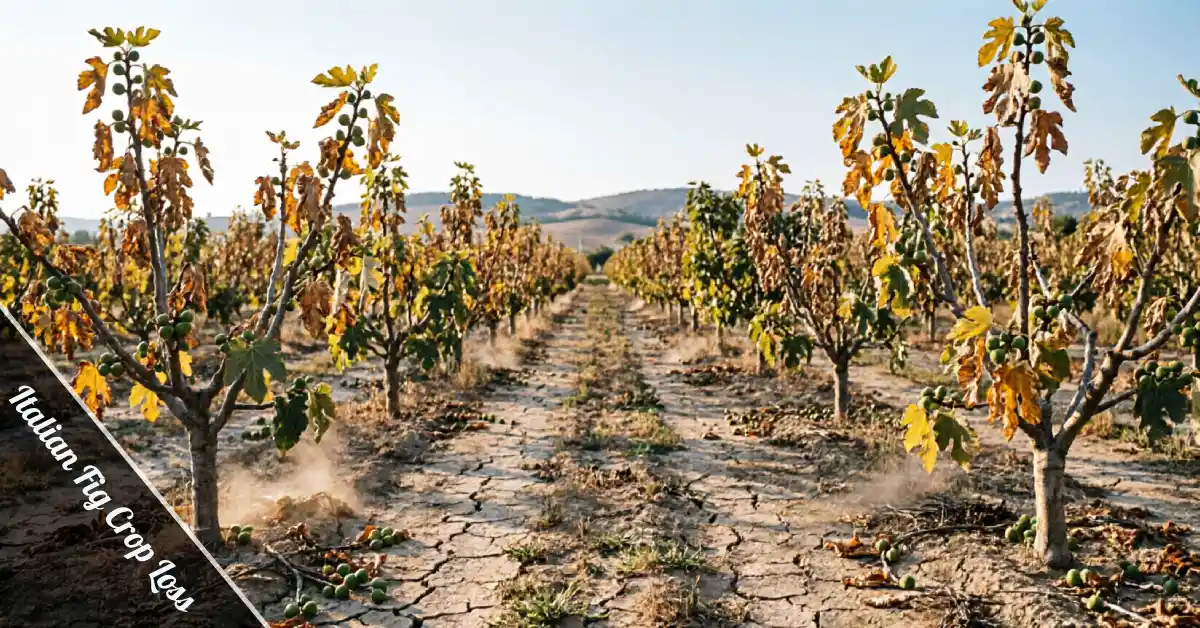
Walk into a fig orchard in southern Italy this year, and something feels off. The trees still look green and full from a distance, but a closer look tells a different story — thinner fruit, dropped branches, and yields that just aren’t adding up the way they used to. That’s Italian fig crop loss, and it’s become the talk of every orchard, market stall, and family farm from Apulia to Sicily.
This isn’t a scare piece. It’s a straight-up look at what’s driving the losses and how growers are fighting back with real, field-tested moves.
What “Italian Fig Crop Loss” Actually Looks Like
Crop loss doesn’t always show up as dead trees. Sometimes it’s fruit that splits before it ripens, or figs that shrink instead of swell.
Other times, the tree looks healthy but produces half as much as it did five years ago. That gap between how a tree looks and what it actually yields is the quiet part of Italian fig crop loss — the part that catches growers off guard because there’s no single dramatic symptom to point to.
For home gardeners experimenting with companion plants alongside their fig trees, sun-tolerant heliantum plants can help signal early moisture stress in the soil, since these plants often wilt before figs show visible symptoms.
Where Figs Are Grown in Italy — and Why the South Feels It Most
Italy’s fig belt runs through Apulia, Sicily, Calabria, Campania, and Sardinia. These regions share hot, dry summers and soil that drains fast, which figs generally love.
But that same climate is exactly why Italian fig crop loss hits hardest here. When rainfall patterns shift even slightly, there’s little buffer left. A dry spring followed by a scorching summer can knock out a season’s worth of fruit before harvest even starts.
Smaller, family-run orchards feel this the most. They don’t always have the irrigation infrastructure that bigger commercial operations use to ride out a rough season.
The Weather Pattern Behind the Recent Losses
Weather is the biggest single driver of Italian fig crop losses, and it’s not a single bad storm doing the damage. It’s a pattern.
Late frosts in early spring catch young buds off guard, killing tissue before it even gets a chance to develop. Then summer brings the opposite problem: heat waves that stress the tree just as fruit is trying to size up. Figs respond to that whiplash by dropping fruit early, a defense move that protects the tree but tanks the harvest.
Rapid temperature swings — cold nights followed by hot days — also crack fruit skin, which invites rot before the fig ever reaches a crate.
Drought compounds all of it. A fig tree under prolonged water stress redirects energy toward survival, not fruit production. That means fewer fruiting sites the following year, too, so one bad season echoes into the next.
Soil, Irrigation, and Nutrient Gaps
Figs are forgiving trees, but they’re not invincible. Poor soil structure and inconsistent watering quietly chip away at yield long before anyone notices a problem.
Compacted soil limits root growth, which limits how much water and nutrients a tree can actually pull in, even during a rainy stretch. Add in inconsistent irrigation — too much one week, none the next — and roots never settle into a steady rhythm.
Nutrient gaps, especially in potassium and calcium, show up as weak branches and smaller fruit. Most growers don’t test soil often enough to catch these issues early, so problems build up over several seasons.
Growers experimenting with diversified planting are also looking at how other fruiting crops handle similar stress. Some orchard owners have started studying Biloxi blueberry varieties for drought resilience, borrowing a few irrigation tricks for their fig rows.
Pests and Diseases Adding to the Damage
Weather sets the stage, but pests and diseases often deliver the final blow. One insect getting a lot of attention lately is a black weevil that bores into fig trunks and weakens the tree from the inside out.
Fungal rot is another major contributor to Italian fig crop loss, especially in years with warm, wet stretches right after harvest. Spores thrive in that humidity, and infected fruit can spread the problem fast through an entire row.
Infected planting material is a quieter risk. Growers who don’t source certified stock sometimes introduce disease without realizing it, and by the time symptoms show, it’s already spread through the block.
| Threat | Main Sign | Season It Hits Hardest |
|---|---|---|
| Black weevil | Trunk boring, weak limbs | Late spring to early summer |
| Fungal rot | Soft, discolored fruit | Warm, wet post-harvest weeks |
| Fruit splitting | Cracked skin, early drop | Sudden temperature swings |
| Drought stress | Smaller fruit, leaf curl | Peak summer heat |
Harvest and Storage Problems Nobody Talks About
Even a decent harvest can still turn into a loss if picking and storage aren’t handled right. Figs are delicate, and they don’t forgive rough handling.
Fruit picked too early won’t ripen properly off the tree, but fruit left too long splits or attracts pests fast. That narrow window is tough to manage across a whole orchard, especially when labor is limited.
Once picked, figs need cool, controlled storage almost immediately. Without it, fresh fruit destined for local markets can spoil within a day or two, cutting into both fresh sales and the volume set aside for drying and processing.
What Growers Are Doing Now — Real, Field-Tested Fixes
The good news? Growers aren’t just watching this happen. Plenty of practical adaptations are already working across affected regions.
Drip irrigation is one of the biggest wins. It delivers water directly to roots, cutting waste and keeping moisture levels steady even during dry stretches, which directly reduces Italian fig crop loss tied to drought stress.
Canopy management — smart pruning that opens up airflow — helps fruit dry faster after rain, which cuts down on fungal rot. Growers are also shifting toward certified, disease-resistant planting stock instead of cuttings from unknown sources.
Some are experimenting with intercropping to diversify income and reduce risk. For growers exploring less common companion crops, sigarilyas planting techniques have become a surprising side conversation at agricultural meetups, since the nitrogen-fixing habits of legumes can support surrounding soil health.
Pest monitoring has also gotten sharper. Regular trunk inspections and pheromone traps catch weevil activity early, before it spreads through an entire orchard.
Practical Tips to Improve Fig Yield and Quality
If you’re managing a fig orchard, or even just a few backyard trees, a few habits make a real difference over time.
Test your soil every season, not every few years. Nutrient gaps are easier to fix early than after a tree’s already stressed.
Water consistently rather than heavily. Figs prefer steady moisture over feast-or-famine cycles that shock the root system.
Prune for airflow, not just shape. Open canopies dry faster and resist fungal problems better than dense, crowded ones.
Watch your trunks. Small entry holes or sawdust-like debris near the base are early weevil warning signs worth checking weekly.
Frequently Asked Questions
What is causing the Italian fig crop loss?
A mix of extreme weather, drought stress, pest pressure, and fungal disease is behind most of the losses growers are reporting.
Which regions are affected most?
Apulia, Sicily, Calabria, and parts of Campania and Sardinia are seeing the sharpest declines, largely due to hot, dry summers.
Can fig trees recover after a bad season?
Yes, most fig trees bounce back with consistent irrigation, better soil care, and pest monitoring over the following seasons.
Does drought really affect fig production that much?
Drought is one of the top drivers of Italian fig crop loss, since stressed trees drop fruit early and produce fewer fruiting sites the next year.
Final Thoughts
Italian fig crop loss isn’t one problem with one fix. It’s weather, soil, pests, and timing all overlapping at once.
But growers across Italy are proving it’s manageable. Better irrigation, smarter pruning, cleaner planting stock, and closer monitoring are already turning things around in orchards willing to adapt. The trees aren’t going anywhere — they just need a little extra attention to keep producing the way they always have.