

I’ll be upfront—my first blueberry experiment was a total bust. I planted two bushes from the nursery, stuck them in the ground, watered them, and waited. Nothing happened. No flowers, no fruit, just leaves. The most exciting moment was watching birds visit to laugh at my failure.
The problem wasn’t that I killed them. I just picked the wrong variety for where I live. Most blueberries need long, cold winters to set fruit. If you live somewhere warm—the South, coastal California, Florida, or anywhere winters barely exist—traditional blueberries just sit there looking pretty.
That’s where the Biloxi blueberry changed everything for me. This variety was literally bred for people like us: gardeners in warm climates who want fresh blueberries without pretending we live in Maine. Once I understood what it actually needed, everything clicked.
Let me walk you through what makes the Biloxi special, how to grow it, and whether it’s worth your time.
What Exactly Is a Biloxi Blueberry?
The Biloxi blueberry is a southern highbush variety developed at the University of Southern Mississippi. Here’s what that means: regular (northern) blueberries are built for cold winters. They need months of freezing temperatures to “wake up” and make flowers. If you don’t give them that cold period, you get a nice-looking bush that produces nothing.
Southern highbush varieties, including Biloxi, were bred by crossing northern types with native southeastern blueberries that naturally thrive in heat and mild winters. It’s basically a hybrid designed to grow where traditional blueberries fail.
Think of it this way: a northern blueberry is like a person who hibernates hard and needs a long sleep to feel human. The Biloxi is more like someone who just needs a quick nap in winter before getting back to work.
Why Biloxi Stands Out
Low chill hours. This is the superpower. While northern varieties need 600–1,000 hours below 45°F to set fruit, Biloxi only needs 150–300 hours. If you’re in the Deep South, coastal zones, or subtropical regions, this difference is everything. Suddenly, growing blueberries isn’t a pipe dream—it’s actually possible.
Sweet berries. Medium to large, firm enough to handle after picking, with a sweet, mild flavour. They’re not the tart punch of some northern varieties, but that’s not a problem if you’re eating them fresh off the bush (which, trust me, tastes better than anything shipped across the country anyway).
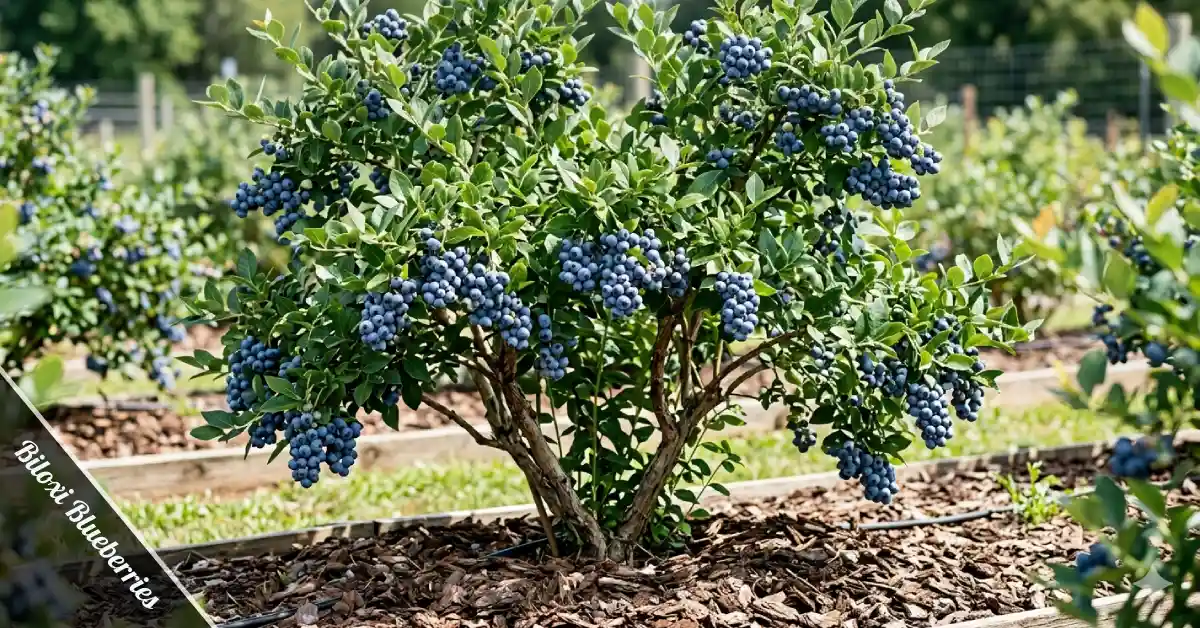
Upright growth. These bushes grow tall and dense—usually 5 to 6 feet at maturity—without spreading all over your garden. The thick canopy handles heavy fruit loads well, though you’ll want to thin it occasionally for better airflow.
Possible second crop. In really mild climates, you might get a smaller fall harvest alongside the main spring/early-summer one. Don’t count on it, but it’s a nice bonus when it happens.
Getting Your Soil Ready (This Is Non-Negotiable)
Here’s where most people stumble. Blueberries are ridiculously picky about soil pH. Biloxi included.
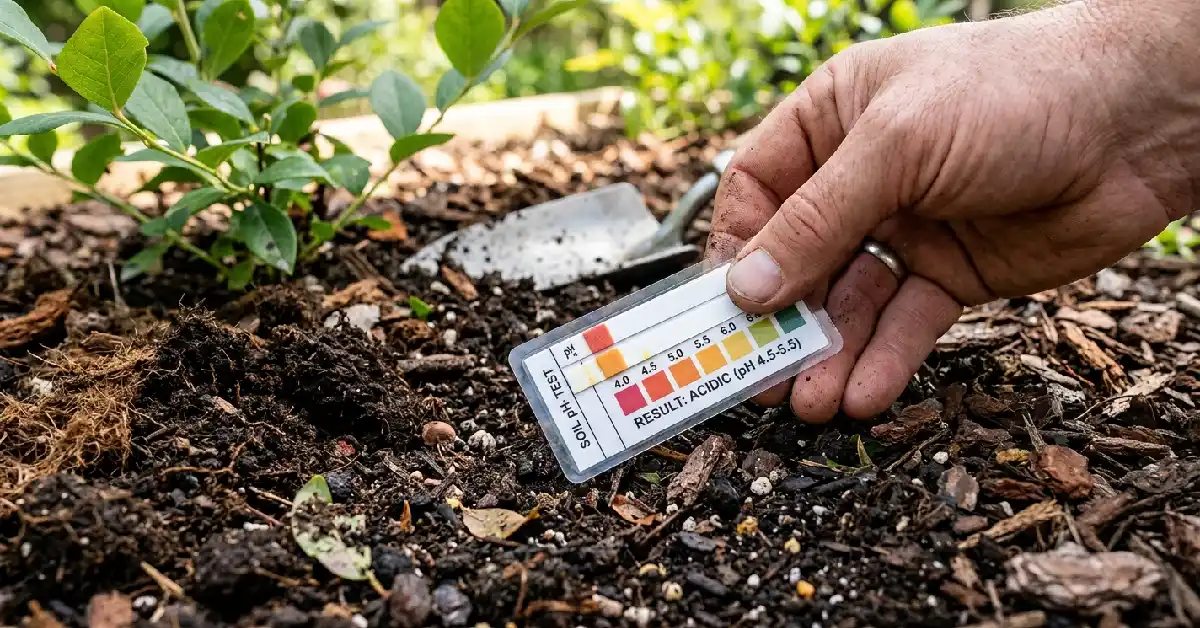
You need soil between 4.0 and 5.5 on the pH scale. That’s acidic—much more acidic than most garden soil naturally is. If your soil is neutral or alkaline (which is common in warm regions), you have to fix it before planting.
The Soil Preparation Process
Test first. Grab a soil test kit from any garden centre or send a sample to your local extension office. Knowing your starting pH saves you months of guessing. I learned this the hard way.
Amend with sulfur. Elemental sulfur mixed into your planting area several months before planting is the standard fix. If you’re planting soon, sulfur takes time to work. Some people use faster-acting options like ammonium sulfate, but plan if you can.
Add organic matter. Work in a generous amount of peat moss, composted pine bark, or other high-organic-matter material. This does triple duty: it improves drainage, keeps moisture consistent, and gradually acidifies the soil as it breaks down.
Use acidic mulch. After planting, blanket the area with 2 to 3 inches of pine bark mulch or pine straw. This protects the shallow root system, keeps the soil cooler and moister, and slowly releases acid into the soil.
Watch for iron chlorosis. If your leaves turn yellow with green veins, that’s not an iron deficiency—it’s a pH problem. The iron is already in the soil; the plant just can’t access it when pH is too high. Fix the pH, and the yellowing stops.
This matters because getting pH wrong is the #1 reason people fail with blueberries. It’s fixable, but it requires attention.
Planting and Positioning
Fall or early winter is the sweet spot for planting. The bush is dormant, the soil is cooler, and the roots have time to settle in before spring growth explodes.
Pick a spot with at least 6 to 8 hours of direct sun daily. Full sun means better flowers and more fruit. Some afternoon shade in extreme heat is fine, but don’t skimp on light. If you’re interested in understanding the fundamentals of proper planting setup, check out this guide to planting best practices.
The planting steps:
- Dig a hole twice as wide as the root ball and just as deep
- Gently loosen the roots if they’re circling (root-bound)
- Set the plant so the top of the root ball is slightly higher than ground level
- Backfill with amended soil
- Add 2 to 3 inches of pine mulch around the base (not touching the stem)
Water well after planting and keep the soil consistently moist—not soggy, just moist—for the first growing season.
Daily Care: Water, Feed, Prune
Once the plant is established, Biloxi isn’t high-maintenance, but it needs consistent attention.
Watering
Blueberries have shallow, fibrous roots that dry out faster than you’d think. In summer, especially during fruit production, you may need to water a couple times a week. The goal is damp soil, not waterlogged. Drip irrigation is your best friend here—it delivers water right to the root zone without waste.
Don’t wait for the plant to wilt. That’s stress you want to avoid.
Fertilizing
Use a fertiliser made for acid-loving plants (azalea or camellia formula works great). Apply it in early spring as new growth appears. A lighter second application in late spring can help, but don’t overdo it. Always water the fertiliser in well.
Sunlight and Growth
Biloxi thrives in full sun conditions, similar to other sun-demanding ornamental plants. If you want to maximise flowering and fruiting, keep your blueberry in bright light throughout the growing season. For more on managing light requirements for sun-loving plants, explore this resource on light-demanding varieties.
Pruning
This intimidates new growers, but it’s essential. In late winter while the plant is dormant, remove dead, diseased, or crossing branches. Cut out spindly growth at the base. Keep the centre of the bush open so light and air reach the whole plant. You’re not trying to make it small—you’re trying to make it more productive.
Understanding Chill Hours
Let me explain this because it’s the real reason Biloxi works where other blueberries don’t.
A “chill hour” is one hour when the temperature is below 45°F but above freezing. Think of it as the plant’s internal calendar. Blueberries need a certain number of these hours to signal dormancy and then wake up ready to flower and fruit. Without enough chill hours, the plant makes leaves but the flower buds never open. You get nothing.
Northern varieties need 600–1,000 hours. Biloxi only needs 150–300. If you’re in a place where winter temperatures rarely dip below 45°F, most blueberries are useless. Biloxi isn’t. That’s the whole point of the breeding.
Pollination: Do You Need Two Plants?
Yes and no. Biloxi is partially self-fertile, meaning one plant will produce some fruit on its own. But “some” is doing a lot of work here. You’ll get a modest harvest from a single bush.
For a real crop—the kind that makes you happy you planted it—get a second variety that blooms at the same time. Emerald, Jewel, Misty, or Sharpblue all work as pollinators. Same bloom window, same chill requirements, compatible pollen. More bees visit, more cross-pollination happens, and your harvest doubles or triples.
If you can only fit one bush, you’ll still get blueberries. Just don’t expect to fill a bucket.
Harvest Timing and Frost Risk
Biloxi blooms early—sometimes late January or February in warm regions. Early blooms mean early fruit, but they also mean frost risk.
If late-winter cold snaps are common where you live, protect the flowers. Frost cloth on cold nights helps. Planting in a spot that avoids low-lying cold pockets (where cold air settles) makes a real difference. Some people even grow Biloxi in containers so they can move plants under shelter if frost threatens.
This is a second-order risk that doesn’t show up until year two, but it’s worth thinking through before you plant.
Growing Biloxi in Containers
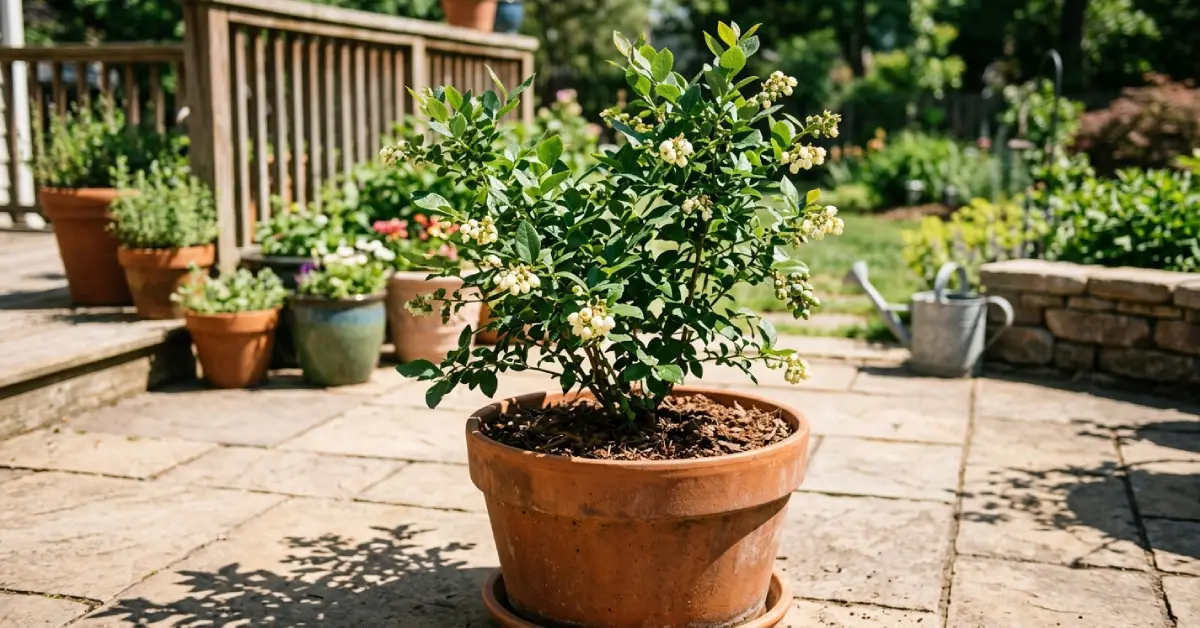
If your native soil is hopeless or you just don’t have garden space, containers work great.
Get a pot at least 18 inches in diameter and depth. Use a commercial potting mix formulated for acid-loving plants (many blueberry-specific mixes exist). Containers let you control pH perfectly and manage watering precisely. You’ll need to water more often than in-ground plants, but you’ll have zero soil pH headaches.
If you’re interested in creative vertical gardening solutions for limited space, you might find inspiration in building support structures for container gardens. While designed for different plants, the principles of container spacing and airflow apply to blueberries too.
Comparing Biloxi to Other Warm-Climate Varieties
If you’re deciding between options, here’s what you should know:
- Biloxi: The balanced choice. Good chill hours, sweet fruit, proven across many regions.
- Misty: Ultra-low chill, excellent yields, handles humidity well. Often planted with Biloxi as a pollinator.
- Sunshine Blue: A dwarf, compact option that tolerates slightly higher pH than most. Best for containers and patios.
- Tropical Blue: The newest option, designed for near-zero chill zones. Can produce within 10 months of planting.
Each has strengths, but Biloxi remains the safest bet for most warm-climate growers because it’s been around longer and has a bigger track record.
Long-Term Care: Years 3 and Beyond
After year one, maintenance is lighter. Keep the soil pH in range (test every few years), mulch consistently, and prune every late winter to maintain shape and productivity. A healthy Biloxi bush can produce for 20+ years.
The main thing is not to ignore it. Blueberries reward consistency. Neglect them for a couple of seasons—stop mulching, let the weeds move in, skip pruning—and productivity drops fast. Stay on top of it, and they reward you year after year.
The Bottom Line
Growing a Biloxi blueberry isn’t complicated, but it’s not zero-effort either. Get the soil right, pick a sunny spot, water consistently, and give it a pollinator if you can. Do that, and you’ll have fresh blueberries every year.
My original failure happened because I didn’t understand what these plants actually needed. Once I fixed the fundamentals—acid soil, enough light, steady moisture, proper pruning—everything changed. The Biloxi became one of the most reliable producers in my garden, and that’s saying something for someone who lives somewhere warm.
If you’re in a hot climate and you’ve given up on blueberries, this variety might be the one that works for you.
FAQs
How many chill hours does Biloxi blueberry need?
150 to 300 hours below 45°F. This is one of the lowest requirements among all blueberry varieties, which is why it thrives in warm climates.
Can I grow Biloxi blueberries in containers?
Absolutely. Use a pot at least 18 inches in diameter and depth, filled with an acidic potting mix. You’ll manage watering and pH more easily than in the ground.
Do Biloxi blueberries need a second plant?
One plant will produce some fruit, but a second pollinator variety (Misty, Emerald, Jewel) will triple your harvest. If space is limited, one plant still works—just don’t expect a huge crop.
What’s the best time to plant Biloxi blueberries?
Late fall or early winter when the plant is dormant. This gives roots time to establish before spring growth.
Will Biloxi blueberries produce a second crop in fall?
In very mild climates, yes—sometimes a smaller second crop appears in late fall. But treat this as a bonus, not a guarantee. It depends on your specific climate and how the season plays out.
What soil pH do Biloxi blueberries need?
4.0 to 5.5. Test your soil before planting and amend with sulfur if needed. This is the single most important factor for success.