

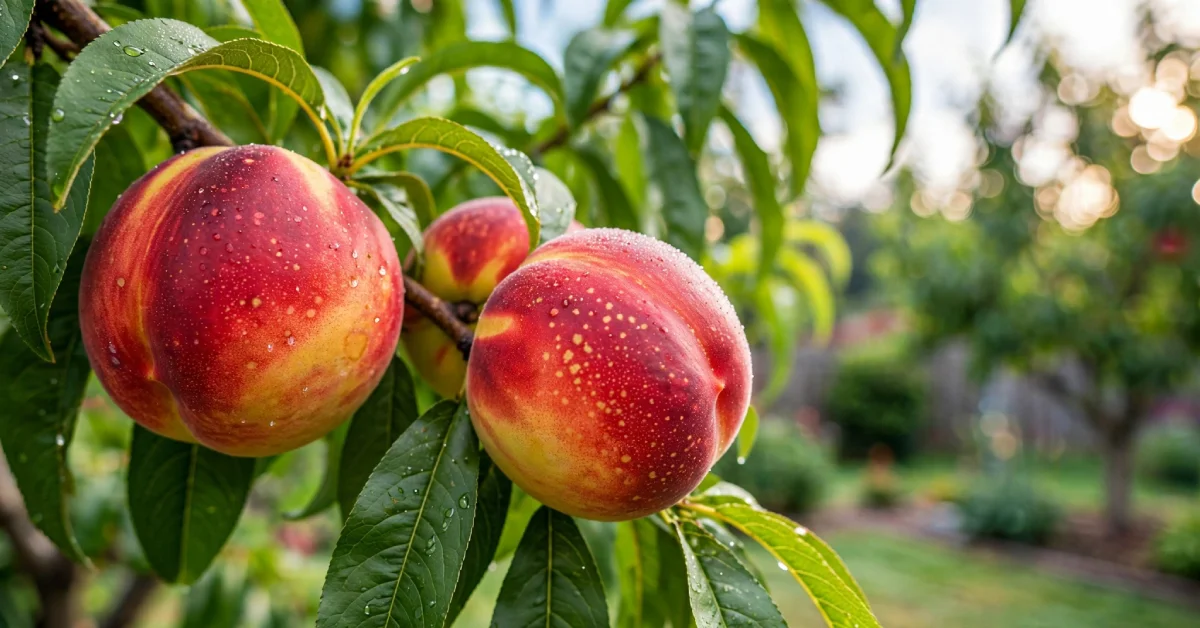
The Flavortop Nectarine (Prunus persica var. neupersica ‘Flavortop’) is a high-scoring yellow freestone nectarine prized for its sweet, juicy flesh and large fruit size. Originating from Fresno, California, in 1969, it ripens in mid-July in warm climates, requires 650 chill hours, and thrives in USDA Zones 5 through 9.
The tree is self-fruitful, disease-resistant, and reaches 12 to 15 feet at maturity.
What Makes the Flavortop Nectarine Stand Out
If you have ever bitten into a grocery store nectarine and found it bland or mealy, the Flavortop will change your mind. This variety consistently ranks among the top nectarines in Dave Wilson Nursery fruit tastings, earning high marks for both flavour and texture. In the 2014 DWN Fruit Tasting Report, Flavortop was listed as one of the most consistently high-scoring varieties and carries the nursery’s Taste Test Winner designation.
The fruit is large, firm, and yellow-fleshed with a freestone pit that separates cleanly. The skin develops a striking red-over-yellow colour as it ripens. The taste is sweet and rich, with the kind of juiciness that commercial varieties lose during early harvesting and long shipping. According to Dave Wilson Nursery, Flavortop is “one of the highest scoring nectarines in DWN fruit tastings” and “one of the very best” (Dave Wilson Nursery, 2024).
Ripening occurs in mid-July in Central California — roughly July 12 to July 29 in the Hickman, CA area — placing it between the Independence and Fantasia varieties in terms of harvest timing. In cooler zones, expect fruit in August.
For growers in warmer regions who want to expand beyond stone fruit, varieties like the Biloxi blueberry offer a complementary harvest earlier in the season with minimal chill requirements, pairing well alongside Flavortop in the same yard.
Flavortop Nectarine Tree Characteristics
Understanding the tree’s profile helps you plan where and how to grow it. Here is what you need to know:
- Mature height: 12 to 15 feet (standard); 8 feet (semi-dwarf rootstock)
- Mature spread: 12 to 15 feet
- USDA hardiness zones: 5 to 9
- Chill hours: 650 hours below 45°F
- Sunlight: Full sun, 6 to 8 hours daily
- Soil: Well-drained loamy soil, pH 6.0 to 7.0
- Pollination: Self-fruitful; no second tree required
- Bloom time: Midseason, with large showy pink blossoms
- Harvest window: Mid-July to August
- Fruit storage: 2 to 3 weeks refrigerated
- Botanical name: Prunus persica var. neupersica ‘Flavortop’
The tree is vigorous and productive, producing large, showy pink blossoms in spring that make it a functional and ornamental addition to your yard. It also shows better disease resistance than many other stone fruit varieties, according to IFA Cooperative (IFA, 2024).
How to Plant a Flavortop Nectarine Tree
Planting correctly in the first season sets the foundation for decades of fruit production. Follow these steps for the best results.
Choose the right site. Pick a spot with full sun and protection from strong winds. Early frost can damage blossoms, so plant on the south or southeast side of a structure when possible. Avoid low-lying areas where cold air settles.
Prepare the soil. Flavortop trees need well-drained loamy soil with a pH between 6.0 and 7.0. If your ground holds water after rain, amend it with compost or consider raised planting. Heavy clay soils cause root rot in stone fruit trees.
Dig and plant. Dig a hole twice as wide as the root ball and the same depth. Set the tree in the hole, spread the roots outward, and backfill with native soil mixed with compost. Water as you fill to eliminate air pockets. Mulch with 2 to 3 inches of organic material around the base, keeping mulch a few inches from the trunk. Space trees 12 to 15 feet apart to allow room for mature spread.
Timing matters. Plant bare-root trees in late winter or early spring while dormant. Container-grown trees can go in the ground from spring through early fall in most zones. Flavortop is commonly offered on Lovell rootstock, a standard choice known for adaptability across a range of soil and climate conditions.
The University of California Cooperative Extension notes that proper site selection and drainage are the two most common factors that determine whether a backyard stone fruit tree survives its first year (UC ANR, 2023).
Planting nitrogen-fixing companions nearby can also benefit your fruit trees over time. Legumes like sigarilyas add nitrogen to the surrounding soil naturally through their root nodules, reducing the need for synthetic fertilisers in the years after planting.
Ongoing Care: Watering, Fertilising, and Pruning
Watering
Keep the soil consistently moist during the first growing season. A deep watering once per week works well in most climates. Place a hose at the base of the tree and let it run for 20 to 30 minutes. During hot, dry stretches, increase frequency to twice weekly. Reduce watering in fall as the tree enters dormancy.
Mature trees tolerate brief dry spells but produce better fruit with consistent moisture. Drip irrigation is a practical long-term solution for established trees.
Fertilizing
Wait at least 6 weeks after planting before applying fertiliser. Use a balanced formula such as 12-12-12 at a rate of about 1 pound per inch of trunk diameter. Apply in early spring before growth resumes. Avoid fertilising after mid-summer, as late nitrogen encourages tender growth that is vulnerable to frost damage.
A soil test every 2 to 3 years helps you adjust nutrient levels accurately. Many county extension offices offer low-cost testing.
Pruning
Pruning is essential in the first 2 years. The goal is an open centre or “vase” shape that allows sunlight and air to reach all branches. This structure reduces disease pressure and improves fruit quality.
Prune in late winter or early spring before buds break. Remove dead, crossing, or inward-growing branches. Make cuts at a 45-degree angle just above an outward-facing bud.
Once the tree begins bearing fruit, thin the developing nectarines so each fruit has about 6 to 8 inches of space on the branch. Thin after the natural fruit drop in early summer for the best size and quality from each harvest. Thinning prevents limb breakage and produces larger, higher-quality fruit. According to the USDA National Agricultural Statistics Service, properly thinned stone fruit trees yield fruit that is 20 to 30% larger on average (USDA NASS, 2023).
Flavortop vs. Other Nectarine Varieties
Several popular nectarine varieties compete for space in home orchards. Here is how Flavortop compares:
| Feature | Flavortop | Fantasia | Arctic Jay | Panamint |
|---|---|---|---|---|
| Flesh color | Yellow | Yellow | White | Bright yellow |
| Stone type | Freestone | Freestone | Freestone | Freestone |
| Chill hours | 650 | 650 | 650 | 400 |
| Zone range | 5-9 | 5-9 | 5-9 | 6-9 |
| Harvest | Mid-July | August | Aug-Sept | August |
| Fruit size | Large | Large | Medium | Large |
| Taste | Sweet, rich | Sweet, tangy | Sweet, low acid | Sweet, tart |
Flavortop’s main edge is its combination of high flavour scores, large fruit, and strong disease resistance. Fantasia is a close rival and ripens a few weeks later, making both a good pairing for extended harvest. Arctic Jay appeals to growers who prefer white-fleshed fruit with lower acidity.
If you are planning a diverse home orchard, consider adding other fruit types alongside your nectarines. The cherimoya, for example, thrives in warm climates and produces a custard-like fruit that ripens at a different time of year, extending your fresh harvest window across multiple seasons.
Common Problems and How to Handle Them
Flavortop is more disease-resistant than many stone fruits, but it is not immune. Here are the most frequent issues:
- Brown rot. This fungal disease affects blossoms and ripening fruit. Remove infected fruit promptly and apply a dormant copper spray in late winter. Good air circulation from proper pruning reduces risk.
- Peach leaf curl. Caused by the fungus Taphrina deformans, this disease distorts and discolours leaves in spring. A single dormant fungicide spray in late fall or early winter prevents it effectively.
- Plum curculio. This small beetle scars developing fruit. Apply kaolin clay or an appropriate insecticide shortly after petal fall.
- Frost damage to blossoms. Late spring freezes destroy open flowers. If your area is prone to late frosts, choose a protected planting site and consider frost cloth during cold snaps.
The Michigan State University Extension reports that peach leaf curl and brown rot are the two most common stone fruit diseases in backyard plantings across the U.S. (MSU Extension, 2024).
Final Thoughts
The Flavortop Nectarine tree earns its reputation as one of the best yellow freestone nectarines available to home growers. Its combination of excellent flavour, reliable yields, disease resistance, and self-fertility makes it a practical choice for backyard orchards in Zones 5 through 9. The firm, juicy flesh holds up well for fresh eating, canning, and baking, giving the fruit real versatility beyond the tree. With proper planting, consistent watering, annual pruning, and basic pest management, you can expect decades of high-quality fruit from a single tree.
FAQs
How long until a Flavortop nectarine tree produces fruit?
Most nursery trees bear fruit within 2 to 4 years of planting, depending on rootstock and growing conditions. Trees on semi-dwarf rootstock may fruit slightly sooner than standard trees.
Do I need two Flavortop trees for pollination?
No. Flavortop is self-fruitful, so a single tree produces fruit on its own. However, planting a second nectarine variety within 100 feet can improve fruit set and yield.
What zones can I grow Flavortop nectarines in?
USDA Zones 5 through 9. The tree handles cold down to approximately -10°F when dormant. It performs best in areas with warm, dry summers.
When should I pick Flavortop nectarines?
Harvest when the fruit gives slightly to gentle pressure, and the background colour shifts from green to fully yellow, with red colouring over the shoulder. The fruit should pull from the branch with a gentle twist. In Central California, this is typically mid-July, around July 12 to July 29 in the Hickman area.
How do I store fresh Flavortop nectarines?
Refrigerate unwashed fruit in a single layer for up to 2 to 3 weeks. For longer storage, slice and freeze or use them in preserves.