

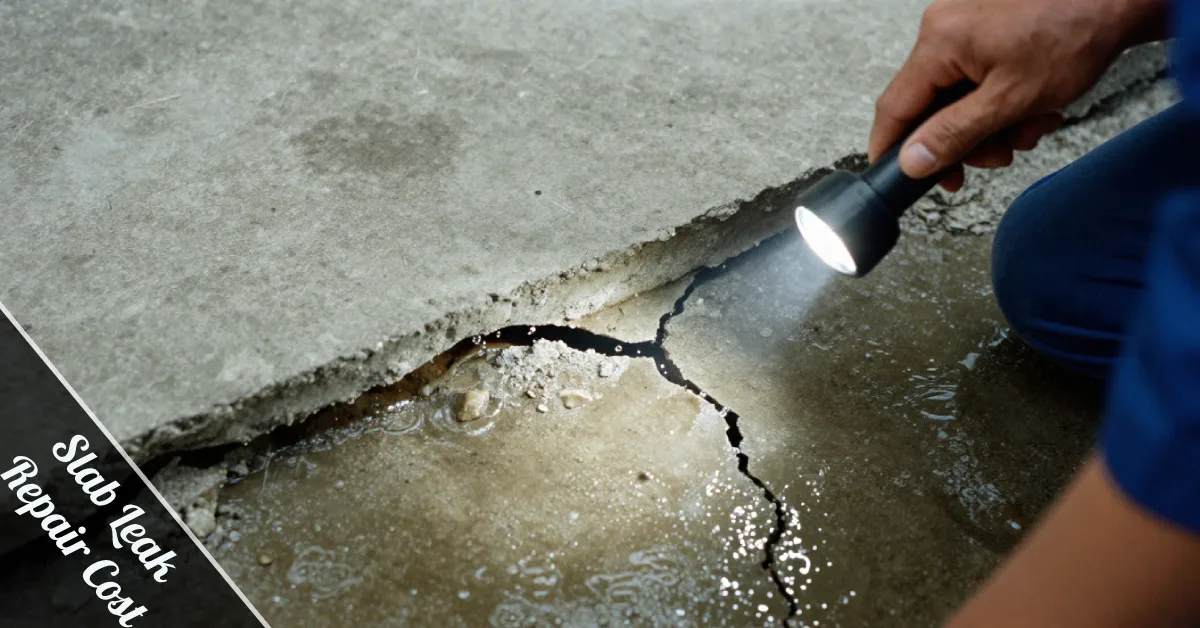
You’re scrolling through your water bill, and something feels off. The numbers don’t add up. Maybe you’ve noticed a warm spot on your floor or heard water running when everything’s turned off. Welcome to the world of slab leaks—where your concrete foundation hides a plumbing problem that’s draining your wallet faster than you realize.
Here’s the deal: slab leak repair cost isn’t just about fixing a pipe. It’s about accessing pipes buried under tons of concrete, preventing structural damage, and stopping water waste that could hit 10,000 gallons monthly. Most homeowners pay around $2,300 for repairs, but costs swing wildly from $630 for simple fixes to $4,400+ when things get complicated. Location matters, repair method matters, and catching it early? That matters most.
Let’s break down what you’re actually paying for, which repair methods make sense for your situation, and how to avoid getting hit with surprise charges that turn a plumbing fix into a financial nightmare.
What Is a Slab Leak and Why Should You Care?
Your home’s plumbing doesn’t just snake through walls. If you’ve got a concrete slab foundation, most pipes run beneath or inside that slab. When those pipes crack, corrode, or break, water seeps into places it shouldn’t. That’s your slab leak—silent, sneaky, and expensive if ignored.
Slab leaks happen for predictable reasons. Corrosion eats through cast iron and copper pipes over decades of water flow. High water pressure stresses pipes until they crack. Poor installation from the ’70s and ’80s finally catches up with you. Even ground movement—hello, California earthquakes—puts pressure on pipes that weren’t designed to flex.
The real problem? You won’t notice until damage spreads beyond the pipe itself. Water erodes soil under your foundation, creating voids that lead to settling and cracks. Your floors warp, doors stick, and mold starts growing in hidden spaces. Structural repairs escalate fast when foundation integrity gets compromised by persistent moisture.
Homes built before the 1980s face a higher risk. Galvanized steel pipes corrode from the inside out. Copper develops pinhole leaks after 30+ years of hard water exposure. If your home predates modern plumbing codes, you’re playing Russian roulette with every passing year. The EPA estimates 10% of homes waste at least 90 gallons daily from leaks—many of them beneath slabs.
Average Slab Leak Repair Cost Breakdown
Let’s cut through the guessing game. The slab leak repair cost you’ll actually pay depends on three things: finding the leak, fixing the pipe, and repairing whatever got damaged in the process. National averages hover around $2,300, but that number means nothing until you factor in your specific situation.
Detection alone runs $150 to $600 because plumbers need specialized equipment—acoustic sensors, infrared cameras, pressure testing gear—to pinpoint leaks without unnecessary digging. Some companies charge $99 for diagnostics and credit it toward repairs if you hire them. Smart move: get detection done first before anyone starts breaking concrete.
Here’s where costs branch off based on repair type. Spot repairs for easily accessible leaks cost $500 to $1,500. Under-slab plumbing work—where plumbers tunnel or break through concrete—jumps to $500-$4,000 depending on accessibility. Waterline repairs specifically? You’re looking at $300 to $1,400 for most jobs.
Pipe rerouting bypasses damaged sections by installing new lines through walls or attics. That ranges from $1,500 to $15,000 based on how much pipe needs replacing and how complex your home’s layout is. Extreme cases requiring full slab replacement? Budget $3,600 to $8,000 just for pouring new concrete, not counting pipe repairs themselves.
Labor drives most of your final bill. Licensed plumbers charge $45 to $200 hourly for this specialized work, and jobs rarely finish in a couple of hours. Multiple leaks, hard-to-reach locations, and extensive concrete work all push that clock higher. Emergency weekend calls? Expect rates to triple—schedule during business hours whenever physically possible.
Foundation repair after slab work adds another layer of expense. Small concrete patches might cost a few hundred dollars, but extensive repairs requiring new reinforcements jump to $2,000-$7,500. You’re essentially paying twice—once to access the leak and again to restore your foundation’s integrity.
Repair Methods Compared: Which One Makes Sense?
You’ve got options when fixing slab leaks, and each one carries different price tags plus trade-offs. Picking the right method saves you money now while preventing repeat repairs later. Let’s compare your choices without the sales pitch.
Spot Repair: Quick Fix or Temporary Band-Aid?
Spot repair breaks through the slab directly above the leak, fixes that section, and patches everything back up. It’s the cheapest option at $500 to $1,500 for accessible leaks. Makes perfect sense when you’ve got one isolated problem in an otherwise healthy plumbing system.
The catch? You’re only fixing what you can see. If your pipes show signs of widespread corrosion or you’ve had multiple leaks already, spot repairs become expensive band-aids. Breaking concrete costs money every time, so repeated spot fixes eventually exceed the cost of more comprehensive solutions.
Epoxy Pipe Lining: The Trenchless Wonder
Epoxy lining creates a new pipe inside your damaged one without major digging. Plumbers insert a resin-coated liner that hardens against the pipe walls, sealing leaks and preventing future corrosion. This trenchless method costs $80 to $250 per linear foot, with typical projects running $1,000 to $4,000.
Benefits stack up fast. Installation requires minimal access points, so you avoid extensive concrete demolition. The eco-friendly materials keep water clean and last up to 50 years. Projects wrap in 4 days instead of weeks of reconstruction. Perfect for homes where breaking the slab would damage the flooring or disrupt living spaces significantly.
However, epoxy won’t work if pipes have deteriorated too severely. The existing pipe needs structural integrity to support the lining process. A professional inspection determines whether your pipes qualify for this method or need complete replacement instead.
Pipe Rerouting: Avoiding the Slab Entirely
Rerouting abandons problematic under-slab pipes completely. Plumbers cap off old lines and install fresh pipes through walls, crawl spaces, or attics. Costs range from $1,500 to $15,000, depending on how much pipe needs replacing and your home’s complexity.
This approach makes strategic sense when you’ve got multiple failing pipes or recurring leak problems. Older Los Angeles homes with original plumbing from the ’60s and ’70s often benefit from rerouting rather than endless spot repairs. You’re essentially installing a new plumbing system that bypasses all the problems buried under concrete.
The upside? Future maintenance becomes infinitely easier when pipes sit in accessible locations. The downside? Higher upfront cost compared to simple spot repairs. But when you factor in preventing future under-slab issues, rerouting often delivers better long-term value for aging systems.
Full Slab Replacement: Nuclear Option for Severe Cases
Full replacement demolishes the existing slab, repairs all plumbing, and pours an entirely new foundation. This extreme solution costs $5,400 to $10,800 for concrete alone—add pipe repair costs on top. You’re looking at $50,000 to $100,000 total for complete foundation overhauls in severe cases.
When does this make sense? Homes with multiple severe leaks, substantially damaged foundations, or ancient plumbing systems that are failing everywhere simultaneously. If your slab shows major cracks, settling, or structural compromise from years of hidden leaks, replacement becomes necessary for safety and property value.
Warning Signs You’ve Got a Slab Leak
Catching leaks early dramatically reduces repair costs and prevents secondary damage. Watch for these red flags—each one signals water escaping somewhere it shouldn’t be beneath your foundation.
Unexplained spikes in water bills top the warning list. If your usage jumps without explanation, you’re paying for water that’s disappearing into your foundation. Even small pinhole leaks waste 10,000 gallons monthly—enough to fill a small pool and add hundreds to your bill.
Warm spots on floors indicate hot water line breaks. Cold floors stay consistently cool, but random warm patches mean hot water’s heating your slab from below. Touch different floor areas—temperature inconsistencies reveal leak locations better than visual inspection.
Sounds of running water when everything’s off? That’s your plumbing system leaking 24/7. Stand quietly in your home during off-hours. Persistent water sounds point to active leaks losing pressure somewhere in the system.
Low water pressure throughout the house suggests major leaks diverting flow. One low-pressure faucet indicates fixture problems, but whole-house pressure drops mean system-wide issues. Slab leaks reduce overall pressure as water escapes before reaching fixtures.
Mold, mildew, or damp spots appearing on floors or under carpet signal moisture accumulation. Slab leaks saturate soil and concrete, creating perfect conditions for mold growth. Musty odors accompanied by visible growth demand immediate investigation—you’ve got water where it shouldn’t be.
Foundation cracks widen as water erodes the supporting soil. Monitor existing cracks for changes, and investigate new cracks immediately. Doors and windows that suddenly stick or won’t close properly indicate foundation settling from undermined soil beneath your home.
How to Actually Reduce Your Repair Costs
Smart moves before, during, and after repairs can cut thousands from your final bill. These strategies work regardless of which repair method you choose—they’re about being strategic rather than reactive when facing slab leak repair cost decisions.
Get multiple quotes from licensed plumbers. One company might suggest extensive repairs while another spots a simpler solution. Request detailed written estimates breaking down labor, materials, and additional fees. Compare apples to apples by ensuring each quote covers an identical scope. Don’t automatically choose the lowest bid—verify licensing, insurance, and references first.
Ask about pipe rerouting before agreeing to slab demolition. Rerouting often costs less than breaking concrete when you factor in foundation repairs afterward. It prevents future under-slab problems by moving pipes to accessible locations. Contractors default to familiar methods, so specifically request rerouting as an alternative. Some plumbers hesitate because they lack attic or wall routing experience—that’s your cue to find someone who does.
Check homeowners’ insurance coverage before paying out of pocket. Many policies cover water damage and pipe repairs, depending on the cause. Review your policy’s water damage provisions carefully. Call your provider to discuss coverage specifics before filing claims. Compare your deductible against potential rate increases—sometimes paying directly saves more long-term than claiming and facing higher premiums.
Schedule regular plumbing inspections every 1-2 years. Professional inspections catch small problems before they become expensive emergencies. Inspectors spot corrosion, pressure issues, and failing components during routine checks. This preventive approach costs $100-$300 but prevents $2,000+ emergency repairs. Homes built before 1980 need more frequent inspections, given older pipe materials and installation methods.
Maintain proper water pressure between 50-75 PSI. Excessive pressure accelerates pipe wear and increases leak risk. Install a pressure gauge on an outdoor spigot to check levels. Pressure regulators cost $200-$400 installed, but extend pipe life significantly. Never exceed 80 PSI—sustained high pressure guarantees premature pipe failure regardless of material quality.
Insurance Coverage: What Actually Gets Paid
Homeowners insurance covers some slab leak costs but not others. Understanding these distinctions prevents nasty surprises when filing claims. The general rule? Insurance covers sudden, accidental damage—not gradual deterioration or maintenance issues.
Most policies cover the cost of accessing and repairing the leak itself. Breaking through the slab, fixing the pipe, and restoring concrete typically qualifies as covered damage. Water damage to flooring, walls, and possessions from the leak? Also covered in most cases. These represent sudden, unexpected events outside your control.
What insurance won’t cover? Gradual deterioration and wear-and-tear that caused the leak in the first place. If corrosion developed over decades in aging pipes, that’s maintenance—not an insurable event. Detection costs before filing claims? Usually, your responsibility. Upgrades beyond restoration to original condition? You’re paying the difference out of pocket.
Policy language varies significantly between carriers and coverage levels. Review your specific policy’s water damage section carefully. Some policies exclude certain leak types or cap coverage at specific amounts. Others require additional endorsements for full slab leak protection. Call your agent to discuss coverage details before assuming you’re protected.
Consider whether filing makes financial sense. Compare repair costs against your deductible and potential rate increases. A $3,000 repair with a $1,500 deductible nets you $1,500 from insurance—but your rates might jump $500 annually for years. Sometimes, eating the cost protects your insurance record and prevents premium hikes that exceed the claim payout over time.
Conclusion: Pay Now or Pay More Later
Slab leak repair cost stings regardless of which number you land on. But ignoring the problem? That’s financial suicide wrapped in foundation damage. Small leaks escalate into structural nightmares that require five-figure fixes when caught late.
Your move: catch it early, compare repair methods honestly, and choose solutions that prevent repeat problems. Spot repairs work for isolated issues in healthy systems. Epoxy lining offers trenchless fixes for qualifying pipes. Rerouting makes sense when you’re facing multiple failures. Full replacement becomes necessary only in extreme cases with severe foundation compromise.
Budget for hidden costs—detection, foundation repair, water damage restoration, and permits all add up. Get multiple quotes, verify licensing, and don’t skip due diligence because you’re panicked. Insurance might help, but understanding coverage specifics before filing prevents claim regrets later.
The homes most vulnerable? Anything built before 1980 with original plumbing. If that’s your situation, schedule inspections now rather than waiting for disaster. Prevention costs hundreds; emergency repairs cost thousands. Your foundation literally supports everything above it—treat slab leaks with the urgency they deserve.