

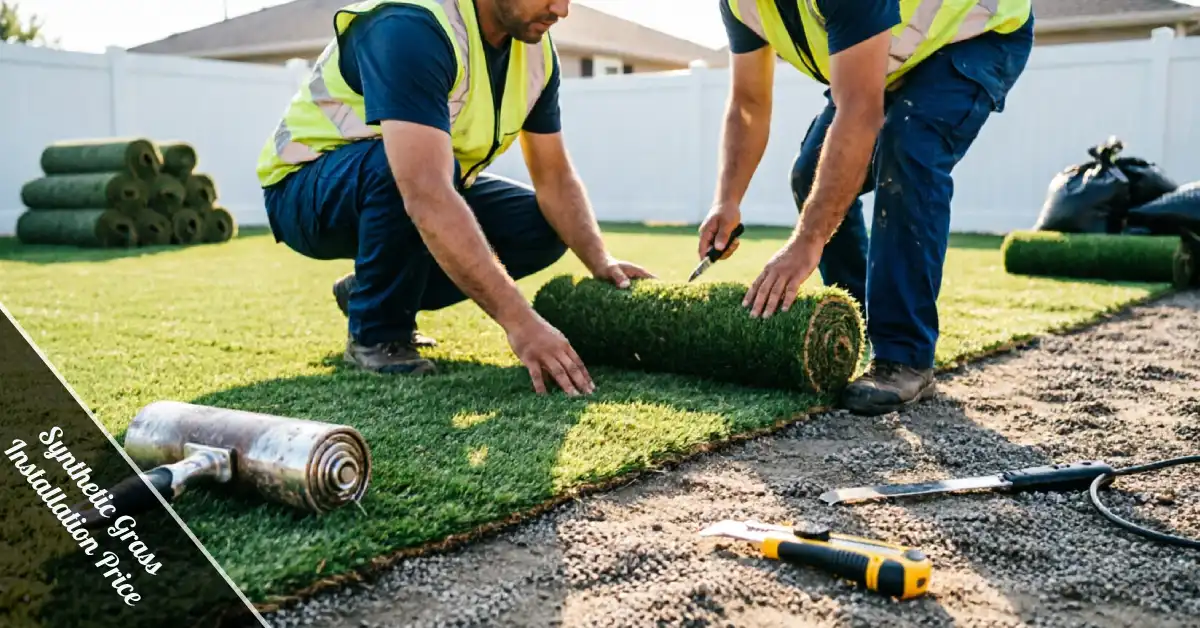
So you’re chasing that perfect green lawn without the mowing, the watering, or the brown patches every August. Smart move. But before you sign anything, you need real numbers. This guide breaks down synthetic grass installation price factors so you’re not guessing your way into a bad deal. Grab a retractable hose reel for cleanup during prep — you’ll still need water on-site for cutting and settling the base, even with fake grass on top.
Most people price this the wrong way. They call one installer, get one number, and assume that’s the market rate. It’s not — costs swing hard by region, turf grade, and how much prep your yard needs.
Quick Pricing Table
Here’s the fast version, before we dig into the details below.
| Project Size | Materials Only | Full Installation |
|---|---|---|
| 400 sq ft | $1,200 – $2,000 | $2,800 – $5,200 |
| 500 sq ft | $1,500 – $2,500 | $3,500 – $6,500 |
| 1,000 sq ft | $3,000 – $5,000 | $7,000 – $13,000 |
Prices shift with region, turf quality, and how much prep your yard needs. Use this table as a starting point, not a final quote — every yard has its own quirks.
Cost Overview
A typical synthetic grass installation price runs between $7 and $13 per square foot. That covers materials, labor, and site prep. Cheaper jobs skip proper drainage. Pricier ones use thicker turf and better base work.
Think of price as three buckets: turf, labor, and ground prep. Each one moves the total up or down depending on your yard’s condition and what look you’re going for.
There’s also a fourth bucket: extras. Edging, curved borders, and pet-turf odor treatments add line items that don’t show up in a basic quote, so always ask what’s included.
Price Per Square Foot
Most homeowners pay $3 to $6 per square foot for turf alone. Add labor, and you’re looking at $4 to $8 more per square foot on top of that.
Bigger yards actually cost less per square foot. Contractors spread setup costs across more area, so a 1,000 sq ft yard often beats the per-foot rate of a small 200 sq ft patch.
Small patches, oddly, cost more per foot. Delivery fees and minimum labor charges get spread across less space, so tiny jobs rarely feel like a bargain.
Material Cost
Turf itself ranges from budget rolls at $2 per square foot to premium, pet-friendly blends near $6. Pile height, backing quality, and UV protection all push the price up.
Cheap turf fades fast and flattens under foot traffic. Spend a little more here — it’s the difference between a lawn that lasts 15 years and one that looks tired in three.
Backing material matters too. Polyurethane backing drains faster and resists tearing better than cheaper latex, especially in yards with heavy foot traffic or pets.
Labor Cost
Labor typically runs $3 to $7 per square foot, depending on your region and crew experience. Complex yards with slopes or curves cost more to install correctly.
Skilled crews cut, compact, and seam turf so seams disappear. That skill costs money, but it’s what keeps your lawn looking like real grass instead of a green rug.
Crew size affects your timeline too. A two-person team might take three days on a 500 sq ft yard, while a four-person crew wraps it in one.
Ground Preparation
This step gets skipped by cut-rate installers, and it shows later. Proper prep means removing old sod, grading the soil, and laying a compacted rock base.
If you’re clearing out old landscaping — say a struggling fig tree hit by crop loss — factor removal into your budget early. Skipping this step causes drainage problems and uneven turf down the road.
Expect $1 to $3 per square foot just for prep on average yards. Rocky or clay-heavy soil pushes that number higher.
Ask your installer how deep they’re digging the base. Two to three inches of compacted road base is standard — anything shallower means shortcuts that show up as soft spots within a year.
Infill and Finishing
Infill — the sand or rubber granules between turf blades — adds $0.50 to $1.50 per square foot. It keeps blades upright and adds cushioning underfoot.
Finishing touches like edging, seaming tape, and nail patterns matter more than people expect. Sloppy finishing is the fastest way to spot a bad installer.
Infill type changes performance too. Silica sand is the budget pick, while zeolite infill fights odor better if you’ve got dogs using the lawn daily.
Pricing by Project Size
A 400 sq ft yard usually lands between $2,800 and $5,200 installed. That’s a typical small backyard or side-yard job for most homeowners.
A 500 sq ft space runs $3,500 to $6,500. Larger 1,000 sq ft lawns land between $7,000 and $13,000, covering front and back combined.
Commercial spaces, sports courts, and rooftop installs price differently. Those need thicker turf and reinforced bases, so budget accordingly if that’s your project.
Multi-zone yards — say a front lawn plus a side dog run — are often priced as separate jobs. Ask for a combined quote anyway; installers frequently discount adjacent zones.
Local Pricing Differences
Coastal cities and high-cost-of-living areas run 20% to 40% above national averages. Labor costs drive most of that gap, not materials.
Rural areas often see lower labor rates but higher shipping costs for turf rolls. Get three local quotes before committing — regional swings are real and worth checking.
Permit rules vary by city, too. Some municipalities require permits for turf covering drainage easements, so check local codes before scheduling the install day.
Using a Price Calculator
Most turf suppliers offer free online calculators. Plug in square footage, turf grade, and your zip code for a rough estimate before calling anyone.
These tools won’t replace an actual site visit. Soil type and drainage needs only show up once a contractor walks your yard in person.
Use the estimate to sanity-check quotes you receive. If a bid lands 30% below the calculator’s low end, ask what’s being cut from the job.
Retail and DIY Options
Home Depot and similar retailers sell turf by the roll starting around $2 per square foot for materials only. That works if you’re installing it yourself.
DIY saves on labor but demands real physical work — cutting, compacting, and seaming take skill. A bad DIY base means redoing the whole job later.
Rent a plate compactor before attempting DIY. Hand-tamping never compacts as evenly, and uneven compaction is the top cause of dips and puddling later.
Cost-Saving Advice
Bundle projects. If you’re already landscaping — maybe restocking planters from a place like Conestoga Nursery in East Earl — ask installers for a combined quote to trim costs.
Get at least three bids before choosing a contractor. Ask what’s included: base material, infill type, and seam work all vary between quotes.
Timing helps too. Late fall and winter are slow seasons for most installers, and some offer discounts just to keep crews working through the off-season.
Conclusion
Your final synthetic grass installation price depends on size, turf grade, labor rates, and how much prep your yard needs. Budget $7 to $13 per square foot as a safe planning range.
Skipping prep or cheap turf saves money now but costs more later in repairs. A properly installed lawn should last 15 to 20 years without major upkeep.
Treat your quote like a checklist, not just a number. Base depth, infill type, and drainage plan all deserve a line item before you sign.
FAQs
How much does the synthetic grass installation price average nationwide?
Most homeowners pay $7 to $13 per square foot for a full installation, materials and labor included.
Is DIY installation cheaper?
Yes, DIY cuts labor costs, but mistakes in base prep often cost more to fix than hiring a pro from the start.
Does the synthetic grass installation price include drainage?
Good contractors include drainage in their quote. Always confirm this before signing, since it’s easy to skip and hard to notice until it rains.
How long does artificial turf last?
Quality turf lasts 15 to 20 years with minimal care, making the upfront synthetic grass installation price a long-term investment rather than a quick fix.


