

You’ve got a scuffed-up floor, a stubborn stain, or a basement that smells like your college dorm room. Someone says, “Just grab some Kilz.” And honestly? That’s not terrible advice — for walls. But floors are a completely different game.
Kilz is a solid primer brand. It’s been a go-to for blocking stains and odors on walls and ceilings for decades. The problem is that why Kilz is not recommended for flooring because it comes down to one simple truth: it wasn’t built for what your floor goes through every single day.
This guide breaks it all down. You’ll know exactly where Kilz falls short, which floors you can use it on, and what products actually work when you need a floor that holds up.
What Is Kilz and What Is It Actually Designed For?
Kilz is a brand of restoration primers made to block stains, seal odors, and prep surfaces for painting. It covers flaws fast and makes painting easier.
The original Kilz formula works great on walls, ceilings, and cabinets. It’s recommended for drywall, wood trim, masonry, and most building materials you’d paint over.
But here’s the thing — a primer’s job is to be painted over. It’s a foundation, not a finish. When you use it on a floor without a proper topcoat designed for foot traffic, you’re asking it to do a job it was never built for.
Kilz doesn’t harden or cure the same way floor-specific products do. According to the manufacturer’s own product guidance, Kilz primers are formulated for surface preparation — not for direct-to-floor application in high-traffic areas.
How Does Kilz Actually Behave When Applied to Floors?
Kilz goes on smoothly, covers stains well, and dries relatively fast. On a wall, that’s perfect. On a floor? The story changes quickly.
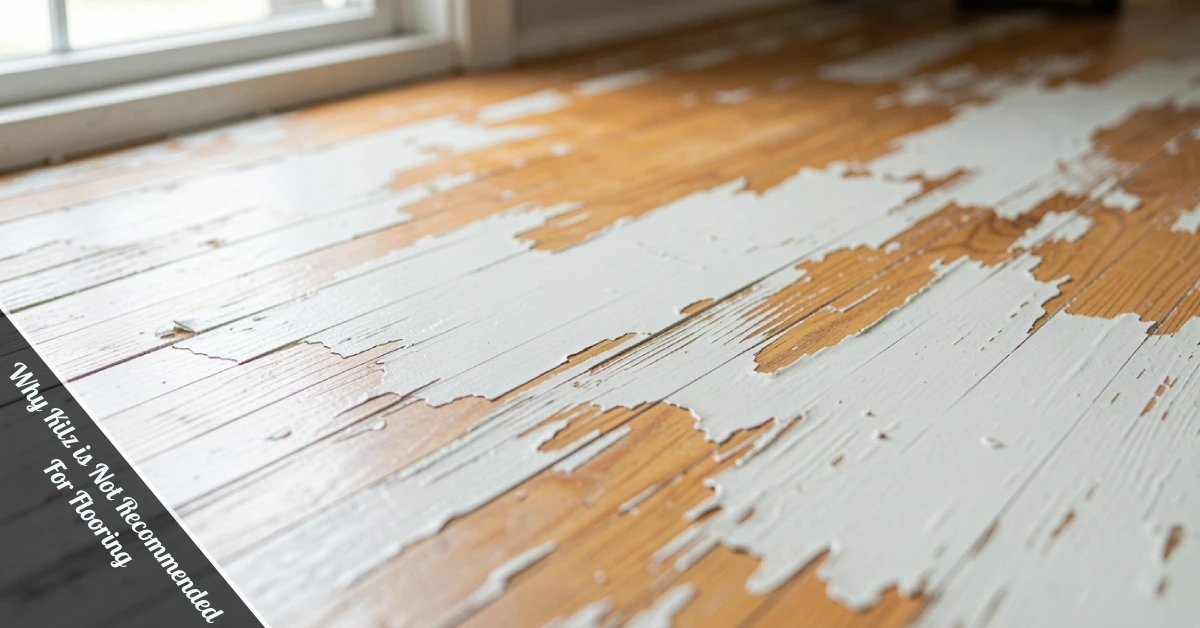
When people walk on it, Kilz starts to wear away. The primer coating isn’t designed to handle friction, weight, and constant movement. It begins peeling, scuffing, and flaking sooner than you’d expect from a branded product.
It also doesn’t provide a hard, protective surface layer. Most floor finishes cure into a tough shell. Kilz stays softer and more porous by comparison. Dust, dirt, and grime stick to it more easily, meaning your floor gets dirtier faster and is harder to clean.
That’s the practical side of why Kilz is not recommended for flooring — the chemistry doesn’t translate from vertical to horizontal surfaces.
6 Key Reasons Why Kilz Is Not Recommended for Flooring
Let’s get into the specifics. These are the real, practical limitations that make Kilz a poor match for flooring projects.
1. It Wears Off Under Foot Traffic
Water-based Kilz primers are not built to handle the weight and friction of people walking over them daily. The coating starts breaking down fast.
Once the primer starts lifting, you’re back to the original problem — scuffs, stains, or whatever you were trying to cover in the first place. You’ve spent time and money, and the floor looks worse than when you started.
Oil-based Kilz handles impact a bit better, but it’s still not a floor finish. It holds up longer but eventually faces the same failure. You’re just delaying the inevitable without a proper topcoat.
2. No Glossy or Smooth Finish
Kilz dries to a flat, matte surface. That’s fine on a wall. But if you want floors that look clean, polished, or professionally finished, Kilz won’t deliver.
The texture after drying is rough and porous. It actually attracts more dirt than a sealed floor would. You end up cleaning more often just to maintain a basic standard of cleanliness.
3. Adhesion Problems on Many Floor Types
Water-based Kilz doesn’t bond properly to all flooring materials. On ceramic tiles, for example, it won’t stick for long since tiles are non-porous and slippery by nature.
On finished hardwood floors, Kilz can actually prevent your finish coat from adhering. So not only does the primer fail — it makes the next step harder too. That’s a double loss.
Even on concrete, adhesion can be inconsistent if the surface isn’t properly cleaned and prepped first. Any dirt, oil, or moisture left behind creates a barrier between the primer and the floor.
4. Strong, Lingering Odor
Oil-based Kilz has a powerful smell that can linger for days — sometimes up to a week without proper ventilation. In an enclosed room or basement, that’s genuinely uncomfortable.
Inhaling Kilz fumes can cause dizziness, drowsiness, and breathing discomfort. If you use it, you need a respirator mask and serious airflow. It’s not a quick weekend job you can walk back into.
Oil-based Kilz also contains petroleum-based derivatives and emits a high amount of volatile organic compounds (VOCs). In fact, some U.S. states restrict or prohibit oil-based Kilz products because of those emissions.
5. Long Drying Time
Oil-based Kilz can take significantly longer to dry — especially without adequate ventilation. If you need the floor back in use quickly, this is a real problem.
You can’t walk on it, can’t put furniture back, and can’t apply a topcoat until it’s fully cured. A floor primer that ties up your space for days is a logistics headache most homeowners don’t account for.
6. Doesn’t Work Well Without Kilz Concrete Floor Paint
To get even decent results on concrete, you’re expected to follow Kilz primer with Kilz Concrete Floor Paint. That’s an added purchase most people don’t plan for.
So now you’re buying two products, spending extra time, and still ending up with a result that a purpose-built floor system would have delivered more efficiently.
Kilz Oil-Based vs Water-Based on Floors — Quick Comparison
| Factor | Kilz Oil-Based | Kilz Water-Based |
| Durability of floors | Somewhat better | Poor — wears quickly |
| Adhesion | Stronger grip | Weak on many surfaces |
| VOC emissions | High — need ventilation | Low — safer indoors |
| Drying time | Slow (up to 7 days) | Faster (1–2 days) |
| Odor | Very strong, lingers | Mild to moderate |
| Finish texture | Rough, non-glossy | Rough, non-glossy |
| Best use case | Concrete subfloors only | Odor/stain masking only |
Why Is Kilz 2 Specifically Not Recommended for Flooring?
Kilz 2 is a water-based primer mainly designed for drywalls, ceilings, and interior trim. The manufacturer doesn’t recommend it for flooring — and for good reason.
Kilz 2’s adhesive quality creates a sticky, textured surface that doesn’t translate to a clean floor finish. It may stick initially, but as you walk on it, the primer leaves the floor gradually.
It also won’t hold the weight of regular foot traffic. If you apply it to a hallway or kitchen floor, you’ll see it failing within weeks. Save Kilz 2 for its intended use — walls and prep work.
What Types of Floors Can Kilz Actually Be Used On?
Here’s the nuanced answer — Kilz isn’t completely off-limits for all floor situations. Context matters a lot here.
Subfloors
Kilz restoration primer works on subfloors — plywood, organic-based materials, and hardwood subfloor panels. The key is that a final finish coat goes on top.
Using it on subfloors to seal odors or mask stains before laying new flooring is a legitimate application. It’s not exposed to foot traffic, so the durability concern is removed.
Concrete Floors
Concrete is tough and porous, which means Kilz can bond to it more effectively than to finished wood or tile. For basement concrete floors, Kilz followed by Kilz Concrete Floor Paint is an acceptable setup.
Just don’t expect a shiny, smooth finish. The concrete texture comes through, and you’ll need to clean it more often. But for a utility basement you’re not converting into a living space, it’s workable.
Tiled Floors
Kilz can be applied over ceramic tiles, and tiles are durable enough to handle foot traffic. The catch: Kilz won’t bond for long because tiles are non-porous.
Think of it as a temporary solution, not a long-term fix. If you’re prepping tile for repainting or masking a stain before selling a property, it can work. But for lasting results, use a tile-specific bonding primer instead.
Can You Use Kilz on Hardwood or Wood Floors?
Technically, yes — but it’s limited to hardwood floors only, due to their density and rigidity. Softer wood floors absorb too much moisture from the primer and can warp or rot over time.
Even on hardwood, Kilz won’t protect the floor from dents, scratches, or moisture over time. And oil-based Kilz on wood floors can interfere with your finish coat’s adhesion — wasting both products.
Water-based Kilz on wood wears off quickly from regular walking. It’s not durable against foot traffic unless you add an epoxy-based finish coat over it. That extra step is the only way to get anything close to lasting results.
Can You Use Kilz on Your Basement Floor?
Yes — basement concrete floors are one of the better use cases for Kilz. Concrete is hard enough to handle the primer without rapid deterioration.
Kilz Concrete Floor Paint helps reduce moisture penetration, covers stains, and makes the basement easier to clean. It also improves brightness and appearance, which matters if you’re converting the space.
That said, the finished texture won’t be perfectly smooth, and you’ll need to maintain it with regular cleaning. For a utility basement, that’s acceptable. For a finished living space, look at dedicated floor systems.
One important note: applying Kilz on basement floors alone — without the concrete floor paint — gives you subpar results. According to flooring experts, always pair the restoration primer with the correct topcoat for durability.
Better Alternatives to Kilz for Flooring Projects
Since why Kilz is not recommended for flooring is now crystal clear, let’s talk about what actually works. The right product depends on your floor type and the result you want.
Floor Primer Alternatives by Surface Type
| Product Type | Best For | Why It Works |
| Epoxy floor primer | Concrete & garage floors | Durable, moisture-resistant |
| Polyurethane sealer | Hardwood floors | Protects grain, resists wear |
| Floor-specific primer | Tile, LVP, subfloor | Designed for foot traffic |
| Latex floor paint + primer | Basement concrete | Bonds well, washable |
For concrete and garage floors, an epoxy primer is the gold standard. It bonds chemically with the concrete, resists moisture, and creates a surface that holds up to heavy use.
For hardwood, polyurethane-based sealers protect the grain while locking out moisture and scratches. They cure into a hard finish coat that actually prevents damage instead of just covering it.
If you’re working on tile or LVP (luxury vinyl plank), look for a bonding primer specifically rated for those surfaces. These are designed to grip slick, non-porous materials in ways that Kilz simply can’t.
Practical Tips for Preparing Your Floors the Right Way
Whatever product you choose, floor prep is where the job is won or lost. Skipping this step is how you end up redoing the whole project in six months.
Always clean the floor thoroughly before applying any primer. Dirt, grease, or moisture trapped beneath the primer will break the bond, no matter how good the product is.
For concrete floors, use an acid-based etching solution before priming. This opens the pores and gives the primer something to grip onto. Without it, even the best primer will eventually lift.
If you’re working with oil-based products, wear a proper respirator — not just a dust mask. Ensure the room has cross-ventilation. Open windows on opposite sides to create actual airflow, not just circulate the fumes.
When in doubt about which primer or sealer to use, call in a professional. One consultation can save you hours of rework and hundreds of dollars in wasted materials. The floor is a long-term investment — treat it like one.
Is Kilz Dangerous to Use on Floors?
Kilz isn’t toxic in the sense that it’s going to cause serious long-term harm from normal use. But it’s not something you should take lightly either.
The oil-based version contains petroleum derivatives that release VOC fumes. Inhaling these can cause dizziness, headaches, and, in poorly ventilated spaces, a real feeling of suffocation.
Keep kids and pets out of any room where Kilz has been applied until the smell completely clears — which can take 3 to 7 days for the oil-based version. For water-based Kilz, odor clears faster, usually within 24 hours, with good airflow.
For outdoor floors, Kilz is a non-starter. It’s not moisture-resistant enough to handle outdoor exposure. Constant rain and humidity will accelerate mold and mildew growth, leading to rot and structural damage.
Final Verdict
Kilz is a quality product for what it was designed to do. That’s wall prep, odor blocking, and stain sealing before painting. It does those jobs well.
But why Kilz is not recommended for flooring isn’t complicated — it lacks the durability, hardness, and adhesion that floors demand. Use it on subfloors before layering new material. Use it on basement concrete with the right topcoat. But don’t rely on it as your primary floor treatment.
Choose products built for foot traffic. Epoxy primers for concrete, polyurethane for wood, and bonding primers for tile. Prep your surface properly, follow the manufacturer’s instructions, and you’ll get a floor that actually holds up.
Got a floor project coming up? Drop your question below — specific floor type, the problem you’re dealing with, and we’ll point you in the right direction.