

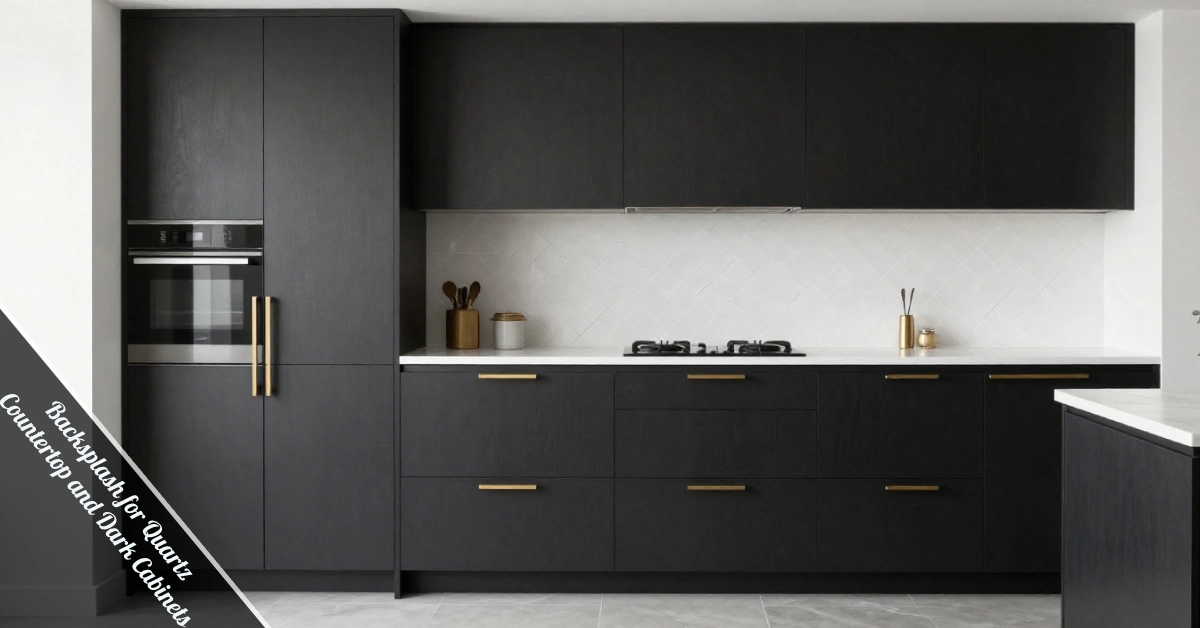
Dark cabinets hit different. They’re bold, rich, and they mean business — but they need the right partner to truly shine.
That’s where your backsplash comes in. It’s not just wall protection. It’s the piece that pulls your whole kitchen together like a great outfit with the right shoes.
Choosing the right backsplash for quartz countertop and dark cabinets is honestly one of the most important design decisions you’ll make in your kitchen remodel. Get it right, and every single glance at your kitchen feels like a win.
Why This Combination Is Actually a Cheat Code
Dark cabinets plus quartz countertops are one of those kitchen combos that just work — like coffee and a good book.
Quartz brings clean, polished brightness. Dark cabinetry brings depth and drama. Together, they set a naturally high-end tone that looks expensive without screaming “I tried too hard.”
The backsplash is the design flex that bridges both worlds. It creates visual flow, balances the contrast, and tells the room’s full story.
Here’s the thing, though — dark cabinets absorb light. Without a well-chosen backsplash, your kitchen can feel a bit cave-like. The right tile or slab flips that completely.
Understanding Your Quartz Before Picking Anything
Your quartz countertop is basically the lead character here. Everything else supports it.
Quartz comes in a wide range of finishes — from solid whites to dramatic veined slabs that mimic marble. The pattern and tone of your quartz should guide your backsplash direction before you even think about colors.
Bold veining in quartz? Keep the backsplash simple. Let the counter do the talking. A calm, minimal tile prevents visual chaos and keeps the space looking intentional.
Minimal or lightly patterned quartz? That’s your green light to add texture or pattern in the backsplash. Geometric tiles, herringbone layouts, or subtle 3D textures can step in and add the interest your quartz isn’t delivering.
Polished quartz reflects light beautifully. Pairing it with glossy backsplash tiles doubles that effect and makes smaller kitchens feel noticeably bigger.
Color Direction: Light, Neutral, or Go Dark?
This is where most homeowners freeze — and honestly, it’s simpler than you think.
Go light. White, soft gray, and cream backsplashes are the most popular choice for dark cabinets — and for good reason. They bounce light around the room, instantly creating a cleaner, brighter feel. Timeless, easy to pair, low-risk.
Stay neutral. Beige, warm gray, or “greige” tones offer balance without harsh contrast. They work especially well when your quartz has subtle warm or mixed undertones. It’s that effortless, pulled-together look.
Go bold and dark. Yep, dark-on-dark is a real move. Charcoal, deep navy, or matte black backsplashes paired with dark cabinets create a moody, luxury atmosphere that’s becoming increasingly popular in modern kitchens. The trick? You need good lighting. Without it, the space just closes in.
One golden rule designers swear by: match your undertones. If your quartz carries warm beige veins, pick tiles with warm hues. Cool gray veins call for cooler-toned tiles. Ignoring undertones is the fastest way to a kitchen that looks “off” without being able to explain why.
Best Backsplash Styles That Actually Work
Let’s break down the tile and material options that consistently perform well in this design combo.
Subway Tile — The Reliable Classic
Subway tile never loses. Its simple rectangular shape works with both traditional and modern dark cabinets.
White subway tile with dark grout against black or espresso cabinets? That’s a magazine-cover kitchen right there. You can also play the layout — stacked, herringbone, or offset — to shift the whole vibe from classic to contemporary.
Full-Height Quartz Slab — The Luxury Power Move
Using the same quartz from your countertop as the backsplash creates a seamless, uninterrupted surface. No grout lines. No visual breaks. Just clean, continuous elegance.
This is a high-end designer favorite because it makes small kitchens feel larger and keeps maintenance incredibly easy. It’s a bigger upfront investment, but the payoff in visual impact and long-term practicality is real.
Geometric & Textured Tiles — The Personality Play
Hexagons, chevrons, 3D tiles, handmade-style ceramics — these bring movement and character. They’re the choice when you want your backsplash to be a focal point without going all-out bold on color.
Keep the color palette controlled when using geometric patterns. Let the shape do the work, not the color.
Metallic and Glass Tiles — The Light Amplifier
Glass tiles reflect light, making them a smart move for kitchens that feel a little dark. Metallic accents — brass, copper, brushed gold — introduce subtle luxury that ties in beautifully with cabinet hardware.
Use metallic elements in moderation. A little goes a long way. Full metallic backsplashes can easily tip from “stylish” to “overwhelming.”
The Contrast vs. Harmony Decision
Here’s the core design choice you’ll keep coming back to with a backsplash for quartz countertop and dark cabinets.
High contrast means a light or bold backsplash against dark cabinets. It creates energy, adds brightness, and gives the backsplash its own moment. Works great in smaller kitchens or rooms with limited natural light.
Tone-on-tone harmony means coordinating similar shades across cabinets, counters, and backsplash. It feels sophisticated and intentional. Larger kitchens handle this approach better since they have enough space to prevent things from feeling closed in.
Neither is wrong. It just depends on your kitchen’s size, lighting situation, and what kind of mood you’re going for.
Quick Comparison: Your Top Backsplash Options
| Style | Best For | Vibe | Maintenance |
|---|---|---|---|
| White Subway Tile | Brightening dark kitchens | Timeless & clean | Easy |
| Quartz Slab | Seamless, modern look | Luxury & minimal | Very easy |
| Geometric Tile | Adding character & depth | Bold & dynamic | Medium |
| Soft Gray/Neutral Tile | Balanced, calm design | Modern & soft | Easy |
| Dark Moody Tile | High-drama interiors | Sophisticated | Medium |
| Glass/Metallic Tile | Maximizing light | Elevated & reflective | Easy |
Lighting: The Detail Most People Skip
Lighting changes everything. That backsplash you loved in the showroom? It might look completely different under your kitchen’s actual lighting.
Under-cabinet LED strips are the secret weapon here. They highlight backsplash texture, make glossy surfaces sparkle, and improve the overall brightness of your cooking zone. It’s one of the best bang-for-your-buck upgrades in any kitchen renovation.
Reflective surfaces — glass, polished tiles, glossy finishes — amplify whatever light exists in the room. Matte finishes absorb light for a softer, cozier feel. Know which direction your kitchen leans and choose accordingly.
Always test your backsplash sample at home, not in the store. Place it next to your actual cabinets and quartz under your real lighting — morning sun AND evening artificial light. What looks crisp at noon might look dull at 7 PM.
Don’t Skip Grout — It’s Making or Breaking Your Look
Grout is the detail everyone forgets until it’s too late.
Light grout makes tile patterns stand out clearly and creates a clean, airy look. Dark grout blends in, hides stains more effectively, and gives the backsplash a sleeker, more uniform appearance.
Here’s the practical advice: for busy kitchens where cooking happens daily, slightly darker grout is the smarter long-term choice. It stays looking clean without constant effort. Always seal your grout — it dramatically extends the lifespan of your backsplash.
Common Mistakes to Dodge
Overloading the space is the number one error. A busy quartz slab with equally busy patterned tiles is just visual noise. One of them needs to be the star — the other plays support.
Ignoring undertones is mistake number two. It’s the reason some kitchens look “almost right” but never fully click. This one detail makes the biggest difference.
Poor lighting decisions can undo even the most carefully chosen materials. Dark spaces need reflective surfaces and proper illumination to bring backslash choices to life.
Finally — skipping the sample test. Never commit without placing a real tile sample at home under your actual conditions for a few days. It’s the simplest way to avoid an expensive mistake.
How to Choose: A Simple 5-Step Framework
Still stuck? Here’s your no-overthinking process:
- Check your undertones — match quartz veining with your cabinet shade and tile warmth
- Decide your direction — do you want contrast (bright) or harmony (coordinated)?
- Test under real lighting — natural daylight and evening artificial light, both matter
- Think about upkeep — go for lower-grout or sealed surfaces in high-use kitchens
- Trust the gut check — the right backsplash makes you smile every time you see it
Wrapping It Up
The right backsplash for quartz countertop and dark cabinets isn’t just a design decision — it’s the element that makes your entire kitchen feel complete.
Whether you go bright and crisp with white subway tile, sleek and seamless with a matching quartz slab, or bold and moody with dark geometric tiles — the key is always balance. Balance between contrast and harmony. Between style and practicality. Between your quartz’s personality and your cabinets’ strength.
Take your time, test your samples, match your undertones, and add good lighting. Your kitchen isn’t just a room — it’s where life happens. Make it a space that feels yours genuinely.
Got a specific combo you’re working with? Drop it in the comments — happy to help you figure out which direction fits your space best.