

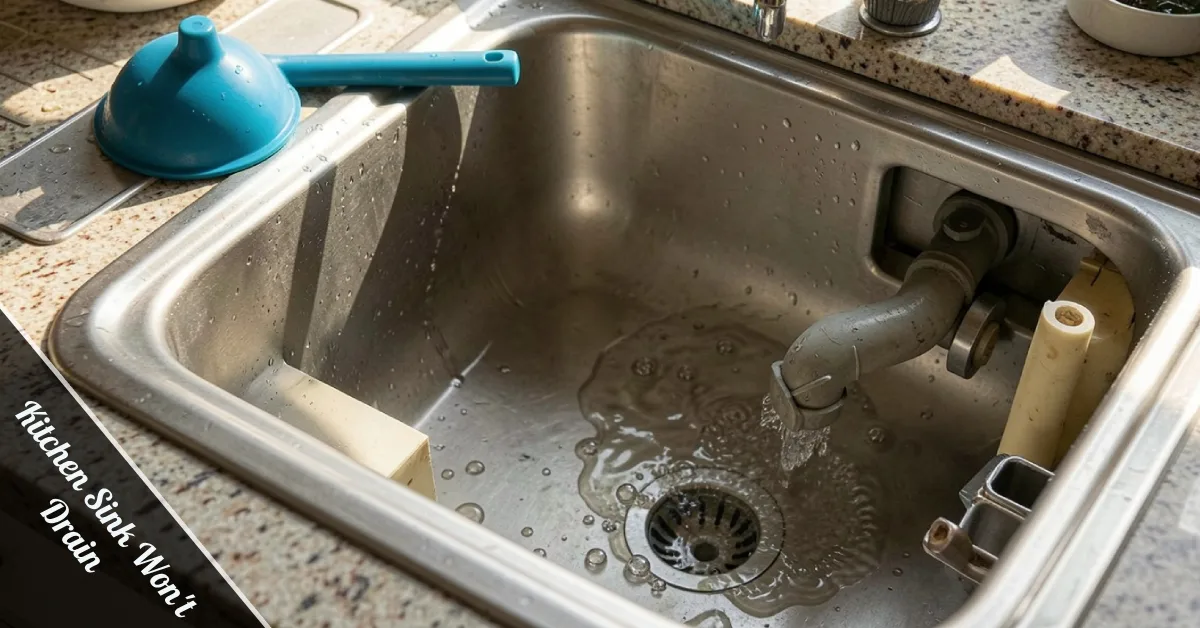
You’re mid-dishes, water’s pooling fast, and the drain’s doing absolutely nothing. A kitchen sink won’t drain for a handful of predictable reasons — and most of them? You can fix it today without calling anyone.
This guide walks you through every scenario: standing water, jammed disposal, gunked-up P-trap, and the deeper stuff you can’t see. Let’s get into it.
Why Your Kitchen Sink Stops Draining
The culprit is almost always buildup. Grease goes down warm and liquid, then cools and sticks to your pipe walls. Food scraps — rice, pasta, coffee grounds, eggshells — attach to that grease layer over time.
A slow drain that’s been ignored for weeks is just a full clog waiting to happen. The buildup narrows the pipe gradually until water barely moves at all.
Sometimes the issue isn’t grease — it’s a jammed garbage disposal, a blocked P-trap, or a venting problem that prevents proper airflow through the pipes. Each one mimics a clog but needs a different fix.
| Problem | Likely Cause | First Move |
|---|---|---|
| Standing water | Full or partial blockage | Scoop water out first |
| Slow drain | Grease or soap film buildup | Hot water + dish soap flush |
| Disposal hums, won’t spin | Jammed grinding plate | Use the reset button or Allen wrench |
| Double sink backs up | Shared drain line clog | Seal one side, plunge the other |
| Pipes look clear, but still won’t drain | Wall line or vent issue | Try a drain snake |
| Bad smell + slow drain | Dirty P-trap | Clean the P-trap |
Step One: Deal With Standing Water First
Before you try anything, get that water out of the basin. Any remedy you pour into a water-filled sink gets diluted immediately and never reaches the actual clog.
Use a cup or bowl to scoop most of it into a bucket. A sponge handles the last inch. Wear gloves if the water looks grimy.
Don’t pour baking soda, vinegar, or chemical cleaners into standing water. They won’t reach the clog effectively and make the situation messier and less safe to work with.
Check the Garbage Disposal Before Anything Else
If you have a disposal, check it early. A stuck disposal can completely stop drainage even when the drain pipe itself is fine.
Turn off the switch first — never put your hand inside. Look under the sink for the small reset button (usually red or black) at the base of the unit. Press it firmly, then briefly run the disposal with cold water.
If it hums but won’t grind, it’s jammed. Most disposals have a small center hole at the bottom where you insert an Allen wrench. Work it back and forth to free whatever’s stuck. Run cold water and try again. If it keeps tripping the reset or smells burned, stop — the motor needs a professional look.
Quick Fixes for Minor Clogs
If the disposal isn’t the issue, try these before pulling out tools. These work best on soft, greasy buildups near the drain opening.
Hot water flush: Very hot tap water (not boiling if you have PVC pipes) poured slowly down the drain can loosen greasy residue. Boiling water can soften plastic fittings, so skip it if you’re unsure about your pipe material.
Baking soda and vinegar: Pour baking soda into the drain first, followed by white vinegar, and cover the drain for five minutes. The fizz can break up light buildup. Flush with hot tap water afterward.
Dish soap flush: A generous pour of dish soap followed by hot water works surprisingly well on grease-based clogs. Dish soap is built to cut grease, so it’s a natural fit here.
These methods won’t work on a fully blocked sink or a packed P-trap — but for a sluggish drain, they’re worth trying before you get the tools out.
How to Plunge a Kitchen Sink Correctly
Plunging is often faster than any liquid remedy. The key is using the right plunger — a flat-bottomed cup plunger, not a toilet flange plunger. The flat shape seals properly over a flat sink drain.
Add two to three inches of water to the basin if it’s dry — just enough to cover the rubber cup. Place the plunger directly over the drain, press gently to push out trapped air, then pump with steady up-and-down strokes for 20 to 30 seconds. Keep the seal tight throughout.
Lift the plunger and check if water drains. If it does, run hot tap water for a minute to flush loose debris through the pipe.
Double Kitchen Sink Not Draining
A kitchen sink won’t drain differently when it’s a double basin setup. Both bowls usually share one drain line, so a clog in that shared section affects both sides.
Before plunging, seal the second drain with a wet rag or stopper — hold it firmly in place. Without that seal, all your plunging pressure just escapes into the other bowl instead of hitting the clog.
If one side has a disposal and that side is backing up, the disposal is likely jammed or blocked. If the non-disposal side backs up when the disposal runs, the shared pipe is the issue.
How to Clean the P-Trap
The P-trap is the curved pipe directly under your sink. It holds a small water seal to block sewer gases, but its shape also catches food, grease, and small objects that cause blockages.
Place a bucket under the trap before loosening anything — it will spill. Most plastic slip nuts loosen by hand. If they’re tight, use pliers with a cloth to avoid scratching the fitting.
Remove the curved section, empty it into the bucket, and clean the inside with a brush or paper towel. Check for small objects — bottle caps, twist ties, bits of plastic. Reinstall carefully, checking that washers are seated properly. Hand-tighten first, then snug with pliers. Don’t overtighten plastic fittings. Run water and check for leaks.
Kitchen Sink Won’t Drain, but Pipes Are Clear
This is the frustrating scenario. You’ve checked everything visible, and it all looks fine. When a kitchen sink won’t drain, and the P-trap is clean, the blockage is usually farther down — inside the wall drain line.
Grease and food residue accumulate inside wall pipes over time, especially in kitchens with high cooking activity. The buildup is gradual, invisible, and doesn’t show up until it’s significant.
A venting problem can also cause this. Plumbing vents allow air into the system so water flows smoothly. A blocked vent creates negative pressure — the sink gurgles, drains slowly, or acts clogged with no visible reason.
If multiple drains in your home are slow at the same time (laundry, bathroom, shower), the issue may be in the main drain line rather than the kitchen specifically.
A hand-crank drain snake fed into the wall pipe after removing the P-trap is your next move. Work it slowly. If it doesn’t advance freely, don’t force it — older pipes can be damaged by aggressive snaking.
What Not to Do When the Sink Won’t Clear
A few common moves make the problem worse. Avoid them.
Don’t mix chemical drain cleaners. Different products can create harmful fumes or chemical reactions when combined. If one product didn’t work, don’t follow it with another — flush the drain with water first, then try a different method entirely.
Don’t keep running the garbage disposal when water isn’t draining. The disposal needs a water flow to move waste through the pipe. Running it into standing water packs debris tighter and stresses the motor.
Don’t use boiling water repeatedly on PVC pipes. Occasional hot water is fine for most homes. Consistent boiling water can warp plastic fittings over time.
How to Keep It from Happening Again
Once your drain is clear, a few simple habits prevent repeat visits from this problem.
Never pour grease, oil, or fat down the drain — even with hot water chasing it. Let it cool, scrape it into a container, and trash it. Use a sink strainer to catch food scraps before they enter the pipe.
Run cold water while using the disposal and keep it running for a few seconds after grinding stops. This moves fine particles through the drain cleanly.
Once a week, pour a little dish soap and hot tap water down the drain. That’s it. Keeps grease from building up and prevents slow kitchen sink drain problems before they start.
When to Call a Plumber
Some clogs are beyond DIY territory. Call a professional if the clog keeps returning after clearing, if water backs up into both basins at once, if other drains in the home are simultaneously slow, or if bad smells continue after a thorough P-trap cleaning.
If a drain snake doesn’t move freely or the line won’t clear after snaking, a plumber with a powered auger or camera inspection will find the exact blockage location without guesswork. Repeated DIY attempts on a stubborn deep clog can damage older pipes — knowing when to stop is part of fixing it right.
FAQs
Why is my kitchen sink not draining but not clogged?
Grease buildup, a venting issue, or a blockage inside the wall pipe can slow or stop drainage with no visible clog in the accessible pipes.
Can I pour boiling water down the sink?
Use caution. Boiling water can soften PVC fittings with repeated use. Hot tap water is safer for most homes.
Why does my double kitchen sink back up on both sides?
Both basins share a drain line. When both sides back up, the clog is usually in the shared section after the two drains connect.
When does a kitchen sink need a plumber?
When the P-trap is clean, a snake doesn’t clear it, the problem keeps returning, or multiple fixtures in the home are draining slowly.