

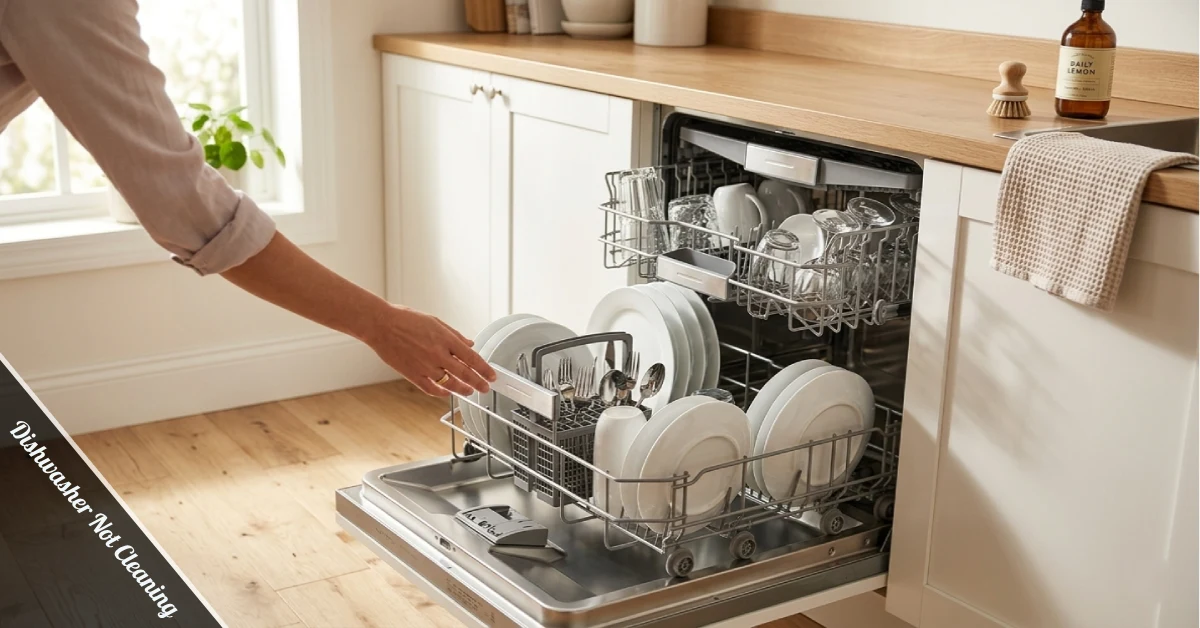
Many homeowners face the problem of a dishwasher not cleaning well. These appliances are very convenient but need regular care to work right.
Finding out why your dishwasher isn’t cleaning is the first step to fix it. Usually, it’s a small problem or a blockage that needs fixing.
Fixing these small issues early can save you a lot of time and money. By acting fast, you avoid costly repairs. This guide will help you get your dishwasher working like new again.
Understanding Why Your Dishwasher Isn’t Cleaning Properly
Fixing a dishwasher troubleshooting issue starts with knowing how it works. If it can’t clean food or grease, something inside needs fixing. Spotting the problem early helps figure out if it’s a simple mistake or a bigger issue.
The Role of Regular Maintenance
Regular care is key to keeping appliances running well. A good dishwasher maintenance guide says to clean filters and check spray arms monthly. This stops debris from building up and causing cleaning problems.
Keeping the pump and heating elements clean also helps. If you ignore this, dirt and food waste can harm the motor. This makes the dishwasher work harder, leading to bad wash cycles and more energy use.
Many homeowners who prioritise kitchen upkeep are also reconsidering their overall kitchen layout. If that sounds like you, it’s worth reading about the closed kitchen trend comeback and how it’s changing the way people think about their cooking spaces.
Common Signs of Poor Cleaning Performance
Spotting early signs of trouble helps fix issues fast. Look for cloudy glassware, gritty plates, or a bad smell after washing. These signs mean the water flow or detergent spread is off.
The table below shows common problems and what might cause them:
| Symptom | Potential Cause | Recommended Action |
|---|---|---|
| Cloudy Glassware | Hard water buildup | Use rinse aid or descaler |
| Food Residue | Clogged filter | Remove and clean filter |
| Water Pooling | Blocked drain hose | Check for kinks or clogs |
| Spots on Dishes | Low water temperature | Run hot water at sink first |
Inspecting and Cleaning the Filter System
Many homeowners forget about the filter system, but it’s key to a dishwasher’s cleaning. Food particles in this area can get back onto your dishes. Regularly cleaning the dishwasher filter keeps your appliance working well.
Locating the Filter in Popular Models
Most dishwashers have a filter at the bottom, near the spray arm. Brands like Bosch, Whirlpool, and KitchenAid make it easy to access. You don’t need special tools.
To find it, pull out the bottom rack. Look for a circular plastic housing. Some have a twist-lock, others a small tab. Once you find it, you’re ready to clean.
Step-by-Step Filter Removal and Cleaning
Twist the filter assembly counter-clockwise to remove it. Lift it out carefully to avoid debris falling back. If it’s dirty, it’s time to clean the filter parts well.
Use a soft-bristled brush and warm soapy water to clean the mesh screen. Don’t use metal scrubbers, as they can damage the mesh. Rinse it well and put it back in place.
Preventing Debris Buildup
To keep the filter clean, don’t let too much food in. Scrape off big pieces before washing. This stops grease and solids from clogging the mesh.
Check the filter monthly to avoid problems. If cleaning isn’t as good, check the filter. Regular care keeps your dishwasher running well and your dishes clean.
Checking Spray Arms for Blockages
If your dishes are dirty, the problem might be in the spray arms. These parts spread water in the machine. Clogged spray arms make cleaning less effective.
When water can’t flow well, the dishwasher can’t clean all parts. Checking them often keeps your dishes clean.
Identifying Clogged Spray Arm Nozzles
Debris often blocks the dishwasher spray arm nozzles. Things like fruit seeds and hard water deposits get stuck. Look for dark or blocked holes in the arms. If you see this, clean them by hand.
Removing and Flushing Spray Arms
Most dishwashers let you take out the spray arms easily. Just unscrew a nut or clip. Then, rinse them in the sink. Use a toothpick or wire to clear debris from the nozzles. Then, rinse with warm water to get rid of all particles.
Testing Spray Arm Rotation
Make sure the arms move well after putting them back. Tall items can stop them from spinning. Try spinning each arm by hand. If it’s hard to move, adjust your dishes. This lets the spray arms work correctly.
Evaluating Water Temperature and Pressure
If your dishes are greasy or dull, it might not be the dishwasher’s fault. Water temperature and pressure play a big role in cleaning dishes. If these are off, food residue can stick around.
The Importance of Hot Water for Grease Removal
Most dishwashers need water at least 120 degrees Fahrenheit to work right. Hot water is key for dissolving detergent and breaking down grease. Cold water can leave a residue on your dishes.
Keeping the right water temperature helps the dishwasher work efficiently. It also prevents water spots on your dishes.
Testing Your Home Water Temperature
Use a kitchen thermometer to check your water. Run hot water for a minute, then fill a glass. Stick the thermometer in to see the temperature.
If it’s under 120 degrees, adjust your water heater. Safety first, so keep it below 125 degrees. If it’s still too low, call a plumber.
Troubleshooting Low Water Pressure Issues
Good water flow is as important as heat. Low pressure can stop the spray arms from working. This often comes from shut-off valves or clogged screens.
| Factor | Ideal Condition | Common Issue |
|---|---|---|
| Water Temp | 120°F – 125°F | Grease buildup |
| Water Pressure | 20 – 120 PSI | Poor spray coverage |
| Flow Rate | 2 Gallons/Min | Incomplete cycles |
Make sure the water supply valve is fully open. If pressure is still low, clean the inlet valve screen. Fixing these issues will improve your dishwasher’s cleaning power.
Improving Detergent Usage and Rinse Aid
Getting dishes clean is more than just a working machine. It’s about the right chemistry inside. Choosing the right cleaning agents breaks down grease and food well.
Choosing the Right Detergent for Your Water Hardness
Water hardness affects how soap works. Hard water can leave a cloudy film. Using a high-quality detergent for your water type helps. Modern detergents have enzymes for different food soils. If your water is very hard, add a water softener. This keeps the detergent working well.
| Detergent Type | Best For | Key Advantage |
|---|---|---|
| Powder | Flexible dosing | Cost-effective |
| Liquid | Pre-treating | Dissolves quickly |
| Tablets/Pods | Convenience | Pre-measured |
The Role of Rinse Aid in Spot Prevention
Rinse aid lowers the water surface tension. This stops mineral deposits when water evaporates. It prevents spots and streaks. This is especially good for plastic items. It helps them dry faster. Using a quality rinse aid keeps your dishes looking new.
Avoiding Common Detergent Mistakes
Using too much soap is a big mistake. It can cause buildup. Always use the right amount for your load size. Choosing the wrong detergent for your dishwasher is another mistake. Some machines need tablets, others liquids or powders. Knowing this helps you get clean dishes every time.
Loading Techniques for Maximum Efficiency
Getting your dishwasher loaded correctly is often overlooked. If you don’t load it well, even the best dishwasher can’t clean everything properly. With the right approach, you make sure every item gets clean.
Proper Dish Placement for Water Circulation
Put all dishes facing the centre. This lets the water jets hit them straight on. Tilted dishes also help, stopping water from pooling and causing spots.
Avoiding Overcrowding the Racks
Don’t pack the racks too full. If you do, water can’t get around. Leave enough space for water to flow, making both washing and drying better.
Positioning Cutlery and Tall Items
Put cutlery in the basket with handles alternating up and down. This stops them from getting stuck together. Tall items go on the sides or back of the bottom rack. This lets the spray arms move freely.
| Item Type | Placement Strategy | Key Benefit |
|---|---|---|
| Plates | Face the centre | Direct spray access |
| Cutlery | Mixed orientation | Prevents nesting |
| Tall Items | Outer edges | Clear rotation path |
By following these tips, your dishwasher will work better. Good loading habits save time and produce cleaner results.
Speaking of kitchen organisation, if you’re also thinking about adding more storage to your space, learning how to hang wall cabinets correctly can help you make the most of your kitchen walls and keep everything within easy reach.
Troubleshooting Mechanical and Electrical Components
When simple fixes don’t work, it’s time to look deeper. Dishwasher troubleshooting might mean checking the machine’s core parts. If your dishes still look dirty, it’s time to inspect the electrical and mechanical components. You’ll need a multimeter and should make sure the dishwasher is off before you start.
Testing the Water Inlet Valve
The dishwasher inlet valve controls water flow. If it doesn’t open, the dishwasher won’t get enough water. Listen for a humming sound during the fill phase. This might mean a blockage or solenoid failure.
To check the valve, make sure the water line is clear and the screen is clean. If the valve gets power but doesn’t let water through, it needs to be replaced. Always turn off the water supply before checking or replacing this part.
Inspecting the Circulation Pump
The circulation pump pushes water through the spray arms. If the motor fails or the impeller gets clogged, cleaning won’t work well. Start by checking for blockages that stop the impeller from spinning.
If the pump makes a grinding noise or doesn’t work, the motor might be damaged. Look for leaks in the pump housing. Moisture can cause electrical problems. If the motor is silent but gets power, the pump needs to be replaced.
Checking the Heating Element for Continuity
A working heating element is key to clean and dry dishes. If the water doesn’t get hot enough, the dishes won’t be clean. Use a multimeter to check the element for continuity.
Turn off the power and remove the wires to get a reading. A good element shows low resistance, usually 10 to 30 ohms. If it shows infinite resistance, it’s broken and needs to be replaced.
| Component | Common Symptom | Diagnostic Tool |
|---|---|---|
| Inlet Valve | No water fill | Multimeter |
| Circulation Pump | Low water pressure | Visual Inspection |
| Heating Element | Cold water/Wet dishes | Multimeter |
Addressing Hard Water and Mineral Buildup
Mineral buildup is a big problem in many American homes. It causes hard water stains that make glassware cloudy. These minerals can also damage your dishwasher over time.
Identifying Limescale Deposits
Limescale looks like a white, chalky film inside your dishwasher or on dishes. If your glasses are foggy after washing, it’s a sign of mineral buildup. Check the heating element and tub walls for limescale.
Using Vinegar and Citric Acid for Deep Cleaning
Simple cleaning methods can help remove mineral deposits. Run a hot cycle with a bowl of white vinegar on the top rack. Or, use food-grade citric acid in an empty cycle to clean and sanitize.
Installing a Water Softener System
If you live in an area with very hard water, consider a water softener. It removes minerals before they reach your appliances. This keeps your dishwasher working well and your dishes clean.
| Cleaning Method | Primary Benefit | Frequency |
|---|---|---|
| White Vinegar | Dissolves light scale | Monthly |
| Citric Acid | Deep cleans heavy buildup | Quarterly |
| Water Softener | Prevents future deposits | Continuous |
While you’re refreshing your kitchen environment, it’s also worth considering updates to your window treatments. Options like top-down Roman shades give you control over natural light and privacy, which can make a real difference in how your kitchen feels day to day.
When to Call a Professional Technician
Knowing when to stop DIY repairs is key for your appliance’s health. Basic cleaning and maintenance are usually fine at home. But some problems need special tools and skills.
Recognizing Complex Electrical Failures
Modern dishwashers use advanced control boards. If it won’t turn on or shows error codes, the issue is complex. These kinds of failures need a professional to fix safely.
Signs of Irreparable Pump Damage
The pump is crucial for your dishwasher. Loud noises or water not draining mean trouble. A professional can check if it’s truly damaged and whether repair or replacement is the right call.
Warranty Considerations and Service Calls
Check your warranty before big repairs. Many warranties are void if an unqualified person works on the appliance. Professional repair keeps your warranty valid.
| Issue Type | DIY Potential | Professional Required |
|---|---|---|
| Clogged Filter | High | Low |
| Control Board Error | Low | High |
| Pump Failure | Low | High |
When you call for service, have your model and serial numbers ready. This helps the technician bring the right parts. This keeps your appliance working well for years to come.
Conclusion
A reliable appliance is key to a well-run home. Learning to maintain your dishwasher keeps your kitchen working smoothly.
Regular care makes a big difference. This guide helps you avoid problems that lead to poor cleaning. Simple steps like clearing debris and checking water flow can make a real difference.
Brands like Bosch, Whirlpool, and KitchenAid work best when you take care of them. You have the ability to keep your dishwasher in top shape. This means your dishes will always come out clean and spot-free.
Start taking care of your appliance today. A well-kept machine saves you time, energy, and money. By following these simple steps, you’ll enjoy a hassle-free experience every time you use it.
FAQs
Why is a dishwasher leaving a gritty residue on plates and glassware?
A clogged filter assembly or blocked spray arm nozzles can cause this. Food particles not caught by the mesh screen recirculate and settle on dishes. Check the bottom of your Whirlpool or KitchenAid for debris and ensure spray arms move freely.
How often should the dishwasher filter be cleaned for good performance?
Clean the filter once a month for most Bosch or Samsung models. Daily use or dishes that aren’t pre-rinsed may need weekly checks. A soft brush and warm, soapy water can prevent buildup.
What is the ideal water temperature for a dishwasher to remove grease effectively?
Water should be at least 120 degrees Fahrenheit for detergent enzymes to work. Cold water can prevent detergent from dissolving properly. Use a thermometer to check the water at your sink.
Can hard water affect the cleaning results in a GE Appliances dishwasher?
Yes, hard water can leave cloudy spots or a white film. Use a dishwasher cleaner for limescale removal. A whole-house water softener or a dishwasher with a built-in softener is also effective.
Why is it important to use rinse aid in addition to standard detergent?
Rinse aid reduces water surface tension. This prevents water spots and streaks. Modern LG and Maytag dishwashers have rinse aid dispensers that support more energy-efficient drying.
How does overcrowding the racks affect the cleaning cycle?
Overcrowding blocks water from reaching all surfaces. This prevents high-pressure water from removing food. Make sure there’s enough space for proper water circulation.
What are the signs that a water inlet valve is failing?
If water doesn’t fill or takes too long, the water inlet valve might be faulty. A technician can check for electrical issues or sediment buildup.
Is it safe to use vinegar to clean the interior of a dishwasher?
Vinegar can remove odors and mineral buildup. However, it can harm rubber gaskets in some Frigidaire or Kenmore models. Citric acid crystals are a safer option for deeper cleaning.
When should a homeowner call a professional technician for repairs?
DIY tasks are fine for basic maintenance, but complex issues need a professional. If the dishwasher trips the breaker or shows an error code, call a certified technician. Check the manufacturer’s warranty before attempting any repairs.