

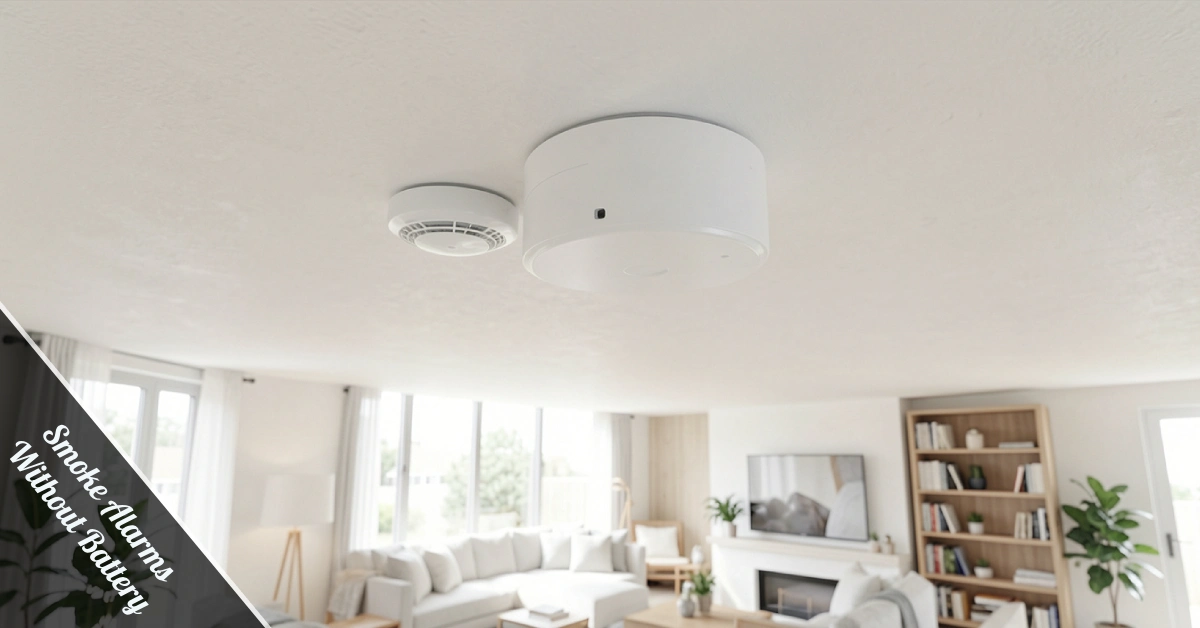
Nobody enjoys being jolted awake at 3 a.m. by a chirping smoke alarm crying out for a new battery. It’s annoying, it’s avoidable, and honestly — it’s a safety risk if you just yank the battery out and go back to sleep. That’s exactly why more homeowners, renters, and landlords are switching to smoke alarms without battery hassle. Think of it as upgrading from a flip phone to a smartphone — same core function, way smarter execution.
This guide breaks down everything you need to know: how these systems work, which type fits your home, and why making the switch is one of the easiest wins for your family’s safety.
What “Smoke Alarms Without Battery” Actually Means
Here’s the thing — the phrase is a little misleading. It doesn’t always mean zero battery involved. What it really means is no regular battery replacement ever again. That’s the real win most people are chasing.
There are two main setups worth knowing. First, you’ve got hardwired smoke alarms — these plug directly into your home’s electrical wiring and pull power continuously. Second, there are sealed 10-year lithium battery units — no wiring needed, but the battery is locked inside and lasts the entire life of the device.
Both options solve the same problem. You stop worrying about dead batteries, forgotten replacements, and that dreaded low-battery chirp. Most hardwired models still carry a sealed backup battery inside — not for regular swapping, just for emergencies like power cuts.
True battery-free systems do exist, usually in commercial buildings or professionally installed home security setups with a central power panel. For the average home, though, hardwired or sealed-battery units are your practical sweet spot.
How Hardwired Smoke Detectors Work
Hardwired smoke alarms tap directly into your home’s electrical system. They get a constant flow of power, which makes them inherently more reliable than units depending solely on replaceable batteries.
The real magic in modern hardwired setups is interconnectivity. When one alarm detects smoke, every alarm in the house goes off simultaneously. If a fire starts in the basement while you’re sleeping upstairs, you’ll hear it — no guessing, no delay. According to the NFPA, interconnected alarms significantly improve escape time in a home fire.
Most hardwired units come with a sealed backup battery built in. This isn’t the kind you swap out every year — it’s there purely to keep the alarm running during a power outage. So even if the electricity goes down during an emergency, you’re still covered.
Installation requires a licensed electrician in most cases, especially in older homes without existing alarm wiring. New constructions and recent renovations are typically already set up for hardwired systems, making installation much simpler.
The 10-Year Sealed Battery Option — Perfect for Renters
Can’t wire your apartment? No problem. Sealed 10-year lithium battery smoke detectors are your cheat code. These units look just like regular smoke alarms but have a tamper-proof battery locked inside that lasts a full decade.
Once you mount one on the ceiling, you’re done. No annual battery swaps. No chirping surprises. When the 10-year lifespan ends, you replace the entire unit — battery and detector together — and start fresh. It’s the closest thing to genuine maintenance-free fire alarms you’ll find without touching any wiring.
These are especially popular in rental properties. Landlords love them because they reduce tenant complaints and satisfy smoke alarm compliance regulations without requiring professional installation every time a unit turns over.
The sealed design also eliminates a sneaky safety risk — tenants (or kids) removing the battery to silence a false alarm and never putting it back. With a sealed unit, that option simply doesn’t exist.
Quick Comparison: Which Type Fits Your Situation?
| Type | Power Source | Battery Replacement | Works in Power Outage | Best For |
|---|---|---|---|---|
| Standard Battery-Powered | Replaceable batteries | Every 1–2 years | Yes | Basic, budget setups |
| Sealed 10-Year Battery | Sealed lithium (internal) | Never (replace unit at 10 yrs) | Yes | Renters, apartments |
| Hardwired Only | Home electrical | N/A | No | Rarely recommended alone |
| Hardwired + Sealed Backup | Wired + sealed battery | Never | Yes | Best overall for homeowners |
| Security System Integrated | Central system panel | Never (centralized backup) | Yes | Large homes, advanced setups |
Benefits That Make the Switch Worth It
Switching to smoke alarms without battery maintenance isn’t just about convenience. It’s a genuine safety upgrade with real long-term advantages.
Reliability goes up. The number one cause of smoke alarm failure is a missing or dead battery. Remove that variable entirely, and your alarm is simply more dependable. The U.S. Fire Administration reports that nearly three in five home fire deaths involve properties with no working smoke alarms.
Maintenance drops to almost zero. Hardwired and sealed-battery units need nothing from you except an occasional dust-off and a monthly test press of the test button. That’s it. Compare that to chasing down the right 9V battery every year.
Peace of mind is real. You stop second-guessing whether the alarm will actually work when it needs to. That mental load disappears — and honestly, that’s worth a lot.
Smart features are becoming standard, too. Many modern maintenance-free fire alarms now include voice alerts, carbon monoxide detection, and even Wi-Fi connectivity for mobile notifications. Your phone can ping you if smoke is detected while you’re at work.
Why Your Smoke Detector Beeps Even With “No Battery”
This one trips people up all the time. You remove what you think is the only battery, but the chirping continues. What’s going on?
Most hardwired units have a secondary sealed backup battery you can’t easily access or see. When that internal battery starts dying, it triggers a low-power chirp — even though the alarm is still pulling power from the wall. The fix isn’t removing anything. The fix is replacing the whole unit if it’s older than 10 years, or checking the manufacturer’s instructions for that specific model.
Chirping can also signal that the detector has hit its expiration date. Smoke alarm sensors degrade over time. Most units are rated for about 10 years, after which the sensor itself becomes unreliable. If yours is past that window, it’s simply telling you it’s done — and you should listen.
Dust buildup is another culprit. A quick vacuum of the alarm’s vents can stop nuisance chirping that isn’t battery-related. If the beeping continues after cleaning, replacement is the safest call.
Installation Tips for Different Home Types
Getting the right setup depends a lot on where you live and what you’re working with structurally.
New homes and renovations are the easiest case. Hardwired interconnected systems are typically required by building codes in new construction across most of the U.S. and the UK. Your electrician handles the wiring, and you benefit from a fully integrated system from day one.
Older homes can be trickier. Running new wiring through finished walls gets expensive fast. In this case, sealed 10-year battery-free smoke detectors are your practical alternative — no wiring, no contractor, just mount and done. You can even get wireless interconnected versions that communicate via radio frequency, so they still trigger each other without any wiring at all.
Apartments and rentals almost always call for the sealed lithium option. Check your local tenancy laws — many regions now legally require landlords to provide working smoke alarms, and NFPA 72 outlines the standards for alarm placement and maintenance across residential properties.
Place alarms on every level of your home, inside each bedroom, and outside sleeping areas. Don’t mount them directly next to kitchens or bathrooms — steam and cooking fumes trigger false alarms, which lead people to remove batteries. With sealed units, that temptation is gone, but placement still matters for accuracy.
The Bottom Line
Smoke alarms without battery drama are no longer a luxury — they’re the practical, modern standard. Whether you go hardwired with a sealed backup or choose a standalone 10-year sealed unit, you’re picking reliability over the annual battery-swap lottery.
For homeowners doing a renovation, hardwired interconnected systems are the clear top pick. For renters or anyone in an older property, a sealed 10-year unit gets you the same low-maintenance protection without touching a single wire. Either way, you get a system that actually works when it matters most — not one that’s been quietly dead since someone yanked the battery out six months ago.
Your home deserves better than a $2 battery standing between your family and an early warning. Make the upgrade, set it, and genuinely forget it.
FAQs
Do smoke alarms without batteries really exist?
Not completely. Most options use a sealed internal battery or hardwired power — what they eliminate is the need for regular battery replacement, not batteries entirely.
Will a hardwired smoke detector work without a battery?
Yes, while electricity is active. But during a power outage, it needs a backup battery to function. That’s why hardwired units with sealed backups are the recommended standard.
Why is my smoke detector beeping with no battery installed?
It likely has a sealed internal backup battery that’s dying, or the unit itself has reached end-of-life. Dust buildup can also cause chirping. If it’s older than 10 years, replace it.
Are 10-year sealed battery detectors reliable?
Yes — they’re designed for exactly this. Consistent power delivery throughout their lifespan and no risk of improper battery installation make them one of the most dependable options available.
What’s the best smoke alarm for a rental apartment?
A sealed 10-year lithium battery smoke detector is your best bet. Easy to install, zero maintenance, and tamper-resistant — ideal for any rental situation.