

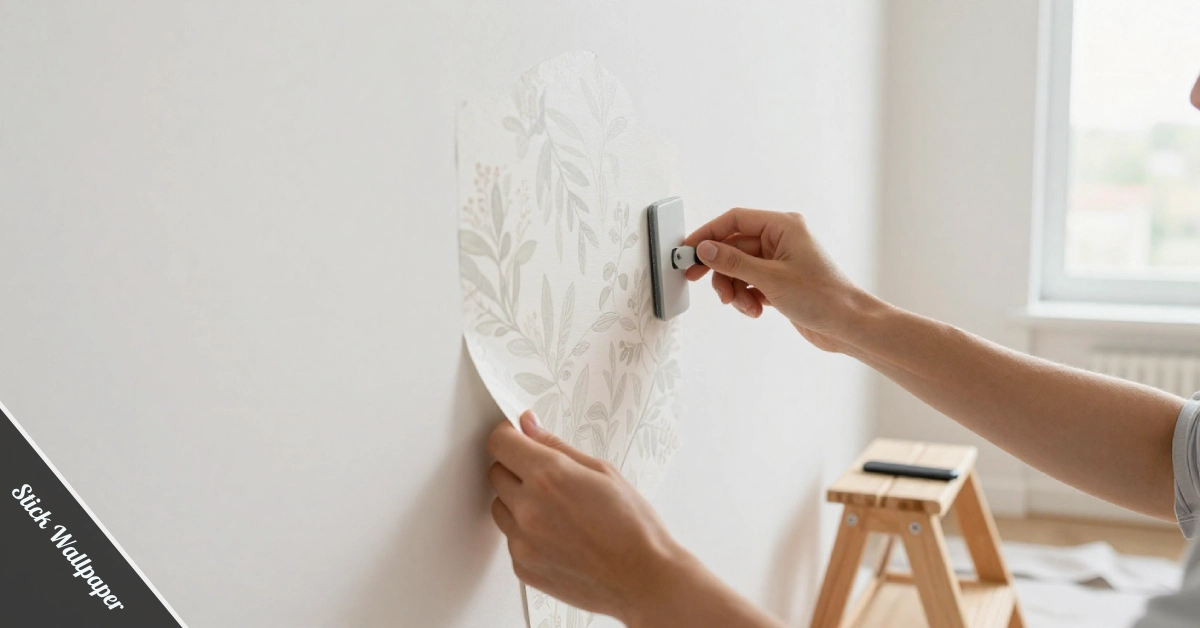
Peel and stick wallpaper is a pressure-sensitive vinyl material that sticks directly to your wall without paste or water. It’s a practical option for renters, beginners, and anyone who wants to refresh a room without permanent changes. To get the best results, prep your wall thoroughly, apply strips in small sections using a smoother tool, and remove slowly with low heat when you’re ready for a change.
The key to success is in the details. Choose the right thickness for your wall type, match your pattern repeat before cutting, and avoid high-moisture areas like shower stalls. With proper prep and a little patience, removable wallpaper can last several years and come off cleanly without damaging your paint.
Most people don’t plan to stay in their first apartment forever. But that doesn’t mean you have to stare at beige walls the whole time you’re there. Peel and stick wallpaper has made it possible to add real personality to a space without losing your security deposit.
It’s not just for renters, though. Homeowners use it too, because it’s fast, forgiving, and doesn’t require professional help. That said, there’s a right way and a wrong way to use it. This guide walks you through the full process, from picking a quality product to removing it cleanly when you’re ready for something new.
What Peel and Stick Wallpaper Actually Is
Stick on wallpaper is a vinyl sheet with a pressure-sensitive adhesive on the back. You peel off the backing paper and press it to the wall. No paste, no trays, no mess.
The most common type is vinyl, which is durable and easy to wipe down. Some brands offer fabric-based options, which feel softer and are better for walls with very slight texture. Eco-friendly versions made from recycled or water-based materials are also becoming more available, usually at a slight price premium.
Standard rolls average between $25 and $60 per roll, depending on thickness and brand. A typical accent wall might need three to five rolls. Budget-conscious shoppers can find decent quality options at home improvement stores, while specialty brands online tend to offer more design variety.
How to Choose the Right Removable Wallpaper
Pattern and color will grab your attention first. But the material and adhesive quality matter just as much, especially if you want it to last.
Look for mid-weight vinyl. Thin vinyl shows every bump and imperfection in your wall. It also tears more easily during installation. Thicker options cost a little more but are much easier to work with, especially for beginners.
Check the adhesive strength before you commit. Order a sample, stick it to a piece of cardboard, leave it for 24 hours, then peel it off. If the adhesive stretches or leaves a sticky mess behind, that’s a preview of removal day.
Pay attention to the pattern repeat. This is the measurement that tells you how often the design repeats vertically. Large-scale designs can have repeats of 12 inches or more, which means extra waste when trimming to match seams. Always order at least one extra roll to account for this.
Room type matters too. For a bedroom, subtle textures or soft prints work well. For a kitchen or dining area, stick to areas away from direct heat or steam. Removable wallpaper is not ideal directly behind a stove or inside a shower enclosure, where moisture and grease will break down the adhesive faster.
Surfaces That Work and Surfaces That Don’t
Peel and stick wallpaper sticks best to smooth, clean, properly painted walls. Matte and eggshell paint finishes are your best bet. Glossy or satin finishes may not give the adhesive enough grip, and you could see edges lifting within weeks.
Textured walls are trickier. Light orange-peel texture may work if your wallpaper is thick, but heavy knockdown or skip-trowel textures will cause air pockets and prevent full adhesion. If you’re set on using removable wallpaper over a textured wall, test a patch in a hidden corner first and check it after a few days.
Fresh paint is another common mistake. New paint takes at least four weeks to fully cure. Applying wallpaper before that window can pull the paint off when you remove it later.
In humid climates, edges can begin lifting sooner, even on well-prepped walls. If you live somewhere with high year-round humidity, focus your wallpaper use on interior walls away from windows and exterior-facing surfaces.
Preparing Your Wall the Right Way
Wall prep is where most people cut corners, and it’s almost always where problems start. A dirty or uneven wall is the fastest way to end up with peeling edges and wasted rolls.
Wipe the wall down with a damp cloth and let it dry completely. If there are small holes or cracks, fill them with spackle, let it dry, and sand smooth. Dust and grease both prevent the adhesive from bonding properly.
If you’re applying over existing wallpaper, only do it if the old layer is flat, paper-based, and fully adhered. Vinyl or textured old wallpaper should be removed first. Layering over damaged or peeling paper traps moisture and can lead to adhesive failure or mold behind the new layer. The extra hour it takes to remove the old paper is worth it.
For extra adhesion, especially in rooms with temperature swings, a thin coat of wallpaper primer gives the adhesive something reliable to bond to.
How to Apply Peel and Stick Wallpaper Without Frustration
The first time I applied wallpaper like this, I skipped the level and paid for it with a very slightly crooked kitchen wall. Don’t skip the level.
Use a level to draw a light vertical pencil line where your first strip will go. This is your guide. Measure from a corner, mark the width of one roll minus a half inch, and draw your line there.
Cut your strips to wall height, adding about two inches extra at the top and bottom for trimming. Peel back the top 12 inches of backing, align the strip with your guide line, and press lightly from the top down. Use a plastic smoother tool to press from the center outward as you go, pushing air toward the edges.
Peel the backing in small sections as you move down the wall. Don’t peel the whole thing at once. It will stick to itself and become nearly impossible to salvage.
Match the pattern on your second strip before pressing it down. A slight overlap at the seam helps hide the join. Trim around outlets with a sharp craft knife and a straight edge. Dull blades tear rather than cut, so swap them out often.
The total cost to apply wallpaper yourself, including tools like a smoother, craft knife, and level, usually runs between $15 and $30 beyond the wallpaper itself. That’s a significant saving compared to hiring someone.
Wallpaper Removal Tips That Protect Your Paint
When it’s time to remove the wallpaper, slow and steady is the only approach that works. Start at a top corner and pull the strip downward at roughly a 45-degree angle. Pulling straight out from the wall increases the chance of taking paint with it.
If a section resists, use a hair dryer on medium heat. Hold it a few inches from the wall and warm the area for about 10 to 15 seconds before peeling. Heat softens the adhesive and lets it release without fighting you.
Work in small sections. Trying to pull an entire strip at once puts more pressure on the wall surface below. If you feel the paint starting to lift, stop, apply more heat, and try again more slowly.
Any adhesive residue left behind usually comes off with warm water and a few drops of mild dish soap on a cloth. Let it sit for a minute before wiping. Avoid scrubbing hard or using abrasive pads on drywall.
If paint does come off in a small spot, patch it with spackle, sand smooth, prime, and touch up with matching paint. In most cases, proper prep before installation makes this step unnecessary.
A Few Mistakes Worth Avoiding
Not ordering enough material is one of the most common issues. Always order one extra roll, especially with large pattern repeats. Matching seams can eat up more material than you expect.
Skipping the sample step is another. What looks great on a screen can feel completely different in your room’s actual lighting. Order a small sample before committing to five or six rolls.
Installing in a cold room can also cause problems. Below 60 degrees Fahrenheit, the adhesive may not activate properly. Work in a room-temperature space and give the wallpaper a few hours to adjust before you start.
FAQs
What surfaces can I apply peel and stick wallpaper to?
Smooth, clean, painted walls work best. Matte and eggshell finishes hold the adhesive well. Avoid heavily textured walls, freshly painted surfaces under four weeks old, and high-moisture areas like shower surrounds.
Is peel and stick wallpaper durable enough for high-traffic areas?
It holds up well in low to medium-traffic areas like bedrooms and home offices. Hallways, entryways, or kids’ rooms with a lot of contact may see edges lift sooner, especially near baseboards and corners.
How do I fix bubbles or misalignment during application?
For bubbles, poke gently with a pin and smooth outward with your thumb. For misalignment, lift the strip carefully from the bottom up while it’s still fresh. Most adhesives allow repositioning within the first few minutes before a firm bond sets.
Can peel and stick wallpaper be reused after removal?
In most cases, no. The adhesive loses strength after the first application. Some premium brands market their products as repositionable, but even those are designed for adjustments during install, not full removal and reapplication months later.
Disclaimer: Results may vary depending on wall condition, paint type, humidity levels, and wallpaper brand. Always test a small patch before applying to a full wall, especially in older homes or high-moisture environments.