

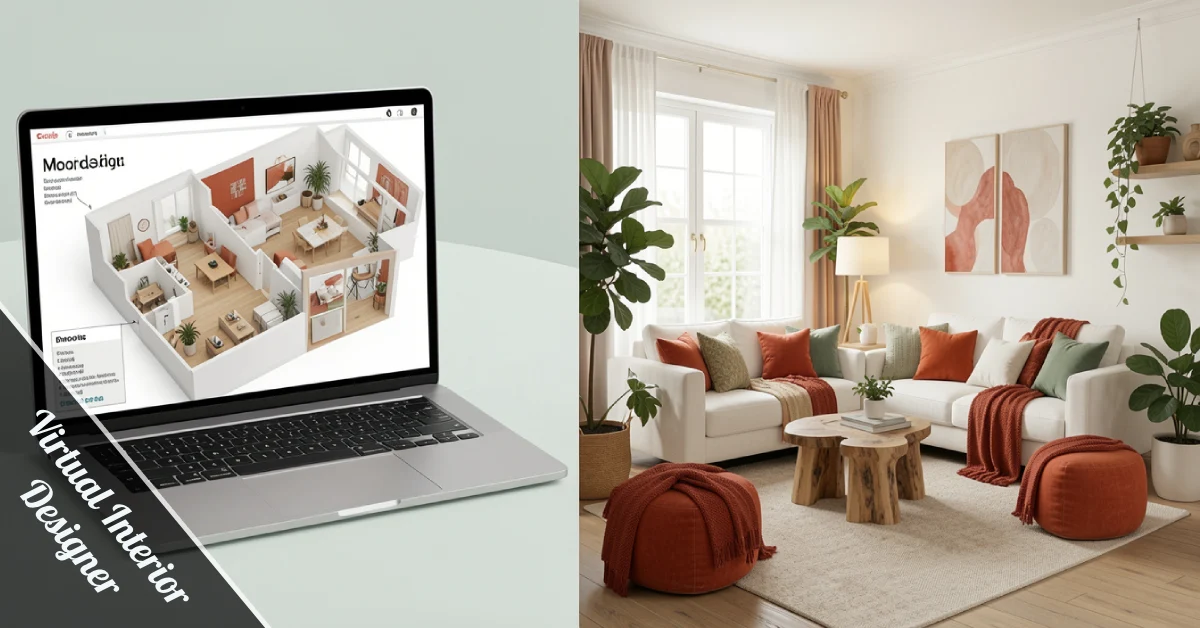
Ever stared at your living room and thought, “Something’s off — but I have no idea what”? You’re not alone. Most people know their space isn’t working. They just don’t know how to fix it. That’s exactly where a virtual interior designer steps in — no fancy showroom visits, no awkward in-home consultations, no sky-high bills.
This is your no-fluff guide to understanding how online interior design actually works, what it costs, which platforms are worth your time, and how to pick the right designer for your space and budget.
What a Virtual Interior Designer Actually Does
Think of it like having a stylish, super-organized friend who also happens to know the exact sofa dimensions that’ll save your cramped apartment. A virtual interior designer works with you completely online — through photos, measurements, video calls, and design platforms — to create a room plan that actually makes sense for how you live.
You share photos of your space. You fill out a style questionnaire. You set a budget. The designer does the heavy lifting: mood boards, furniture layouts, color palettes, product links, and sometimes full 3D room previews. You get a clear design roadmap without anyone needing to step foot in your home.
It’s not a watered-down version of “real” design. It’s professional-grade work delivered remotely, and it’s genuinely good.
How the Process Works, Step by Step
No mystery here. The online design process is pretty straightforward, and most platforms guide you through it clearly.
Step 1 — You share your space. Upload photos, drop in your room measurements, and answer questions about your style preferences, daily habits, and budget. The more detail you give, the better the result.
Step 2 — The designer creates a concept. You’ll receive mood boards, initial design directions, and product suggestions. Some platforms also offer a video call so you can talk it through directly.
Step 3 — Revisions happen. You give feedback. The designer adjusts. Most packages include at least one revision round, so you’re not locked into anything you’re unsure about.
Step 4 — You get the full design plan. This includes a finalized layout, furniture dimensions, décor picks, product links, and often a 3D visualization of the finished space.
Step 5 — You implement it. Since the service is remote, you handle ordering and setup yourself. But with a detailed plan in hand, it’s far less stressful than winging it solo.
Virtual vs. Traditional Interior Design: The Real Difference
| Factor | Virtual Interior Design | Traditional In-Home Design |
|---|---|---|
| Cost | Low to medium | Medium to high |
| Convenience | Work from anywhere, anytime | Requires scheduled home visits |
| Access to designers | Global talent pool | Local designers only |
| Turnaround | Usually faster | Can take weeks or months |
| Best for | Most rooms and budgets | Large renovations, luxury projects |
| Decision pressure | Review plans on your own time | Often, faster decisions are required |
The truth? For most people redesigning a bedroom, home office, or living room, virtual design does the job just as well — sometimes better — because you get to review everything without someone standing in your living room waiting for an answer.
Best Platforms Worth Knowing
The online design space has grown a lot. A few platforms consistently come up when people talk about quality and reliability.
Havenly is the go-to for people who want a simple, beginner-friendly experience. The process is guided, the price points are accessible, and it works well for homeowners and renters who want clear design direction without a complicated setup.
Decorilla goes a step further. You typically receive multiple designer concepts before you commit to one direction — which is great if you’re not 100% sure what style you’re after. It’s more personalized and leans toward a premium experience.
Spacejoy is strong on the visual side. If you want to see exactly how furniture fits your actual room before you buy anything, Spacejoy’s 3D room previews make that possible. It’s especially useful for people who struggle to visualize spatial layouts from a flat plan.
Each platform serves a slightly different type of client. The right pick depends on whether you prioritize price, creative options, or visualization accuracy.
Free Tools If You Want to DIY First
Not ready to hire anyone yet? Fair enough. Trying a few free tools first helps you figure out your style and narrow down what you actually want before spending money.
Planner 5D lets you build room layouts in both 2D and 3D. It’s easy to use and good for experimenting with furniture placement before committing to any purchases.
Homestyler gives you realistic room visualizations with actual furniture pieces. Good for getting a feel for how different styles translate in a real-looking space.
Interior AI is the newer one worth knowing. You upload a photo of your room, and it instantly shows you what it could look like in different design styles — minimal effort, quick inspiration.
These tools don’t replace a professional plan, but they’re solid for building your design confidence and clarifying your preferences before you bring in expert help.
What It Actually Costs
Pricing varies, and it’s worth understanding what you’re paying for before you commit to a package.
Basic single-room packages on platforms like Havenly typically start at affordable rates, often ranging from $79 to $199 depending on the service tier. These usually include a style consultation, mood board, shopping list, and one revision round.
More detailed packages — think multiple rooms, 3D renderings, personalized sourcing, and multiple revision rounds — can run higher. Premium services on platforms like Decorilla can range from $300 to $600+, depending on the scope.
Custom freelance designers charge their own rates, which vary widely based on experience, specialty, and project complexity. A small guest room costs less to plan than an open-concept living and dining space.
The main cost factors to watch:
- Room size and complexity
- Number of revisions included
- Whether 3D visualization is part of the package
- Custom furniture sourcing vs. ready-to-buy recommendations
- Designer experience level
Understanding exactly what’s included in each package before you sign up saves you from surprise costs later.
How to Pick the Right Designer for Your Space
Choosing well here makes the difference between a plan you love and one that sits unused in your inbox.
Start with portfolio reviews. Look at a designer’s past work and ask yourself honestly whether their style matches your vision — not just whether the work looks good in general. Good design that doesn’t match your taste is still the wrong fit for you.
Read client reviews carefully. Look for mentions of communication, how revisions were handled, and whether the designer worked within budget. These details matter more than star ratings alone.
Check what’s included. A strong designer clearly outlines what the package covers, what costs extra, and how they handle product recommendations within your price range. Ambiguity here is a red flag.
Don’t assume more expensive means better. The right designer is the one who understands how you actually live and builds a plan around that — not one who simply has the highest price tag.
Rooms That Benefit Most from Online Design Help
A virtual interior designer can work on almost any room, but some spaces see a bigger payoff than others.
Living rooms benefit from layout guidance, seating arrangement help, and getting the balance between functional and welcoming right. It’s also one of the harder rooms to get right solo because there are so many elements at play.
Home offices have become a priority for remote workers. Designers focus on ergonomics, lighting, storage, and minimizing the visual clutter that kills productivity.
Bedrooms often need help with calm, restful color choices and smarter storage solutions — especially in smaller rooms where every square foot counts.
Studio apartments and small spaces are where online design really earns its keep. A professional layout plan makes a cramped space livable in ways most people can’t figure out on their own.
FAQs
Is a virtual interior designer worth the cost?
Yes, for most people. You get professional design guidance, avoid costly furniture mistakes, and end up with a space that actually works — all at a fraction of traditional design fees.
Can they work with a tight budget?
Absolutely. Many designers specialize in budget-conscious projects and help you reuse what you already own, prioritize high-impact upgrades, and find lower-cost alternatives that still look great.
Do I need any special software?
No. Most services run through websites, mobile apps, or simple email communication. Some platforms offer interactive 3D tools, but nothing technical is required on your end.
How long does a project take?
Most single-room projects are completed within one to two weeks, depending on the platform and how quickly you provide feedback and approvals.
Your Space Deserves a Plan That Actually Works
Redesigning your space doesn’t have to mean expensive in-home visits, confusing renovation decisions, or months of uncertainty. A virtual interior designer gives you professional guidance, a clear plan, and the confidence to make smart choices — all from your phone or laptop.
Whether you’re refreshing a bedroom, sorting out a home office, or finally making that studio apartment feel like home, online design makes professional help genuinely accessible. Review your options, check a few portfolios, and pick the service that fits your goals. Your space is waiting.