

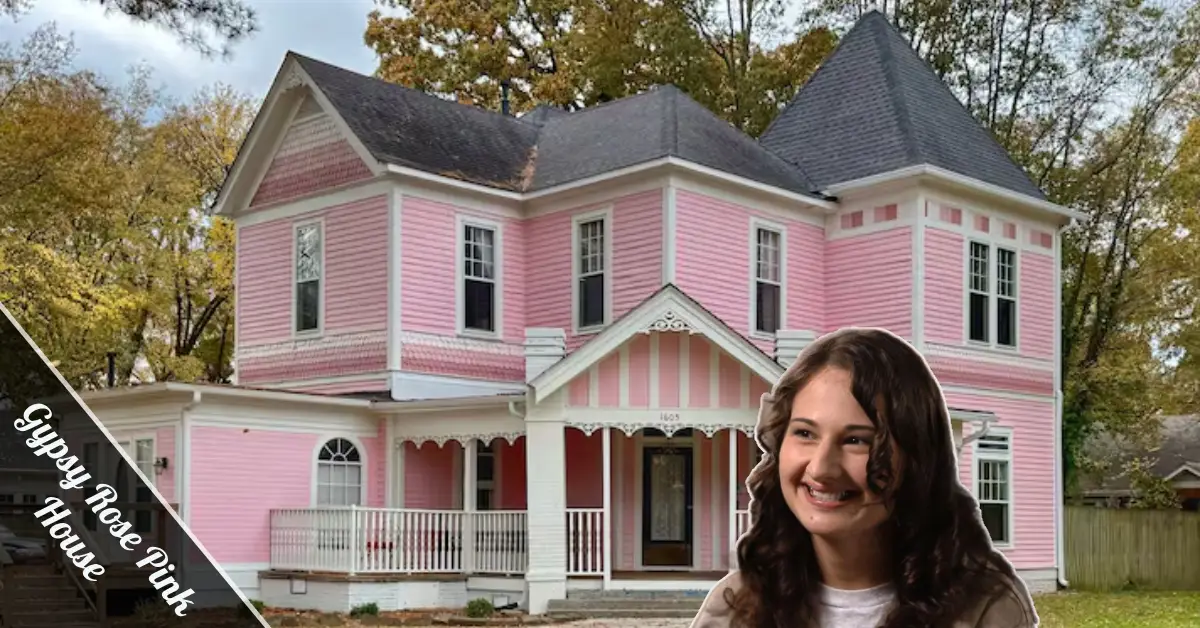
You’ve probably seen it. That bright, bubblegum-pink house is sitting in a quiet Springfield, Missouri, neighborhood. It looks like it belongs in a storybook. But the story attached to it? Nothing close to a fairy tale.
The Gypsy Rose Pink House is one of the most searched addresses in true crime history. And it’s not just because of what happened inside. It’s because the house itself was part of the lie. Every ramp, every medical modification, every cheerful coat of pink paint was wrapped up in one of the most disturbing cases of child abuse America has ever seen.
If you’re here to understand what really went on inside those walls, why the house looks the way it does, and what’s happened to it since, you’re in the right place. Let’s get into it.
How the Blanchards Got the Pink House
The house didn’t start as a crime scene. It started as a gift.
Habitat for Humanity, the nonprofit known for building homes for families in need, constructed the property in Springfield, Missouri, for Dee Dee Blanchard and her daughter Gypsy Rose. Dee Dee had spent years presenting Gypsy Rose as a severely ill child, telling doctors, neighbors, and charity organizations that her daughter suffered from leukemia, muscular dystrophy, seizures, and a long list of other conditions.
Because of that carefully crafted image, the Blanchards qualified for a housing program designed specifically for families with chronically ill children. Dee Dee submitted Gypsy Rose’s fabricated medical records, and the community rallied around them. Financial assistance covered housing costs, medical bills, and more.
It worked. The family moved in, and the house became the physical proof of Dee Dee’s story. A disabled child needs a special home, right? That was the logic, and it played perfectly.
Why Is the Gypsy Rose Pink House Actually Pink?
The color was chosen during the Habitat for Humanity build, and there’s no verified public record of who made that decision or why. What is clear is that the color made the house impossible to miss. In a street of ordinary homes, this one stood out.
Some people speculate Dee Dee chose it to reinforce Gypsy Rose’s public image as a sweet, vulnerable girl. Others think it was simply a personal preference. Either way, the pink became iconic. It’s the first thing people mention when they talk about the house, and it’s what makes it instantly recognizable in photos.
The color meant to charm a neighborhood ended up becoming a symbol recognized worldwide by true crime followers.
What Was Inside the Gypsy Rose Pink House
The outside got your attention. The inside told Dee Dee’s story.
The home was modified from the ground up to support the illusion of Gypsy Rose’s supposed disabilities. There was a wheelchair ramp at the entrance, because Dee Dee told the world Gypsy Rose couldn’t walk. There was specialized medical equipment throughout the home. Feeding tubes, a hospital-style setup, and other clinical tools were present inside a house that was supposed to be a family home.
Gypsy Rose could walk. She didn’t need the wheelchair. She didn’t need the feeding tubes. But Dee Dee kept her in that chair, kept her dependent, and used the house’s physical setup to reinforce the lie every single day.
For anyone who visited, the medical equipment made the story believable. Doctors believed it. Neighbors believed it. Charity workers believed it. The house was a prop, and it was a convincing one.
Dee Dee Blanchard and Munchausen by Proxy
What Dee Dee Blanchard did has a clinical name: Munchausen syndrome by proxy, now formally called Factitious Disorder Imposed on Another (FDIA). It’s a psychological condition where a caregiver fabricates or induces illness in someone under their care, usually to gain attention, sympathy, or control.
In Gypsy Rose’s case, Dee Dee went far beyond making up symptoms. She took Gypsy Rose to dozens of doctors. She convinced medical professionals that Gypsy Rose had leukemia, muscular dystrophy, vision problems, hearing loss, and cognitive delays. She got Gypsy Rose put through unnecessary surgeries. She had feeding tubes inserted. She shaved Gypsy Rose’s head to make the leukemia story believable.
Gypsy Rose lived her entire childhood believing she was sick. She had no access to the outside world without Dee Dee controlling what she saw and heard. The pink house wasn’t a home. It was a controlled environment built around a lie.
The Community That Got Played
Neighbors helped them. Local businesses donated. Charities provided trips, gifts, and financial support. The Make-A-Wish Foundation reportedly granted Gypsy Rose a wish. She was taken to concerts and events as a sick child, getting her dreams fulfilled.
The community wasn’t naive. They were deceived by someone who had spent years perfecting a performance. Dee Dee was charming, grateful, and convincing. She played the role of the devoted mother sacrificing everything for her disabled daughter. People respected her for it.
That community goodwill was built entirely on fabricated medical records and a well-maintained lie. And the pink house sat at the center of it, giving the whole story a physical anchor.
What Happened in June 2015
On June 14, 2015, Dee Dee Blanchard was found murdered in the Gypsy Rose Pink House.
A Facebook post from Gypsy Rose’s account was the first public signal that something was wrong. The post, which read that Dee Dee was dead and described the act explicitly, alerted both the public and law enforcement. Investigators traced the post and found Gypsy Rose had fled to Wisconsin with her online boyfriend, Nicholas Godejohn.
Godejohn had physically carried out the murder while Gypsy Rose waited in another room. She had planned it. After years of abuse, unnecessary medical procedures, and complete isolation, Gypsy Rose had reached a point where she saw no other way out.
Both were arrested. Godejohn was convicted of first-degree murder. Gypsy Rose pleaded guilty to second-degree murder and received a 10-year prison sentence.
Gypsy Rose Blanchard: Life After the Pink House
Gypsy Rose served about eight years of her sentence before being released in December 2023.
While in prison, she married Ryan Scott Anderson in 2022 in a ceremony conducted over video call. After her release, she moved to Louisiana and has been navigating public life with a level of visibility that most people in her situation never face.
She has spoken openly about her experience, her mother’s abuse, and her time in prison. Her story has been covered in the Hulu series “The Act”, documentaries, and multiple long-form journalism pieces. She is now considered by many advocates to be a survivor of extreme childhood abuse, and her case has pushed conversations about medical child abuse into the mainstream.
The house that defined her childhood is still standing. She is not going back to it.
The Gypsy Rose Pink House Today
The property is still in Springfield, Missouri, and it still draws attention.
After Dee Dee’s murder and the subsequent legal proceedings, the Gypsy Rose Pink House became part of a complicated estate situation. David Yancey, the Greene County Public Administrator, took over management of the Blanchard estate. His office handles the legal and financial matters tied to the property, including ongoing disputes about its future.
The house has not been demolished. It has not been significantly altered, at least not in terms of its exterior appearance. People still drive past it. True crime tourists photograph it. It sits in a regular neighborhood as a very pink, very visible reminder of what happened there.
What happens to it long-term remains an open question. Legal battles over the estate have not been fully resolved. The property’s future, whether it gets sold, converted, or demolished, is still being worked out through the courts.
Why This Case Still Has Everyone Talking
Here’s a quick breakdown of why the Gypsy Rose case cut through the noise and stayed there.
| Factor | Why It Matters |
|---|---|
| Medical child abuse | Rare cases that go this far are rarely exposed |
| Community deception | Everyone around them was fooled for years |
| Sympathetic perpetrator | Gypsy Rose is widely seen as a victim who acted out of desperation |
| Media coverage | The Hulu series brought the story to millions of new viewers |
| The house itself | A physical, still-standing location gives the story a real anchor |
| Ongoing developments | Gypsy Rose’s public life after release keeps the story current |
The Gypsy Rose Pink House works as a true crime landmark because it is real and still there. It is not a demolished lot or a historical marker. It is a pink house on a Missouri street that you can find on Google Maps right now. That tangibility keeps the story alive in a way that most cases don’t have.
What the Pink House Tells Us About Medical Child Abuse
The case brought Munchausen by proxy to public attention in a way that clinical literature never could.
Most people had never heard of the condition before this case. Now it is one of the most searched forms of child abuse online. Doctors, child welfare workers, and advocacy groups have pointed to the Blanchard case as a reason to implement better screening protocols when children present with multiple complex diagnoses over long periods.
The house, with its wheelchair ramp and medical setup built for a child who didn’t need them, is the clearest visual example of how this kind of abuse works. It is sustained, resourced, and invisible to everyone around it until something catastrophic forces it into the open.
The Gypsy Rose Pink House: A Story That Isn’t Over
The Gypsy Rose Pink House is more than a true crime landmark. It’s a case study in how abuse can be hidden in plain sight, how community goodwill can be weaponized, and how a child can spend her entire life trapped in someone else’s story.
Gypsy Rose is out now, building something that resembles a normal life. The house is still standing in Springfield. The legal questions around the estate are still working through the system. And the conversations the case started around medical child abuse, caregiver accountability, and survivor justice are still going.
The pink house didn’t just hold a dark story. It helped tell it. And now that the story is public, it keeps doing that job, one tourist photo and one true crime podcast episode at a time.
If this case is new to you, start with the documentary coverage and go from there. If you’ve followed it for years, you already know why it doesn’t leave you alone.