

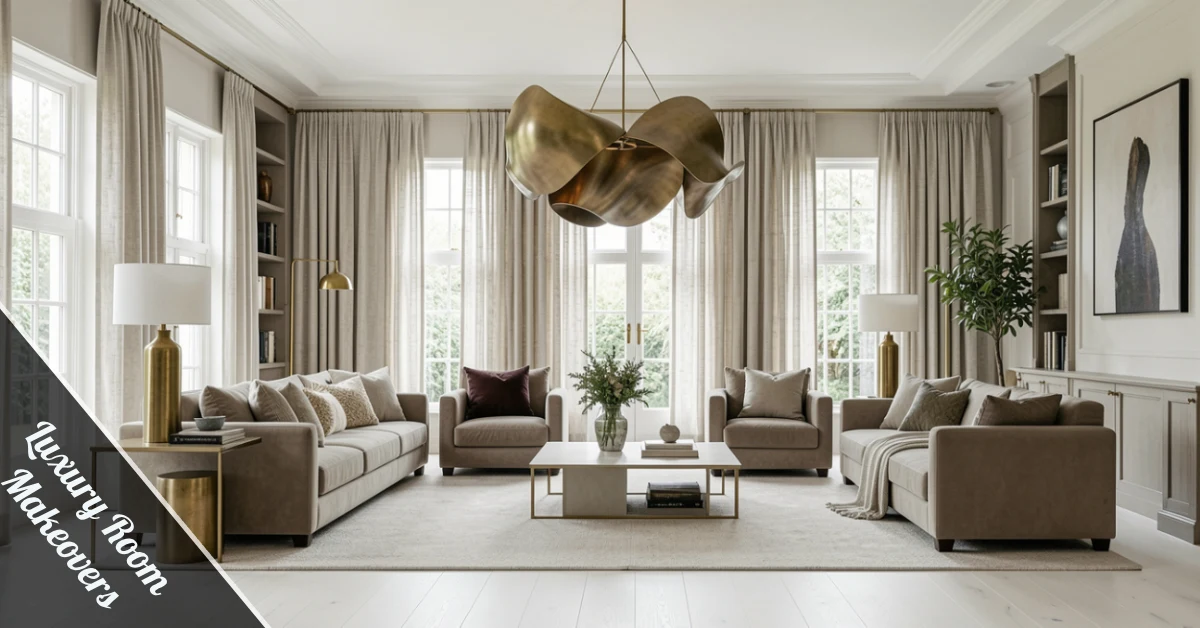
You don’t need a mansion budget to make your room feel like a five-star suite. Luxury room makeovers are more accessible in 2026 than they’ve ever been — and the gap between “expensive-looking” and “actually expensive” is mostly just knowing where to spend. Whether you’re working with a spare bedroom or a tired living room, this guide gives you the exact playbook designers use, minus the designer price tag.
What a Luxury Room Makeover Actually Means
Most people think luxury equals expensive. It doesn’t. Luxury means intentional. Every choice — the paint shade, the curtain weight, the rug placement — serves a purpose. That’s what separates a room that feels pulled-together from one that just has nice stuff in it.
The real difference comes down to three things: quality of materials, proportion, and cohesion. A room with a $5,000 budget can feel genuinely high-end if every dollar lands in the right place. A room with a $20,000 budget can feel chaotic if nothing connects.
Luxury also means the room holds up. These aren’t trendy changes that look dated in two years. The goal is a space that feels timeless, comfortable, and elevated every single day you walk into it.
The 5 Approaches Designers Actually Use
Not every room needs the same strategy. Here’s how professionals break it down — and when each one makes sense.
| Approach | Best For | Relative Cost |
|---|---|---|
| Full Gut Renovation | Poor layout, structural problems | $$$$$ |
| Designer Refresh | Dated look, solid bones | $$$ |
| Statement Piece Strategy | One wow-factor anchor needed | $$ |
| Layered Luxury Method | Spreading cost over time | $–$$$ |
| Material Upgrade Approach | Builder-grade finishes | $$ |
The Designer Refresh is where most homeowners get the best return. You keep the structure, replace the flooring, lighting, window treatments, and anchor furniture — and get about 80% of the visual impact at 40% of the cost of a full reno.
The Material Upgrade Approach is the stealth move. Swap laminate for wide-plank white oak. Replace hollow interior doors with solid-core ones. Swap standard switches for brushed brass hardware. Nobody knows what you spent, but everybody feels the difference.
The Statement Piece Strategy works if you’re short on budget but long on taste. Pick one showstopper — a book-matched marble wall, a bespoke chandelier, a custom upholstered headboard — and let everything else quietly support it.
Step-by-Step: How to Execute a Luxury Room Makeover
Follow this sequence. Skipping steps is how people waste money and end up with a room that almost works.
Step 1 — Lock in the vision. Pull reference images from design platforms and identify three recurring themes in what you’re drawn to. This is your filter for every purchase decision.
Step 2 — Audit the room. Walk through and tag everything: keep, update, or replace. Be ruthless. One piece that doesn’t belong undermines the entire room.
Step 3 — Fix the bones first. Uneven floors, cracked walls, faulty electrical — address these before anything decorative. No amount of styling covers structural neglect.
Step 4 — Paint. Use premium zero-VOC paint. Pick one wall color and use a slightly lighter or deeper version for trim. Done right, this single step transforms the room.
Step 5 — Upgrade the lighting. This is the highest-impact single change in any room. Replace flat overhead fixtures with layered lighting — a statement ceiling piece, task lamps, and accent lights. Use warm white bulbs with a color temperature between 2700K and 3000K. The room will feel completely different before you’ve touched the furniture.
Step 6 — Lay the flooring. Engineered hardwood, large-format porcelain tile, or a high-pile area rug over refinished floors all signal quality immediately.
Step 7 — Place anchor furniture. One or two investment pieces in solid materials. Scale matters — oversized furniture in a small room instantly kills the luxury feel.
Step 8 — Add textiles and window treatments. Floor-to-ceiling curtains in linen, velvet, or silk-blend fabrics add height and drama. Layer throw pillows and blankets in complementary textures.
Step 9 — Style with intention. Group décor in odd numbers. Limit accessories to items with real visual power. Clear every surface before you style it.
Step 10 — Final walkthrough at night. Luxury rooms must perform under artificial light, not just daylight. Adjust lamp placement and dimmer settings until the room feels right at every hour.
Luxury Room Makeover Cost Breakdown
Here’s where the money actually goes — with real figures, not vague ranges.
| Category | Cost Range |
|---|---|
| Paint + Prep | $200 – $800 |
| Lighting Upgrades | $500 – $5,000 |
| Engineered Hardwood Flooring | $8 – $20/sq ft installed |
| Premium Tile | $12 – $35/sq ft installed |
| Custom Window Treatments | $300 – $3,000 per window |
| Anchor Furniture (sofa/bed) | $1,500 – $12,000 |
| Art + Accessories | 10–15% of the total project budget |
| Design Consultation | $150–$500/hr or $2,000–$8,000 flat |
Three money-saving moves that don’t cut quality:
- Buy floor samples from luxury showrooms — 40 to 70% off retail, same product
- Shop lighting from contract suppliers instead of retail stores
- Splurge on surfaces you touch daily (handles, faucets, bedding) and save on background elements like paint and ceiling fixtures
Mistakes That Quietly Kill the Luxury Feel
Even experienced decorators fall into these. Knowing them up front saves real money.
Choosing paint color first. Paint should come last — after flooring and major fabrics. It’s the easiest thing to adjust, so don’t let it drive decisions.
Wrong furniture scale. Oversized pieces in a small room feel cramped. Too many small pieces feel cheap. Tape out the floor plan before ordering anything.
Ignoring the ceiling. It’s the fifth wall. A tray ceiling, a subtle wallpaper, or even a matte designer color change everything about how a room reads.
Skipping the rug. Hard flooring without a rug feels cold and unfinished. A rug defines zones, absorbs sound, and is one of the highest-impact purchases in any room.
Buying everything from one retailer. Luxury rooms look collected, not coordinated. Mix eras, price points, and sources on purpose.
Rushing the final 10%. Most homeowners stop after the big purchases. The styling phase — art placement, book stacking, fresh florals — is what makes a room look complete rather than furnished.
How Luxury Room Makeovers Affect Home Resale Value
A well-executed makeover isn’t just about how you live — it directly moves the needle on what your home is worth. Real estate professionals consistently report that a thoughtfully designed primary bedroom or living room increases a home’s perceived value by 5 to 15% and shortens sale time.
Premium materials are the reason. Solid hardwood floors, stone countertops, and solid-core interior doors hold their appeal for decades without needing replacement. The upfront cost becomes genuinely economical over time.
There’s also a daily quality-of-life argument. Better lighting reduces eye strain. Quality bedding improves sleep. Rugs, curtains, and upholstered furniture absorb sound and reduce noise fatigue. These aren’t abstract benefits — they’re measurable improvements to how you feel in your own home every day.
FAQs About Luxury Room Makeovers
What’s the most cost-effective luxury room makeover?
The bedroom. Upgrade to 400-thread-count Egyptian cotton bedding, add a statement headboard, improve the lighting, and repaint. Under $3,000 in most homes, and you use it every single day.
Can I pull off a luxury look without a designer?
Yes, but it takes discipline. Follow the 60-30-10 color rule: 60% dominant color, 30% secondary, 10% accent. Study rooms you admire and reverse-engineer what they have in common. When in doubt, buy less and buy better.
What design styles work best?
The most enduring options: Contemporary (clean lines, neutral palette), Modern Glam (metallics, velvet, statement lighting), Transitional (classic meets modern), and Japandi (Japanese minimalism with Scandinavian warmth). All four age well and photograph beautifully.
How long does a luxury room makeover take?
A designer refresh with no structural work: one to four weeks. A full renovation with flooring, lighting, and custom built-ins: six to twelve weeks. Custom furniture and window treatments add four to eight weeks of lead time on top of that.
What single change has the biggest impact?
Lighting — every time. A sculptural chandelier or pendant, dimmable lamps, and warm-toned bulbs make a room feel completely different without touching anything else. It’s also one of the most affordable upgrades relative to its visual return.