

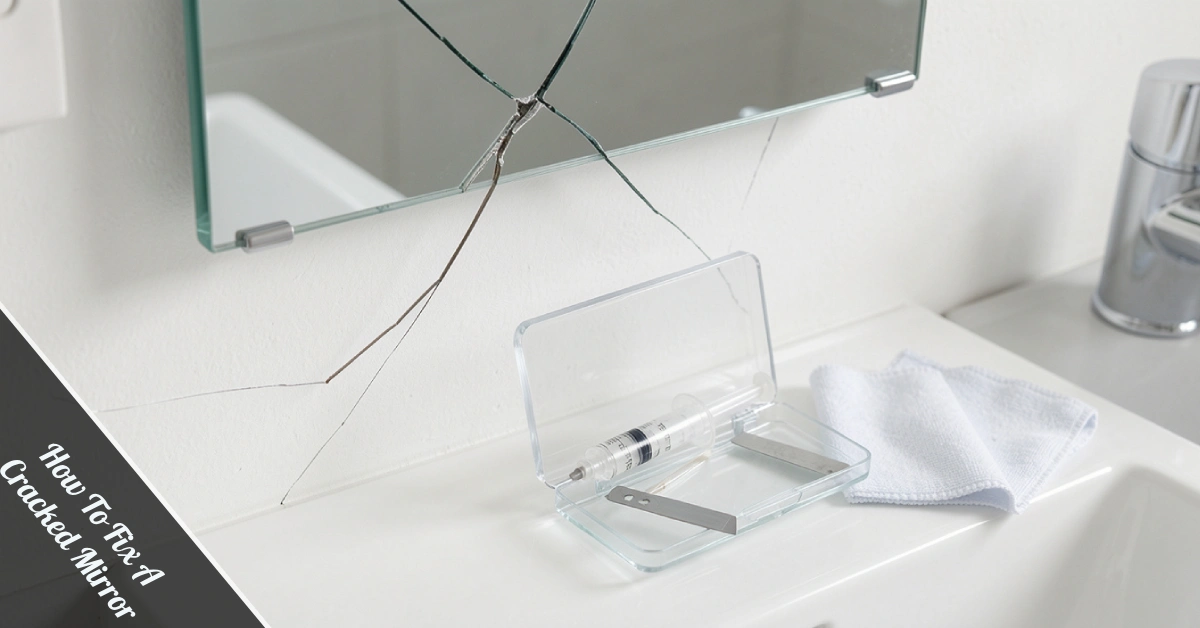
So your mirror’s got a crack. Before you panic — or toss the whole thing — take a breath. How to fix a cracked mirror is more doable than most people think, and you don’t need a contractor or a big budget.
This guide covers the right methods, which tricks to skip, when to replace them, and how to stay safe.
First, Understand What You’re Working With
Not every crack is the same. A hairline crack near the corner of a framed vanity mirror? That’s very fixable. A deep split running edge-to-edge on a full-length closet door mirror? That’s a replacement situation — no debate.
Here’s a quick breakdown to help you decide before you touch anything:
| Crack Type | What It Means | Best Move |
|---|---|---|
| Hairline crack | Thin, shallow, stable | Mirror repair kit or clear resin |
| Small chip | Tiny missing piece, usually the edge | Fill with resin or epoxy |
| Deep crack | Feel with your fingernail | Cosmetic repair only; watch it closely |
| Edge crack | Runs from the border inward | Repair if short; replace if spreading |
| Edge-to-edge crack | Splits the mirror in two | Replace — it’s a safety risk |
| Loose or shattered | Pieces moving or falling | Replace immediately |
One thing people miss: the mirror’s reflective backing matters too. If there’s black spotting, peeling, or damage behind the glass, resin on the front won’t fully fix the look. You’re dealing with two separate issues there.
Safety First — This Part Isn’t Optional
Before you even pick up a repair kit, get your gloves and eye protection on. Cracked glass has edges that cut even with a careful touch. Keep kids and pets out of the room.
Don’t press the glass. Seriously — pressure is how a manageable crack becomes a broken mirror. If the mirror’s wall-mounted and wobbles when touched, take it down before doing anything else.
Clean the crack gently using rubbing alcohol and a microfiber cloth. You want the area dry, dust-free, and grease-free so resin bonds properly. Skip water — moisture near the exposed mirror backing causes dark spots and silvering damage.
If you spot loose shards, don’t push them back with your fingers. Tape over them temporarily. Knowing how to fix a cracked mirror safely starts here — before any product touches the glass.
How To Fix A Cracked Mirror: The Methods That Work
Mirror Repair Kit (Best for Hairline Cracks)
This is your most reliable option for small cracks. Mirror repair kits — and yes, windshield repair kits work too — use clear resin injected into the crack so light passes through more evenly. The crack won’t vanish, but it becomes much less visible.
Here’s the process, step by step:
- Clean and fully dry the mirror surface
- Apply the stabilizer film or adhesive patch from the kit over the crack
- Inject resin slowly through the applicator or syringe — patience here pays off
- Let it cure fully (some kits use sunlight, others need UV light)
- Peel the film and scrape excess resin with a razor blade at a low, shallow angle
- Wipe clean with a glass cleaner
Don’t rush step four. Undercured resin stays tacky and smears. Give it the full recommended time, even if it feels set.
Clear Resin (Best for Thin, Visible Cracks)
Clear resin flows easily into a narrow gap and dries with a clean finish. A toothpick or fine brush helps guide it exactly where it needs to go without spreading.
Watch for bubbles after applying. A gentle tap near the crack usually releases them. Bubbles that cure in place make the repair more visible — so don’t skip this step.
Once hardened, scrape and polish the same way as the repair kit method. On a wall mirror under normal lighting, the crack becomes significantly less noticeable.
Clear Two-Part Epoxy (Best for Deeper Cracks or Small Chips)
Epoxy is thicker than resin, making it harder to push into hairline cracks — but better for filling slightly larger damaged areas. Mix the resin and hardener exactly as the product says. Wrong ratios leave a sticky, cloudy result.
Apply a small amount using a toothpick. Keep it narrow. Too much creates a raised ridge that’s hard to scrape off cleanly. Let it cure fully — most products need several hours, some a full day.
Clear epoxy beats super glue for this job every time. It’s more durable, dries clearer, and gives you more working time before it sets.
What Doesn’t Work (Don’t Waste Your Time)
Super Glue
Super glue dries too fast, doesn’t flow into the crack evenly, and often leaves cloudy marks on glass. It can temporarily hold a chipped edge together on a hidden spot, but for any visible crack, the result usually looks worse than the original damage.
Toothpaste
People see this all over short-form video content and try it. Toothpaste can slightly polish very light surface marks — not actual cracks. It won’t bond broken glass, won’t stop spreading, and leaves residue inside the crack that blocks resin from bonding later if you decide to do a real repair.
Nail polish gets the same verdict. Interesting idea, unreliable result.
How To Fix A Cracked Mirror on a Closet Door
Closet door mirrors get a tougher deal than wall mirrors — they move constantly, and that movement stresses existing cracks every single day. Don’t slam or force the door while the glass is cracked.
For a small, stable crack, clean the surface and apply a glass repair kit or clear resin. Let it cure fully before using the door again. Adding clear safety film over the repaired area is smart — it won’t fix the crack, but it holds the surface together if the glass shifts further.
If the crack is long, runs near an edge, or the glass feels even slightly loose in the track, replace the panel. Large cracked closet mirrors are a genuine safety risk, and DIY repair has real limits here.
How To Stop a Mirror Crack from Spreading
Speed matters. The faster you act, the better your chances of stabilizing it. First move: eliminate any pressure or movement near the mirror.
A glass repair kit or clear resin applied early can slow or halt spreading by filling the gap before it widens. Clean, dry conditions help the product bond before more stress hits.
Avoid placing the mirror near heat sources, strong sunlight, or cold drafts. Temperature swings stress glass — existing cracks worsen faster under those conditions.
Creative Ways To Hide a Mirror Crack
Sometimes you don’t need to fix the crack — you just need to make it disappear visually. Decorative vinyl designs, mirror trim, glass tiles, or a well-placed plant can work better than any resin if the crack is near the edge or bottom of the mirror.
One interesting approach: kintsugi-style repair. Mix clear epoxy with gold or metallic powder and apply it along the crack line. It turns the damage into a deliberate design detail rather than hiding it. It won’t restore the mirror structurally, but it looks genuinely intentional.
Only do decorative fixes on mirrors that are still structurally stable. If the glass is loose or badly cracked, decorate after it’s been secured or replaced — not before.
When To Skip Repair and Just Replace It
How to fix a cracked mirror is a real option for small, stable damage. But some mirrors are past that point. Replace the mirror when:
- The crack is long, deep, or branching
- It runs from one edge to another
- The glass feels loose or moves in the frame
- There are multiple cracks or shattered sections
- It’s a large bathroom mirror or closet door with significant breakage
Large wall mirrors, shaped mirrors, and full-length mirrors cost more to replace because of cutting and installation, but that cost is worth it compared to an unsafe mirror held together with resin and optimism.
Quick Cost Reality Check
DIY repair is the cheapest route. A basic mirror repair kit or clear resin runs a few dollars to under $20 at most hardware stores. Professional repair makes sense for antique or custom mirrors where the piece has real value.
For standard mirrors with serious damage, replacement is usually more practical. Get measurements first — size and shape drive cost more than anything else.
Wrapping It Up
How to fix a cracked mirror comes down to one honest assessment: how bad is the damage? Small, stable cracks respond well to a repair kit, clear resin, or epoxy. Toothpaste and super glue are not the move. Large cracks, loose glass, and shattered sections need replacement.
Work safely, choose the right product for your crack type, and don’t rush the curing time. A careful repair of a small crack can hold up well and save you the cost of a full replacement.
Got questions about a specific crack situation? Drop them in the comments.
FAQs
Can a cracked mirror actually be repaired at home?
Yes — if the crack is small, stable, and not near a high-stress area. A mirror repair kit or clear resin handles hairline cracks and small chips well.
Is it safe to use a cracked mirror?
A minor hairline crack in a stable, framed mirror is usually low risk. A large crack, loose glass, or edge-to-edge split is a safety hazard — replace it.
Does clear nail polish work on mirror cracks?
Not reliably. It may soften a very shallow surface scratch, but it won’t bond broken glass or stop spreading. Use proper glass resin instead.
How long does mirror crack repair last?
Done correctly with quality resin or epoxy, a small crack repair can hold for years — especially on mirrors that aren’t moved often.
What’s the fastest way to stop a crack from spreading?
Stop pressure on the glass, keep it away from heat or cold, and apply a glass repair product as soon as possible. Clear tape is a short-term safety step only.